Helen Stuart Campbell (born Helen Stuart; July 5, 1839 - July 22, 1918) was a social reformer and pioneer in the field of home economics. She wrote several important studies about women trapped in poverty, and the role that effective home economics could play in lifting women and families out of poverty.She was born in Lockport, New York to Jane E. (n e Campbell) and Homer H. Stuart. (She later changed her surname to favor her mother's maiden name.) She studied in Warren, Rhode Island and Bloomington, New Jersey. She worked as a professor of economics at the University of Wisconsin from 1893-96, and then as a professor of domestic science at Kansas State Agricultural College from 1896-97
Helen Stuart Campbell (born Helen Stuart; July 5, 1839 - July 22, 1918) was a social reformer and pioneer in the field of home economics. She wrote several important studies about women trapped in poverty, and the role that effective home economics could play in lifting women and families out of poverty.She was born in Lockport, New York to Jane E. (n e Campbell) and Homer H. Stuart. (She later changed her surname to favor her mother's maiden name.) She studied in Warren, Rhode Island and Bloomington, New Jersey. She worked as a professor of economics at the University of Wisconsin from 1893-96, and then as a professor of domestic science at Kansas State Agricultural College from 1896-97
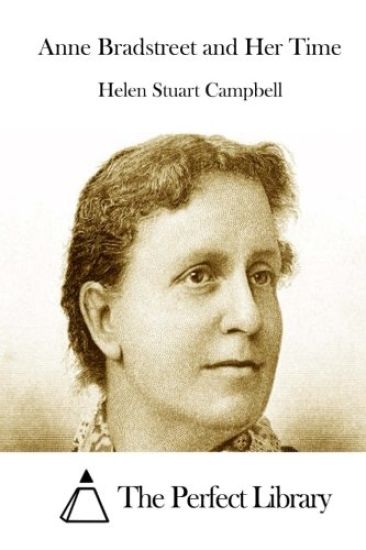
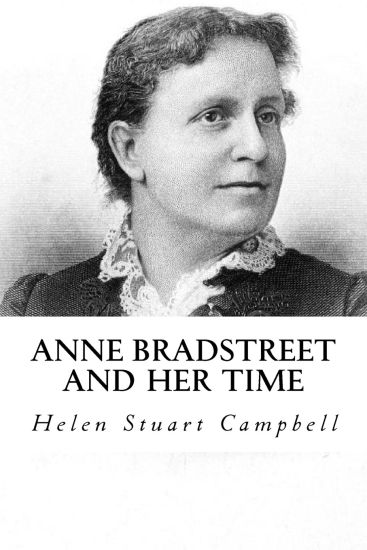
Anne Bradstreet was the first American female writer as well as the first American female poet to have her works published.Anne Bradstreet (March 20, 1612 - September 16, 1672), n e Dudley, was the most prominent of early English poets of North America and first writer in England's North American colonies to be published. She is the first Puritan figure in American Literature and notable for her large corpus of poetry, as well as personal writings published posthumously. Born to a wealthy Puritan family in Northampton, England, Bradstreet was a well-read scholar especially affected by the works of Du Bartas. A mother of eight children and the wife of a public officer in the New England community, Bradstreet wrote poetry in addition to her other duties. Her early works read in the style of Du Bartas, but her later writings develop into her unique style of poetry which centers on her role as a mother, her struggles with the sufferings of life, and her Puritan faith...... Helen Stuart Campbell (born Helen Stuart; pen name, "Mrs. Helen Weeks"; July 5, 1839 - July 22, 1918) was a social reformer and pioneer in the field of home economics. She wrote several important studies about women trapped in poverty, and the role that effective home economics could play in lifting women and families out of poverty. Biography: She was born in Lockport, New York to Jane E. (n e Campbell) and Homer H. Stuart. (She later changed her surname to favor her mother's maiden name.) She studied in Warren, Rhode Island and Bloomington, New Jersey. She worked as a professor of economics at the University of Wisconsin from 1893-96, and then as a professor of domestic science at Kansas State Agricultural College from 1896-97. Publications: In the 1860s and 70s, she wrote stories and children's books under the name "Mrs. Helen Weeks". In later life, divorced from husband Dr. Grenville Weeks, Campbell - her new pen name - wrote novels and nonfiction works dealing with home economics and relationships between the individual, the home, the workplace, physical well-being, and childhood. She was active in many organizations that advocated female empowerment and associated with many intellectuals and original thinkers, including writer Charlotte Perkins Gilman. Much of her writing was engaging and vigorous. Her pieces exposed Gilded Age social inequities and public health failures. She was the author of a biography of 17th century colonial American poet, Anne Bradstreet.
Helen Stuart Campbell (born Helen Stuart; pen name, "Mrs. Helen Weeks"; July 5, 1839 - July 22, 1918) was a social reformer and pioneer in the field of home economics. She wrote several important studies about women trapped in poverty, and the role that effective home economics could play in lifting women and families out of poverty. Biography: She was born in Lockport, New York to Jane E. (n e Campbell) and Homer H. Stuart. (She later changed her surname to favor her mother's maiden name.) She studied in Warren, Rhode Island and Bloomington, New Jersey. She worked as a professor of economics at the University of Wisconsin from 1893-96, and then as a professor of domestic science at Kansas State Agricultural College from 1896-97. Publications: In the 1860s and 70s, she wrote stories and children's books under the name "Mrs. Helen Weeks". In later life, divorced from husband Dr. Grenville Weeks, Campbell - her new pen name - wrote novels and nonfiction works dealing with home economics and relationships between the individual, the home, the workplace, physical well-being, and childhood. She was active in many organizations that advocated female empowerment and associated with many intellectuals and original thinkers, including writer Charlotte Perkins Gilman. Much of her writing was engaging and vigorous. Her pieces exposed Gilded Age social inequities and public health failures. She was the author of a biography of 17th century colonial American poet, Anne Bradstreet.
The book ""Stuart Letters Of Robert And Elizabeth Sullivan Stuart And Their Children V1, 1819-1864: With An Undated Letter Prior To July 21, 1813"" is a collection of letters written by Robert and Elizabeth Sullivan Stuart and their children between 1813 and 1864. The book is divided into two parts, with the first part containing letters written between 1819 and 1864, and the second part containing an undated letter written prior to July 21, 1813.The letters provide a glimpse into the daily lives of the Stuart family, including their thoughts, feelings, and experiences. They cover a range of topics, including family news, social events, politics, and religion. The letters also reveal the family's attitudes towards slavery and the Civil War, as well as their views on education and women's rights.The book is edited by Robert Stuart, who provides historical context and background information for each letter. The letters are presented in their original form, with some minor editing for clarity. The book is a valuable resource for historians, genealogists, and anyone interested in the history of the Stuart family and the United States during the 19th century.In Two Volumes. Volume 1, 1819-1853. Volume 2, 1854-1864.This scarce antiquarian book is a facsimile reprint of the old original and may contain some imperfections such as library marks and notations. Because we believe this work is culturally important, we have made it available as part of our commitment for protecting, preserving, and promoting the world's literature in affordable, high quality, modern editions, that are true to their original work.
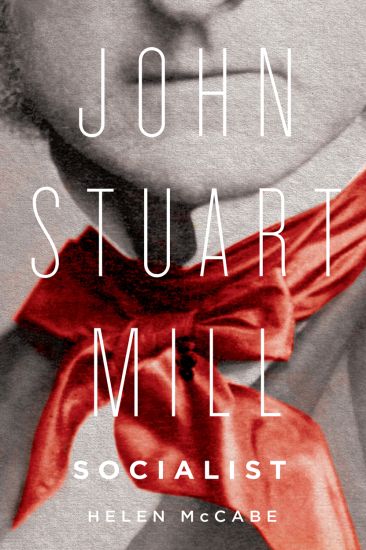
Best known as the author of On Liberty, John Stuart Mill remains a canonical figure in liberalism today. Yet according to his autobiography, by the mid-1840s he placed himself "under the general designation of Socialist." Taking this self-description seriously, John Stuart Mill, Socialist reinterprets Mill's work in its light.Helen McCabe explores the nineteenth-century political economist's core commitments to egalitarianism, social justice, social harmony, and a socialist utopia of cooperation, fairness, and human flourishing. Uncovering Mill's changing relationship with the radicalism of his youth and his excitement about the revolutionary events of 1848, McCabe argues that he saw liberal reforms as solutions to contemporary problems, while socialism was the path to a better future. In so doing, she casts new light on his political theory, including his theory of social progress; his support for democracy; his feminism; his concept of utility; his understanding of individuality; and his account of "the permanent interests of man as a progressive being," which is so central to his famous harm principle.As we look to rebuild the world in the wake of financial crises, climate change, and a global pandemic, John Stuart Mill, Socialist offers a radical rereading of the philosopher and a fresh perspective on contemporary meanings of socialism.
Best known as the author of On Liberty, John Stuart Mill remains a canonical figure in liberalism today. Yet according to his autobiography, by the mid-1840s he placed himself "under the general designation of Socialist." Taking this self-description seriously, John Stuart Mill, Socialist reinterprets Mill's work in its light.Helen McCabe explores the nineteenth-century political economist's core commitments to egalitarianism, social justice, social harmony, and a socialist utopia of cooperation, fairness, and human flourishing. Uncovering Mill's changing relationship with the radicalism of his youth and his excitement about the revolutionary events of 1848, McCabe argues that he saw liberal reforms as solutions to contemporary problems, while socialism was the path to a better future. In so doing, she casts new light on his political theory, including his theory of social progress; his support for democracy; his feminism; his concept of utility; his understanding of individuality; and his account of "the permanent interests of man as a progressive being," which is so central to his famous harm principle.As we look to rebuild the world in the wake of financial crises, climate change, and a global pandemic, John Stuart Mill, Socialist offers a radical rereading of the philosopher and a fresh perspective on contemporary meanings of socialism.
'This is the most lucid and engaged account of Stuart Hall's work. Meticulously, and with an exemplary generosity, Helen Davis patiently unravels the threads of Hall's intellectual history. The result is a most useful and thoughtful book, which could prove to be indispensable for students of cultural studies' - Graeme Turner, University of Queensland Understanding Stuart Hall traces the development of one of the most influential and respected figures within cultural studies. Focusing on Stuart Hall's writings over a period of nearly fifty years, this volume offers students and academics a cogent and exploratory route through complex and overlapping areas of analysis. In her critical assessment of Hall's most important contributions to academic and public debate, Davis shows the extent to which his analyses of race and ethnicity have been informed by early studies of Marxism, class and 'societies structured in dominance'. Davis offers fresh insight into the formation of one of the most prolific, charismatic and controversial intellectuals of his generation. Despite having been branded a 'cultural pessimist', Stuart Hall has long been associated with encouraging new, cutting-edge scholarship within the field. This volume concludes with a discussion of Hall's most recent political and academic interventions and his continuing commitment to innovation within the visual arts.