In der Geschichte des protestantischen Kirchenrechts bedeutet das fünfbändige Ius Ecclesiasticum Protestantium des Hallenser Professors Justus Henning Böhmer (1674-1749) Grundlegung und Höhepunkt zugleich. Immer wieder rühmte man es dafür, dass es einerseits der Ordnung des Liber Extra Raimunds von Peñafort folgte, also in der Traditionslinie des katholischen Kirchenrechts blieb, andererseits aber durch gründliche historische und dogmatische Überlegungen das spezifisch Protestantische herausarbeitete. Wie jedoch verhalten sich die Dissertationen, über die Justus Henning Böhmers Schüler zwischen 1699 und 1747 disputierten, zum Ius Ecclesiasticum Protestantium? Ließ Böhmer gewisse Inhalte erst disputieren, um die Reaktion der akademischen Welt zu testen, bevor er die jeweilige Thematik für sein Hauptwerk bearbeitete? Ausgehend von den Dissertationen widmet sich Renate Schulze dem kirchenrechtlichen Werk des wohl bedeutendsten protestantischen Kirchenrechtlers des 18. Jahrhunderts. Angelpunkt vieler Diskussionen ist die Frage der Legitimation der weltlichen Aufsicht über die Kirche. Hinzu tritt die grundsätzliche Frage, was aus der katholischen kanonistischen Tradition in den protestantischen Kirchen mit Blick auf deren Bekenntnisschriften weiter Bestand haben kann. Daneben werden die Bedeutung der Dissertationen für Böhmers Werk sowie Kriterien dafür, was zu Böhmers Zeit und speziell in seinen Augen als "gute Dissertation" gelten konnte, herausgearbeitet und ein gutes Stück Hallenser Wissenschaftsgeschichte des Kirchenrechts in der ersten Blütezeit der Universität erschlossen.
Christianity is not only a global but also an intercultural phenomenon. The diversity of world Christianity is evident not merely outside our borders but even within our own neighborhoods. Over the past half century theologians and missiologists have addressed this reality by developing local and contextual theologies and by exploring issues like contextualization, inculturation, and translation. In recent years these various trajectories have coalesced into a new field called intercultural theology. Bringing together missiology, religious studies, social science research, and Christian theology, the field of intercultural theology is a fresh attempt to rethink the discipline of theology in light of the diversity and pluriformity of Christianity today. Henning Wrogemann, one of the leading missiologists and scholars of religion in Europe, has written the most comprehensive textbook on the subject of Christianity and culture today. In three volumes his Intercultural Theology provides an exhaustive account of the history, theory, and practice of Christian mission. Volume one introduces the concepts of culture and context, volume two surveys theologies of mission both past and present, and volume three explores theologies of religion and interreligious relationships. In this first volume on intercultural hermeneutics, Wrogemann introduces the term "intercultural theology" and investigates what it means to understand another cultural context. In addition to surveying different hermeneutical theories and concepts of culture, he assesses how intercultural understanding has taken place throughout the history of Christian mission. Wrogemann also provides an extensive discussion of contextual theologies with a special focus on African theologies. Intercultural Theology is an indispensable resource for all people—especially students, pastors, and scholars—that explores the defining issues of Christian identity and practice in the context of an increasingly intercultural and interreligious world. Missiological Engagements charts interdisciplinary and innovative trajectories in the history, theology, and practice of Christian mission, featuring contributions by leading thinkers from both the Euro-American West and the majority world whose missiological scholarship bridges church, academy, and society.
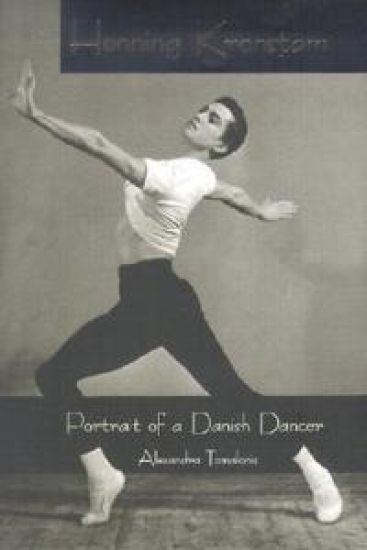
The story of Henning Kronstam, one of the greatest dancers of 20th-century ballet, is a testament of professional achievement and personal victory. Overcoming illness, family disapproval and his own private torments, Kronstam dominated one of the world's most renowned companies, the Royal Danish Ballet, for nearly 30 years - beginning in 1956 when he created the role of Romeo at the age of 20 in Frederick Ashton's ""Romeo and Juliet"", until a new generation, trained by him, took the stage. In 1979, Kronstam organized and directed the Bournonville Fesival, introducing the world to the rarely performed works of August Bournonville, the Danes' master choreographer. Alexandra Tomalonis has documented Kronstam's major roles as recounted in his own workds, revealing the man behind the dancer. Kronstam's range streched from classical ballet to modern dance; his greatest roles included Bournonville's James; Balanchine's Apollo; Petit's Cyrano; and the Old Clown in Murray Louis's ""Hoopla"". His refusal to substitute ""flash"" for style won him the admiration of his peers, and to many he remains a beacon of artistic integrity. In the writing of this book, the author conducted 200 hours of interviews with Kronstam and talked to over 100 dancers and choreographers, including many who worked with him. She observed classes and rehearsals at the Royal Danish Ballet over a ten-year period and, as such provides the story of the dance company in addition to a biography of the man. The photographs showcase Kronstam's refined classical technique and dramatic range and the theatrical traditions of the Royal Danish Ballet.