Kirjojen hintavertailu. Mukana 11 244 527 kirjaa ja 12 kauppaa.

Kirjahaku

Etsi kirjoja tekijän nimen, kirjan nimen tai ISBN:n perusteella.

1000 tulosta hakusanalla Henning Schmidgen

The Helmholtz Curves

The Helmholtz Curves

Henning Schmidgen

Fordham University Press
2014
sidottu
This book reconstructs the emergence of the phenomenon of "lost time" by engaging with two of the most significant time experts of the nineteenth century: the German physiologist Hermann von Helmholtz and the French writer Marcel Proust. Its starting point is the archival discovery of curve images that Helmholtz produced in the context of pathbreaking experiments on the temporality of the nervous system in 1851. With a "frog drawing machine," Helmholtz established the temporal gap between stimulus and response that has remained a core issue in debates between neuroscientists and philosophers. When naming the recorded phenomena, Helmholtz introduced the term temps perdu, or lost time. Proust had excellent contacts with the biomedical world of late-nineteenth-century Paris, and he was familiar with this term and physiological tracing technologies behind it. Drawing on the machine philosophy of Deleuze, Schmidgen highlights the resemblance between the machinic assemblages and rhizomatic networks within which Helmholtz and Proust pursued their respective projects.
The Helmholtz Curves

The Helmholtz Curves

Henning Schmidgen

Fordham University Press
2014
pokkari
This book reconstructs the emergence of the phenomenon of "lost time" by engaging with two of the most significant time experts of the nineteenth century: the German physiologist Hermann von Helmholtz and the French writer Marcel Proust. Its starting point is the archival discovery of curve images that Helmholtz produced in the context of pathbreaking experiments on the temporality of the nervous system in 1851. With a "frog drawing machine," Helmholtz established the temporal gap between stimulus and response that has remained a core issue in debates between neuroscientists and philosophers. When naming the recorded phenomena, Helmholtz introduced the term temps perdu, or lost time. Proust had excellent contacts with the biomedical world of late-nineteenth-century Paris, and he was familiar with this term and physiological tracing technologies behind it. Drawing on the machine philosophy of Deleuze, Schmidgen highlights the resemblance between the machinic assemblages and rhizomatic networks within which Helmholtz and Proust pursued their respective projects.

Bruno Latour in Pieces

Bruno Latour in Pieces

Henning Schmidgen

Fordham University Press
2014
sidottu
Bruno Latour stirs things up. Latour began as a lover of science and technology, co-founder of actor-network theory, and philosopher of a modernity that had "never been modern." In the meantime he is regarded not just as one of the most intelligent—and also popular—exponents of science studies but also as a major innovator of the social sciences, an exemplary wanderer who walks the line between the sciences and the humanities. This book provides the first comprehensive overview of the Latourian oeuvre, from his early anthropological studies in Abidjan (Ivory Coast), to influential books like Laboratory Life and Science in Action, and his most recent reflections on an empirical metaphysics of "modes of existence." In the course of this enquiry it becomes clear that the basic problem to which Latour's work responds is that of social tradition, the transmission of experience and knowledge. What this empirical philosopher constantly grapples with is the complex relationship of knowledge, time, and culture.
Bruno Latour in Pieces

Bruno Latour in Pieces

Henning Schmidgen

Fordham University Press
2014
pokkari
Bruno Latour stirs things up. Latour began as a lover of science and technology, co-founder of actor-network theory, and philosopher of a modernity that had "never been modern." In the meantime he is regarded not just as one of the most intelligent—and also popular—exponents of science studies but also as a major innovator of the social sciences, an exemplary wanderer who walks the line between the sciences and the humanities. This book provides the first comprehensive overview of the Latourian oeuvre, from his early anthropological studies in Abidjan (Ivory Coast), to influential books like Laboratory Life and Science in Action, and his most recent reflections on an empirical metaphysics of "modes of existence." In the course of this enquiry it becomes clear that the basic problem to which Latour's work responds is that of social tradition, the transmission of experience and knowledge. What this empirical philosopher constantly grapples with is the complex relationship of knowledge, time, and culture.
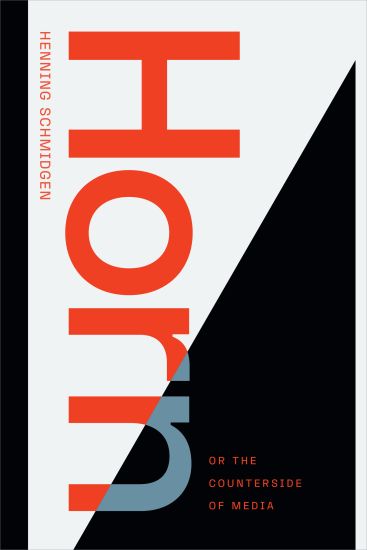
Horn, or the Counterside of Media

Horn, or the Counterside of Media

Henning Schmidgen

Duke University Press
2022
sidottu
We regularly touch and handle media devices. At the same time, media devices such as body scanners, car seat pressure sensors, and smart phones scan and touch us. In Horn, Henning Schmidgen reflects on the bidirectional nature of touch and the ways in which surfaces constitute sites of mediation between interior and exterior. Schmidgen uses the concept of "horn"-whether manifested as a rhinoceros horn or a musical instrument-to stand for both natural substances and artificial objects as spaces of tactility. He enters into creative dialogue with artists, scientists, and philosophers, ranging from Salvador DalÍ, William Kentridge, and Rebecca Horn to Sigmund Freud, Walter Benjamin, and Marshall McLuhan, who plumb the complex interplay between tactility and technological and biological surfaces. Whether analyzing how DalÍ conceived of images as tactile entities during his “rhinoceros phase” or examining the problem of tactility in Thomas Pynchon’s The Crying of Lot 49, Schmidgen reconfigures understandings of the dynamic phenomena of touch in media.
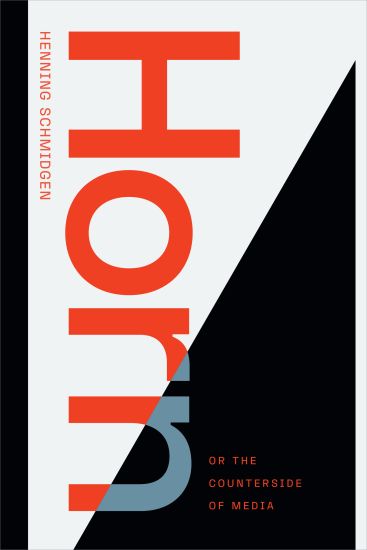
Horn, or the Counterside of Media

Horn, or the Counterside of Media

Henning Schmidgen

Duke University Press
2022
pokkari
We regularly touch and handle media devices. At the same time, media devices such as body scanners, car seat pressure sensors, and smart phones scan and touch us. In Horn, Henning Schmidgen reflects on the bidirectional nature of touch and the ways in which surfaces constitute sites of mediation between interior and exterior. Schmidgen uses the concept of "horn"-whether manifested as a rhinoceros horn or a musical instrument-to stand for both natural substances and artificial objects as spaces of tactility. He enters into creative dialogue with artists, scientists, and philosophers, ranging from Salvador DalÍ, William Kentridge, and Rebecca Horn to Sigmund Freud, Walter Benjamin, and Marshall McLuhan, who plumb the complex interplay between tactility and technological and biological surfaces. Whether analyzing how DalÍ conceived of images as tactile entities during his “rhinoceros phase” or examining the problem of tactility in Thomas Pynchon’s The Crying of Lot 49, Schmidgen reconfigures understandings of the dynamic phenomena of touch in media.
Aramis

Aramis

Bruno Latour; Henning Schmidgen

Mohr Siebeck
2018
sidottu
"Aramis ist eine automatische Metro, die fast im Süden von Paris gebaut worden wäre. Ich habe daraus den Helden eines Dossiers in Szientifiktion gemacht. Alle Abenteuer dieses nicht-menschlichen Helden werden wahrheitsgetreu berichtet. Aber sie erscheinen nie wahrscheinlich, weil wir es nicht gewohnt sind, die Liebe und den Hass einer Spitzentechnologie im Detail zu erforschen. Zum ersten Mal, glaube ich, entfaltet sich vor unseren Augen die Geschichte einer soziologischen Untersuchung und die Liebesgeschichte einer Maschine. Zum ersten Mal sprechen auch die Ingenieure direkt, und ihre Stimmen wie ihre Dokumente gleichen kaum dem furchterregenden Mythos von der seelenlosen Technik."Basierend auf zahlreichen Interviews, technischen Berichten und Dokumentationen spürt Bruno Latour dem gescheiterten Großprojekt eines modularen Nahverkehrssystems nach. Latour analysiert dieses Scheitern in Form eines literarisch anspruchsvollen Hybrids aus Kriminalroman und Wissenschafts- bzw. Technikforschung. Die verschiedenen Akteure dieser Geschichte eines hochkomplexen Mensch-Ding-Systems - Menschen, Schaltpläne, Motoren, Prototypen, Schienensysteme etc. - kommen dabei in einer Weise gleichberechtigt zu Wort, die für das Verständnis der Akteur-Netzwerk-Analyse von exemplarischem Wert ist. Die Schriftenreihe Historische Wissensforschung eröffnet mit der ersten deutschen Übersetzung dieses Klassikers ihre Rubrik "Unter dem Radar", in deren Rahmen vergessene oder schwer zugängliche Arbeiten der Wissenssoziologie und -geschichte vorgelegt und historisch kontextualisiert werden.
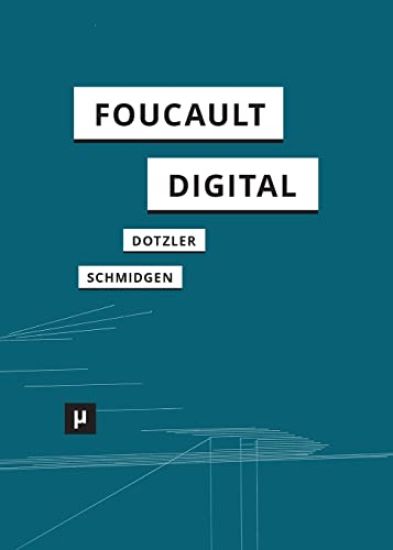
Foucault, digital

Foucault, digital

Bernhard J Dotzler; Henning Schmidgen

meson press eG
2022
pokkari
Mitte der 1960er Jahre hat Michel Foucault die Methode der "Diskursanalyse" in die Geistes- und Sozialwissenschaften eingef hrt. Besonders in der Arch ologie des Wissens hat er daf r pl diert, die Geschichte des Wissens und der Wissenschaften zum Gegenstand diskursanalytischer Untersuchungen zu machen. ber ein halbes Jahrhundert sp ter ist im Bereich der Informatik ein zunehmendes Interesse an der Diskursanalyse zu verzeichnen. In der Regel spielt Foucault dabei aber keine Rolle. Fern von jeder Arch ologie setzen auch die Digital Humanities vermehrt auf die Analyse von historischen und gegenw rtigen Diskursen. Angesichts dieser Konjunkturen ist es an der Zeit, die Arch ologie des Wissens neu zu lesen. Denn schon 1968 behauptete der franz sische Historiker Emmanuel Le Roy Ladurie "Der zuk nftige Historiker wird Programmierer sein, oder er wird nicht sein." Ein Jahr sp ter gibt Foucault mit seinem Buch auf eben diese Herausforderung eine ebenso informierte wie nuancierte Antwort. Diese Antwort ist in ihrer Aktualit t und Relevanz erst noch zu entdecken.
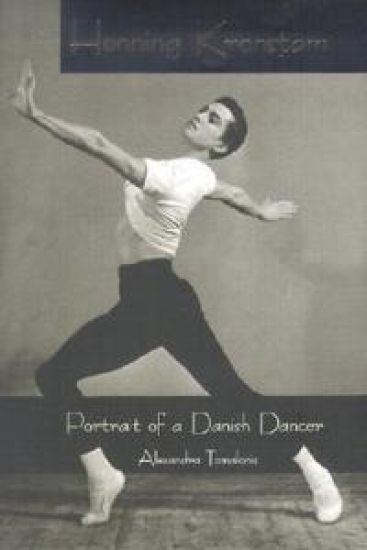
Henning Kronstam

Henning Kronstam

Alexandra Tomalonis

University Press of Florida
2002
sidottu
The story of Henning Kronstam, one of the greatest dancers of 20th-century ballet, is a testament of professional achievement and personal victory. Overcoming illness, family disapproval and his own private torments, Kronstam dominated one of the world's most renowned companies, the Royal Danish Ballet, for nearly 30 years - beginning in 1956 when he created the role of Romeo at the age of 20 in Frederick Ashton's ""Romeo and Juliet"", until a new generation, trained by him, took the stage. In 1979, Kronstam organized and directed the Bournonville Fesival, introducing the world to the rarely performed works of August Bournonville, the Danes' master choreographer. Alexandra Tomalonis has documented Kronstam's major roles as recounted in his own workds, revealing the man behind the dancer. Kronstam's range streched from classical ballet to modern dance; his greatest roles included Bournonville's James; Balanchine's Apollo; Petit's Cyrano; and the Old Clown in Murray Louis's ""Hoopla"". His refusal to substitute ""flash"" for style won him the admiration of his peers, and to many he remains a beacon of artistic integrity. In the writing of this book, the author conducted 200 hours of interviews with Kronstam and talked to over 100 dancers and choreographers, including many who worked with him. She observed classes and rehearsals at the Royal Danish Ballet over a ten-year period and, as such provides the story of the dance company in addition to a biography of the man. The photographs showcase Kronstam's refined classical technique and dramatic range and the theatrical traditions of the Royal Danish Ballet.