Kirjojen hintavertailu. Mukana 11 244 527 kirjaa ja 12 kauppaa.

Kirjahaku

Etsi kirjoja tekijän nimen, kirjan nimen tai ISBN:n perusteella.

1000 tulosta hakusanalla Henry M. Sayre

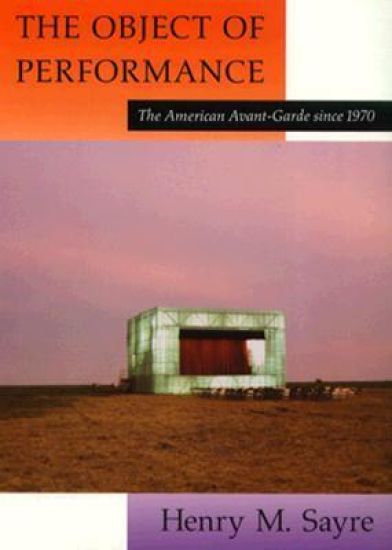
The Object of Performance

The Object of Performance

Henry M. Sayre

University of Chicago Press
1992
nidottu
Sayre defines for the first time the apparently diffuse avant-garde art of the past two decades in terms of its distinctly postmodern concerns. The range of arts discussed here encompasses contemporary dance, photography, oral poetics, performance art, and earthworks. "Sayre has written one of the most intelligent, sensible, and readable accounts of the tenents of Postmodern artmaking published to date."—Jeff Abell, New Art Examiner"No one can read The Object of Performance without gaining a far better idea than before of what has happened to art, and, in some measure, why. . . . I find this book consistently illuminating."—Arthur C. Danto
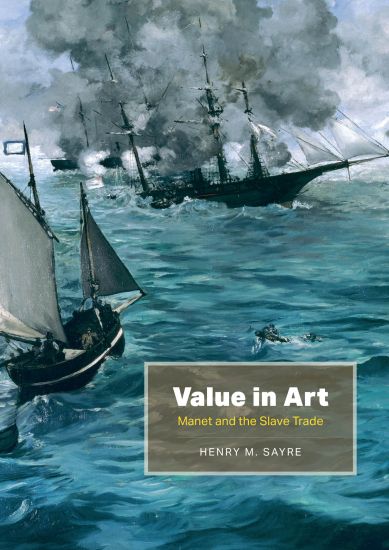
Value in Art

Value in Art

Henry M. Sayre

University of Chicago Press
2022
sidottu
Art historian Henry M. Sayre traces the origins of the term “value” in art criticism, revealing the politics that define Manet’s art. How did art critics come to speak of light and dark as, respectively, “high in value” and “low in value”? Henry M. Sayre traces the origin of this usage to one of art history’s most famous and racially charged paintings, Édouard Manet’s Olympia. Art critics once described light and dark in painting in terms of musical metaphor—higher and lower tones, notes, and scales. Sayre shows that it was Émile Zola who introduced the new “law of values” in an 1867 essay on Manet. Unpacking the intricate contexts of Zola’s essay and of several related paintings by Manet, Sayre argues that Zola’s usage of value was intentionally double coded—an economic metaphor for the political economy of slavery. In Manet’s painting, Olympia and her maid represent objects of exchange, a commentary on the French Empire’s complicity in the ongoing slave trade in the Americas. Expertly researched and argued, this bold study reveals the extraordinary weight of history and politics that Manet’s painting bears. Locating the presence of slavery at modernism’s roots, Value in Art is a surprising and necessary intervention in our understanding of art history.
James B. Thompson

James B. Thompson

Henry M. Sayre

Hallie Ford Museum of Art,US
2009
pokkari
This book on the contemporary painter and printmaker James B. Thompson is a meditation on the possibility of discovering, in an American landscape wracked by the devastation of global warming, flood, drought, and environmental disaster, an uncanny beauty, even a source of affirmation and hope. Thompson's entirely abstract canvases and prints offer themselves up as metaphors for landscape, as terrains full of incident designed to reveal not only a sense of what we have lost but the creative energy necessary to renew our imaginative capacity to move on. They constitute a new sublime, a vision of something infinite that we cannot quite comprehend, even as they seek to convey landscape's very essence.Henry M. Sayre's introductory essay and commentaries on individual works place Thompson's work in the context of landscape painting as a whole and offer the viewer insight into the meaning of the works themselves.
Le Rêve d'Un Ministre, Avant Le Sacre de S. M. Charles X 2e Édition
Le reve d'un ministre, avant le sacre de S. M. Charles X; precede de l'emploi de la journee de S. Exc. Par M. E. La *********. 2e editionDate de l'edition originale: 1825Sujet de l'ouvrage: France -- 1824-1830 (Charles X)Ce livre est la reproduction fidele d'une oeuvre publiee avant 1920 et fait partie d'une collection de livres reimprimes a la demande editee par Hachette Livre, dans le cadre d'un partenariat avec la Bibliotheque nationale de France, offrant l'opportunite d'acceder a des ouvrages anciens et souvent rares issus des fonds patrimoniaux de la BnF.Les oeuvres faisant partie de cette collection ont ete numerisees par la BnF et sont presentes sur Gallica, sa bibliotheque numerique.En entreprenant de redonner vie a ces ouvrages au travers d'une collection de livres reimprimes a la demande, nous leur donnons la possibilite de rencontrer un public elargi et participons a la transmission de connaissances et de savoirs parfois difficilement accessibles.Nous avons cherche a concilier la reproduction fidele d'un livre ancien a partir de sa version numerisee avec le souci d'un confort de lecture optimal. Nous esperons que les ouvrages de cette nouvelle collection vous apporteront entiere satisfaction.Pour plus d'informations, rendez-vous sur www.hachettebnf.fr
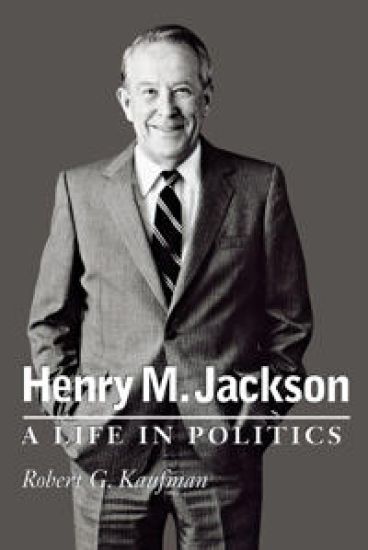
Henry M. Jackson

Henry M. Jackson

Robert G. Kaufman

University of Washington Press
2015
pokkari
Henry M. Jackson ranks as one of the great legislators in American history. With a Congressional career spanning the tenure of nine Presidents, Jackson had an enormous impact on the most crucial foreign policy and defense issues of the Cold War era, as well as a marked impact on energy policy, civil rights, and other watershed issues in domestic politics.Jackson first arrived in Washington, D.C., in January 1941 as the Democratic representative of the Second District of Washington State, at the age of 28 the youngest member of Congress. “Scoop” Jackson won reelection time and again by wide margins, moving to the Senate in 1953 and serving there until his death in 1983. He became a powerful voice in U.S. foreign policy and a leading influence in major domestic legislation, especially concerning natural resources, energy, and the environment, working effectively with Senator Warren Magnuson to bring considerable federal investment to Washington State.A standard bearer for the New Deal-Fair Deal tradition of Roosevelt and Truman, Jackson advocated a strong role for the federal government in the economy, health care, and civil rights. He was a firm believer in public control of electric and nuclear power, and leveled stern criticism at the oil industry’s “obscene profits” during the energy crisis of the 1970s. He ran for the presidency twice, in 1972 and 1976, but was defeated for the nomination first by George McGovern and then by Jimmy Carter, marking the beginning of a split between dovish and hawkish liberal Democrats that would not be mended until the ascendance of Bill Clinton.Jackson’s vision concerning America’s Cold War objectives owed much to Harry Truman’s approach to world affairs but, ironically, found its best manifestation in the actions taken by the Republican administration of Ronald Reagan. An early and strong supporter of Israel and of Soviet dissidents, he strongly opposed the Nixon/Kissinger policy of detente as well as many of Carter’s methods of dealing with the Soviet Union.Robert Kaufman has immersed himself in the life and times of Jackson, poring over the more than 1,500 boxes of written materials and tapes that make up the Jackson Papers housed at the University of Washington, as well as the collections of every presidential library from Kennedy through Reagan. He interviewed many people who knew Jackson, both friends and rivals, and consulted other archival materials and published sources dealing with Jackson, relevant U.S. political history and commentary, arms negotiation documents, and congressional reports. He uses this wealth of material to present a thoughtful and encompassing picture of the ideas and policies that shaped America’s Cold War philosophy and actions.
Henry M. Jackson

Henry M. Jackson

Robert G. Kaufman

University of Washington Press
2015
sidottu
Henry M. Jackson ranks as one of the great legislators in American history. With a Congressional career spanning the tenure of nine Presidents, Jackson had an enormous impact on the most crucial foreign policy and defense issues of the Cold War era, as well as a marked impact on energy policy, civil rights, and other watershed issues in domestic politics.Jackson first arrived in Washington, D.C., in January 1941 as the Democratic representative of the Second District of Washington State, at the age of 28 the youngest member of Congress. "Scoop" Jackson won reelection time and again by wide margins, moving to the Senate in 1953 and serving there until his death in 1983. He became a powerful voice in U.S. foreign policy and a leading influence in major domestic legislation, especially concerning natural resources, energy, and the environment, working effectively with Senator Warren Magnuson to bring considerable federal investment to Washington State.A standard bearer for the New Deal-Fair Deal tradition of Roosevelt and Truman, Jackson advocated a strong role for the federal government in the economy, health care, and civil rights. He was a firm believer in public control of electric and nuclear power, and leveled stern criticism at the oil industry's "obscene profits" during the energy crisis of the 1970s. He ran for the presidency twice, in 1972 and 1976, but was defeated for the nomination first by George McGovern and then by Jimmy Carter, marking the beginning of a split between dovish and hawkish liberal Democrats that would not be mended until the ascendance of Bill Clinton.Jackson's vision concerning America's Cold War objectives owed much to Harry Truman's approach to world affairs but, ironically, found its best manifestation in the actions taken by the Republican administration of Ronald Reagan. An early and strong supporter of Israel and of Soviet dissidents, he strongly opposed the Nixon/Kissinger policy of detente as well as many of Carter's methods of dealing with the Soviet Union.Robert Kaufman has immersed himself in the life and times of Jackson, poring over the more than 1,500 boxes of written materials and tapes that make up the Jackson Papers housed at the University of Washington, as well as the collections of every presidential library from Kennedy through Reagan. He interviewed many people who knew Jackson, both friends and rivals, and consulted other archival materials and published sources dealing with Jackson, relevant U.S. political history and commentary, arms negotiation documents, and congressional reports. He uses this wealth of material to present a thoughtful and encompassing picture of the ideas and policies that shaped America's Cold War philosophy and actions.
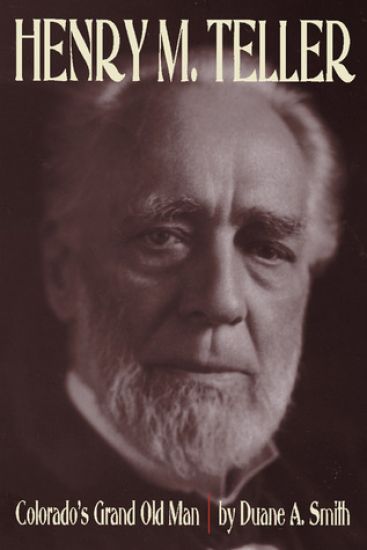
Henry M. Teller

Henry M. Teller

Duane A. Smith

University Press of Colorado
2002
sidottu
Serving longer in the US Senate than any other Coloradan, Henry M Teller was one of the Centennial State's greatest statesmen and political leaders. Teller was a prime example of what a politician should be in an era when elected officials left a great deal to be desired. As Colorado's representative, Teller stated his beliefs and stuck by them. Not all agreed with him, but all admired him for his honesty and integrity. His legal career in Colorado encompassed much of the early legislation in the territory, such as developing mining law and the organisation of the Colorado Central Railroad, while his Washington career touched on nearly every important western economic development issue that occurred in Colorado between 1876 and 1909. Teller declared to the US Congress that Colorado was a part of the nation, and that the West deserved a say in its decisions.
Henry M. Stanley

Henry M. Stanley

Henry William Little

British Library, Historical Print Editions
2011
pokkari
Title: Henry M. Stanley: his life, travels and explorations.Publisher: British Library, Historical Print EditionsThe British Library is the national library of the United Kingdom. It is one of the world's largest research libraries holding over 150 million items in all known languages and formats: books, journals, newspapers, sound recordings, patents, maps, stamps, prints and much more. Its collections include around 14 million books, along with substantial additional collections of manuscripts and historical items dating back as far as 300 BC.The HISTORY OF TRAVEL collection includes books from the British Library digitised by Microsoft. This collection contains personal narratives, travel guides and documentary accounts by Victorian travelers, male and female. Also included are pamphlets, travel guides, and personal narratives of trips to and around the Americas, the Indies, Europe, Africa and the Middle East. ++++The below data was compiled from various identification fields in the bibliographic record of this title. This data is provided as an additional tool in helping to insure edition identification: ++++ British Library Little, Henry William; 1890. xvi. 456 p.; 8 . 010096.f.13.
Henry M. Stanley-The Man From Africa

Henry M. Stanley-The Man From Africa

Robert Edmond Alter

WILDSIDE PRESS
2022
pokkari
One of famed crime author Robert Edmond Alter's less-well-known books, Henry M. Stanley: The Man from Africa concerns the life of Sir Henry Morton Stanley, explorer, journalist, soldier, colonial administrator, author and politician who was famous for his exploration of Central Africa and his search for missionary and explorer David Livingstone, whom he later claimed to have greeted with the now-famous line: "Dr. Livingstone, I presume?"