
Kirjahaku
Etsi kirjoja tekijän nimen, kirjan nimen tai ISBN:n perusteella.
1000 tulosta hakusanalla Henry M. Snyder

The Negro in the Christian Pulpit
Atticus G Haygood; James W Hood; Henry M Snyder
Hansebooks
2019
pokkari
The Negro in the Christian Pulpit - or, The two characters and two destinies, as delineated in twenty-one practical sermons is an unchanged, high-quality reprint of the original edition of 1884. Hansebooks is editor of the literature on different topic areas such as research and science, travel and expeditions, cooking and nutrition, medicine, and other genres. As a publisher we focus on the preservation of historical literature. Many works of historical writers and scientists are available today as antiques only. Hansebooks newly publishes these books and contributes to the preservation of literature which has become rare and historical knowledge for the future.
![Physical Geography. by W. M. Davis ... Assisted by William Henry Snyder. [With Plates.]](/covers/9781240923601.jpg)
Physical Geography. by W. M. Davis ... Assisted by William Henry Snyder. [With Plates.]
William Morris Davis; William Henry Snyder
British Library, Historical Print Editions
2011
pokkari
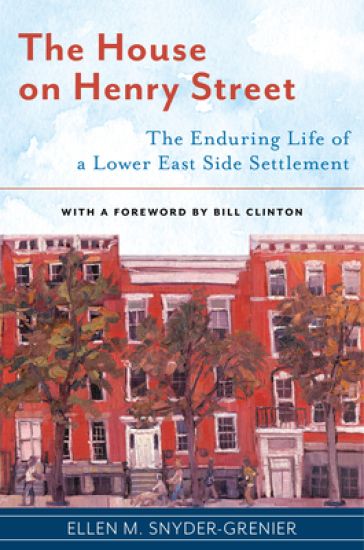
The House on Henry Street
Ellen M. Snyder-Grenier; Bill Clinton
New York University Press
2020
sidottu
Chronicles the sweeping history of the storied Henry Street Settlement and its enduring vision of a more just society On a cold March day in 1893, 26-year-old nurse Lillian Wald rushed through the poverty-stricken streets of New York's Lower East Side to a squalid bedroom where a young mother lay dying—abandoned by her doctor because she could not pay his fee. The misery in the room and the walk to reach it inspired Wald to establish Henry Street Settlement, which would become one of the most influential social welfare organizations in American history. Through personal narratives, vivid images, and previously untold stories, Ellen M. Snyder-Grenier chronicles Henry Street's sweeping history from 1893 to today. From the fights for public health and immigrants' rights that fueled its founding, to advocating for relief during the Great Depression, all the way to tackling homelessness and AIDS in the 1980s, and into today—Henry Street has been a champion for social justice. Its powerful narrative illuminates larger stories about poverty, and who is "worthy" of help; immigration and migration, and who is welcomed; human rights, and whose voice is heard. For over 125 years, Henry Street Settlement has survived in a changing city and nation because of its ability to change with the times; because of the ingenuity of its guiding principle—that by bridging divides of class, culture, and race we could create a more equitable world; and because of the persistence of poverty, racism, and income disparity that it has pledged to confront. This makes the story of Henry Street as relevant today as it was more than a century ago. The House on Henry Street is not just about the challenges of overcoming hardship, but about the best possibilities of urban life and the hope and ambition it takes to achieve them.
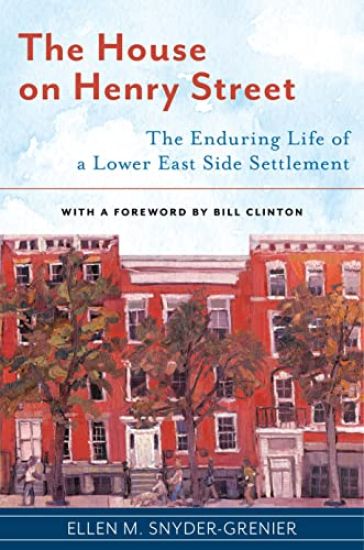
The House on Henry Street
Ellen M. Snyder-Grenier; Bill Clinton
NEW YORK UNIVERSITY PRESS
2025
pokkari
Chronicles the sweeping history of the storied Henry Street Settlement and its enduring vision of a more just society On a cold March day in 1893, 26-year-old nurse Lillian Wald rushed through the poverty-stricken streets of New York's Lower East Side to a squalid bedroom where a young mother lay dying—abandoned by her doctor because she could not pay his fee. The misery in the room and the walk to reach it inspired Wald to establish Henry Street Settlement, which would become one of the most influential social welfare organizations in American history. Through personal narratives, vivid images, and previously untold stories, Ellen M. Snyder-Grenier chronicles Henry Street's sweeping history from 1893 to today. From the fights for public health and immigrants' rights that fueled its founding, to advocating for relief during the Great Depression, all the way to tackling homelessness and AIDS in the 1980s, and into today—Henry Street has been a champion for social justice. Its powerful narrative illuminates larger stories about poverty, and who is "worthy" of help; immigration and migration, and who is welcomed; human rights, and whose voice is heard. For over 125 years, Henry Street Settlement has survived in a changing city and nation because of its ability to change with the times; because of the ingenuity of its guiding principle—that by bridging divides of class, culture, and race we could create a more equitable world; and because of the persistence of poverty, racism, and income disparity that it has pledged to confront. This makes the story of Henry Street as relevant today as it was more than a century ago. The House on Henry Street is not just about the challenges of overcoming hardship, but about the best possibilities of urban life and the hope and ambition it takes to achieve them.

Foreign Policy Decision Making: An Approach to the Study of International Politics
Richard Carlton Snyder; Henry W. Bruck; Burton M. Sapin
Literary Licensing, LLC
2012
sidottu

Foreign Policy Decision Making: An Approach to the Study of International Politics
Richard Carlton Snyder; Henry W. Bruck; Burton M. Sapin
Literary Licensing, LLC
2012
nidottu

Called to Community
Eberhard Arnold; Dietrich Bonhoeffer; Joan Chittister; Dorothy Day; Fyodor Dostoyevsky; Richard J. Foster; Jonathan Wilson-Hartgrove; David Janzen; Søren Kierkegaard; C. S. Lewis; Chiara Lubich; Thomas Merton; Henri J. M. Nouwen; John M. Perkins; Eugene H. Peterson; Christine D. Pohl; Howard A. Snyder; Mother Teresa; Saint Benedict; Jeremiah Barker; Amy Carmichael; Hans Denck; Andreas Ehrenpreis; Thomas R Kelly; Penelope Lawson; Juan Mateos; Kathleen Norris; Thomas E Powers; Peter Riedemann; Christopher C Smith; Ulrich Stadler
PLOUGH PUBLISHING HOUSE
2024
pokkari
Fifty-two readings on living in intentional Christian community to spark group discussion.Gold Medal Winner, 2017 Illumination Book Awards, Christian LivingSilver Medal Winner, 2017 Benjamin Franklin Award in Religion, Independent Book Publishers AssociationWhy, in an age of connectivity, are our lives more isolated and fragmented than ever? And what can be done about it? The answer lies in the hands of God’s people. Increasingly, today’s Christians want to be the church, to follow Christ together in daily life. From every corner of society, they are daring to step away from the status quo and respond to Christ’s call to share their lives more fully with one another and with others. As they take the plunge, they are discovering the rich, meaningful life that Jesus has in mind for all people, and pointing the church back to its original calling: to be a gathered, united community that demonstrates the transforming love of God.Of course, such a life together with others isn’t easy. The selections in this volume are, by and large, written by practitioners—people who have pioneered life in intentional community and have discovered in the nitty-gritty of daily life what it takes to establish, nurture, and sustain a Christian community over the long haul.Whether you have just begun thinking about communal living, are already embarking on sharing life with others, or have been part of a community for many years, the pieces in this collection will encourage, challenge, and strengthen you. The book’s fifty-two chapters can be read one a week to ignite meaningful group discussion.Contributors include: John F. Alexander, Eberhard Arnold, J. Heinrich Arnold, Johann Christoph Arnold, Alden Bass, Benedict of Nursia, Christoph Friedrich Blumhardt, Leonardo Boff, Dietrich Bonhoeffer, Joan Chittister, Stephen B. Clark, Andy Crouch, Dorothy Day, Anthony de Mello, Elizabeth Dede, Catherine de Hueck Doherty, Fyodor Dostoyevsky, Jenny Duckworth, Friedrich Foerster, Richard J. Foster, Jodi Garbison, Arthur G. Gish, Helmut Gollwitzer, Adele J Gonzalez, Stanley Hauerwas, Joseph H. Hellerman, Roy Hession, David Janzen, Rufus Jones, Emmanuel Katongole, Arthur Katz, Søren Kierkegaard, C. Norman Kraus, C.S. Lewis, Gerhard Lohfink, Ed Loring, Chiara Lubich, George MacDonald, Thomas Merton, Hal Miller, José P. Miranda, Jürgen Moltmann, Charles E. Moore, Henri J. M. Nouwen, Elizabeth O’Connor, John M. Perkins, Eugene H.Peterson, Christine D. Pohl, Chris Rice, Basilea Schlink, Howard A. Snyder, Mother Teresa, Thomas à Kempis, Elton Trueblood, and Jonathan Wilson-Hartgrove.
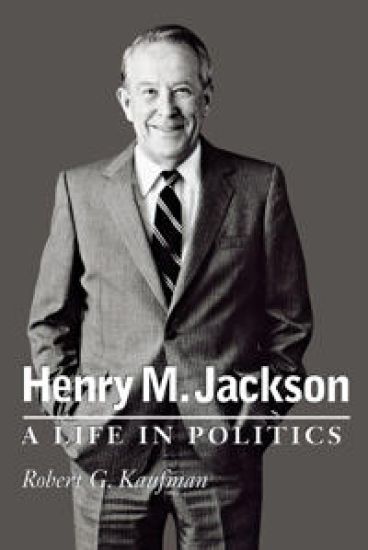
Henry M. Jackson ranks as one of the great legislators in American history. With a Congressional career spanning the tenure of nine Presidents, Jackson had an enormous impact on the most crucial foreign policy and defense issues of the Cold War era, as well as a marked impact on energy policy, civil rights, and other watershed issues in domestic politics.Jackson first arrived in Washington, D.C., in January 1941 as the Democratic representative of the Second District of Washington State, at the age of 28 the youngest member of Congress. “Scoop” Jackson won reelection time and again by wide margins, moving to the Senate in 1953 and serving there until his death in 1983. He became a powerful voice in U.S. foreign policy and a leading influence in major domestic legislation, especially concerning natural resources, energy, and the environment, working effectively with Senator Warren Magnuson to bring considerable federal investment to Washington State.A standard bearer for the New Deal-Fair Deal tradition of Roosevelt and Truman, Jackson advocated a strong role for the federal government in the economy, health care, and civil rights. He was a firm believer in public control of electric and nuclear power, and leveled stern criticism at the oil industry’s “obscene profits” during the energy crisis of the 1970s. He ran for the presidency twice, in 1972 and 1976, but was defeated for the nomination first by George McGovern and then by Jimmy Carter, marking the beginning of a split between dovish and hawkish liberal Democrats that would not be mended until the ascendance of Bill Clinton.Jackson’s vision concerning America’s Cold War objectives owed much to Harry Truman’s approach to world affairs but, ironically, found its best manifestation in the actions taken by the Republican administration of Ronald Reagan. An early and strong supporter of Israel and of Soviet dissidents, he strongly opposed the Nixon/Kissinger policy of detente as well as many of Carter’s methods of dealing with the Soviet Union.Robert Kaufman has immersed himself in the life and times of Jackson, poring over the more than 1,500 boxes of written materials and tapes that make up the Jackson Papers housed at the University of Washington, as well as the collections of every presidential library from Kennedy through Reagan. He interviewed many people who knew Jackson, both friends and rivals, and consulted other archival materials and published sources dealing with Jackson, relevant U.S. political history and commentary, arms negotiation documents, and congressional reports. He uses this wealth of material to present a thoughtful and encompassing picture of the ideas and policies that shaped America’s Cold War philosophy and actions.

Henry M. Jackson ranks as one of the great legislators in American history. With a Congressional career spanning the tenure of nine Presidents, Jackson had an enormous impact on the most crucial foreign policy and defense issues of the Cold War era, as well as a marked impact on energy policy, civil rights, and other watershed issues in domestic politics.Jackson first arrived in Washington, D.C., in January 1941 as the Democratic representative of the Second District of Washington State, at the age of 28 the youngest member of Congress. "Scoop" Jackson won reelection time and again by wide margins, moving to the Senate in 1953 and serving there until his death in 1983. He became a powerful voice in U.S. foreign policy and a leading influence in major domestic legislation, especially concerning natural resources, energy, and the environment, working effectively with Senator Warren Magnuson to bring considerable federal investment to Washington State.A standard bearer for the New Deal-Fair Deal tradition of Roosevelt and Truman, Jackson advocated a strong role for the federal government in the economy, health care, and civil rights. He was a firm believer in public control of electric and nuclear power, and leveled stern criticism at the oil industry's "obscene profits" during the energy crisis of the 1970s. He ran for the presidency twice, in 1972 and 1976, but was defeated for the nomination first by George McGovern and then by Jimmy Carter, marking the beginning of a split between dovish and hawkish liberal Democrats that would not be mended until the ascendance of Bill Clinton.Jackson's vision concerning America's Cold War objectives owed much to Harry Truman's approach to world affairs but, ironically, found its best manifestation in the actions taken by the Republican administration of Ronald Reagan. An early and strong supporter of Israel and of Soviet dissidents, he strongly opposed the Nixon/Kissinger policy of detente as well as many of Carter's methods of dealing with the Soviet Union.Robert Kaufman has immersed himself in the life and times of Jackson, poring over the more than 1,500 boxes of written materials and tapes that make up the Jackson Papers housed at the University of Washington, as well as the collections of every presidential library from Kennedy through Reagan. He interviewed many people who knew Jackson, both friends and rivals, and consulted other archival materials and published sources dealing with Jackson, relevant U.S. political history and commentary, arms negotiation documents, and congressional reports. He uses this wealth of material to present a thoughtful and encompassing picture of the ideas and policies that shaped America's Cold War philosophy and actions.
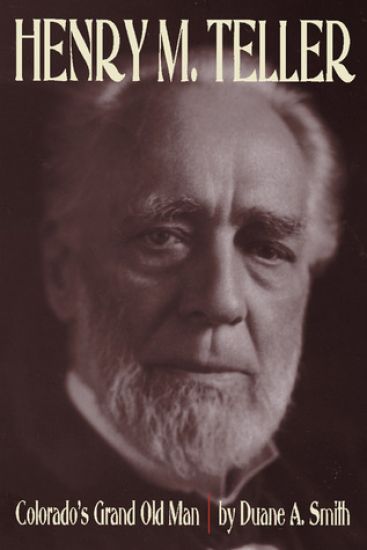
Serving longer in the US Senate than any other Coloradan, Henry M Teller was one of the Centennial State's greatest statesmen and political leaders. Teller was a prime example of what a politician should be in an era when elected officials left a great deal to be desired. As Colorado's representative, Teller stated his beliefs and stuck by them. Not all agreed with him, but all admired him for his honesty and integrity. His legal career in Colorado encompassed much of the early legislation in the territory, such as developing mining law and the organisation of the Colorado Central Railroad, while his Washington career touched on nearly every important western economic development issue that occurred in Colorado between 1876 and 1909. Teller declared to the US Congress that Colorado was a part of the nation, and that the West deserved a say in its decisions.



Title: Henry M. Stanley: his life, travels and explorations.Publisher: British Library, Historical Print EditionsThe British Library is the national library of the United Kingdom. It is one of the world's largest research libraries holding over 150 million items in all known languages and formats: books, journals, newspapers, sound recordings, patents, maps, stamps, prints and much more. Its collections include around 14 million books, along with substantial additional collections of manuscripts and historical items dating back as far as 300 BC.The HISTORY OF TRAVEL collection includes books from the British Library digitised by Microsoft. This collection contains personal narratives, travel guides and documentary accounts by Victorian travelers, male and female. Also included are pamphlets, travel guides, and personal narratives of trips to and around the Americas, the Indies, Europe, Africa and the Middle East. ++++The below data was compiled from various identification fields in the bibliographic record of this title. This data is provided as an additional tool in helping to insure edition identification: ++++ British Library Little, Henry William; 1890. xvi. 456 p.; 8 . 010096.f.13.
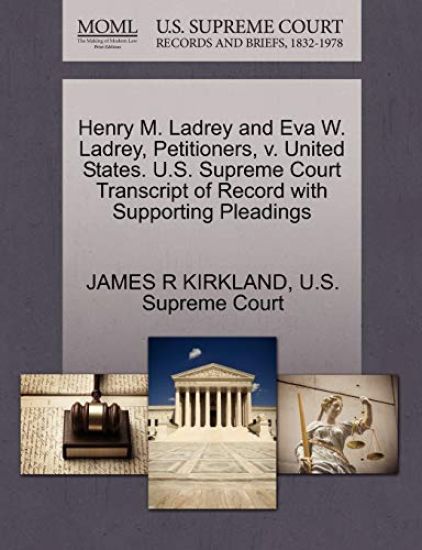
Henry M. Ladrey and Eva W. Ladrey, Petitioners, V. United States. U.S. Supreme Court Transcript of Record with Supporting Pleadings
James R Kirkland
Gale, U.S. Supreme Court Records
2011
pokkari


History of the Atlantic Telegraph. by Henry M. Field ...
Henry M (Henry Martyn) Field
University of Michigan Library
2006
pokkari

History of the Atlantic Telegraph. by Henry M. Field ...
Henry M (Henry Martyn) Field
University of Michigan Library
2006
pokkari