Kirjojen hintavertailu. Mukana 11 342 296 kirjaa ja 12 kauppaa.

Kirjahaku

Etsi kirjoja tekijän nimen, kirjan nimen tai ISBN:n perusteella.

1000 tulosta hakusanalla Henry Miller; Gregory Conko

The Frankenfood Myth

The Frankenfood Myth

Henry Miller; Gregory Conko

Praeger Publishers Inc
2004
sidottu
Few topics have inspired as much international furor and misinformation as the development and distribution of genetically altered foods. For thousands of years, farmers have bred crops for their resistance to disease, productivity, and nutritional value; and over the past century, scientists have used increasingly more sophisticated methods for modifying them at the genetic level. But only since the 1970s have advances in biotechnology (or gene-splicing to be more precise) upped the ante, with the promise of dramatically improved agricultural products—and public resistance far out of synch with the potential risks.In this provocative and meticulously researched book, Henry Miller and Gregory Conko trace the origins of gene-splicing, its applications, and the backlash from consumer groups and government agencies against so-called Frankenfoods—from America to Zimbabwe. They explain how a happy conspiracy of anti-technology activism, bureaucratic over-reach, and business lobbying has resulted in a regulatory framework in which there is an inverse relationship between the degree of product risk and degree of regulatory scrutiny. The net result, they argue, is a combination of public confusion, political manipulation, ill-conceived regulation (from such agencies as the USDA, EPA, and FDA), and ultimately, the obstruction of one of the safest and most promising technologies ever developed—with profoundly negative consequences for the environment and starving people around the world. The authors go on to suggest a way to emerge from this morass, proposing a variety of business and policy reforms that can unlock the potential of this cutting-edge science, while ensuring appropriate safeguards and moving environmentally friendly products into the hands of farmers and consumers. This book is guaranteed to fuel the ongoing debate over the future of biotech and its cultural, economic, and political implications.
Henry Miller

Henry Miller

Robert Ferguson

Faber Faber
2012
pokkari
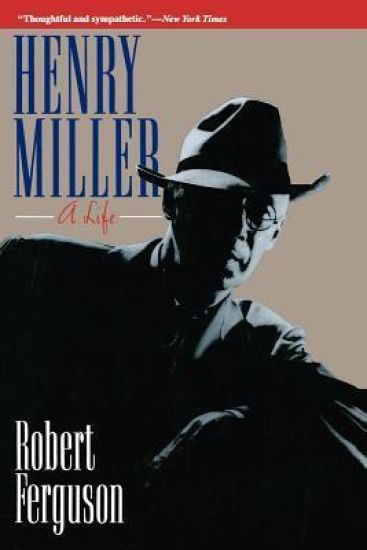
Bohemian, egoist and prophet of sensualism, Henry Miller remains to many writers and readers a literary lion. Born in Brooklyn in 1891, son of a tailor of German extraction, Miller would embrace a freewheeling existence that carried him through umpteen jobs and sexual encounters, providing rich source material for the novels he would write. Greenwich Village and Paris in the 1920s offered rich pickings, as did Miller's ten-year affair with Anais Nin. But he was 69 before Tropic of Cancer was legally published in the US and made him famous, almost 30 years from its composition and long after his peers had devoured it in contraband French editions.Robert Ferguson reveals Miller as a amalgam of vulnerability and insouciance, who endured thirty years of official opprobrium but won the respect of Orwell, T.S. Eliot and Lawrence Durrell, and readers by the thousand.'This impressive biography [is] good, dirty fun.' Observer'Engaging and perceptive.' Economist'Lively and entertaining.' J.G. Ballard
The Henry Miller Reader

The Henry Miller Reader

Henry Miller

New Directions Publishing Corporation
1969
nidottu
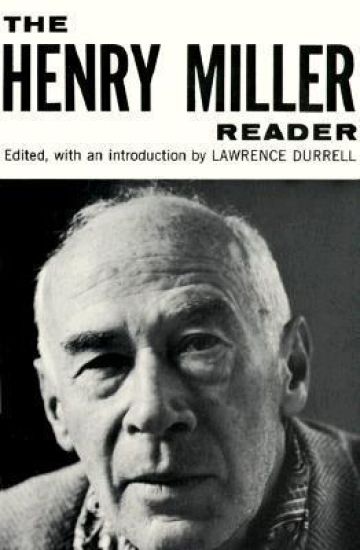
In 1958, when Henry Miller was elected to membership in the American Institute of Arts and Letters, the citation described him as: "The veteran author of many books whose originality and richness of technique are matched by the variety and daring of his subject matter. His boldness of approach and intense curiosity concerning man and nature are unequalled in the prose literature of our times." It is most fitting that this anthology of "the best" of Henry Miller should have been assembled by one of the first among Miller’s contemporaries to recognize his genius, the eminent British writer Lawrence Durrell. Drawing material from a dozen different books Durrell has traced the main line and principal themes of the "single, endless autobiography" which is Henry Miller’s life work. "I suspect," writes Durrell in his Introduction, "that Miller’s final place will be among those towering anomalies of authorship like Whitman or Blake who have left us, not simply works of art, but a corpus of ideas which motivate and influence a whole cultural pattern." Earlier, H. L. Mencken had said, "his is one of the most beautiful prose styles today," and the late Sir Herbert Read had written that "what makes Miller distinctive among modern writers is his ability to combine, without confusion, the aesthetic and prophetic functions." Included are stories, "portraits" of persons and places, philosophical essays, and aphorisms. For each selection Miller himself prepared a brief commentary which fits the piece into its place in his life story. This framework is supplemented by a chronology from Miller’s birth in 1891 up to the spring of 1959, a bibliography, and, as an appendix, an open letter to the Supreme Court of Norway written in protest of the ban on Sexus, a part of which appears in this volume.
Henry Miller on Writing

Henry Miller on Writing

Henry Miller

New Directions Publishing Corporation
1964
nidottu
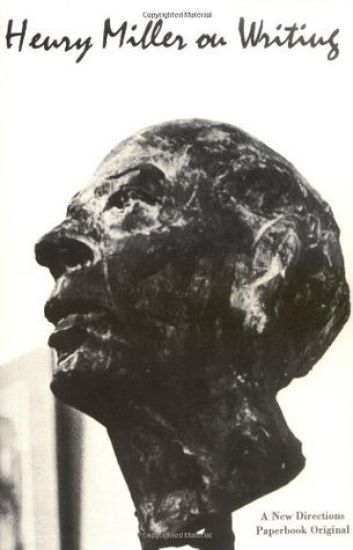
Some of the most rewarding pages in Henry Miller's books concern his self-education as a writer. He tells, as few great writers ever have, how he set his goals, how he discovered the excitement of using words, how the books he read influenced him, and how he learned to draw on his own experience.
Into the Heart of Life: Henry Miller at One Hundred

Into the Heart of Life: Henry Miller at One Hundred

Henry Miller

NEW DIRECTIONS PUBLISHING CORPORATION
1991
nidottu
The delights of his prose are many, not the least of which is Miller's comic irony, which as The London Times noted, can be "as stringent and urgent as Swift's." Frederick Turner has organized the whole to highlight the autobiographical chronology of Miller's life, and along the way places the author squarely where he belongs--in the great tradition of American radical individualism, as a child of Emerson, Thoreau, and Whitman. Miller, who joyously declared "I am interested--like God--only in the individual," would have been pleased. The keynotes here are self-liberation and the pleasures of Miller's "knotty, cross-grained" genius, as Turner describes it--"defying classification, ultimately unamenable to any vision, any program not his] own." Or, as Henry Miller himself put it: "I am the hero and the book is myself."
Henry Miller

Henry Miller

Louis A. Renza

Bloomsbury Academic USA
2016
nidottu
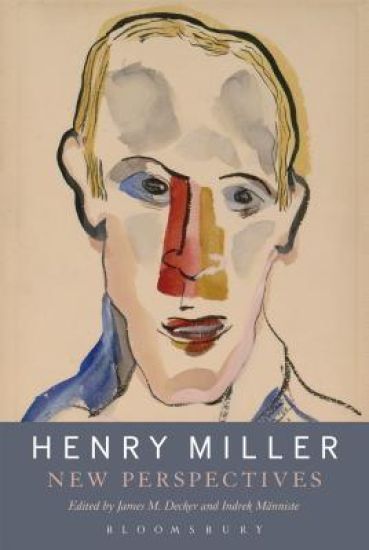
Scholarly responses to Henry Miller’s works have never been numerous and for many years Miller was not a fashionable writer for literary studies. In fact, there exist only three collections of essays concerning Henry Miller’s oeuvre. Since these books appeared, a new generation of international Miller scholars has emerged, one that is re-energizing critical readings of this important American Modernist. Henry Miller: New Perspectives presents new essays on carefully chosen themes within Miller and his intellectual heritage to form the most authoritative collection ever published on this author.
Henry Miller

Henry Miller

Louis A. Renza

Bloomsbury Academic USA
2015
sidottu
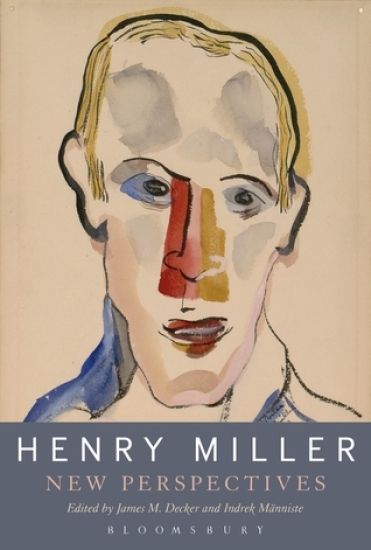
Scholarly responses to Henry Miller’s works have never been numerous and for many years Miller was not a fashionable writer for literary studies. In fact, there exist only three collections of essays concerning Henry Miller’s oeuvre. Since these books appeared, a new generation of international Miller scholars has emerged, one that is re-energizing critical readings of this important American Modernist. Henry Miller: New Perspectives presents new essays on carefully chosen themes within Miller and his intellectual heritage to form the most authoritative collection ever published on this author.
Henry Miller

Henry Miller

David Stephen Calonne

Reaktion Books
2014
nidottu
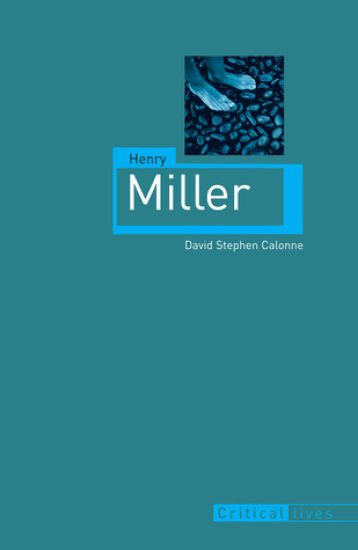
This new critical biography takes an innovative look at the life and work of the notorious American author (1891-1980). It examines Miller's intense immersion in esoteric and theosophical interests, charting the cultivation of these ideas from his boyhood and adolescence to late in his career and evaluating the way in which his writings and lifestyle were influenced by his spiritual quests. From astrology and Gnosticism to Nostradamus and the great thinkers of the East, Miller remained deeply engaged with a variety of distinct philosophies throughout his career. David Stephen Calonne explores the effects this had on the author's work in addition to Miller's own complex and volatile life, from his marriages and love affairs with Beatrice Wickens, June Mansfield and Anais Nin to his years in Paris, the journey to Greece which resulted in what Miller himself considered his greatest book - the travelogue The Colossus of Maroussi - and his subsequent residence in Big Sur and Pacific Palisades, California. Calonne discusses Miller's involvement in the arts, his love of painting and music, and his friendships with a number of classical musicians.Miller is revealed as a quirky, charismatic man of genius who continues to influence popular culture today, as, for example, in the work of award-winning graphic novelist Alison Bechdel. Highlighting many areas of Miller's life that have hitherto been neglected, Calonne's book takes a fascinating revisionary approach to the life and work of one of America's most controversial and iconic writers.
Henry Miller, Happy Rock

Henry Miller, Happy Rock

Brassai

University of Chicago Press
2002
sidottu
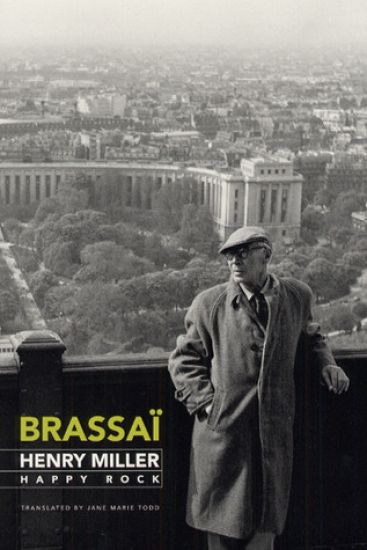
Henry Miller's advice to young artists is lovingly recalled by a dear friend in this powerful rembrance of a literary genius who has influenced so many writers, artists, and intellectuals. (Literature)
Henry Miller and James Laughlin

Henry Miller and James Laughlin

Laughlin James; Henry Miller; Wickes George

WW NORTON CO
1996
sidottu
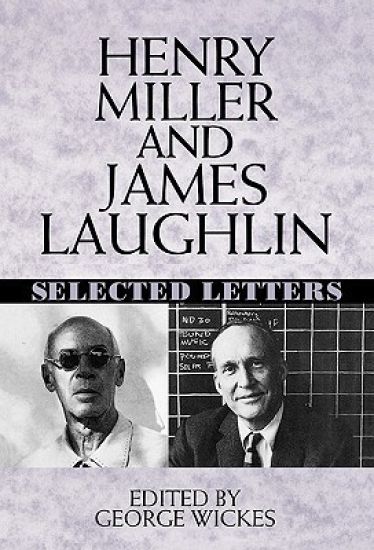
Ever mercurial in temperament, an idealist who struggled financially to meet his material needs, Henry Miller for decades relied on his publisher James Laughlin's generosity and expert editorial advice. Although Miller's letters decried the conservatism of American book publishing and were often suspicious in tone, Miller nevertheless admired and trusted Laughlin with intimate details about his work and his personal life. The resulting correspondence, spanning from 1935 to 1979, shortly before Miller's death on June 7, 1980, is a remarkable, uncensored record of the ideas and intentions behind many of the author's most provocative literary endeavors.
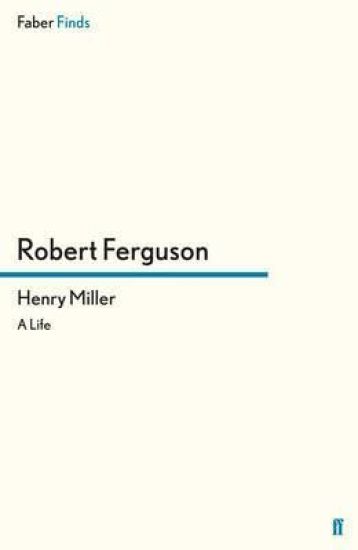
Henry Miller: A Life

Henry Miller: A Life

Robert Ferguson

W. W. Norton Company
1993
nidottu
The only biography Henry Miller ever wanted was the one he himself wrote in the brash, life-affirming fictions of The Tropic of Capricorn, The Tropic of Cancer, and The Rosy Crucifixion. But Robert Ferguson's new biography tells a different tale; for where the novels are sexually explicit and brutally frank--woundingly so to those close to Miller--they are also the fantasies of a man escaping from his past, and from himself.
Henry Miller and Narrative Form

Henry Miller and Narrative Form

James Decker

Routledge
2005
sidottu
In this bold study James M. Decker argues against the commonly held opinion that Henry Miller’s narratives suffer from ‘formlessness’. He instead positions Miller as a stylistic pioneer, whose place must be assured in the American literary canon.From Moloch to Nexus through such widely-read texts as Tropic of Cancer and Tropic of Capricorn, Decker examines what Miller calls his ‘spiral form’, a radically digressive style that shifts wildly between realism and the fantastic. Drawing on a variety of narratological and critical sources, as well as Miller’s own aesthetic theories, he highlights that this fragmented narrative style formed part of a sustained critique of modern spiritual decay. A deliberate move rather than a compositional weakness, then, Miller’s style finds a wide variety of antecedents in the work of such figures as Nietzsche, Rabelais, Joyce, Bergson and Whitman, and is viewed by Decker as an attempt to chart the journey of the self through the modern city.Henry Miller and Narrative Form affords readers new insights into some of the most challenging writings of the twentieth century and provides a template for understanding the significance of an extraordinary and inventive narrative form.
Henry Miller and Religion

Henry Miller and Religion

Thomas Nesbit

Routledge
2015
nidottu
This study argues that this previously banned author devoted his entire life to articulating a religion of self-liberation in his autobiographical books, examining his life and work within the context of fringe religious movements that were linked with the avant-garde in New York City and Paris at the first of the 20th century. This study shows how these transatlantic movements – including Gurdjieff, Rosicrucianism, and Theosophy – gave him the hermeneutical devices, not to mention the creative license, to interpret texts and symbols from mainline religions in an iconoclastic manner, ranging from obscure Taoist treatises to the mystical works of Jacob Boehme. The influence of numerous philosophical sources widely circulated in his most critical years – particularly Henri Bergson’s Two Sources of Morality and Religion (1932) – also helped him develop a religious view situated between transcendence and immanence, in which self-liberation through the channeled flow of élan vital is the chief objective. Miller’s knowledge of these intellectual currents, along with his involvement with sidestream religious groups, inspired him to meld his religious and literary aims into one perplexing project.
Henry Miller and Religion

Henry Miller and Religion

Thomas Nesbit

Routledge
2007
sidottu
This study argues that this previously banned author devoted his entire life to articulating a religion of self-liberation in his autobiographical books, examining his life and work within the context of fringe religious movements that were linked with the avant-garde in New York City and Paris at the first of the 20th century. This study shows how these transatlantic movements – including Gurdjieff, Rosicrucianism, and Theosophy – gave him the hermeneutical devices, not to mention the creative license, to interpret texts and symbols from mainline religions in an iconoclastic manner, ranging from obscure Taoist treatises to the mystical works of Jacob Boehme. The influence of numerous philosophical sources widely circulated in his most critical years – particularly Henri Bergson’s Two Sources of Morality and Religion (1932) – also helped him develop a religious view situated between transcendence and immanence, in which self-liberation through the channeled flow of élan vital is the chief objective. Miller’s knowledge of these intellectual currents, along with his involvement with sidestream religious groups, inspired him to meld his religious and literary aims into one perplexing project.
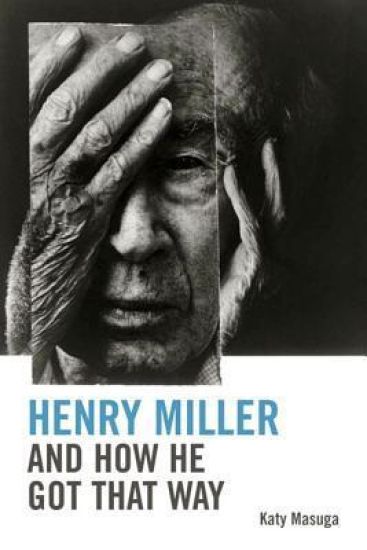
Henry Miller and How He Got That Way

Henry Miller and How He Got That Way

Katy Masuga

Edinburgh University Press
2011
sidottu
Identifying six significant writers - Whitman, Dostoevsky, Rimbaud, Lewis Carroll, Proust and D. H. Lawrence - Katy Masuga explores their influence on Miller's work as well as Miller's retroactive impact on their writing. She explores four forms of intertextuality in relation to each 'ancestral' author: direct allusions; unconscious style; reverse influence; and participation of the ancestral author as part of the story within the text. The study is informed by the theories of Bakhtin, Barthes and Kristeva on polyvocity and of Blanchot, Wittgenstein and Deleuze on language games and the indefatigability of writing. By presenting Miller in intertextual context, he emerges as a noteworthy modernist writer whose contributions to literature include the struggle to find a distinctive voice alongside a distinguished lineage of literary figures. Key Features * Major contribution to rehabilitating an important and often overlooked twentieth-century writer * Places Miller's work in thought-provoking intertextual relationships among a diverse range of writers * Provides an incisive critical approach to Miller's writing
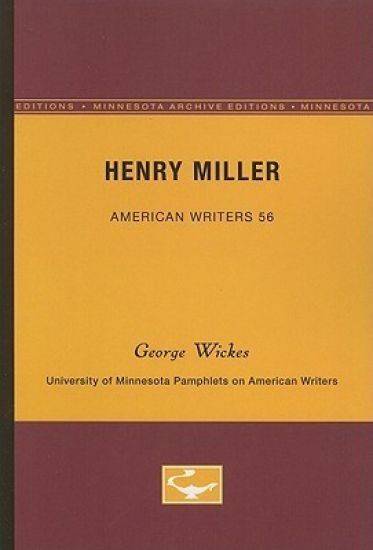
Henry Miller - American Writers 56

Henry Miller - American Writers 56

Wickes George

UNIVERSITY OF MINNESOTA PRESS
1966
nidottu
Henry Miller - American Writers 56 was first published in 1966. Minnesota Archive Editions uses digital technology to make long-unavailable books once again accessible, and are published unaltered from the original University of Minnesota Press editions.
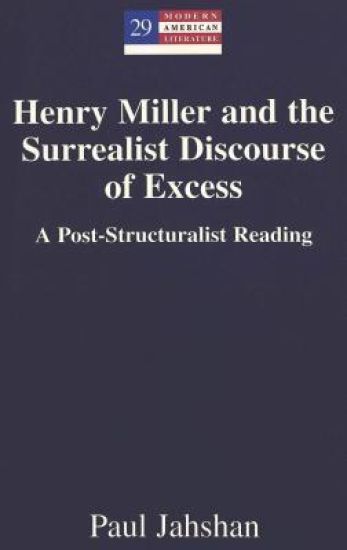
Henry Miller and the Surrealist Discourse of Excess

Henry Miller and the Surrealist Discourse of Excess

Paul Jahshan

Peter Lang Publishing Inc
2001
sidottu
Henry Miller is one of the least stylistically understood modern writers. Having been dubbed a Zen saint and ostracized as a happy pornographer, Miller is now relegated to the museum of literary oddities and his text treated with unjustified indifference. If the influence of French surrealism has been recognized by most critics and readers, it is not without a cost: Miller is safely classified as a surrealist writer and most, if not all, of his stylistic peculiarities are thus conveniently disposed of. What Miller's texts share with those of the French surrealists is an imagery of excess, indeed, but one which is economically and masterfully geared toward a reader whose response(s) help in constructing a peculiarly Millerian version of stylistic deviation. This study focuses on the way this Millerian text invites a fresh re-reading of one of America's leading modern authors.