Kirjojen hintavertailu. Mukana 11 244 527 kirjaa ja 12 kauppaa.

Kirjahaku

Etsi kirjoja tekijän nimen, kirjan nimen tai ISBN:n perusteella.

1000 tulosta hakusanalla Henry Spiller

Erotic Triangles

Erotic Triangles

Henry Spiller

University of Chicago Press
2010
sidottu
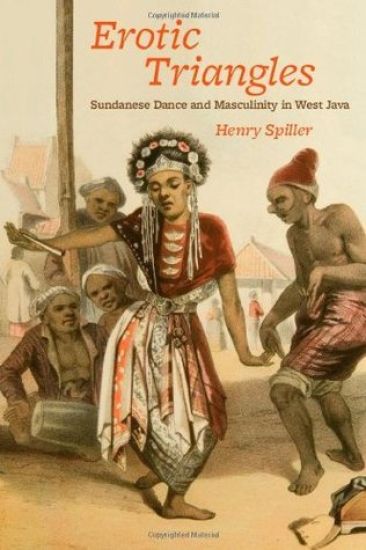
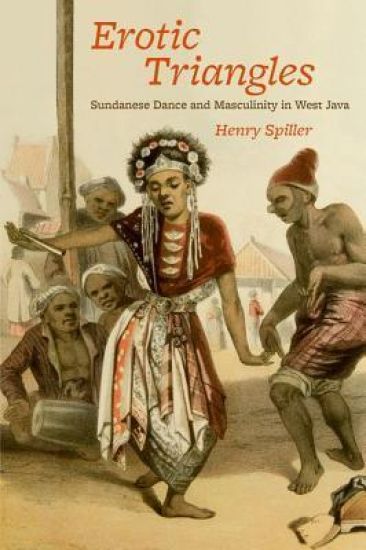
In West Java, Indonesia, all it takes is a woman's voice and a drumbeat to make a man get up and dance. Every day, men there - be they students, pedicab drivers, civil servants, or businessmen - breach ordinary standards of decorum and succumb to the rhythm at village ceremonies, weddings, political rallies, and nightclubs. The music the men dance to varies from traditional gong ensembles to the contemporary pop known as dangdut, but they consistently dance with great enthusiasm. In "Erotic Triangles", Henry Spiller draws on decades of ethnographic research to explore the reasons behind this phenomenon, arguing that Sundanese men use dance to explore and enact contradictions in their gender identities. Framing the three crucial elements of Sundanese dance - the female entertainer, the drumming, and men's sense of freedom - as a triangle, Spiller connects them to a range of other theoretical perspectives, drawing on thinkers from Eve Kosofsky Sedgwick, Levi-Strauss, and Freud to Euclid. By granting men permission to literally perform their masculinity, Spiller ultimately concludes, dance provides a crucial space for both reinforcing and resisting orthodox gender ideologies.
Erotic Triangles

Erotic Triangles

Henry Spiller

University of Chicago Press
2010
nidottu
In West Java, Indonesia, all it takes is a woman's voice and a drumbeat to make a man get up and dance. Every day, men there - be they students, pedicab drivers, civil servants, or businessmen - breach ordinary standards of decorum and succumb to the rhythm at village ceremonies, weddings, political rallies, and nightclubs. The music the men dance to varies from traditional gong ensembles to the contemporary pop known as dangdut, but they consistently dance with great enthusiasm. In "Erotic Triangles", Henry Spiller draws on decades of ethnographic research to explore the reasons behind this phenomenon, arguing that Sundanese men use dance to explore and enact contradictions in their gender identities. Framing the three crucial elements of Sundanese dance - the female entertainer, the drumming, and men's sense of freedom - as a triangle, Spiller connects them to a range of other theoretical perspectives, drawing on thinkers from Eve Kosofsky Sedgwick, Levi-Strauss, and Freud to Euclid. By granting men permission to literally perform their masculinity, Spiller ultimately concludes, dance provides a crucial space for both reinforcing and resisting orthodox gender ideologies.
Javaphilia

Javaphilia

Henry Spiller

University of Hawai'i Press
2015
sidottu
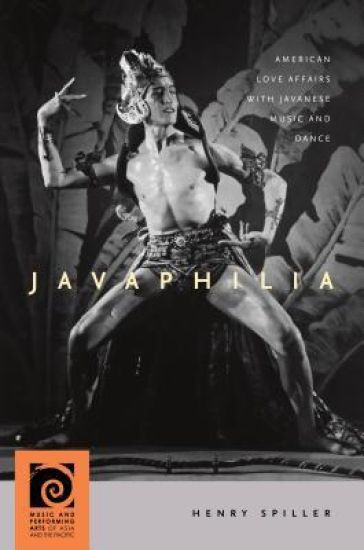
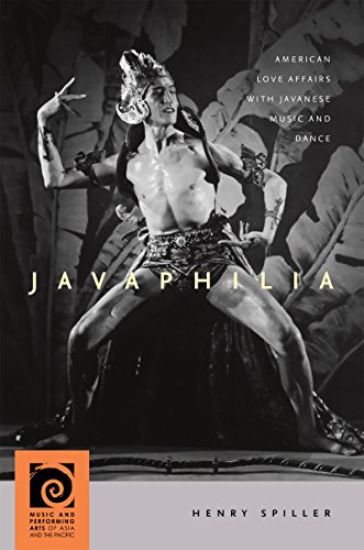
Fragrant tropical fl owers, opulent batik fabrics, magnificent bronze gamelanorchestras, and, of course, aromatic coff ee. Such are the exotic images of Java, Indonesia’s most densely populated island, that have hovered at the periphery of North American imaginations for generations. Through close readings of the careers of four “javaphiles” - individuals who embraced Javanese performing arts in their own quests for a sense of belonging - Javaphilia: American Love Affairs with Javanese Music and Dance explores a century of American representations of Javanese performing arts by North Americans. While other Asian cultures made direct impressions on Americans by virtue of fi rsthand contacts through immigration, trade, and war, the distance between Java and America, and the vagueness of Americans’ imagery, enabled a few disenfranchised musicians and dancers to fashion alternative identities through bold and idiosyncratic representations of Javanese music and dance.Javaphilia’s main subjects—Canadian-born singer Eva Gauthier (1885–1958), dancer/painter Hubert Stowitts (1892–1953), ethnomusicologist Mantle Hood (1918–2005), and composer Lou Harrison (1917–2003)—all felt marginalized by the mainstream of Western society: Gauthier by her lukewarm reception as an operatic mezzo-soprano in Europe, Stowitts by his homosexuality, Hood by conflicting interests in spirituality and scientifi c method, and Harrison by his predilection for prettiness in a musical milieu that valued more anxious expressions. All four parlayed their own direct experiences of Java into a defining essence for their own characters. By identifying aspects of Javanese music anddance that were compatible with their own tendencies, these individuals could literally perform unconventional—yet coherent—identities based in Javanese music and dance. Although they purported to represent Java to their fellow North Americans, they were in fact simply representing themselves.In addition to probing the fascinating details of these javaphiles’ lives, Javaphilia presents a novel analysis of North America’s first significant encounters with Javanese performing arts at the 1893 World’s Columbian Exposition in Chicago. An account of the First International Gamelan Festival, in Vancouver, BC (at Expo 86), almost a century later, bookends the epoch that is the focus of Javaphilia and sets the stage for a meditation on North Americans’ ongoing relationships with the music and dance of Java.
Javaphilia

Javaphilia

Henry Spiller

University of Hawai'i Press
2017
nidottu
Fragrant tropical flowers, opulent batik fabrics, magnificent bronze gamelan orchestras, and, of course, aromatic coffee. Such are the exotic images of Java, Indonesia's most densely populated island, that have hovered at the periphery of North American imaginations for generations. Through close readings of the careers of four ""javaphiles"" —individuals who embraced Javanese performing arts in their own quests for a sense of belonging— Javaphilia: American Love Affairs with Javanese Music and Dance explores a century of American representations of Javanese performing arts by North Americans. While other Asian cultures made direct impressions on Americans by virtue of firsthand contacts through immigration, trade, and war, the distance between Java and America, and the vagueness of Americans' imagery, enabled a few disenfranchised musicians and dancers to fashion alternative identities through bold and idiosyncratic representations of Javanese music and dance.Javaphilia's main subjects—Canadian-born singer Eva Gauthier (1885–1958), dancer/painter Hubert Stowitts (1892–1953), ethnomusicologist Mantle Hood (1918–2005), and composer Lou Harrison (1917–2003)—all felt marginalized by the mainstream of Western society: Gauthier by her lukewarm reception as an operatic mezzo-soprano in Europe, Stowitts by his homosexuality, Hood by conflicting interests in spirituality and scientific method, and Harrison by his predilection for prettiness in a musical milieu that valued more anxious expressions. All four parlayed their own direct experiences of Java into a defining essence for their own characters. By identifying aspects of Javanese music and dance that were compatible with their own tendencies, these individuals could literally perform unconventional—yet coherent—identities based in Javanese music and dance. Although they purported to represent Java to their fellow North Americans, they were in fact simply representing themselves.In addition to probing the fascinating details of these javaphiles' lives, Javaphilia presents a novel analysis of North America's first significant encounters with Javanese performing arts at the 1893 World's Columbian Exposition in Chicago. An account of the First International Gamelan Festival, in Vancouver, BC (at Expo 86), almost a century later, bookends the epoch that is the focus of Javaphilia and sets the stage for a meditation on North Americans' ongoing relationships with the music and dance of Java.
Archaic Instruments in Modern West Java: Bamboo Murmurs
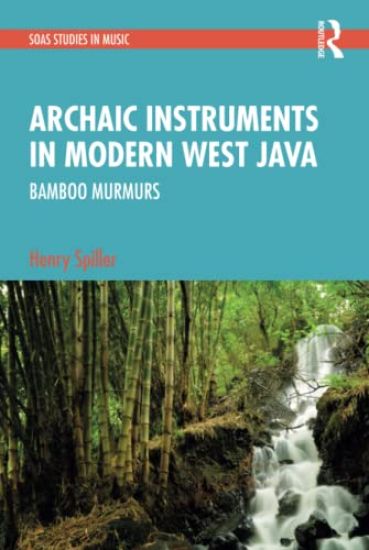
Archaic Instruments in Modern West Java: Bamboo Murmurs explores how current residents of Bandung, Indonesia, have (re-)adopted bamboo musical instruments to forge meaningful bridges between their past and present—between traditional and modern values. Although it focuses specifically on Bandung, the cosmopolitan capital city of West Java, the book grapples with ongoing issues of global significance, including musical environmentalism, heavy metal music, the effects of first-world hegemonies on developing countries, and cultural “authenticity.” Bamboo music's association with the Sundanese landscape, old agricultural ceremonies, and participatory music making, as well as its adaptability to modern society, make it a fertile site for an ecomusicological study.
Archaic Instruments in Modern West Java: Bamboo Murmurs
Archaic Instruments in Modern West Java: Bamboo Murmurs explores how current residents of Bandung, Indonesia, have (re-)adopted bamboo musical instruments to forge meaningful bridges between their past and present—between traditional and modern values. Although it focuses specifically on Bandung, the cosmopolitan capital city of West Java, the book grapples with ongoing issues of global significance, including musical environmentalism, heavy metal music, the effects of first-world hegemonies on developing countries, and cultural “authenticity.” Bamboo music's association with the Sundanese landscape, old agricultural ceremonies, and participatory music making, as well as its adaptability to modern society, make it a fertile site for an ecomusicological study.
Focus: Gamelan Music of Indonesia

Focus: Gamelan Music of Indonesia

Henry Spiller; Elizabeth A. Clendinning

TAYLOR FRANCIS LTD
2022
sidottu
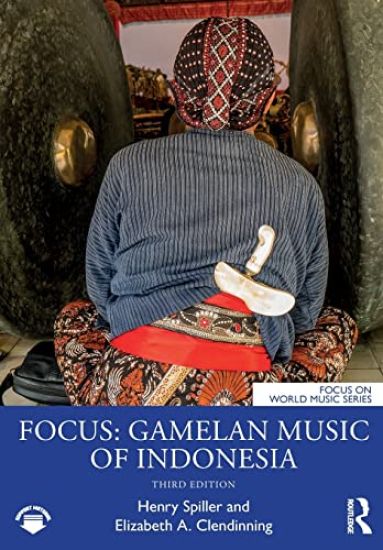
Focus: Gamelan Music of Indonesia, Third Edition, introduces the emblematic music of Southeast Asia’s largest country, as sound and as cultural phenomenon, highlighting the significant role gamelan music plays in the national culture while teaching of Indonesian values and modern-day life. Despite Indonesia’s great diversity—a melting pot of indigenous, Hindu, Buddhist, Islamic, Portuguese, Dutch, British, and modern global influences—a forged national identity is at its core. This volume explores that identity, understanding present-day Javanese, Balinese, Cirebonese, and Sundanese gamelan music through ethnic, social, cultural, and global perspectives. New to the third edition:Updated content throughout to reflect current Indonesian history and geography, as well as revivals of gamelan ensembles by the Cirebonese courtsModern examples of Indonesian musics, along with new uses of gamelan and other traditional musicsAn examination of school gamelan and ISBI as a center of innovationExpanded discussion on dangdut and its current status in Indonesia, along with Islam’s effect on dangdutListening examples now posted as online eResources
Focus: Gamelan Music of Indonesia

Focus: Gamelan Music of Indonesia

Henry Spiller; Elizabeth A. Clendinning

TAYLOR FRANCIS LTD
2022
nidottu
Focus: Gamelan Music of Indonesia, Third Edition, introduces the emblematic music of Southeast Asia’s largest country, as sound and as cultural phenomenon, highlighting the significant role gamelan music plays in the national culture while teaching of Indonesian values and modern-day life. Despite Indonesia’s great diversity—a melting pot of indigenous, Hindu, Buddhist, Islamic, Portuguese, Dutch, British, and modern global influences—a forged national identity is at its core. This volume explores that identity, understanding present-day Javanese, Balinese, Cirebonese, and Sundanese gamelan music through ethnic, social, cultural, and global perspectives. New to the third edition:Updated content throughout to reflect current Indonesian history and geography, as well as revivals of gamelan ensembles by the Cirebonese courtsModern examples of Indonesian musics, along with new uses of gamelan and other traditional musicsAn examination of school gamelan and ISBI as a center of innovationExpanded discussion on dangdut and its current status in Indonesia, along with Islam’s effect on dangdutListening examples now posted as online eResources
Evangeline

Evangeline

Henry Wadsworth Longfellow; Frank Siller

Antigonos Verlag
2024
nidottu
Unver nderter Nachdruck der Originalausgabe von 1879. Der Verlag Antigonos spezialisiert sich auf die Herausgabe von Nachdrucken historischer B cher. Wir achten darauf, dass diese Werke der ffentlichkeit in einem guten Zustand zug nglich gemacht werden, um ihr kulturelles Erbe zu bewahren.
Lettres inédites du roi Henri IV

Lettres inédites du roi Henri IV

Eugène Halphen; Nicolas Bruslart Sillery

Antigonos Verlag
2025
pokkari
R impression inchang e de l' dition originale de 1866. La maison d' dition Antigonos est sp cialis e dans la publication de r impressions de livres historiques. Nous veillons ce que ces ouvrages soient mis la disposition du public dans de bonnes conditions afin de pr server leur patrimoine culturel.
Henry

Henry

David Starkey

Harpercollins Publishers
2009
pokkari
Bestselling royal historian David Starkeyâ??s captivating biography is a radical re-evaluation of Henry VIII, the British monarchyâ??s most enduring icon.
Henry

Henry

Rwg

Rwg Publishing
2019
pokkari
College rule (also known as medium ruled paper) is the most common lined paper in use in the United States. It is generally used in middle school through to college and is also popular with adults. This is a good choice for teen or adult notebooks and composition books (known as exercise books outside the US).