This is a collection of commentaries and essays on the majority of the novels, and many of the short stories, of the Victorian and Edwardian novelist Sir Henry Rider Haggard. Haggard is best known as the author of "She" and "King Solomon's Mines". He was not only an accomplished story teller, but also a public servant of note and an agricultural reformer.
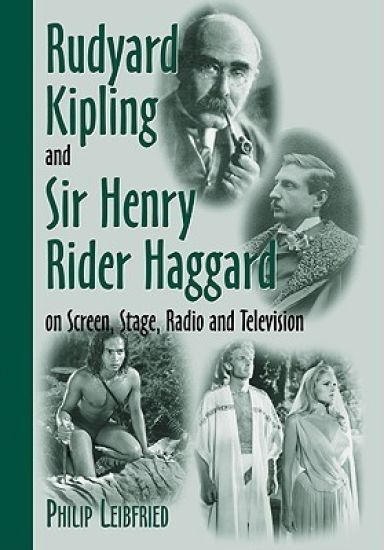
Rudyard Kipling and Sir Henry Rider Haggard--close friends--wrote about adventure and the exotic in very different ways. Examined together, their works illuminate each other. The writings of both have been adapted to the screen, stage, television, and radio numerous times (with varying degrees of fidelity) and this is a complete guide to those adaptations. In the main section of the book each original literary work is summarized, followed by a complete filmography and an analysis of each film based on that story or poem. Additional sections provide information on adaptations for radio, stage, and television. Photographs are included from films ranging from The Jungle Book (Kipling) to King Solomon's Mines (Haggard).
King Solomon's Mines (1885) is a popular novel by the Victorian adventure writer and fabulist, Sir H. Rider Haggard. It tells of a quest into an unexplored region of Africa by a group of adventurers led by Allan Quatermain in search of the missing brother of one of the party. It is significant as the first English fictional adventure novel set in Africa, and is considered the genesis of the Lost World literary genre.
The Ivory Child is a novel by H. Rider Haggard Sir The author writes, "It is enough to say that when Allan Quatermain, in the opening sentence of his narrative, speaks of this as 'one of the strangest of all the adventures which have befallen me in the course of a life, that so far can scarcely be called tame or humdrum, ' he is well within the mark."Henry Rider Haggard, KBE ( 22 June 1856 - 14 May 1925), known as H. Rider Haggard, was an English writer of adventure novels set in exotic locations, predominantly Africa, and a pioneer of the Lost World literary genre.He was also involved in agricultural reform throughout the British Empire. His stories, situated at the lighter end of Victorian literature, continue to be popular and influential.Henry Rider Haggard, generally known as H. Rider Haggard or Rider Haggard, was born at Bradenham, Norfolk, the eighth of ten children, to Sir William Meybohm Rider Haggard, a barrister, and Ella Doveton, an author and poet. His father was born in Saint Petersburg, Russia, to British parents. Haggard was initially sent to Garsington Rectory in Oxfordshire to study under Reverend H. J. Graham, but unlike his older brothers who graduated from various private schools, he attended Ipswich Grammar School.This was because his father, who perhaps regarded him as somebody who was not going to amount to much, could no longer afford to maintain his expensive private education. After failing his army entrance exam, he was sent to a private crammer in London to prepare for the entrance exam for the British Foreign Office, for which he never sat. During his two years in London he came into contact with people interested in the study of psychical phenomena.In 1875, Haggard's father sent him to what is now South Africa to take up an unpaid position as assistant to the secretary to Sir Henry Bulwer, Lieutenant-Governor of the Colony of Natal.In 1876 he was transferred to the staff of Sir Theophilus Shepstone, Special Commissioner for the Transvaal. It was in this role that Haggard was present in Pretoria in April 1877 for the official announcement of the British annexation of the Boer Republic of the Transvaal. Indeed, Haggard raised the Union flag and read out much of the proclamation following the loss of voice of the official originally entrusted with the duty. At about that time, Haggard fell in love with Mary Elizabeth "Lilly" Jackson, whom he intended to marry once he obtained paid employment in Africa. In 1878 he became Registrar of the High Court in the Transvaal, and wrote to his father informing him that he intended to return to England and marry her. His father forbade it until Haggard had made a career for himself, and by 1879 Jackson had married Frank Archer, a well-to-do banker. When Haggard eventually returned to England, he married a friend of his sister, Marianna Louisa Margitson (1859-1943) in 1880, and the couple travelled to Africa together. They had a son named Jack (who died of measles at age 10) and three daughters, Angela, Dorothy and Lilias. Lilias Rider Haggard became an author, edited The Rabbit Skin Cap and I Walked By Night, and wrote a biography of her father entitled..He died on 14 May 1925 at age 6
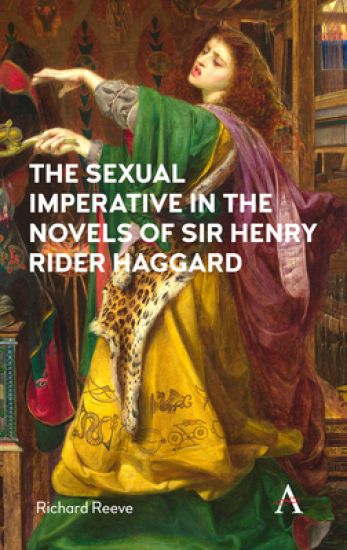
The Sexual Imperative in the Novels of Sir Henry Rider Haggard is a detailed study of the development of the theme of the sexual imperative primarily through the prism of ten of Haggard’s novels, a largely unexplored area of his fiction, and also through some of his contemporary romances. Filling an important gap in Haggard scholarship, which has traditionally tended to focus on his early romances and their political and psychological resonances, the book contributes to wider current debates on Victorian and turn-of-the-century literature. This volume explores the relationship between Haggard’s fictional rendition of the sexual imperative and aspects of his personal history, proposing that his preoccupation with the subject constitutes, in significant part, an outworking of deeply personal sexual and emotional issues. Relating Haggard’s fiction to the literary and social context in which he wrote, Richard Reeve contends that although Haggard’s treatment of this theme is not nearly as adventurous as that of some of his literary contemporaries, his repeated consideration of what he regarded as the most important human driver lends his fiction a strength and integrity which has not been fully recognized.
The Sexual Imperative in the Novels of Sir Henry Rider Haggard is a detailed study of the development of the theme of the sexual imperative primarily through the prism of ten of Haggard’s novels, a largely unexplored area of his fiction, and also through some of his contemporary romances. Filling an important gap in Haggard scholarship, which has traditionally tended to focus on his early romances and their political and psychological resonances, the book contributes to wider current debates on Victorian and turn-of-the-century literature. This volume explores the relationship between Haggard’s fictional rendition of the sexual imperative and aspects of his personal history, proposing that his preoccupation with the subject constitutes, in significant part, an outworking of deeply personal sexual and emotional issues. Relating Haggard’s fiction to the literary and social context in which he wrote, Richard Reeve contends that although Haggard’s treatment of this theme is not nearly as adventurous as that of some of his literary contemporaries, his repeated consideration of what he regarded as the most important human driver lends his fiction a strength and integrity which has not been fully recognized.
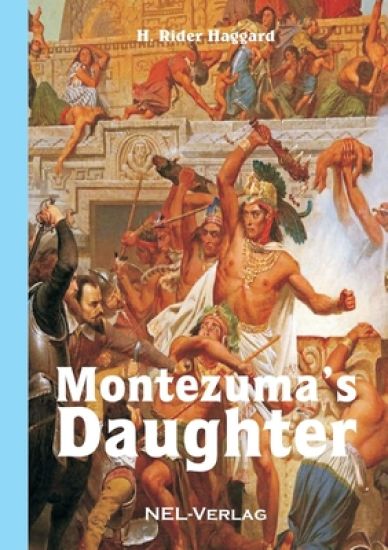
Now glory be to God who has given us the victory! It is true, the strength of Spain is shattered, her ships are sunk or fled, the sea has swallowed her soldiers and her sailors by hundreds and by thousands, and England breathes again. They came to conquer, to bring us to the torture and the stake - to do to us free Englishmen as Cortes did by the Indians of Anahuac. Our manhood to the slave bench, our daughters to dishonour, our souls to the loving-kindness of the priest, our wealth to the Emperor and the Pope! God has answered them with his winds, Drake has answered them with his guns. They are gone, and with them the glory of Spain.I, Thomas Wingfield, heard the news to-day on this very Thursday in the Bungay market-place, whither I went to gossip and to sell the apples which these dreadful gales have left me, as they hang upon my trees.