Kirjojen hintavertailu. Mukana 11 244 527 kirjaa ja 12 kauppaa.

Kirjahaku

Etsi kirjoja tekijän nimen, kirjan nimen tai ISBN:n perusteella.

1000 tulosta hakusanalla Herbert Silberer

The Rediscovered Psychoanalytic Work of Herbert Silberer
Charles Corliss presents, for the first time, the complete English translation of Herbert Silberer’s work on dreams, Der Traum: Einführung in die Traumpsychologie. Based on lectures delivered at the majestic Urania Star Observatory in Vienna in 1918, Der Traum was a wide-ranging, accessible introduction to the meaning of dreams, with examples from Silberer’s practice providing a rich source of illustration. One hundred years after the work was first published in Silberer’s native German, Corliss rescues his voice from obscurity and adds key supplementary information to place the work in context.The book begins with an introduction which surveys the range of Silberer’s contributions to psychoanalysis and sets out what is known of his life, before presenting the full original text. Presented in eight parts, each with preliminary remarks by Corliss, the book covers several topics including differing viewpoints on dreams, Silberer’s concept of the hypnagogic phenomenon, experimental dreams, and aspects of his own theory. Der Traum ends with a philosophical exploration of how dream content relates to the core moral fiber of our being, with the work as a whole reflecting Silberer’s optimistic, depth-oriented, and at times, almost mystical stance. Corliss concludes the book with a reflection on the rich, teleologically optimistic, and refreshingly panoramic value of Der Traum.This unique book will be of interest to analytical psychologists and Jungian psychotherapists in practice and training, as well as to academics and students of Jungian studies and the history of psychoanalysis, psychoanalytic studies, theology, philosophy, and the history of psychology.

The Rediscovered Psychoanalytic Work of Herbert Silberer
Charles Corliss presents, for the first time, the complete English translation of Herbert Silberer’s work on dreams, Der Traum: Einführung in die Traumpsychologie. Based on lectures delivered at the majestic Urania Star Observatory in Vienna in 1918, Der Traum was a wide-ranging, accessible introduction to the meaning of dreams, with examples from Silberer’s practice providing a rich source of illustration. One hundred years after the work was first published in Silberer’s native German, Corliss rescues his voice from obscurity and adds key supplementary information to place the work in context.The book begins with an introduction which surveys the range of Silberer’s contributions to psychoanalysis and sets out what is known of his life, before presenting the full original text. Presented in eight parts, each with preliminary remarks by Corliss, the book covers several topics including differing viewpoints on dreams, Silberer’s concept of the hypnagogic phenomenon, experimental dreams, and aspects of his own theory. Der Traum ends with a philosophical exploration of how dream content relates to the core moral fiber of our being, with the work as a whole reflecting Silberer’s optimistic, depth-oriented, and at times, almost mystical stance. Corliss concludes the book with a reflection on the rich, teleologically optimistic, and refreshingly panoramic value of Der Traum.This unique book will be of interest to analytical psychologists and Jungian psychotherapists in practice and training, as well as to academics and students of Jungian studies and the history of psychoanalysis, psychoanalytic studies, theology, philosophy, and the history of psychology.

A Primer of the Psychoanalytic Theory of Herbert Silberer
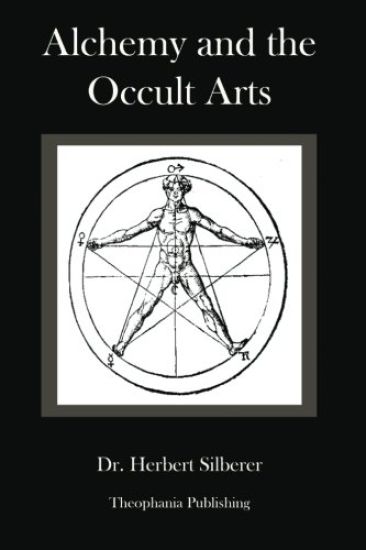
Herbert Silberer was an early member of Freud’s Vienna Group whose work was unique and prodigious; yet, owing to his expulsion from the psychoanalytic community, his contributions have been dismissed for close to a century. Based on original documents and primary sources, A Primer of the Psychoanalytic Theory of Herbert Silberer: What Silberer Said recovers the psychoanalytic theory of Herbert Silberer, revealing its connections to philosophy, theology and transcendence, and examining how his writings influenced C. G. Jung.The book begins with an overview of what is known of Silberer’s life, before commencing with an exploration of his writings. Charles Corliss covers topics including Silberer’s groundbreaking construct of the hypnagogic phenomenon, the process and meaning of symbolism and symbol formation, alchemy and its connection to his major work Problems of Mysticism and Symbolism, the use of symbols in Freemasonry and his influential understanding of dreams and their meaning. The book also explores Silberer’s complex relationship with the field of psychoanalysis, including his opposition to many psychoanalytic assumptions.Introducing and assessing the main contributions of Silberer’s work, this book will be of interest to analytical psychologists and Jungian psychotherapists in practice and training, as well as to academics and students of Jungian studies and the history of psychoanalysis, psychoanalytic studies, theology, philosophy and the history of psychology.
A Primer of the Psychoanalytic Theory of Herbert Silberer
Herbert Silberer was an early member of Freud’s Vienna Group whose work was unique and prodigious; yet, owing to his expulsion from the psychoanalytic community, his contributions have been dismissed for close to a century. Based on original documents and primary sources, A Primer of the Psychoanalytic Theory of Herbert Silberer: What Silberer Said recovers the psychoanalytic theory of Herbert Silberer, revealing its connections to philosophy, theology and transcendence, and examining how his writings influenced C. G. Jung.The book begins with an overview of what is known of Silberer’s life, before commencing with an exploration of his writings. Charles Corliss covers topics including Silberer’s groundbreaking construct of the hypnagogic phenomenon, the process and meaning of symbolism and symbol formation, alchemy and its connection to his major work Problems of Mysticism and Symbolism, the use of symbols in Freemasonry and his influential understanding of dreams and their meaning. The book also explores Silberer’s complex relationship with the field of psychoanalysis, including his opposition to many psychoanalytic assumptions.Introducing and assessing the main contributions of Silberer’s work, this book will be of interest to analytical psychologists and Jungian psychotherapists in practice and training, as well as to academics and students of Jungian studies and the history of psychoanalysis, psychoanalytic studies, theology, philosophy and the history of psychology.

Hidden Symbolism of Alchemy and the Occult Arts (Hardcover)
Herbert Silberer's examinations of alchemy and the occult, and his attempts to correlate the two crafts to the pursuit of psychoanalysis, is published here complete with the original illustrations. First published in 1917, this text represents the extensive investigations Herbert Silberer undertook in order to map occurrences in the occult with the ascendant psychoanalytic disciplines present in the Vienna School of which he was part. This text is marked by its depth of research, with sources such as Hermes Trismegistus, Flamel, Lacinius, Michael Meier, Paracelsus, and Boehme quoted and drawn upon in service of Silberer's thesis. The support of alchemy as a spiritual movement, on the same level as the yoga traditions of the Indian subcontinent, is also notable. Together with the three original illustrations, this edition also contains the extensive bibliography and notes of Silberer.
Hidden Symbolism of Alchemy and the Occult Arts
Herbert Silberer's examinations of alchemy and the occult, and his attempts to correlate the two crafts to the pursuit of psychoanalysis, is published here complete with the original illustrations. First published in 1917, this text represents the extensive investigations Herbert Silberer undertook in order to map occurrences in the occult with the ascendant psychoanalytic disciplines present in the Vienna School of which he was part. This text is marked by its depth of research, with sources such as Hermes Trismegistus, Flamel, Lacinius, Michael Meier, Paracelsus, and Boehme quoted and drawn upon in service of Silberer's thesis. The support of alchemy as a spiritual movement, on the same level as the yoga traditions of the Indian subcontinent, is also notable. Together with the three original illustrations, this edition also contains the extensive bibliography and notes of Silberer.
Hidden Symbolism of Alchemy and the Occult Arts

Hidden Symbolism of Alchemy and the Occult Arts

Herbert Silberer

Createspace Independent Publishing Platform
2018
nidottu
Prominent among the stones of a fireplace in my country den, one large rounded giant stands out. It was bourne by the glacial streams from a more northern resting place and is marked by a fossil of a mollusk that inhabited northern seas many million years ago. Yet in spite of the eons of time that have passed it can be compared with specimens of mollusks that live today. Down through the countless centuries the living stream has carved its structural habitations in much the same form. The science of Paleontology has collected this history and has attempted a reconstruction of life from its beginnings. The same principle here illustrated is true for the thought-life of mankind. The forms in which it has been preserved however are not so evident. The structuralizations are not so definite. If they were, evolution would not have been possible for the living stream of energy which is utilized by mind-stuff cannot be confined if it would advance to more complex integrations. Hence the products of mind in evolution are more plastic-more subtle and more changing. They are to be found in the myths and the folklore of ancient peoples, the poetry, dramatic art, and the language of later races. From age to age however the strivings continue the same. The living vessels must continue and the products express the most fundamental strivings, in varying though related forms.
Hidden Symbolism of Alchemy and the Occult Arts

Hidden Symbolism of Alchemy and the Occult Arts

Herbert Silberer

Pantianos Classics
1917
pokkari
Silberer's examinations of alchemy and the occult, and his attempts to correlate the two crafts to psychoanalysis, is published here complete with the original illustrations.First published in 1917 under the title Problems of Mysticism and its Symbolism, this text represents the extensive investigations Herbert Silberer undertook in order to map occurrences in the occult with the ascendant psychoanalytic disciplines present in the Vienna School of which he was part.This text is marked by its depth of research, with sources such as Hermes Trismegistus, Flamel, Lacinius, Michael Meier, Paracelsus, and Boehme quoted and drawn upon in service of Silberer's thesis. The support of alchemy as a spiritual movement, on the same level as the yoga traditions of the Indian subcontinent, is also notable.For his part, Silberer believed that Freudian psychoanalytic theory did not venture far enough to uncover the mental workings of a patient. He therefore delved into literature to investigate material to do with various alchemical and occultist phenomena, and how such may prove useful as a supplement to Freud's methodology.Together with the three original illustrations, this edition also contains the extensive bibliography and notes of Silberer. Unfortunately, the author died in 1922: at his time of death, Herbert Silberer had continued to unearth further knowledge of the arcane to support his beliefs, which would later prove influential on figures such as the psychiatrist Carl Jung.
Viertausend Kilometer im Ballon

Viertausend Kilometer im Ballon

Herbert Silberer

Springer-Verlag Berlin and Heidelberg GmbH Co. K
1903
nidottu
Der modeme sogenannte "Kulturmensch" hat sich an so manches gewOhnt Die einander Uberhastenden Fortschritte auf wissenschaftlichen und technischen Gebieten, die staunenswerten Erfindungen, die einander in einem fort jagen, sie haben ihn dahin gebracht, da6 er kaum von etwas mehr Uberrascht wird. Taucht eine neue, unerhOrte Erfindung auf, flugs wird sie den Zwecken der Menschen dienstbar gemacht und reiht sich so in das allge- meine Weltgetriebe ein, als ob sie schon immer da gewesen ware. Nach kurzer Zeit spricht man darilber kaum mehr als das, was sich eben durch den Gebrauch ergibt. Rasch ist das UnerhOrte, Absonderliche alltaglich, selbstverstandlich geworden. Es ware ein Wunder, wenn man die Luftschiffahrt nicht auch nachgerade als etwas "Selbstverstandliches" ansehen wiirde. AlIein so ganz gewOhnt hat man sich doch noch nicht daran. Die AlIgemeinheit fiihlt si ch noch nicht so recht heimisch auf diesem Gebiete. Es ist noch nichts "Abgetanes". Wohl deshalb, weil die Luftschiff- fahrt im Vergleich mit vielen anderen technischen Errungenschaften eine sehr sprOde Dame ist. Sie hat dem WilIen des Menschen noch nicht nachgegeben - sie stellt Probleme, die erst gel6st werden mUssen, bevor sie sich ergibt und eingefUgt werden kann in das gewOhnliche Treiben. Voriaufig nimmt sie noch eine Sonder- stellung ein. Schon in ihrem Wesen ist est etwas Besonderes. Es verhalt sich ungeHihr so: die modernen Verkehrsmittel, so groB- artig sie sich auch entwickeln, halten si ch in dem altgewohnten Rahmen, sie haften am Boden.