List of References on Embargoes is an unchanged, high-quality reprint of the original edition of 1899. Hansebooks is editor of the literature on different topic areas such as research and science, travel and expeditions, cooking and nutrition, medicine, and other genres. As a publisher we focus on the preservation of historical literature. Many works of historical writers and scientists are available today as antiques only. Hansebooks newly publishes these books and contributes to the preservation of literature which has become rare and historical knowledge for the future.
This book has been considered by academicians and scholars of great significance and value to literature. This forms a part of the knowledge base for future generations. So that the book is never forgotten we have represented this book in a print format as the same form as it was originally first published. Hence any marks or annotations seen are left intentionally to preserve its true nature.
Energetic, shrewd, and charming, Herman B Wells was the driving force behind the transformation of Indiana University—which became a model for American public higher education in the 20th century. A person of unusual sensitivity and a skilled and empathetic communicator, his character and vision shaped the structure, ethos, and spirit of the institution in countless ways. Wells articulated a persuasive vision of the place of the university in the modern world. Under his leadership, Indiana University would grow in size and stature, establishing strong connections to the state, the nation, and the world. His dedication to the arts, to academic freedom, and to international education remained hallmarks of his 63-year tenure as President and University Chancellor. Wells lavished particular attention on the flagship campus at Bloomington, expanding its footprint tenfold in size and maintaining its woodland landscape as new buildings and facilities were constructed. Gracefully aging in place, he became a beloved paterfamilias to the IU clan. Wells built an institution, and, in the process, became one himself.
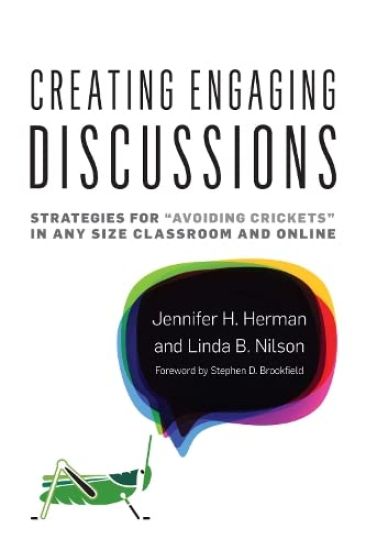
If you have ever been apprehensive about initiating classroom discussion, fearing silences, the domination of a couple of speakers, superficial contributions, or off-topic remarks, this book provides strategies for creating a positive learning experience.Jennifer H. Herman and Linda B. Nilson demonstrate how to create the conditions to facilitate deep and meaningful learning as well as to assess the effectiveness of discussions. They identify, analyze, and solve common problems in both classroom and online discussions and in both small and large classes. They take a direct, practice-oriented approach that--in acknowledging common challenges--provides principles, guidance on design, examples of activities and techniques, and eight detailed case studies. These cases demonstrate successful approaches that faculty across disciplines and from a variety of institutions have adopted in their face-to-face, blended, or online courses at the undergraduate or graduate level. The case authors begin by describing the original pedagogical challenge they faced and explain how they addressed it and assessed the results of their innovation. They also offer practical recommendations to readers who may want to try their strategies. Intended for faculty, this book will be equally valuable for educational developers who can use this resource in their programs and private consultations. At the graduate level, this book can serve as a text or workshop resource in college teaching courses and teaching assistant development programs. The final chapter provides a set of resources and activities – including discussion questions on the case studies, writing prompts, and jigsaw formats – that are equally appropriate for individual study or for use in workshop environments. You’ll never again have to suffer such a profound silence that, as described by a contributor to the book, she could hear the crickets chirping outside.
If you have ever been apprehensive about initiating classroom discussion, fearing silences, the domination of a couple of speakers, superficial contributions, or off-topic remarks, this book provides strategies for creating a positive learning experience.Jennifer H. Herman and Linda B. Nilson demonstrate how to create the conditions to facilitate deep and meaningful learning as well as to assess the effectiveness of discussions. They identify, analyze, and solve common problems in both classroom and online discussions and in both small and large classes. They take a direct, practice-oriented approach that--in acknowledging common challenges--provides principles, guidance on design, examples of activities and techniques, and eight detailed case studies. These cases demonstrate successful approaches that faculty across disciplines and from a variety of institutions have adopted in their face-to-face, blended, or online courses at the undergraduate or graduate level. The case authors begin by describing the original pedagogical challenge they faced and explain how they addressed it and assessed the results of their innovation. They also offer practical recommendations to readers who may want to try their strategies. Intended for faculty, this book will be equally valuable for educational developers who can use this resource in their programs and private consultations. At the graduate level, this book can serve as a text or workshop resource in college teaching courses and teaching assistant development programs. The final chapter provides a set of resources and activities – including discussion questions on the case studies, writing prompts, and jigsaw formats – that are equally appropriate for individual study or for use in workshop environments. You’ll never again have to suffer such a profound silence that, as described by a contributor to the book, she could hear the crickets chirping outside.
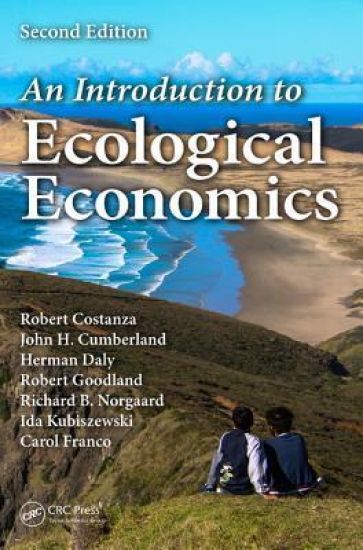
From Empty-World Economics to Full-World EconomicsEcological economics explores new ways of thinking about how we manage our lives and our planet to achieve a sustainable, equitable, and prosperous future. Ecological economics extends and integrates the study and management of both "nature's household" and "humankind's household"—An Introduction to Ecological Economics, Second Edition, the first update and expansion of this classic text in 15 years, describes new approaches to achieving a sustainable and desirable human presence on Earth. Written by the top experts in the field, it addresses the necessity for an innovative approach to integrated environmental, social, and economic analysis and management, and describes policies aimed at achieving our shared goals. Demands a Departure from Business as UsualThe book begins with a description of prevailing interdependent environmental, economic, and social issues and their underlying causes, and offers guidance on designing policies and instruments capable of adequately coping with these problems. It documents the historical development of the disciplines of economics and ecology, and explores how they have evolved so differently from a shared conceptual base. Structured into four sections, it also presents various ideas and models in their proper chronological context, details the fundamental principles of ecological economics, and outlines prospects for the future. What’s New in the Second Edition:Includes several new pieces and updates in each sectionAdds a series of independently authored "boxes" to expand and update information in the current textAddresses the historical development of economics and ecology and the recent progress in integrating the study of humans and the rest of natureCovers the basic concepts and applications of ecological economics in language accessible to a broad audience An Introduction to Ecological Economics, Second Edition can be used in an introductory undergraduate or graduate course; requires no prior knowledge of mathematics, economics, or ecology; provides a unified understanding of natural and human-dominated ecosystems; and reintegrates the market economy within society and the rest of nature.
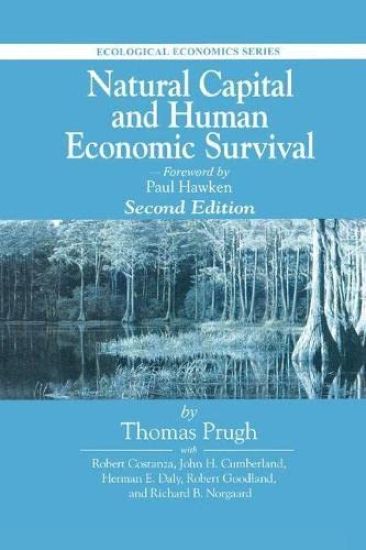
Most people love nature and consider themselves environmentalists, but nature isn't just pretty and lovable, it is indispensable to our survival and economic activity. That is the most compelling reason for environmental protection. The conventional economic wisdom views land (natural capital) as a small part of the economy, along with capital, labor, technology and so on. The authors argue that this is backwards: that the economy nests within the environment (land) and not the other way around. The authors give a brief history of the origins of conventional economic wisdom and critique it from a the standpoint of ecological economics. They explain what natural capital -our life support system - is and does, and describe the severe strains that have been put on it. They conclude with some policy options, such as green taxes and suggestions for personal action that would conserve natural capital and thus make conserve resources for present and future generations. Natural Capital and Human Economic Survival is written for environmentalists, environmental studies majors and anyone concerned about the flaws of mainstream economics - how it has led us into unsustainable ways of living - and who would like to learn about alternatives that are more sustainable.
Most people love nature and consider themselves environmentalists, but nature isn't just pretty and lovable, it is indispensable to our survival and economic activity. That is the most compelling reason for environmental protection. The conventional economic wisdom views land (natural capital) as a small part of the economy, along with capital, labor, technology and so on. The authors argue that this is backwards: that the economy nests within the environment (land) and not the other way around. The authors give a brief history of the origins of conventional economic wisdom and critique it from a the standpoint of ecological economics. They explain what natural capital -our life support system - is and does, and describe the severe strains that have been put on it. They conclude with some policy options, such as green taxes and suggestions for personal action that would conserve natural capital and thus make conserve resources for present and future generations. Natural Capital and Human Economic Survival is written for environmentalists, environmental studies majors and anyone concerned about the flaws of mainstream economics - how it has led us into unsustainable ways of living - and who would like to learn about alternatives that are more sustainable.
This work has been selected by scholars as being culturally important and is part of the knowledge base of civilization as we know it.This work is in the public domain in the United States of America, and possibly other nations. Within the United States, you may freely copy and distribute this work, as no entity (individual or corporate) has a copyright on the body of the work.Scholars believe, and we concur, that this work is important enough to be preserved, reproduced, and made generally available to the public. To ensure a quality reading experience, this work has been proofread and republished using a format that seamlessly blends the original graphical elements with text in an easy-to-read typeface.We appreciate your support of the preservation process, and thank you for being an important part of keeping this knowledge alive and relevant.