Kirjojen hintavertailu. Mukana 11 699 587 kirjaa ja 12 kauppaa.

Kirjahaku

Etsi kirjoja tekijän nimen, kirjan nimen tai ISBN:n perusteella.

1000 tulosta hakusanalla Hermann Hesse; Thomas Mann

Mythisches Erzählen bei Hermann Hesse und Thomas Mann
Die Studie befasst sich mit der Verhältnisbestimmung von Mythos und Rationalität im modernen philosophischen und literarischen Diskurs. Ausgehend von einer Analyse der philosophischen Auseinandersetzung mit dem Phänomen Mythos um den Beginn des 20. Jahrhunderts werden zunächst Hermann Hesses und Thomas Manns jeweiliger Mythosbegriff untersucht, um im Anschluss daran ihr literarisches Mythenerzählen anhand von ausgewählten Romanen und Erzählungen zu beleuchten.Obwohl Hesse und Mann beide in der Verbindung von Mythos und Psychologie einen humanistischen Zugang zum Mythos sehen, unterscheiden sich ihre Strategien zum Umgang mit mythischem Erzählen grundlegend. Während man Hermann Hesses Ansatz mit dem Schlagwort ‚Mythos als Psychologie‘ umschreiben könnte, hat Thomas Mann für sein eigenes Mythenerzählen selbst die Formel ‚Mythos plus Psychologie‘ geprägt. So sieht Mann in Mythen einen Ausdruck des Irrationalen, der durch psychologische Durchleuchtung und Ironisierung erst „ins Humane umfunktioniert“ werden muss, um sich der politischen Instrumentalisierung entziehen zu können. Hermann Hesse dagegen schließt sich an C. G. Jung an und interpretiert Mythen als Verbildlichung psychischer Prozesse und transrationaler Erfahrung,en die bereits inhärent humanistisch sind.
Mythisches Erzählen bei Hermann Hesse und Thomas Mann
Die Studie befasst sich mit der Verhältnisbestimmung von Mythos und Rationalität im modernen philosophischen und literarischen Diskurs. Ausgehend von einer Analyse der philosophischen Auseinandersetzung mit dem Phänomen Mythos um den Beginn des 20. Jahrhunderts werden zunächst Hermann Hesses und Thomas Manns jeweiliger Mythosbegriff untersucht, um im Anschluss daran ihr literarisches Mythenerzählen anhand von ausgewählten Romanen und Erzählungen zu beleuchten.Obwohl Hesse und Mann beide in der Verbindung von Mythos und Psychologie einen humanistischen Zugang zum Mythos sehen, unterscheiden sich ihre Strategien zum Umgang mit mythischem Erzählen grundlegend. Während man Hermann Hesses Ansatz mit dem Schlagwort ‚Mythos als Psychologie‘ umschreiben könnte, hat Thomas Mann für sein eigenes Mythenerzählen selbst die Formel ‚Mythos plus Psychologie‘ geprägt. So sieht Mann in Mythen einen Ausdruck des Irrationalen, der durch psychologische Durchleuchtung und Ironisierung erst „ins Humane umfunktioniert“ werden muss, um sich der politischen Instrumentalisierung entziehen zu können. Hermann Hesse dagegen schließt sich an C. G. Jung an und interpretiert Mythen als Verbildlichung psychischer Prozesse und transrationaler Erfahrung,en die bereits inhärent humanistisch sind.
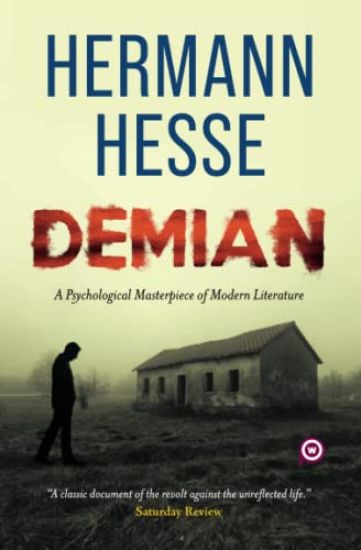
Demian

Demian

Hermann Hesse; Thomas Mann

Adhyayan Books
2022
nidottu
First published in 1919, it is a brilliant journey of the psyche written by one of Germany's most influential writers and thinkers-Herman Hesse. A young man awakens to selfhood and to a world of possibilities beyond the conventions of his upbringing. Emil Sinclair is a quiet boy drawn into a forbidden yet seductive realm of petty crime and defiance. His guide is his precocious, mysterious classmate Max Demian, who provokes in Emil a search for self-discovery and spiritual fulfilment.
Demian

Demian

Hermann Hesse; Thomas Mann

General Press India
2022
nidottu
First published in 1919 under the pseudonym Emil Sinclair, 'Demian' is an assessment of the attainment of self-awareness by a troubled adolescent. The novel is a popular work of Hermann Hesse, one of Germany's most influential writers and thinkers, and poet who was awarded the Nobel Prize for Literature in 1946. The central theme of Hesse's work is the individual's struggles to break out of the established manners of civilization so as to find an essential spirit and identity. 'Demian' tracks the life of a perturbed German youth as he navigates the duality of a world filled with illusions and spiritual truth. When Sinclair first meets childhood classmate Max Demian, his eyes are opened to the contradictions of his existing Christian knowledge. As Sinclair resumes to question his worldview, the two friends are separated and reunited throughout their lives, with each meeting being a vantage for Sinclair to reconcile a world at conflict. He ascends on his path to freedom and a realization of self as the friendship grows in surprising and explosive ways. It is a classic coming-of-age tale that continues to inspire generations of readers in its quest for good and evil, morality, and self-discovery. Given its subject matter, the story is a popular choice for young readers, one that explores the interesting psychological underpinnings of growing up.
Thomas Mann und Herrmann Hesse

Thomas Mann und Herrmann Hesse

Stefan Noack

Grin Publishing
2009
pokkari
Studienarbeit aus dem Jahr 2008 im Fachbereich Germanistik - Neuere Deutsche Literatur, Note: 1.3, Freie Universit t Berlin, Veranstaltung: Facheinf hrung, Thema: Exilpublizistik, Sprache: Deutsch, Abstract: Herrmann Hesse z hlt seit Jahren zu meinen Lieblingsautoren. Ich habe die meisten seiner B cher gelesen. Manche ein zweites oder sogar ein drittes Mal. Dabei faszinierte mich immer wieder das Gleichgewicht zwischen Stil und Inhalt, die verk nstelte Tiefgr ndigkeit, die nicht nur Teil seiner Werke, sondern auch immer ein Teil seiner selbst, war. Als ich durch mein Studium auf Thomas Mann aufmerksam wurde und 'Die Buddenbrocks' las, war ich zu Anfang entt uscht. Die Dinge, die mich an Hesse faszinierten, schien Mann von vornherein abzulehnen. Seine Art zu schreiben und zu Leben war vollkommen anders. Um Thomas Mann und sein Werk besser verstehen und sch tzen zu k nnen, suchte ich nach einer Biographie. Ich bl tterte die Seiten eines Buchversandes durch und war erstaunt, als ich auf den 'Briefwechsel zwischen Herrmann Hesse und Thomas Mann' stie . Dass sich die beiden h chstwahrscheinlich gekannt hatten, war mir klar gewesen. Doch standen sie sich vielleicht sogar nahe? Ich recherchierte, analysierte und versuchte mir ein Bild vom Verh ltnis der Schriftsteller zu machen. Dieses Bild war am Ende so umfassend, dass ich es im Folgenden nicht g nzlich wiedergeben kann. Sowohl auf Grund von thematischen Zw ngen, als auch wegen meiner Passion f r die Geschichte des Dritten Reichs, habe ich mich dazu entschlossen einen besonderen Blick auf die 'Exiljahre' 1933 bis 1945 zu werfen.
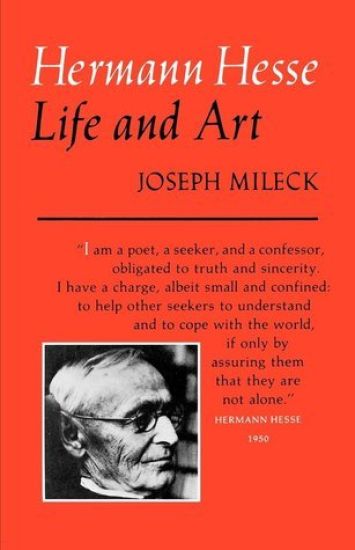
Hermann Hesse

Hermann Hesse

Joseph Mileck

University of California Press
1981
pokkari
"A critical biography far surpassing the previous ones." (Times Higher Education Supplement). "There are to be sure many writers whose biographies are more interesting than their fiction but Hesse is not one of these. He led a long and sometimes eventful life with marital tensions, travel controversy, crises, even some thoughts of suicide and a period of time as a student in a home for retarded and unmanageable. In addition, there was his search which led him through the culture and arts of West and East, his views of politics and society, of psychology and philosophy. The difference between Hesse and other writers is that virtually every shred and patch of his life was brought into his writing, his fiction particularly. 'He had to write about himself and there is little of what he wrote that is not confessional in form and therapeutic in function.' Autobiography is the very matter of his work. Mileck's contribution is to extend and fill out the evidence of his life, his psychoanalysis, his drive toward self-realization which was the very engine of his being, to show the raw material and thus to invite readers to see how it was transmuted, transfigured, fantasized, poeticized, symbolized." (Los Angeles Times). "Hesse was a prolific author for some 60 years, and his mind drew everything it contemplated into his private wars between flesh and spirit. objectivity and subjectivity, the longings for society and isolation. No one is better qualified to disentangle this abundance than Mileck, compiler of the huge two-volume Hesse bibliography. For completeness, then, no biography in English compares." (Kirkus Reviews). "Mileck provides his own translations of the German quotations from Hesse's works, and the eight interpretive chapters are thoroughly indexed, making the work readily accessible to researchers and students concerned with specific Hesse questions and themes. This very readable book also contains a number of exceptional photographs, which, together with Mileck's fervor and understanding of the author, help create a living image of Hesse the man and the artist." (Choice). "Professor Mileck ...brings to his task an acquaintanceship with Hesse's published and unpublished writings ...which borders on omniscience. This is a literary biography which concentrates on the works and looks at the life of its subject briefly and always in relation to its involvement with the works ...[This] is true scholarship, which does not make the book less readable and accessible to the general public...a solid and valuable book which should make it easier ...to bring [Hesse] back into the orbit of serious appreciation in the English-speaking world." (Books and Bookmen).
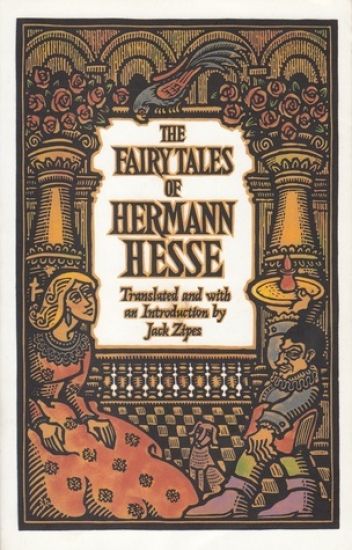
The Fairy Tales of Hermann Hesse

The Fairy Tales of Hermann Hesse

Hermann Hesse

Bantam Doubleday Dell Publishing Group
1995
pokkari
A collection of twenty-two fairy tales by the Nobel Prize-winning novelist, most translated into English for the first time, show the influence of German Romanticism, psychoanalysis, and Eastern religion on his development as an author. Simultaneous.
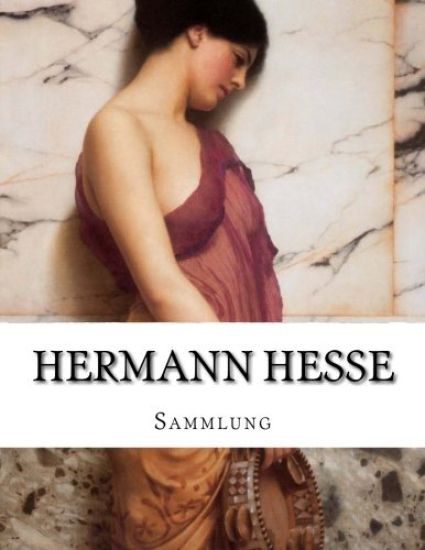
Hermann Hesse, Sammlung

Hermann Hesse, Sammlung

Hermann Hesse

Createspace Independent Publishing Platform
2016
nidottu
Hermann Karl Hesse (1877- 1962) war ein deutschsprachiger Schriftsteller, Dichter und Maler. Weltweite Bekanntheit erlangte er mit Prosawerken wie Siddhartha oder Der Steppenwolf und mit seinen Gedichten (z. B. "Stufen"). 1946 wurde ihm der Nobelpreis f r Literatur und 1954 der Orden Pour le m rite f r Wissenschaft und K nste verliehen. In diesem buch: Siddhartha, 1922 Demian, Die Geschichte von Emil Sinclairs Jugend, 1919 Eine Stunde hinter Mitternacht, 1889 Knulp: Drei Geschichten aus dem Leben Knulps, 1915 Klingsors letzter Sommer, 1920 Boccaccio, 1904 Hermann Lauscher, 1908 Peter Camenzind, 1904 Unterm Rad, 1906 Diesseits, 1907 Romantische Lieder, 1899
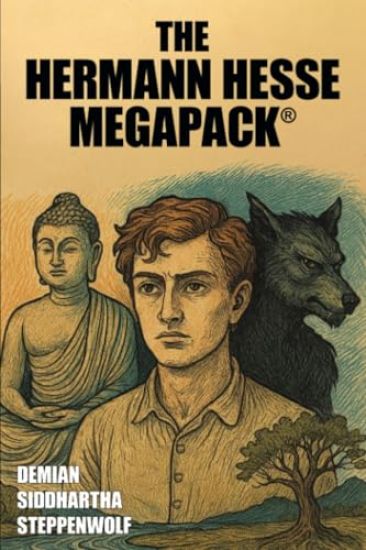
The Hermann Hesse MEGAPACK(R)

The Hermann Hesse MEGAPACK(R)

Hermann Hesse

WILDSIDE PRESS
2025
nidottu
This MEGAPACK(R) assembles three of Hesse's most important works: Demian (1919), Siddhartha (1922), and Steppenwolf (1927). Each novel reflects Hesse's fascination with the inner struggles of individuals searching for meaning in a confusing and changing world.Demian, published shortly after World War I, explores youthful rebellion, self-realization, and the mysterious nature of human consciousness. It captured the uncertainty and restlessness of post-war Europe.Siddhartha delves into spiritual enlightenment, following the journey of a young man in ancient India seeking personal fulfillment beyond religious dogma. Its simple yet profound message resonated strongly with readers, becoming especially popular among young people in the 1960s.Steppenwolf explores existential themes of isolation, the duality of human nature, and the quest for personal identity, becoming a defining text for many readers in the mid-20th century, particularly those grappling with similar personal and cultural anxieties.If you enjoyed this volume of Wildside Press's best-selling MEGAPACK(R) ebook series, search your favorite online bookseller for "Wildside Press MEGAPACK" to see more than 400 other volumes in the series, covering fiction in all genres, from literary to westerns, from romance to science fiction and fantasy. All are bargain priced and sure to please Accept to substitutes for these great collections.
Mit Hermann Hesse reisen

Mit Hermann Hesse reisen

Hermann Hesse

Insel Verlag GmbH
1990
pokkari
Inspiriert durch ihre eigene Familie erzählt Britta Marx in ihrem Erstlingswerk aus dem Alltag einer Frau, die dem herkömmlichen Berufsleben "Adieu" gesagt hat, um Mann, Kinder und Streichelzoo zu versorgen und dies zu ihrer Lebensstellung zu machen..... Ihre Hauptperson Mariella Kaiser schreibt sich den Frust und die Lust von der Seele, hauptberuflich Haushälterin, Seelsorgerin, Funktaxilenkerin, Sanitäterin, Tierdresseurin, Richterin, Fuhrparkwärterin und Gärtnerin zu sein. Nebenher versieht sie auch einige Ehrenämter und wartet auf den großen Durchbruch - aber welchen?