

Kirjahaku
Etsi kirjoja tekijän nimen, kirjan nimen tai ISBN:n perusteella.
1000 tulosta hakusanalla Hermann Von Gilm

Jakob Stainer, Der Geigenmacher Von Absam, in Geschichte Und Dichtung
Hermann Von Gilm
Wentworth Press
2018
sidottu

Jakob Stainer, Der Geigenmacher Von Absam, in Geschichte Und Dichtung
Hermann Von Gilm
Hutson Street Press
2025
sidottu

Jakob Stainer, Der Geigenmacher Von Absam, in Geschichte Und Dichtung
Hermann Von Gilm
Hutson Street Press
2025
pokkari

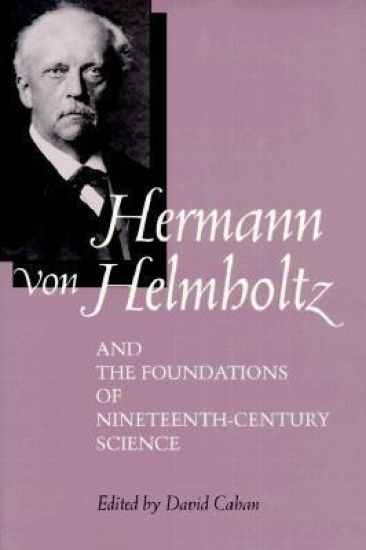
Hermann von Helmholtz and the Foundations of Nineteenth-Century Science
University of California Press
1994
sidottu
Hermann von Helmholtz (1821-1894) was a polymath of dazzling intellectual range and energy. Renowned for his co-discovery of the second law of thermodynamics and his invention of the ophthalmoscope, Helmholtz also made many other contributions to physiology, physical theory, philosophy of science and mathematics, and aesthetic thought. During the late nineteenth century, Helmholtz was revered as a scientist-sage - much like Albert Einstein in this century. David Cahan has assembled an outstanding group of European and North American historians of science and philosophy for this intellectual biography of Helmholtz, the first ever to critically assess both his published and unpublished writings. It represents a significant contribution not only to Helmholtz scholarship but also to the history of nineteenth-century science and philosophy in general.

Hermann Von Helmholtz
Leo Koenigsberger; Frances A. (TRN) Welby; Lord Kelvin
Kessinger Pub
2008
pokkari


Lehnin, H: Hermann Von Lehnin, Der Durch Die Alte Und Neuest
Hermann Von Lehnin
KESSINGER PUBLISHING, LLC
2010
nidottu
Hermann von Helmholtz’s Mechanism: The Loss of Certainty
Gregor Schiemann
Springer-Verlag New York Inc.
2008
sidottu
Focusing on Hermann von Helmholtz, this study addresses one of the nineteenth century’s most important German natural scientists. Among his most well-known contributions to science are the invention of the ophthalmoscope and grou- breaking work towards formulating the law of the conservation of energy. The volume of his work, reaching from medicine to physiology to physics and epis- mology, his impact on the development of the sciences far beyond German borders, and the contribution he made to the organization and popularization of research, all established Helmholtz’s prominence both in the academic world and in public cultural life. Helmholtz was also one of the last representatives of a conception of nature that strove to reduce all phenomena to matter in motion. In reaction to the increasingly insurmountable difficulties that program had in fulfilling its own standards for s- entific explanation, he developed elements of a modern understanding of science that have remained of fundamental importance to this day.
This volume is a reminder that slavery was truly an awful institution that, even today in its legacy, continues to plague the United States. During its height, abolitionists "waved the bloody flag" and vigorously protested to end it, though it took plunging the nation into the Civil War to result in it being finally eradicated. One person that took a powerful stand against "the peculiar institution" was John Brown. Though Brown had led forces against pro-slavery opponents earlier, it wasn't until 1859 when he grabbed the national stage by leading forces, particularly enslaved African Americans, at Harper's Ferry. Unfortunately, the movement was ultimately unsuccessful, and Brown was captured and tried for treason against the Commonwealth of Virginia (before Harper's Ferry was part of West Virginia). He was hanged despite vocal opposition from his supporters. Yet, his work as an abolitionist created extraordinary ripples of tension that significantly fueled the drift towards war. Dr. Hermann Von Holst (1841 - 1904) was a historian who was born in Germany, emigrated to the United States after the end of the Civil War to teach, and then moved back and forth between the US and Germany on various teaching appointments. He wrote and taught extensively, focusing on American history. Von Holst was particularly moved by John Brown, and astounded by the Confederate apologists who housed a complete lack of understanding and empathy for the horrors of slavery. Charles Town, West Virginia, where Brown met his end, is now the home of the American Public University System, which has done much to restore the town and maintains a museum in its library. This edition is dedicated to Dr. Wallace Boston, enthusiastic friend of Charles Town history and longtime President of APUS.
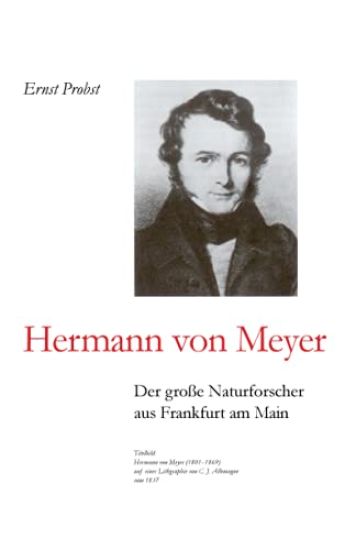
Der bedeutendste Wirbeltierpal ontologe des 19. Jahrhunderts in Deutschland und vielleicht sogar in Europa steht im Mittelpunkt des Taschenbuches "Hermann von Meyer: Der gro e Naturforscher aus Frankfurt am Main". Verfasser ist der Wiesbadener Wissenschaftsautor Ernst Probst, der ab 1977 viele Zeitungsartikel und ab 1986 zahlreiche B cher ber pal ontologische Themen schrieb. Viele Sammler und Museen vertrauten Meyer ihre Fossilien zur Untersuchung an. Von 1828 bis 1869 verfasste der Freizeitforscher mehr als 300 Fachpublikationen. Zu den vielen Urzeittieren, denen er einen wissenschaftlichen Namen gab, geh rten die Dinosaurier Plateosaurus und Stenopelix, etliche Flugsaurier, der Urvogel Archaeopteryx, Wildpferde und ein R sseltier. Nach ihm haben andere Experten insgesamt 37 fossile Pflanzen und Tiere benannt. Trotz einer Gehbehinderung besuchte Meyer auf eigene Kosten etliche Fundstellen, Sammlungen und Tagungen. F r seine wissenschaftliche Arbeit nahm er kein Geld an. Seinen Lebensunterhalt verdiente er als "Bundescassen-Controlleur" und "Bundescassier" des "Deutschen Bundestages" in Frankfurt am Main.



Unver nderter Nachdruck der Originalausgabe von 1877.

Unver nderter Nachdruck der Originalausgabe von 1877.

Der bedeutendste Wirbeltierpal ontologe des 19. Jahrhunderts in Deutschland und vielleicht sogar in Europa steht im Mittelpunkt des Taschenbuches "Hermann von Meyer: Der gro e Naturforscher aus Frankfurt am Main". Verfasser ist der Wiesbadener Wissenschaftsautor Ernst Probst, der ab 1977 viele Zeitungsartikel und ab 1986 zahlreiche B cher ber pal ontologische Themen schrieb. Viele Sammler und Museen vertrauten Meyer ihre Fossilien zur Untersuchung an. Von 1828 bis 1869 verfasste der Freizeitforscher mehr als 300 Fachpublikationen. Zu den vielen Urzeittieren, denen er einen wissenschaftlichen Namen gab, geh rten die Dinosaurier Plateosaurus und Stenopelix, etliche Flugsaurier, der Urvogel Archaeopteryx, Urpferde und ein R sseltier. Nach ihm haben andere Experten insgesamt 37 fossile Pflanzen und Tiere benannt. Trotz einer Gehbehinderung besuchte Meyer auf eigene Kosten etliche Fundstellen, Sammlungen und Tagungen. F r seine wissenschaftliche Arbeit nahm er kein Geld an. Seinen Lebensunterhalt verdiente er als "Bundescassen-Controlleur" und "Bundescassier" des "Deutschen Bundestages" in Frankfurt am Main.

Hermann von Helmholtz
Springer Fachmedien Wiesbaden
2022
nidottu
Wie schnell fühlt und denkt der Mensch? Wie lange dauert es, bis eine Schmerzempfindung vom Fuß bis ins Gehirn transportiert wird? Wie viel Zeit braucht ein visueller Eindruck, um bewusst wahrgenommen zu werden? Hermann von Helmholtz hat die Beantwortung dieser Fragen im 19. Jahrhundert auf eine neue Grundlage gestellt. 1850 gelang es Helmholtz zum ersten Mal, die Fortpflanzungsgeschwindigkeit der Nervenreizung zu messen. Damit legte er die Basis für die experimentelle Erforschung des Zeiterlebens, wie sie bis heute in Neuropsychologie, Hirnforschung und Kognitionsforschung betrieben wird. Zugleich schuf Helmholtz ein neues Bild des Denkens, das die relative Langsamkeit kognitiver Prozesse zeigt und Aufmerksamkeit auf die Unterbrechungen, Intervalle und Zwischenzeiten im menschlichen Fühlen und Denken lenkt. Dieser Band erlaubt es, Helmholtz bei der Laborarbeit über die Schulter zu gucken. Er enthält sämtliche Beiträge, die Helmholtz derPsychophysiologie der Zeit gewidmet hat.


Ansprachen und Reden zu Ehren von Hermann von Helmholz
Hermann Von Helmholtz
Hansebooks
2016
pokkari