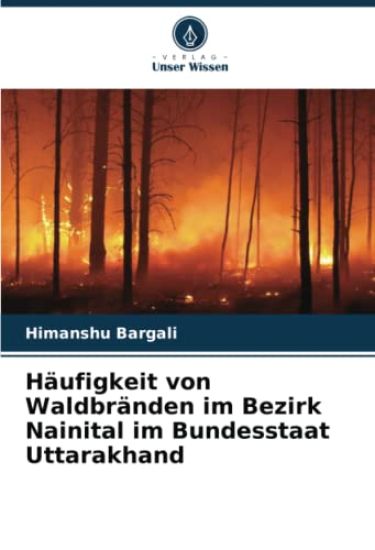
Ein Wald ist eine gro e Fl che, die mit B umen bedeckt ist, aber ein Wald besteht nicht nur aus B umen, sondern auch aus kleineren Pflanzen, wie Moosen, Str uchern und Wildblumen. W lder sind die Heimat von mehr als zwei Dritteln aller bekannten Landarten. Feuer wird von den Hindus als Gott (Agni) betrachtet und bei der Durchf hrung der meisten Rituale verwendet. Nach dem Glauben der Hindus und wie auch von Lord Krishna in der Bhagwat Gita gepredigt, ist das Feuer einer der f nf heiligsten Bestandteile des Lebens. Feuer ist eines der wichtigsten Objekte, da es vielseitig einsetzbar ist und die Gesellschaft f r ihr Wohlergehen darauf angewiesen ist. Keine Gesellschaft kann sich ihre Existenz ohne die Existenz des Feuers berhaupt vorstellen. Auch wenn das Feuer ein Segen f r die Menschheit ist, so verursacht es doch auch immense Verluste in Form von Leben, Eigentum und anderen wertvollen Ressourcen. Vor allem Waldbr nde haben der Natur und der Gesellschaft geschadet. Br nde verursachen das Problem der Umweltverschmutzung. Etwa 90 % der Waldbr nde in Indien werden von Menschen verursacht.
Une for t est une grande tendue de terre couverte d'arbres, mais une for t est bien plus que de simples arbres, elle comprend galement des plantes plus petites, comme des mousses, des arbustes et des fleurs sauvages. Les for ts abritent plus des deux tiers de toutes les esp ces terrestres connues. Le feu est consid r comme un dieu (l'Agni) par les hindous et est utilis dans l'ex cution de la plupart des rituels. Comme le croient les hindous et comme le pr che galement le Seigneur Krishna dans la Bhagwat Gita, le feu est l'un des cinq constituants les plus sacr s de la vie. Le feu est l'un des objets les plus importants pour ses multiples usages et dont la soci t d pend pour son bien- tre. Aucune soci t ne peut m me imaginer son existence sans l'existence du feu. Si le feu a t une b n diction pour l'humanit , il provoque galement d'immenses pertes en termes de vies humaines, de biens et d'autres ressources pr cieuses. Les feux de for t, en particulier, ont t n fastes pour la nature comme pour la soci t . Les incendies cr ent le probl me de la pollution. Environ 90 % des feux de for t en Inde sont provoqu s par l'homme.
La foresta una vasta area di terreno ricoperta di alberi, ma una foresta molto pi di semplici alberi, comprende anche piante pi piccole, come muschi, arbusti e fiori selvatici. Le foreste ospitano pi di due terzi di tutte le specie terrestri conosciute. Il fuoco considerato un dio (Agni) dagli ind ed utilizzato nella maggior parte dei rituali. Come credono gli ind e come predica anche il Signore Krishna nella Bhagwat Gita, il fuoco uno dei cinque costituenti pi sacri della vita. Il fuoco uno degli oggetti pi importanti per i suoi molteplici usi e da cui la societ dipende per il suo benessere. Nessuna societ pu immaginare la propria esistenza senza l'esistenza del fuoco. Se da un lato il fuoco pu essere una manna per l'umanit , dall'altro causa immense perdite sotto forma di vite umane, propriet e altre risorse preziose. Gli incendi boschivi, in particolare, sono stati dannosi per la natura e per la societ . Gli incendi creano il problema dell'inquinamento. Circa il 90% degli incendi boschivi in India sono causati dall'uomo.
Publisher's Note: Products purchased from Third Party sellers are not guaranteed by the publisher for quality, authenticity, or access to any online entitlements included with the product.Secure today's mobile devices and applicationsImplement a systematic approach to security in your mobile application development with help from this practical guide. Featuring case studies, code examples, and best practices, Mobile Application Security details how to protect against vulnerabilities in the latest smartphone and PDA platforms. Maximize isolation, lockdown internal and removable storage, work with sandboxing and signing, and encrypt sensitive user information. Safeguards against viruses, worms, malware, and buffer overflow exploits are also covered in this comprehensive resource.Design highly isolated, secure, and authenticated mobile applicationsUse the Google Android emulator, debugger, and third-party security toolsConfigure Apple iPhone APIs to prevent overflow and SQL injection attacksEmploy private and public key cryptography on Windows Mobile devicesEnforce fine-grained security policies using the BlackBerry Enterprise ServerPlug holes in Java Mobile Edition, SymbianOS, and WebOS applicationsTest for XSS, CSRF, HTTP redirects, and phishing attacks on WAP/Mobile HTML applicationsIdentify and eliminate threats from Bluetooth, SMS, and GPS servicesHimanshu Dwivedi is a co-founder of iSEC Partners (www.isecpartners.com), an information security firm specializing in application security. Chris Clark is a principal security consultant with iSEC Partners. David Thiel is a principal security consultant with iSEC Partners.
Characterization and Treatment of Textile Wastewater covers fundamental knowledge of characterization of textile wastewater and adsorbents; naturally prepared adsorption and coagulation process for removal of COD, BOD and color. This book is intended for everyone actively working on the environment, especially for researchers in textile wastewater, as the problem of disposal of textile influent is worldwide. Potential technical environmental persons like engineers, project managers, consultants, and water analysts will find this book immediately useful for fine-tuning performance and reliability. This book will also be of interest to individuals who want effective knowledge of wastewater, adsorption and coagulation.
Institutions are norms that undergird organizations and are reflected in laws and practices. Over time, institutions take root and persist as they are path dependent and thus change resistant. Therefore, it is puzzling when institutions change. One such puzzle has been the enactment of the Right to Information (RTI) Act in India in 2005, which brought about institutional change by transforming the ‘information regime’. Why did the government upend the norm of secrecy, which had historically been entrenched within the Indian State? This book uses archival material, internal government documents, and interviews to understand the why and how of institutional change. It demonstrates that the institutional change resulted from ‘ideas’ emerging gradually and incrementally, leading to a ‘tipping point’. About the IDSA Series: This series interrogates the interplay between globalization, the state, and social forces in the making and un-making of institutions in South Asia. Why do institutions persist and change? Do we need to transcend materialism and dwell in ideas and culture as well to understand why institutions perform and fail? The first book in the Institutions and Development in South Asia series, this volume studies the historical institutionalism in the information regime in India by presenting an alternative narrative about the evolution of the RTI Act.
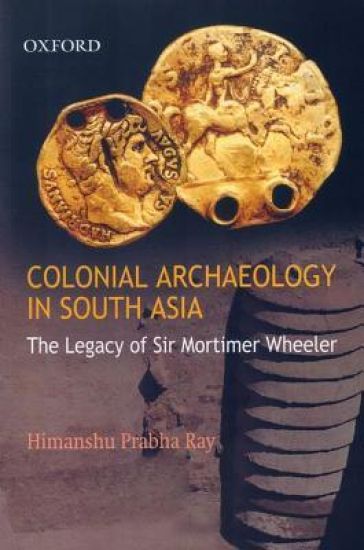
This volume discusses larger issues relating to the practice and institutionalization of the discipline of archaeology under British rule and assesses the extent to which colonial intervention shaped the nascent discipline of archaeology in South Asia, especially with reference to the study of the past.
Development economics is about understanding how and why lives change. How Lives Change: Palanpur, India, and Development Economics studies a single village in a crucially important country to illuminate the drivers of these changes, why some people do better or worse than others, and what influences mobility and inequality. How Lives Change draws on seven decades of detailed data collection by a team of dedicated development economists to describe the evolution of Palanpur's economy, its society, and its politics. The emerging story of integration of the village economy with the outside world is placed against the backdrop of a rapidly transforming India and, in turn, helps to understand the transformation. It puts development economics into practice to assess its performance and potential in a unique and powerful way to show how the development of one village since India's independence can be set in the context of the entire country's story. How Lives Change sets out the role of, and scope for, public policy in shaping the lives of individuals. It describes how changes in Palanpur's economy since the late 1950s were initially driven by the advance of agriculture through land reforms, the expansion of irrigation and the introduction of "green revolution" technologies. Since the mid-1980s, newly emerging off-farm opportunities in nearby towns and outside agriculture became the key driver of growth and change, profoundly influencing poverty, income mobility, and inequality in Palanpur. Village institutions are shown to have evolved in subtle but clear ways over time, both shaping and being shaped by economic change. Individual entrepreneurship and initiative is found to play a critical role in driving and responding to the forces of change; and yet, against a backdrop of real economic growth and structural transformation, this book shows that human development outcomes have shown only weak progress and remain stubbornly resistant to change.
This book traces the archaeological trajectory of the expansion of Buddhism and its regional variations in South Asia. Focusing on the multireligious context of the subcontinent in the first millennium BCE, the volume breaks from conventional studies that pose Buddhism as a counter to the Vedic tradition to understanding the religion more integrally in terms of dhamma (teachings of the Buddha), dana (practice of cultivating generosity) and the engagement with the written word. The work underlines that relic and image worship were important features in the spread of Buddhism in the region and were instrumental in bringing the monastics and the laity together. Further, the author examines the significance of the histories of monastic complexes (viharas, stupas, caityas) and also religious travel and pilgrimage that provided connections across the subcontinent and the seas. An interdisciplinary study, this book will be of great interest to students and scholars in South Asian studies, religion, especially Buddhist studies, history and archaeology.
This book breaks new ground by examining trans-oceanic connectivity through the perspective of coastal shrines and maritime cultural landscapes across the Bay of Bengal and the South China Sea. It covers a period of expanding networks and cross-cultural encounters from the 3rd century BCE to the 13th century CE. The book examines the distinctiveness of these shrines, and highlights their interconnections, and their role in social integration in South and Southeast Asia. By drawing on data from shipwreck sites, the author elaborates on the material and religious intersections and transmissions between cultures across the seas. Many of these coastal shrines survived into the colonial period when they came to be admired for their aesthetic value as ‘monuments’. As nation states of the region became independent, these shrines were often inscribed on UNESCO’s World Heritage List on account of their Outstanding Universal Values. The book argues that in the 21st century there is a need to promote the cultural connectivity of the past as transnational heritage on UNESCO’s global platform to preserve and protect our shared heritage. The volume will be essential reading for academics and researchers of archaeology, anthropology, museum and heritage studies, history of South and Southeast Asia, religious studies, cultural studies, and Asian studies.
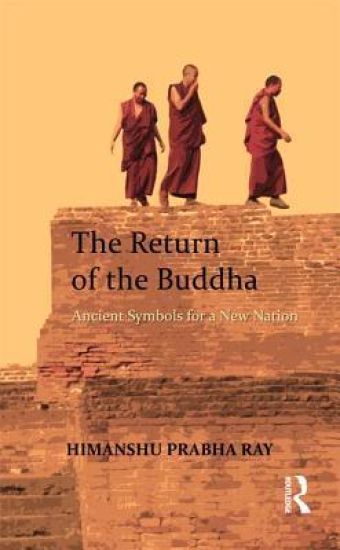
The Return of the Buddha traces the development of Buddhist archaeology in colonial India, examines its impact on the reconstruction of India’s Buddhist past, and the making of a public and academic discourse around these archaeological discoveries. The book discusses the role of the state and modern Buddhist institutions in the reconstitution of national heritage through promulgation of laws for the protection of Buddhist monuments, acquiring of land around the sites, restoration of edifices, and organization of the display and dissemination of relics. It also highlights the engagement of prominent Indian figures, such as Nehru, Gandhi, Ambedkar, and Tagore, with Buddhist themes in their writings. Stressing upon the lasting legacy of Buddhism in independent India, the author explores the use of Buddhist symbols and imagery in nation-building and the making of the constitution, as also the recent efforts to resurrect Buddhist centers of learning such as Nalanda. With rich archival sources, the book will immensely interest scholars, researchers and students of modern Indian history, culture, archaeology, Buddhist studies, and heritage management.
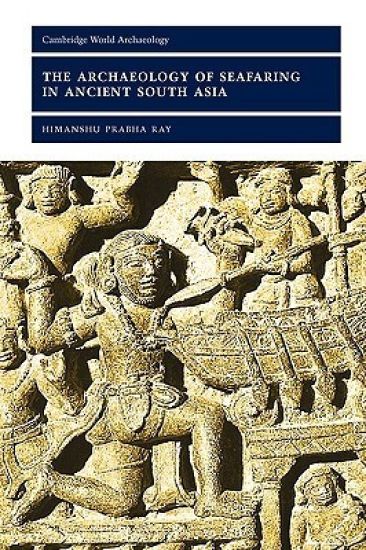
Prior to European expansion, communities of the Indian subcontinent had a strong maritime orientation. In this new archaeological study, Himanshu Prabha Ray explores seafaring activity, religious travel and political economy in this ancient period. By using archaeological data from the Red Sea to the Indonesian archipelago, she reveals how the early history of peninsular South Asia is interconnected with that of its Asian and Mediterranean partners in the Indian Ocean Region. The book departs from traditional studies, focusing on the communities' maritime history rather than agrarian expansion and the emergence of the state. Rather than being a prime mover in social, economic and religious change, the state is viewed as just one participant in a complex interplay of social actors, including merchants, guilds, boat-builders, sailors, pilgrims, religious clergy and craft-producers. A study that will be welcomed by students of Archaeology and Ancient History, particularly those interested in South Asian Studies.
Prior to European expansion, communities of the Indian subcontinent had a strong maritime orientation. In this new archaeological study, Himanshu Prabha Ray explores seafaring activity, religious travel and political economy in this ancient period. By using archaeological data from the Red Sea to the Indonesian archipelago, she reveals how the early history of peninsular South Asia is interconnected with that of its Asian and Mediterranean partners in the Indian Ocean Region. The book departs from traditional studies, focusing on the communities' maritime history rather than agrarian expansion and the emergence of the state. Rather than being a prime mover in social, economic and religious change, the state is viewed as just one participant in a complex interplay of social actors, including merchants, guilds, boat-builders, sailors, pilgrims, religious clergy and craft-producers. A study that will be welcomed by students of Archaeology and Ancient History, particularly those interested in South Asian Studies.
Advanced ASIC Chip Synthesis: Using Synopsys® Design Compiler® Physical Compiler® and PrimeTime®, Second Edition describes the advanced concepts and techniques used towards ASIC chip synthesis, physical synthesis, formal verification and static timing analysis, using the Synopsys suite of tools. In addition, the entire ASIC design flow methodology targeted for VDSM (Very-Deep-Sub-Micron) technologies is covered in detail. The emphasis of this book is on real-time application of Synopsys tools, used to combat various problems seen at VDSM geometries. Readers will be exposed to an effective design methodology for handling complex, sub-micron ASIC designs. Significance is placed on HDL coding styles, synthesis and optimization, dynamic simulation, formal verification, DFT scan insertion, links to layout, physical synthesis, and static timing analysis. At each step, problems related to each phase of the design flow are identified, with solutions and work-around described in detail. In addition, crucial issues related to layout, which includes clock tree synthesis and back-end integration (links to layout) are also discussed at length. Furthermore, the book contains in-depth discussions on the basis of Synopsys technology libraries and HDL coding styles, targeted towards optimal synthesis solution. Target audiences for this book are practicing ASIC design engineers and masters level students undertaking advanced VLSI courses on ASIC chip design and DFT techniques.