
Kirjahaku
Etsi kirjoja tekijän nimen, kirjan nimen tai ISBN:n perusteella.
626 tulosta hakusanalla Hiroshi Doi

Foundations of Systems Biology
Masao Nagasaki; Ayumu Saito; Atsushi Doi; Hiroshi Matsuno; Satoru Miyano
Springer London Ltd
2017
nidottu
Today, as hundreds of genomes have been sequenced and thousands of proteins and more than ten thousand metabolites have been identi?ed, navigating safely through this wealth of information without getting completely lost has become crucial for research in, and teaching of, molecular biology. Consequently, a considerable number of tools have been developed and put on the market in the last two decades that describe the multitude of potential/putative interactions between genes, proteins, metabolites, and other biologically relevant compounds in terms of metabolic, genetic, signaling, and other networks, their aim being to support all sorts of explorations through bio-data bases currently called Systems Biology. As a result, navigating safely through this wealth of information-processing tools has become equally crucial for successful work in molecular biology. To help perform such navigation tasks successfully, this book starts by providing an extremely useful overview of existing tools for ?nding (or designing) and inv- tigating metabolic, genetic, signaling, and other network databases, addressing also user-relevant practical questions like • Is the database viewable through a web browser? • Is there a licensing fee? • What is the data type (metabolic, gene regulatory, signaling, etc. )? • Is the database developed/maintained by a curator or a computer? • Is there any software for editing pathways? • Is it possible to simulate the pathway? It then goes on to introduce a speci?c such tool, that is, the fabulous “Cell - lustrator 3. 0” tool developed by the authors.

Foundations of Systems Biology
Masao Nagasaki; Ayumu Saito; Atsushi Doi; Hiroshi Matsuno; Satoru Miyano
Springer London Ltd
2009
muu
Today, as hundreds of genomes have been sequenced and thousands of proteins and more than ten thousand metabolites have been identi?ed, navigating safely through this wealth of information without getting completely lost has become crucial for research in, and teaching of, molecular biology. Consequently, a considerable number of tools have been developed and put on the market in the last two decades that describe the multitude of potential/putative interactions between genes, proteins, metabolites, and other biologically relevant compounds in terms of metabolic, genetic, signaling, and other networks, their aim being to support all sorts of explorations through bio-data bases currently called Systems Biology. As a result, navigating safely through this wealth of information-processing tools has become equally crucial for successful work in molecular biology. To help perform such navigation tasks successfully, this book starts by providing an extremely useful overview of existing tools for ?nding (or designing) and inv- tigating metabolic, genetic, signaling, and other network databases, addressing also user-relevant practical questions like • Is the database viewable through a web browser? • Is there a licensing fee? • What is the data type (metabolic, gene regulatory, signaling, etc. )? • Is the database developed/maintained by a curator or a computer? • Is there any software for editing pathways? • Is it possible to simulate the pathway? It then goes on to introduce a speci?c such tool, that is, the fabulous “Cell - lustrator 3. 0” tool developed by the authors.

Hiroshi Fujiwara
Rizzoli International Publications
2014
sidottu
Known internationally and variously described as the Godfather of Streetwear and one of the founding fathers of Tokyo's Harajuku scene, Hiroshi Fujiwara exerts a disproportionate influence over contemporary design culture. Fujiwara, who had collaborated with the likes of Malcolm McLaren and Vivienne Westwood as a teenager in the early 1980s, merged a seminal interest in punk with hip-hop and skate culture to become one of Japan's principal tastemakers. A musician and producer, Fujiwara is also one of the most prolific of sneaker designers, and his kicks are some of the most sought-after collectibles. In addition to his very visible and longstanding collaborations with Nike, he has authored a number of fashion lines, and is at the head of the Tokyo-based Fragment Design. Maintaining his reign as the arbiter of hip for over 30 years, this book presents the breadth of his career, including sections on his highly sought after artwork and graphics, sneakers, product design, and curated personal effects. With an introduction by Eric Clapton and contributions by Takashi Murakami, Mark Parker, Jean Touitou, Nigo, Sarah Lerfel, this graphically inspired book provides a unique glimpse into one of the most influential tastemakers of our time.
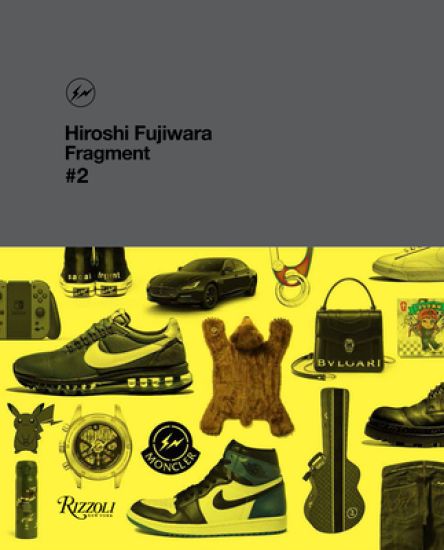
Commanding the hothouse environment of Harajuku, the street fashion and culture district of Tokyo, Hiroshi Fujiwara is recognized the world over as a pioneer in streetwear, music, and art and is the ultimate arbiter of cool. Known internationally as one of the founding fathers of the 1990s Tokyo scene, Fujiwara exerts a disproportionate influence over contemporary design culture. With recent and highly successful collaborations with Louis Vuitton and Moncler, and with his mainstay work at Nike and Medicom, Fujiwara refines an aesthetic immersed in punk, hip-hop, and skate culture and translates it into pure luxury. A musician and producer originally from western Japan, Fujiwara is one of the most prolific of sneaker designers, and his kicks remain some of the most sought-after collectibles. In addition to his very visible and long-standing collaborations with major Western brands, he has long associations with Japanese disruptors like Jun Takahashi of Undercover and is head of the Tokyo-based Fragment Design. Chronicling his reign as the arbiter of hip for more than thirty years, this book presents his current preoccupations, with chapters on his highly sought-after artwork and graphics, sneakers, product design, and curated personal effects, giving readers a unique glimpse into one of the most influential tastemakers of our time.
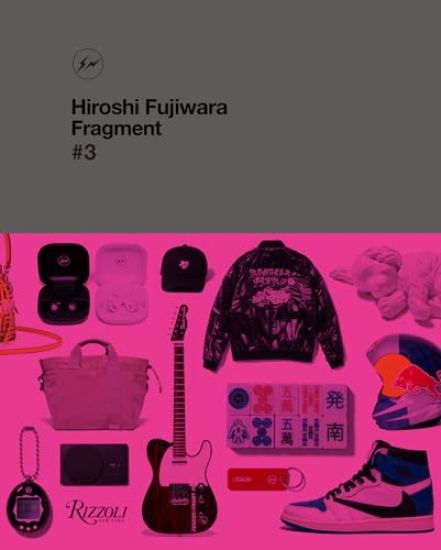
Hiroshi Fujiwara: Fragment #3
Hiroshi Fujiwara; Tiffany Godoy
RIZZOLI INTERNATIONAL PUBLICATIONS
2025
sidottu
Fujiwara is recognized the world over as a pioneer in streetwear, music, and art, and the ultimate arbiter of cool. Known internationally as one of the founding fathers of the 1990s Ura-Harajuku scene, Fujiwara exerts a disproportionate influence over contemporary design culture. With recent collaborations from Fendi to Maserati and with his mainstay work at Nike, Nintendo, and Moncler and Medicom, Fujiwara refines an aesthetic immersed in punk, hip-hop, anime, and skate culture and translates it into pure luxury. A musician and producer originally from western Japan, Fujiwara is one of the most prolific of sneaker designers, and his kicks remain some of the most sought-after collectibles. In addition to his very visible and long-standing collaborations with major Western brands, he has long associations with Japanese disruptors like Jun Takahashi of Undercover, and is at the head of the Tokyo-based Fragment Design. This book catalogues his current preoccupations, with chapters on his highly sought-after artwork and graphics, sneakers, product design, and curated personal effects. Heavy on graphic design, this book provides a unique glimpse into one of the most influential tastemakers of our time.
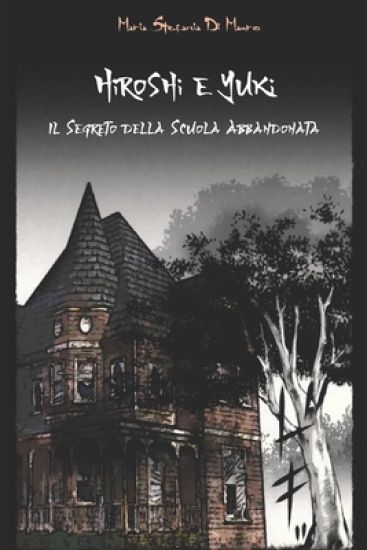
Hiroshi e Yuki: Il Segreto della Scuola Abbandonata
Maria Stefania Di Mauro
Independently Published
2019
nidottu
Un'antica profezia, un libro segreto unico nel suo genere e il mistero di una scuola abbandonata...Kyoto, Giappone. Hiroshi Miyazaki e Yuki Tanaka sono due amici di sedici anni con la passione per il mistero, l'avventura e le antiche leggende.Tutto ebbe inizio con un sogno inquietante fatto da Hiroshi, che catapult i due giovani in una macabra storia realmente accaduta. Fin dai tempi antichi, gli antenati di Hiroshi, consideravano i sogni rivelatori di segreti, ma lui di questo non era a conoscenza; fino a quando nonna Aya gli rivel un grande segreto sulla loro famiglia, informandolo del suo dono. Dono che lui stesso ignorava di possedere.Hiroshi e Yuki partono alla ricerca della verit sulla scuola abbandonata nella quale, per pi di un secolo nessuno ebbe il coraggio di svelare il mistero che l'avvolgeva, era meglio tacere per salvare le apparenze. Mentre Yuki parte all'avventura senza neanche pensarci, Hiroshi ha bisogno di essere spronato dalla nonna e dall'amico per decidere di seguire le proprie passioni, un'adolescente che si sente inadeguato agli occhi dei suoi genitori, nonostante mente brillante. Hiroshi vorrebbe solo essere amato per quello che , ma suo padre ha gi scritto il suo destino, che non coincide con le passioni del ragazzo. Anche se si sempre sentito in trappola, in dovere di accontentare la propria famiglia, specialmente dopo la perdita del fratello maggiore, per Hiroshi arrivato il momento di decidere se realizzare il suo sogno ad ogni costo e adempiere cos alla profezia.

Hiroshi e Yuki Vol. II: Il Tempio dei Samurai 侍
Maria Stefania Di Mauro
Independently Published
2019
nidottu
passato un anno da quando Hiroshi Miyazaki ha scoperto di essere il Custode del Sacro Libro della Verit , ora sa di avere un dono ed deciso ad usarlo per aiutare gli altri.Hiroshi e Yuki s'imbattono in una nuova avventura piena di colpi di scena. Akiko, la discendente del Samurai Ideki Kimura entra a far parte della loro vita, vuole scoprire la verit sul suo antenato.Qual la vera storia di uno dei Samurai pi importanti del Giappone? Cosa si nasconde dietro la sua morte?Il giovane Prescelto costretto a fare i conti con una realt a lui sconosciuta ed inimmaginabile.Scopre che non solo il Sacro Libro ad essere tale, ma esistono altri oggetti, come la Katana perduta dei Samurai, con poteri immensi e devono essere ritrovati; che il suo mondo non l'unico e come se non bastasse... Akuma Il Signore delle forze oscure, generato dalla pi potente magia nera, vuole creare il nuovo mondo distruggendo quelli gi esistenti, ma possono tre giovani amici contrastare queste forze, anche se uno di loro l'Eletto?Questa l'eterna lotta tra Luce e Oscurit

Hiroshi Yoshida was born 19 September, 1876 in Kurume, Fukuoka. He died 5 April, 1950 (aged 73) in his home in Tokyo.Hiroshi Yoshida was born Hiroshi Ueda. At the age of 15, he was adopted by the Yoshida family after his talent for painting was discovered by Kasaburo Yoshida, a junior high school art teacher.In 1920, at the age of 44, Yoshida presented his first woodcut at the Watanabe Print Workshop, organized by Shōzaburō Watanabe (1885-1962), publisher and advocate of the shin-hanga movement.Yoshida believed that the painter should have supreme authority and assume the role of director, not the publishing house. Yoshida was known to be meticulous about the process and quality of his finished prints. He did not give his prints the "seal of approval" or the stamp of his name, "jizuri" (self-print), unless he was extremely satisfied with the end result.At the age of 73, Yoshida took his last sketching trip to Izu and Nagaoka and painted his last works The Sea of Western Izu and The Mountains of Izu. He became sick on the trip and returned to Tokyo where he died on 5 April, 1950, at his home.
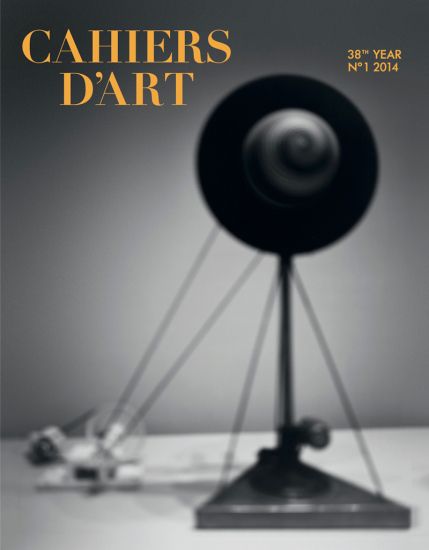
Cahiers d’Art N°1, 2014: Hiroshi Sugimoto: 38th Year, 100th issue
Hiroshi Sugimoto
Cahiers d'art
2014
nidottu
Issue No. 1, 2014 is a rare opportunity to see unpublished works reproduced at the highest standard. Serpentine Gallery co-director Hans Ulrich Obrist interviewed Sugimoto for the issue and Akiko Miki, Chief Curator, Palais de Tokyo, has contributed an important text on the artist's work. The issue also includes an essay from Daniel Birnbaum on Ulf Linde's exploration of the mathematical dimensions to Duchamp's oeuvre in addition to a reprint of an archival article from a 1929 Cahiers d'Art presentation on Brancusi's work, including photographs and a statement written by Brancusi accompanied by a text from surrealist playwright Roger Vitrac.

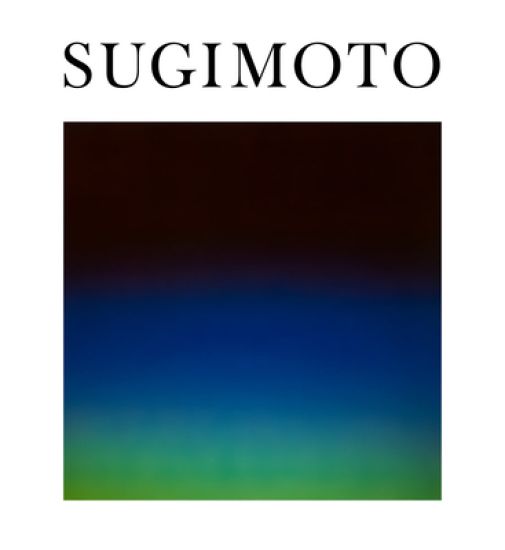
Hiroshi Sugimoto: Time Machine
HATJE CANTZ
2023
sidottu
Magical images that defy time from the grand master of conceptual photography. Through his expansive exploration of the possibilities of still images, the internationally renowned artist and photographer Hiroshi Sugimoto has created some of the most alluringly enigmatic photographs of our time; pictures that are meticulously crafted and deeply thought-provoking, familiar yet tantalisingly ambiguous. Hiroshi Sugimoto: Time Machine is a comprehensive survey of work produced over the past five decades, featuring selections from all of Sugimoto’s major photographic series, as well as lesser-known works that illuminate his innovative, conceptually-driven approach to making pictures. Texts by a collection of international writers, artists and scholars - including Geoffrey Batchen, Edmund de Waal, Mami Kataoka, Ralph Rugoff, Lara Strongman and Margaret Wertheim - will highlight his work’s philosophical yet playful inquiry into the nature of representation and art, our understanding of time and memory, and the paradoxical character of photography as a medium suited to both documenting and invention.

Hiroshi Sugimoto
Pasquale Gagliardi; Annabelle Selldorf
Verlag der Buchhandlung Walther Konig
2015
sidottu
Glass Tea House Mondrian documents Hirosho Sugimoto's (born 1948) first architectural work in Europe--a tea-house pavilion of extraordinary beauty in a formerly unused space on San Giorgio Island, Venice. After the tea ceremony, visitors exit the courtyard through a Japanese garden, in which Sugimoto has placed architectural fragments found locally.
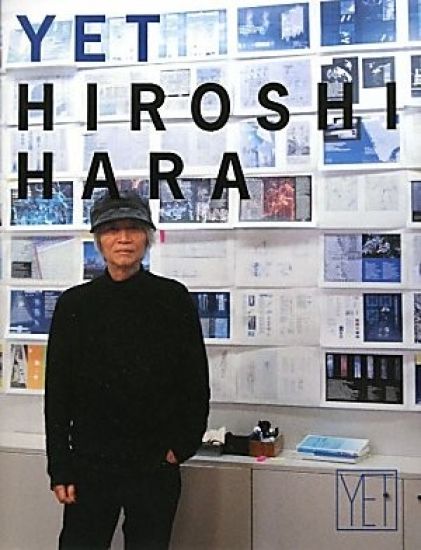
Hiroshi Hara
TOTO
2009
nidottu

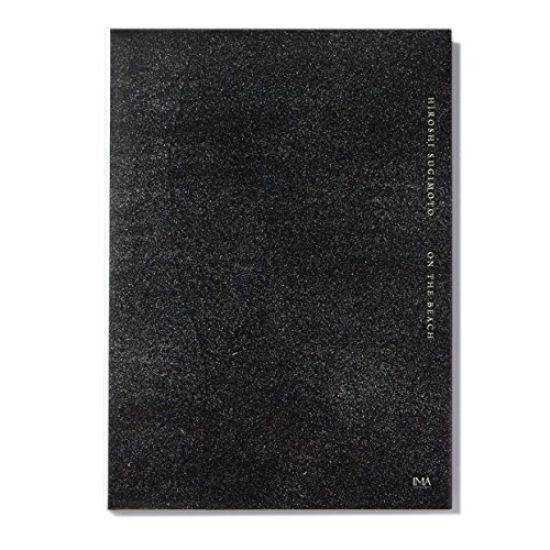
Hiroshi Sugimoto - on the Beach
Amana
2017
nidottu


Water and air. These primordial substances, which make possible all life on earth, are the subject of Hiroshi Sugimoto's Seascapes series. For over thirty years, Sugimoto has traveled the world photographing its seas, producing a body of work that is an extended meditation on the passage of time and the natural history of the earth. Sugimoto has called photography the "fossilization of time," and the Seascapes photographs simultaneously capture a discrete moment in time but also evoke a feeling of timelessness. This volume, the second in a series of books on Sugimoto's art, presents the complete series of over 200 Seascapes, some of which have never before been reproduced. All are identical in format, with the horizon line precisely bifurcating each image, though at times the sea and sky almost merge into one seamless unit. Each photograph captures a moment when the sea is placid, almost flat. Within this strict format, however, he has created a limitless array of portraits of his subjects. An essay by Munesuke Mita, Professor of Sociology at the University of Tokyo, examines contemporary art through a sociological lens, comparing the recent history of art with mathematical predictions of population growth. He connects Sugimoto's body of work to this unique analysis of the art world.
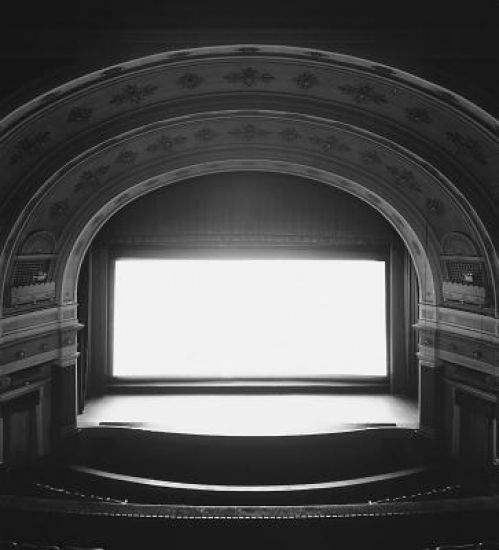
In the late 1970s, as Hiroshi Sugimoto was defining his artistic voice, he posed a question to himself: "Suppose you shoot a whole movie in a single frame?" The answer that came to him: "You get a shining screen." For almost four decades, Sugimoto has been photographing the interiors of theatres using a large-format camera and no lighting other than the projection of the running movie. He opens the aperture when a film begins and closes it when it ends. In the resulting images, the screen becomes a luminous white box and the ambient light subtly brings forward the rich architectural details of these spaces. He began by photographing the classic movie palaces built in the 1920s and 30s, their ornate architectural elements a testament to the cultural importance of the burgeoning movie industry. He continued the series with drive-in theatres. In the last decade, Sugimoto has photographed historic theatres in Europe as well as disused theatres that expose the ravages of time. Taken together, these photographs present an extended meditation on the passage of time, a recurring theme in his artwork. Theaters, the third in a series of books on Sugimoto's art, presents 130 photographs, 18 of which have never before been published.