Kirjojen hintavertailu. Mukana 11 342 296 kirjaa ja 12 kauppaa.

Kirjahaku

Etsi kirjoja tekijän nimen, kirjan nimen tai ISBN:n perusteella.

1000 tulosta hakusanalla Hoban Lillian

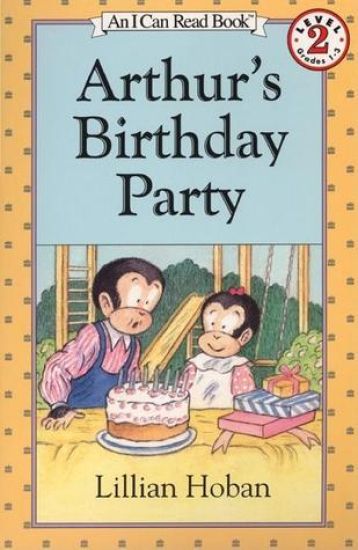
Arthur's Birthday Party

Arthur's Birthday Party

Hoban Lillian

HARPERCOLLINS PUBLISHERS INC
2000
nidottu
Happy Birthday, Arthur Arthur is having a gymnastics party for his birthday, with prizes for balancing, tumbling, and rope climbing. Arthur is sure that he will win the prize for best all--around gymnast. But his little sister, Violet, and her friend Wilma have been practicing-and they may have a surprise in store....
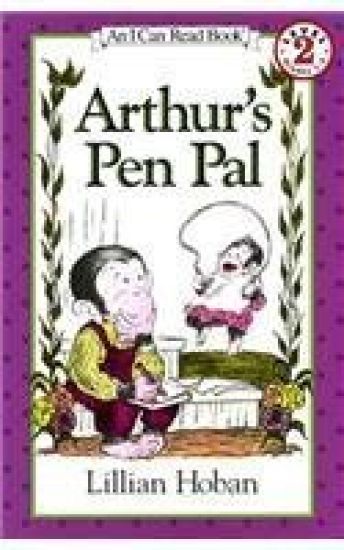
Arthur's Pen Pal

Arthur's Pen Pal

Lillian Hoban

Harpercollins
1982
nidottu
Arthur thinks his pen pal is more fun than his little sister. Little sisters don't do things like karate and wrestling -- or do they? It takes a surprise letter to show Arthur that sometimes there's more to sisters -- and pen pals -- than meets the eye
Arthur's Funny Money

Arthur's Funny Money

Lillian Hoban

Harpercollins
1984
nidottu
'An hilarious account of Arthur's attempts to earn enough money to buy a T-shirt and cap, assisted by his sister Violet. Simple business concepts are ingeniously woven into the story. This marvelous book will capture the interest of eager learners and creative teachers.' --YC. Children's Choices for 1982 (IRA/CBC)Children's Books of 1981 (Library of Congress)
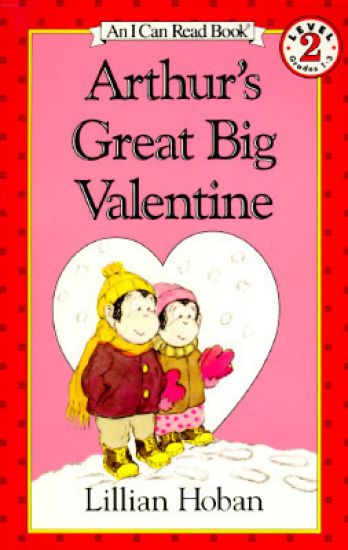
Arthur's Great Big Valentine

Arthur's Great Big Valentine

Lillian Hoban

Atlantic Books
1991
nidottu
"[In] this lovely valentine from Hoban to all beginning readers, a minor squabble with his best friend, Norman, has left Arthur all alone this wintry Valentine's Day [until] Norman's little brother saves the day, and the two best friends are reunited. This title will warm up any snowy, blustery day."—SLJ.
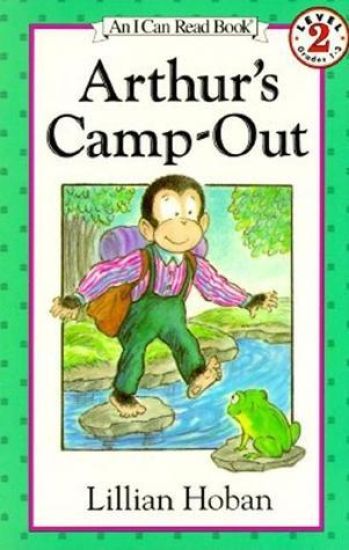
Arthur's Camp-Out

Arthur's Camp-Out

Lillian Hoban

Harpercollins
1994
nidottu
Arthur's gone Camping.Violet's camping out too, but her friends don't want Arthur around. So Arthur decidesto collect slimy things he knows Violet wouldn't like. But he doesn't count on slippery rocks and swooping bats, or hunger pangs. Then he smells hot dogs roasting over a warm fire...
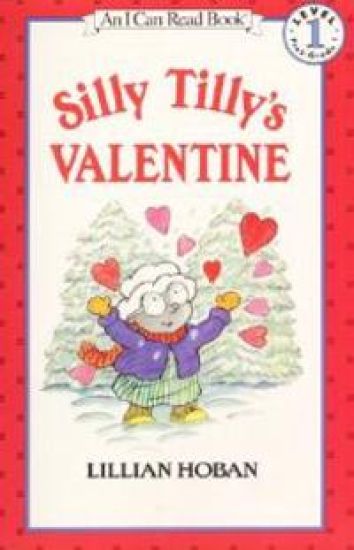
Silly Tilly's Valentine

Silly Tilly's Valentine

Lillian Hoban

Harpercollins
1998
nidottu
Silly Tilly Mole can't remember why today is special. Is it because it's snowing and the wind is swirling colored snowflakes all around her? Or maybe it's the bright red something special in her mailbox that makes this a special day.Beginning Readers will enjoy discovering what Tilly forgot to rememeber in Lillian Hoban's third charming story about this delightfully silly character.Tilly Mole knows it's a special day, but she just can't remember why.Is it because it's snowing outside? Or does it have something to do with that bright red something in her mailbox? Beginning readers will enjoy discovering what Tilly forgot to remember in this delightful Level 1 I can Read Book."Hoban's simple text and trademark illustrations make this story a fine addition for easy-reader collections.'--School Library Journal
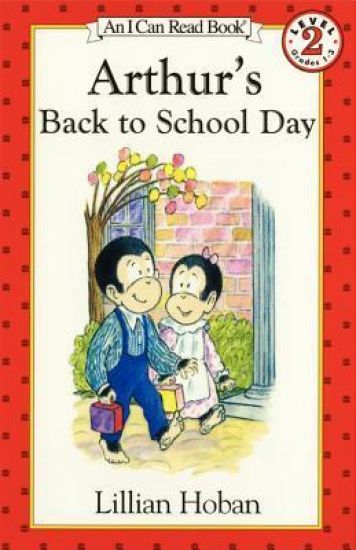
Arthur's Back to School Day

Arthur's Back to School Day

Lillian Hoban

HarperCollins Publishers (Australia) Pty Ltd
1998
nidottu
Brrr ... ing!There's the school bell!It's the first day back at school for Arthur and Violet and all of their friends. Time for riding the school bus, going to class, and best of all, eating snacks and playing games at recess.But this year the first day is full of surprises. The bus ride to school is an unexpected adventure, and Arthur's friend, Norman, almost loses his lunch box. Just when things settle down, Arthur finds his snack has disappeared from his lunch box. What will happen next on this exciting first day of schoolBeginning readers heading back to school will enjoy the humor in Lillian Hoban's tenth I Can Read Book about these much loved characters.
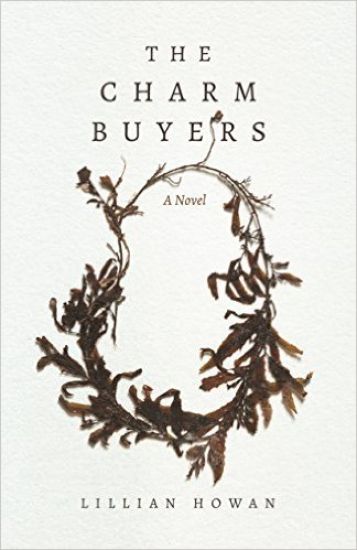
The Charm Buyers

The Charm Buyers

Lillian Howan

University of Hawai'i Press
2017
nidottu
The Charm Buyers describes extraordinary beauty and turbulent change: Tahiti during the last years of French nuclear testing in the Pacific in the 1990s.Marc Antoine Chen, the troubled heir of black pearl cultivators, narrates his journey through a labyrinth of elusive truths. As a child, Marc lives in a dreamlike world with his great-grandmother A-tai and her stories of a semi-nomadic Hakka culture that no longer exists. The Hakka, originally brought from China to Tahiti to work in cotton in the nineteenth century, settled in communities throughout the South Pacific.On the verge of adulthood, Marc falls in love with the calm and confident Marie-Laure Li, but when she leaves to study in France, Marc drifts, becoming the lover of the enigmatic painter Aurore du Chatelet. Years later, Marie-Laure returns, suffering from a debilitating malady—one of many illnesses surfacing in the wake of nuclear testing—and Marc is offered a strange, magical proposal in exchange for the life of his once beloved.A supernatural, shamanic reality exists together with the traditions of the Hakka, set against the background of the French colonial past and the Ma‘ohi struggle for independence. The Charm Buyers presents a world in transition and its people—black pearl cultivators, artists, taro farmers, politicians, smugglers, and shamans.
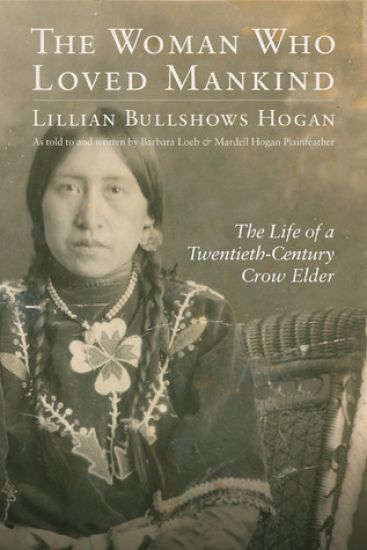
The Woman Who Loved Mankind

The Woman Who Loved Mankind

Lillian Bullshows Hogan

University of Nebraska Press
2012
sidottu
The oldest living Crow at the dawn of the twenty-first century, Lillian Bullshows Hogan, grew up on the Crow reservation in rural Montana. In The Woman Who Loved Mankind she enthralls readers with stories from her long and remarkable life and the stories of her parents, part of the last generation of Crow born to nomadic ways. As a child Hogan had a miniature tepee, a fast horse, and a medicine necklace of green beads; she learned traditional arts and food gathering from her mother and experienced the bitterness of Indian boarding school. As an adult she drove a car, maintained a bank account, and read the local English paper, but she spoke Crow as her first language, practiced beadwork, tanned hides, and often visited the last of the old chiefs and berdaches with her family. Though she married in the traditional Crow way and was a proud member of the Tobacco and Sacred Pipe societies, she also helped establish a Christian church on her reservation. Hogan’s stories are warm, funny, heartbreaking, and brimming with information about Crow life. Hogan told her stories to her daughter, Mardell Hogan Plainfeather, and to Barbara Loeb, a scholar and longtime friend of the family whose record of her words stays true to Hogan’s expressive speaking rhythms with its echoes of traditional Crow storytelling.
The Woman Who Loved Mankind

The Woman Who Loved Mankind

Lillian Bullshows Hogan

University of Nebraska Press
2025
pokkari
The oldest living Crow at the dawn of the twenty-first century, Lillian Bullshows Hogan, grew up on the Crow reservation in rural Montana. In The Woman Who Loved Mankind she enthralls readers with stories from her long and remarkable life and the stories of her parents, part of the last generation of Crow born to nomadic ways. As a child Hogan had a miniature tepee, a fast horse, and a medicine necklace of green beads; she learned traditional arts and food gathering from her mother and experienced the bitterness of Indian boarding school. As an adult she drove a car, maintained a bank account, and read the local English paper, but she spoke Crow as her first language, practiced beadwork, tanned hides, and often visited the last of the old chiefs and berdaches with her family. Though she married in the traditional Crow way and was a proud member of the Tobacco and Sacred Pipe societies, she also helped establish a Christian church on her reservation. Hogan’s stories are warm, funny, heartbreaking, and brimming with information about Crow life. Hogan told her stories to her daughter, Mardell Hogan Plainfeather, and to Barbara Loeb, a scholar and longtime friend of the family whose record of her words stays true to Hogan’s expressive speaking rhythms with its echoes of traditional Crow storytelling.
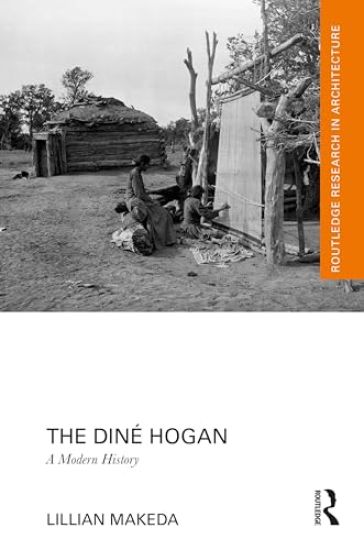
The Diné Hogan

The Diné Hogan

Lillian Makeda

TAYLOR FRANCIS LTD
2024
sidottu
Over the course of their history, the Navajo (Diné) have constructed many types of architecture, but during the 20th century, one building emerged to become a powerful and inspiring symbol of tribal culture. This book describes the rise of the octagonal stacked-log hogan as the most important architectural form among the Diné.The Navajo Nation is the largest Indian reservation in the United States and encompasses territory from within Arizona, New Mexico, and Utah, where thousands of Native American homes, called hogans, dot the landscape. Almost all of these buildings are octagonal. Whether built from plywood nailed onto a wood frame or with other kinds of timber construction, octagonal hogans derive from the stacked-log hogan, a form which came to prominence around the middle of the last century. The stacked-log hogan has also influenced public architecture, and virtually every Diné community on the reservation has a school, senior center, office building, or community center that intentionally evokes it. Although the octagon recurs as a theme across the Navajo reservation, the inventiveness of vernacular builders and professional architects alike has produced a wide range of octagonally inspired architecture. Previous publications about Navajo material culture have emphasized weaving and metalwork, overlooking the importance of the tribe’s built environment. But, populated by an array of octagonal public buildings and by the hogan – one of the few Indigenous dwellings still in use during the 21st century – the Navajo Nation maintains a deep connection with tradition. This book describes how the hogan has remained at the center of Diné society and become the basis for the most distinctive Native American landscape in the United States.The Diné Hogan: A Modern History will appeal to scholarly and educated readers interested in Native American history and American architecture. It is also well suited to a broad selection of college courses in American studies, cultural geography, Native American art, and Native American architecture.
The Diné Hogan

The Diné Hogan

Lillian Makeda

TAYLOR FRANCIS LTD
2025
nidottu
Over the course of their history, the Navajo (Diné) have constructed many types of architecture, but during the 20th century, one building emerged to become a powerful and inspiring symbol of tribal culture. This book describes the rise of the octagonal stacked-log hogan as the most important architectural form among the Diné. The Navajo Nation is the largest Indian reservation in the United States and encompasses territory from within Arizona, New Mexico, and Utah, where thousands of Native American homes, called hogans, dot the landscape. Almost all of these buildings are octagonal. Whether built from plywood nailed onto a wood frame or with other kinds of timber construction, octagonal hogans derive from the stacked-log hogan, a form which came to prominence around the middle of the last century. The stacked-log hogan has also influenced public architecture, and virtually every Diné community on the reservation has a school, senior center, office building, or community center that intentionally evokes it. Although the octagon recurs as a theme across the Navajo reservation, the inventiveness of vernacular builders and professional architects alike has produced a wide range of octagonally inspired architecture. Previous publications about Navajo material culture have emphasized weaving and metalwork, overlooking the importance of the tribe’s built environment. But, populated by an array of octagonal public buildings and by the hogan – one of the few Indigenous dwellings still in use during the 21st century – the Navajo Nation maintains a deep connection with tradition. This book describes how the hogan has remained at the center of Diné society and become the basis for the most distinctive Native American landscape in the United States. The Diné Hogan: A Modern History will appeal to scholarly and educated readers interested in Native American history and American architecture. It is also well suited to a broad selection of college courses in American studies, cultural geography, Native American art, and Native American architecture.
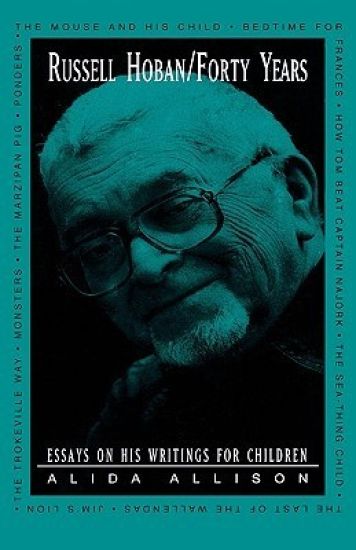
Russell Hoban/Forty Years

Russell Hoban/Forty Years

Alida Allison

CRC Press Inc
2000
sidottu
This edited volume reviews the long career of Russell Hoban, an American writer residing in England who writes for children and adults. The Forty Years in the title refers to the length of Hoban's career to date. Hoban's contribution specifically to children's literature is commemorated in this volume of essays by international scholars,
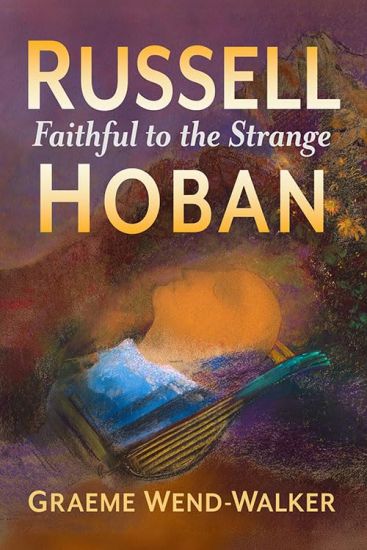
Russell Hoban

Russell Hoban

Graeme Wend-Walker

MCFARLAND CO INC
2025
nidottu
Spanning more than half a century, Russell Hoban's celebrated literary career won him critical accolades and legions of admirers across multiple genres. Many know him from the groundbreaking masterpiece Riddley Walker, with its twelve-year-old protagonist contemplating "what the idear of us myt be" from amidst the ruins of civilization. Some know Hoban from the genre-defying The Mouse and His Child, or from idiosyncratic novels of floundering Londoners struggling with writer's block or whether to steal turtles from the Zoo, hallucinating Death as a chimpanzee, or a grapefruit as the head of Orpheus. Still others fondly recall Frances the Badger's refusal to go to bed, or share Emmet Otter with their own children at Christmas. This book, the first consideration of Russell Hoban's literary career as a whole, explores what binds these seemingly disparate works together. Discovering unexpected patterns between books written from out of what one character describes as a perpetual "state of surprise," this critical study also draws on Hoban's biography, from his formation as an artist under the influence of jazz in New York to the upheaval of his self-reinvention as a writer, as it offers its own reflection on what the idea of Russell Hoban might be.
James Hoban's Secret Society

James Hoban's Secret Society

Thomas Saharsky

Westphalia Press
2023
pokkari
James Hoban's Secret Society is a pocket guide to Hoban's fraternal legacy. This concise history delineates the opportunity and rise of a skilled immigrant craftsman in colonial America. Hoban's family-centric approach to his work helped establish a tight-knit group of professional woodworkers who stayed with him throughout his entire career. Hoban's work brought credibility and notoriety to the Irish Labor Movement of the 18th century. Hoban's visionary work defined civic architecture first in South Carolina and then in the U.S. Capital. The expertise he demonstrated impressed heads of state and thrust Hoban into the limelight, where President George Washington chose him to build the White House. Hoban and his contemporaries cultivated social, civil, and military organizations that brought continuity and zeal to the United States Capitol Project. They held feasts, festivals, and civic processions that honored the traditions of master craftsmen. His fraternal endeavors developed the social provisions necessary for the federal city jobsite to survive the early years. James Hoban's legacy spanned multiple administrations, and his original design stands as a testament to the enlightened planning in colonial America. Thomas Saharsky is a Master Freemason. As a young man, his interest in his ancestors and history took him on a chef's journey, traveling the world while cooking in various countries. Now preferring a slower tempo, he resides in the Great Lakes region of the U.S., where he grew up. Although he still travels a great deal, he now plans his trips around research into the cultures that informed the craftsmen involved in the early American colonial period.
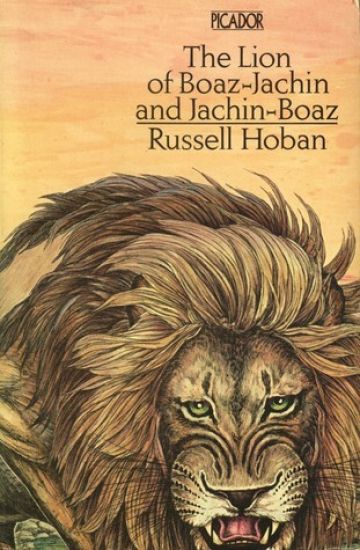
The Lion of Boaz-Jachin and Jachin-Boaz

The Lion of Boaz-Jachin and Jachin-Boaz

Hoban Russell

PAN MACMILLAN
1991
pokkari
The map-maker lives in a time when lions are extinct. He makes a map for his son to find everything he could ever want, but suddenly deserts his family to look for a lion. His son, pursuing him, finds a great deal more than just his father. The author also wrote "Turtle Diary" and "Pilgerman".