Kirjojen hintavertailu. Mukana 11 244 527 kirjaa ja 12 kauppaa.

Kirjahaku

Etsi kirjoja tekijän nimen, kirjan nimen tai ISBN:n perusteella.

1000 tulosta hakusanalla Hope Allison Robinson

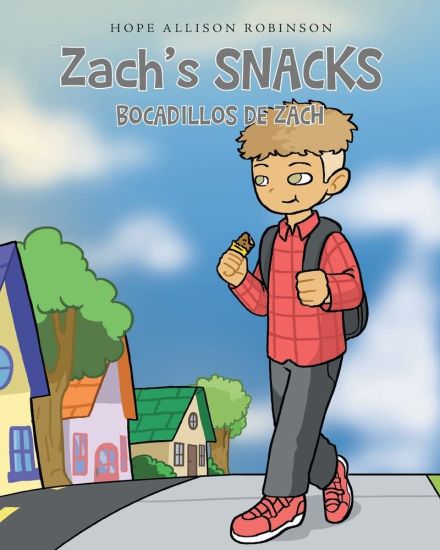
Zach's Snacks

Zach's Snacks

Hope Allison Robinson

Covenant Books
2022
pokkari
Zach's Snacks is a delightful book that kids will enjoy because it highlights popular snacks, sharing, and counting by tens. Zach's Snacks is a bilingual book. Reading is critical to literacy, and some children may not be able to read in English. Furthermore, all children need to be exposed to languages. Books expose children to new words, and being able to visualize words vastly improves memories.
Zach's Snacks

Zach's Snacks

Hope Allison Robinson

Covenant Books
2022
sidottu
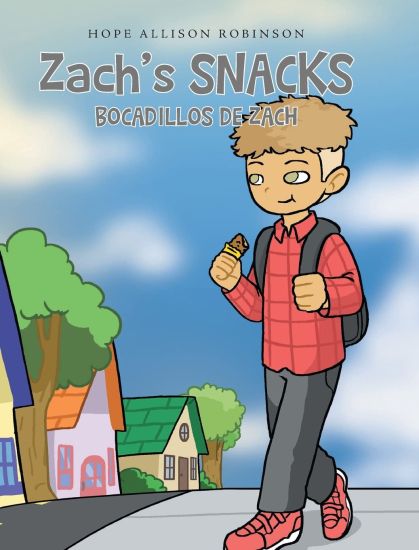
Zach's Snacks is a delightful book that kids will enjoy because it highlights popular snacks, sharing, and counting by tens. Zach's Snacks is a bilingual book. Reading is critical to literacy, and some children may not be able to read in English. Furthermore, all children need to be exposed to languages. Books expose children to new words, and being able to visualize words vastly improves memories.
Ally's Apple Days

Ally's Apple Days

Hope Allison Robinson

Covenant Books
2021
pokkari
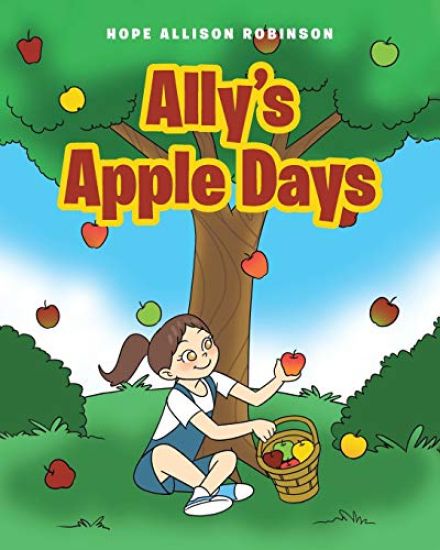
Ally's Apple Days is a wonderful children's book to teach the days of the week, and sharing and caring. Children will learn also about different types of apples. It should appeal to parents providing early education and teachers teaching language arts and math. It effectively combines the fact that apples are healthy, plentiful, and that there are hundreds of different kinds. Apples are rich in fiber, antioxidants, and flavonoids to help our body fight off diseases. There are 2,500 different varieties of apples grown in the US, and 7,500 different varieties of apples in the world. Therefore, Ally's Apple Days will turn into Apple weeks.
Ally's Apple Days

Ally's Apple Days

Hope Allison Robinson

Covenant Books
2021
sidottu
Ally's Apple Days is a wonderful children's book to teach the days of the week, and sharing and caring. Children will learn also about different types of apples. It should appeal to parents providing early education and teachers teaching language arts and math. It effectively combines the fact that apples are healthy, plentiful, and that there are hundreds of different kinds. Apples are rich in fiber, antioxidants, and flavonoids to help our body fight off diseases. There are 2,500 different varieties of apples grown in the US, and 7,500 different varieties of apples in the world. Therefore, Ally's Apple Days will turn into Apple weeks.
I'm Not a Plastic Bag

I'm Not a Plastic Bag

Rachel Hope Allison

Archaia Entertainment, LLC
2012
sidottu
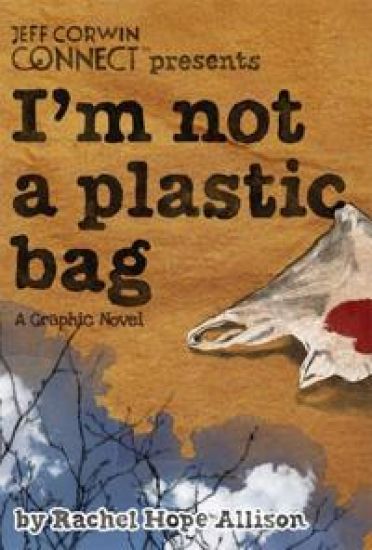
This title comes with a foreward by Jeff Corwin. Based on the real-life occurrence of The Great Pacific Garbage Patch, an island of floating trash in a remote area of the Northern Pacific Ocean more than twice the size of Texas, "I'm Not a Plastic Bag" tells a moving story about loneliness, beauty, and humankind's connection to our planet. Produced in conjunction with American Forests and the Global ReLeaf programs, Archaia will plant two trees for each tree used in the manufacturing of this book. It is presented in partnership with JeffCorwinConnect, a global, ecological, educational and entertainment multimedia company launched by Jeff Corwin, the popular wildlife expert and nature conservationist.
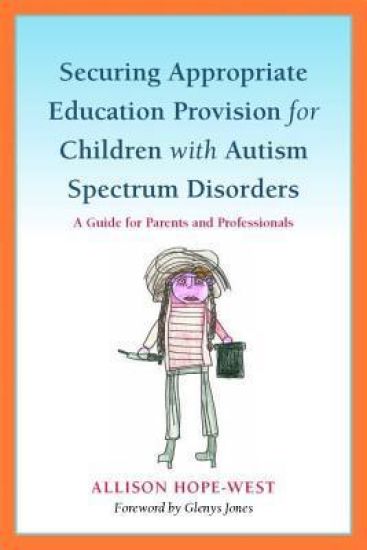
Securing Appropriate Education Provision for Children with Autism Spectrum Disorders

Securing Appropriate Education Provision for Children with Autism Spectrum Disorders

Glenys Jones; Allison Hope-West

Jessica Kingsley Publishers
2010
pokkari
Searching for the right school for a child with an autism spectrum disorder (ASD) opens up a huge and complicated world, and it can be difficult to know where to begin. What should you look out for in a school? What questions should you ask? How do you choose between different educational approaches and programmes? This accessible guide cuts through all of the jargon surrounding special educational needs (SEN) and walks parents and professionals through the entire journey of securing appropriate educational provision for a child with autism spectrum disorder (ASD). The author explains the implications of having, or not having, a diagnosis; how to obtain a Statement of SEN; how to find and secure an appropriate school; and how to work effectively with outside agencies. She provides clear explanations of all of the legal aspects of the process, including SEN law, the SEN Code of Practice and the new guidelines for SEND tribunals. Recognising that mainstream schooling is not the best option in every case, she also shows that independent schools and home-schooling can be viable options in some cases. A multitude of useful resources, websites and other sources of further information are also included. Whether you are the parent or carer of a child with ASD, or a professional working with children with autism, the ideas and information in this book will steer you through the complex maze of issues surrounding how to secure appropriate education provision for children with ASD.
Hope Has Peace

Hope Has Peace

Allison Dennis

Faithful Little Print House
2024
sidottu
Have you ever been tempted to worry about things outside your control?A winter storm is brewing and Hope has lost contact with her Papa Pilot on the radio. Her friend Sarah, whose Daddy is flying with Hope's Papa, is quite worried.Fly alongside Hope in this aviation-themed tale as Hope shares with Sarah the peace that comes from trusting in the Lord.
Jesus Heals: Finding Hope, Wholeness, and Peace

Jesus Heals: Finding Hope, Wholeness, and Peace

Allison Gingras

Our Sunday Visitor
2025
nidottu
Jesus healed a lot of people during his earthly ministry. Yet those healings weren't fancy magic tricks to show off his divinity. Every miracle healing reveals something about Jesus and teaches us about who he is and who we are in him.Jesus Heals guides women through selected Bible stories of Jesus' tender care of ordinary people, all suffering in some form. Through story, Scripture reflections, and discussion questions, this prayer journal and Scripture study shows how Jesus is still healing us today, even when his healing doesn't happen in the way we expect. Whether he heals us physically or spiritually, he fulfills the promise of his words in John 10:10, "I came that they may have life, and have it abundantly."Stay Connected Journals for Catholic Women help you deepen your connection with Jesus through inspiring stories, reflections, Scripture study, and prompts for prayer and journaling. Each journal explores a different path to spiritual growth in short, easy-to-complete chapters -- perfect for individuals or small faith-sharing groups
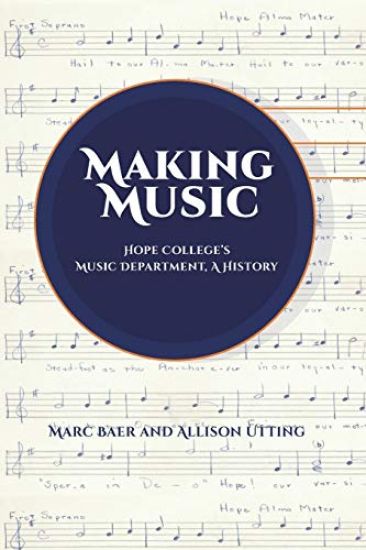
Making Music: Hope College's Music Department, A History

Making Music: Hope College's Music Department, A History

Allison Utting; Marc Baer

Van Raalte Press
2020
nidottu
On October 22, 2015, the Jack H. Miller Center for Musical Arts opened on the east side of Hope's campus, and at that time, the college's Department of Music comprised thirteen full-time and twenty-eight part-time faculty. Such a remarkable building and staff could not have been imagined in 1862 when the college opened its doors to a handful of students.There has always been music at Hope College. Indeed, making music has been so pervasive, it is a wonder that Hope students have had time to do anything else. But if, as in the words of the student newspaper, "We find music everywhere," then in the early years, it was also nowhere, at least in terms of either having a recognized physical space or being an established part of the college curriculum-or even having the appropriate faculty for such an academic department. John Nykerk is traditionally considered the founder of Hope College's Department of Music. Although it is true that Nykerk shaped what would become a department to fit a modern form, it is equally true that the department's foundation goes back to the first days of the college, because music has always been taught at Hope-even before the college graduated its first class. If music has existed from the beginning, then as historians, we want to point out how much context matters, because we often err by imposing our own experience onto the past. Thus, the music at Hope College has changed, just as the college has changed-music has served a changing Hope, and Hope has served a changing Music Department. Music made the department, not the other way around. To unpack all this, we approach various topics through six thematic chapters.The first chapter tells the convoluted story of the era between the 1860s and the 1940s, when the college did not know quite what to do with music. Read any Anchor before the last few decades, and notice that the subject of music dominates its pages. But should the model of teaching music to students be that of the conservatory or the liberal arts college? To justify the major required a definition of Music's identity, that is, should the music taught to students have the academic rigor of philosophy or chemistry, or was it better to think first in terms of what today would be termed an extracurricular?If the story in the first chapter is complicated, then that of the second chapter is relatively simple: a recognizably modern faculty with a distinct character emerged fairly quickly from around 1945 to 1965, due to a strong working relationship and respect between the leadership of the department and that of the college. Yet from the late 1860s to the early 1890s, the outcome of that relationship could not be predicted.Chapter 3 focuses on students as makers of music. To a large extent, this story is told through the eyes of the department. Students, however, have made music on their own in venues far beyond the department, for example, a class party after the Pull or fraternity men serenading the women of Voorhees-who then did their own spontaneous singing.One of the most intriguing questions from the late nineteenth through the late twentieth century involved physical location. Almost every department at Hope had a well-recognized building associated with it. For Music, however, it proved hard to determine where home was for the faculty who taught music and if there could be an appropriate building in which all musicians could both teach and perform. It is safe to say that by 2015 musical performances ranked second in terms of audience, just after collegiate athletics. At the same time, what those audiences heard in the century and a half covered in this book was characterized by both change and continuity. Although audiences from 1866 to the present have heard music at Hope College-graduation being a case-different years have brought different kinds of music. Musical events at Hope are the bridge that links the college to the city of Holland-and beyond.
Message Of Hope 365 days

Message Of Hope 365 days

Allison Anderson

Createspace Independent Publishing Platform
2018
nidottu
The Word of God is full of verses, and sometimes it's hard to find where they are located. Are you talking to someone, and can't recall a scripture for they're need? What about not knowing how to pray for something or someone? Let this book encourage you and give you the hope and guidance your needing as you study and read Message Of Hope 365 Days.
The Financial Crisis and the Free Market Cure:  Why Pure Capitalism is the World Economy's Only Hope
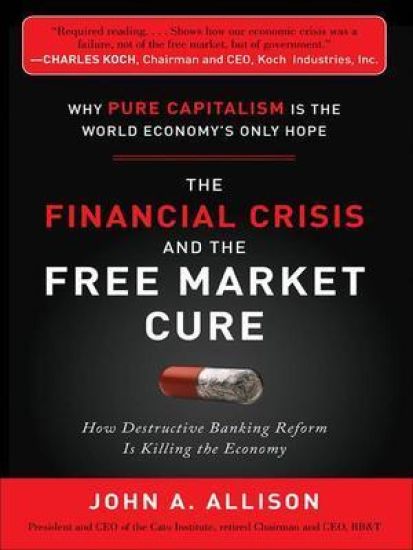
The #1 Wall Street Journal Bestseller“Required reading. . . . Shows how our economic crisis was a failure, not of the free market, but of government.” —Charles Koch, Chairman and CEO, Koch Industries, Inc. “The Financial Crisis and the Free Market Cure is a sophisticated yet accessible analysis of the causes and solutions to America’s financial meltdown.”—Ed Crane, President Emeritus of the Cato Institute“An indispensable contribution to the debate about the future of the American economy.”—Arthur Brooks, President, American Enterprise Institute“No one is better equipped to understand what is going on today and the causes of the financial crisis. Please pay attention to what he says here.”—Bernie Marcus, Chairman, The Marcus Foundation, and cofounder, Home Depot“Allison explains the unintended consequences of government policies and their impact on the financial crisis . . . and recommends practical steps to improve the economy and individual liberty.”—James M. Kilts, former Chairman and CEO, Gillette Company“[This is] the best, deepest explanation of what caused the crisis and the consequences of our government’s response to it.”—Yaron Brook, President and Executive Director, Ayn Rand Institute“John Allison is superb with his comprehensive and thought-provoking explanation for our current economic crisis and a clear and compelling path to a brighter future.”—Steve Reinemund, Dean, Wake Forest University Schools of Business, and retired Chairman and CEO, PepsiCo“[John Allison] assembles evidence that shows that our financial crisis, followed by the Great Recession, was caused by Congress, the Federal Reserve, Freddie Mac, and Fannie Mae, and was helped along by the Bill Clinton, George W. Bush, and Barack Obama White Houses.”—Walter E. Williams, syndicated coumnist Did Wall Street cause the mess we are in? Should Washington place stronger regulations on the entire financial industry? Can we lower unemployment rates by controlling the free market?The answer is NO.Not only is free market capitalism good for the economy, says industry expert John Allison, it is our only hope for recovery. As the nation’s longest-serving CEO of a top-25 financial institution, Allison has had a unique inside view of the events leading up to the financial crisis. He has seen the direct effect of government incentives on the real estate market. He has seen how government regulations only make matters worse.And now, in this controversial wake-up call of a book, he has given us a solution. The national bestselling The Financial Crisis and the Free Market Cure reveals:Why regulation is bad for the market—and for the world What we can do to promote a healthy free market How we can help end unemployment in America The truth about TARP and the bailoutsHow Washington can help Wall Street build a better future for everyoneWith shrewd insight, alarming insider details, and practical advice for today’s leaders, this electrifying analysis is nothing less than a call to arms for a nation on the brink. You’ll learn how government incentives helped blow up the real estate bubble to unsustainable proportions, how financial tools such as derivatives have been wrongly blamed for the crash, and how Congress fails to understand it should not try to control the market—and then completely mismanages it when it tries. In the end, you’ll understand why it’s so important to put “free” back in free market.It’s time for America to accept the truth: the government can’t fix the economy because the government wrecked the economy. This book gives us the tools, the inspiration—and the cure.
The Financial Crisis and the Free Market Cure: Why Pure Capitalism is the World Economy's Only Hope
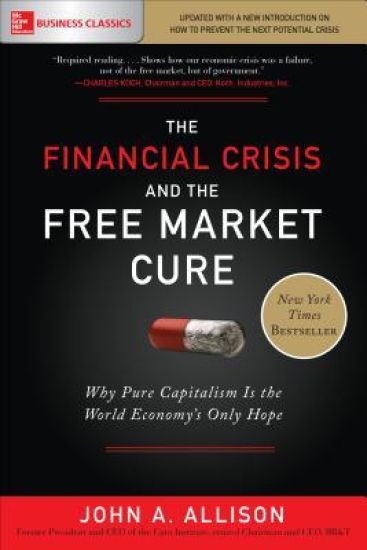
WHAT HAVE WE LEARNED FROM THE FINANCIAL CRISIS?NOTHING.The informative bestseller that shows us where our economy went wrong—and what we can do about it—with a timely new introduction.One of the most important books to emerge from the 2008 economic crisis, this powerful wake-up call from financial expert John Allison has become a classic in the field. Now, in light of emerging global trends and shakeups in the stock market, the book’s message is more timely than ever: The government should stop trying to fix our economy. The free market is our best and only hope. In this eye-opening book, Allison reveals:•How the Federal Reserve has even more power than before the Great Recession—and why this is a problem.•How Wall Street has been wrongly blamed for our slow economic recovery—and why it’s Washington’s fault.•How government regulations like Dodd Frank have burdened banks—and stifled growth.•How socialized medicine and entitlements drive up costs—and how government policies exacerbate unemployment and income inequality.•Why free market capitalism offers a proven cure for our economy—and how to make it work for all Americans.
Black, White, and Green

Black, White, and Green

Alison Hope Alkon

University of Georgia Press
2012
sidottu
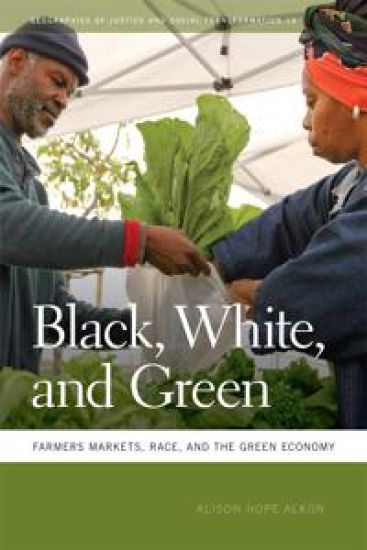
Farmers markets are much more than places to buy produce. According to advocates for sustainable food systems, they are also places to “vote with your fork” for environmental protection, vibrant communities, and strong local economies. Farmers markets have become essential to the movement for food-system reform and are a shining example of a growing green economy where consumers can shop their way to social change.Black, White, and Green brings new energy to this topic by exploring dimensions of race and class as they relate to farmers markets and the green economy. With a focus on two Bay Area markets—one in the primarily white neighborhood of North Berkeley, and the other in largely black West Oakland—Alison Hope Alkon investigates the possibilities for social and environmental change embodied by farmers markets and the green economy.Drawing on ethnographic and historical sources, Alkon describes the meanings that farmers market managers, vendors, and consumers attribute to the buying and selling of local organic food, and the ways that those meanings are raced and classed. She mobilizes this research to understand how the green economy fosters visions of social change that are compatible with economic growth while marginalizing those that are not.Black, White, and Green is one of the first books to carefully theorize the green economy, to examine the racial dynamics of food politics, and to approach issues of food access from an environmental-justice perspective. In a practical sense, Alkon offers an empathetic critique of a newly popular strategy for social change, highlighting both its strengths and limitations.
Black, White, and Green

Black, White, and Green

Alison Hope Alkon

University of Georgia Press
2012
pokkari
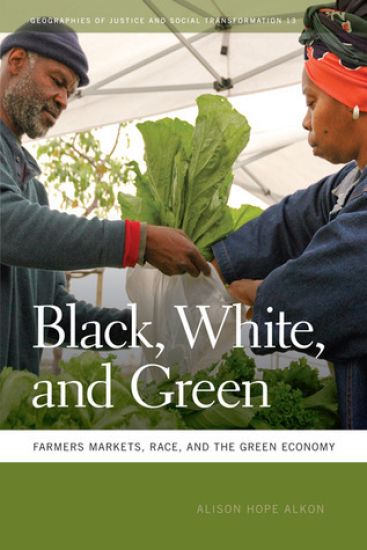
Farmers markets are much more than places to buy produce. According to advocates for sustainable food systems, they are also places to “vote with your fork” for environmental protection, vibrant communities, and strong local economies. Farmers markets have become essential to the movement for food-system reform and are a shining example of a growing green economy where consumers can shop their way to social change.Black, White, and Green brings new energy to this topic by exploring dimensions of race and class as they relate to farmers markets and the green economy. With a focus on two Bay Area markets—one in the primarily white neighborhood of North Berkeley, and the other in largely black West Oakland—Alison Hope Alkon investigates the possibilities for social and environmental change embodied by farmers markets and the green economy.Drawing on ethnographic and historical sources, Alkon describes the meanings that farmers market managers, vendors, and consumers attribute to the buying and selling of local organic food, and the ways that those meanings are raced and classed. She mobilizes this research to understand how the green economy fosters visions of social change that are compatible with economic growth while marginalizing those that are not.Black, White, and Green is one of the first books to carefully theorize the green economy, to examine the racial dynamics of food politics, and to approach issues of food access from an environmental-justice perspective. In a practical sense, Alkon offers an empathetic critique of a newly popular strategy for social change, highlighting both its strengths and limitations.