
Kirjahaku
Etsi kirjoja tekijän nimen, kirjan nimen tai ISBN:n perusteella.
1000 tulosta hakusanalla Horace Hills Morgan

Representative Names in the History of English Literature
Horace Hills Morgan
Outlook Verlag
2024
pokkari
Reprint of the original, first published in 1875.

Representative Names in the History of English Literature
Horace Hills Morgan
Outlook Verlag
2024
sidottu
Reprint of the original, first published in 1875.

Representative names in the history of English literature
Horace Hills Morgan
Hansebooks
2017
pokkari

Representative Names in the History of English Literature
Horace Hills Morgan
Antigonos Verlag
2025
nidottu


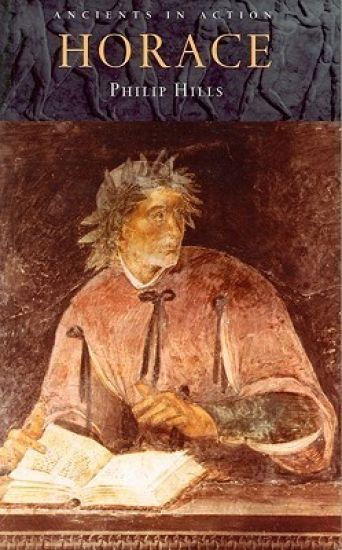
Horace is a poet of surprising contradictions who lived through the most dramatic period of social and political revolution in Rome. From fighting on the losing side in the civil war, he became a confidant of his recent enemies. From humble beginnings as the son of a freedman, he rocketed to the very centre of the Roman establishment. Though he is often regarded as morally and politically conservative, his love poetry is played against the backdrop of a hedonistic, bisexual demi-monde. The strident voice of some of the nationalistic odes contrasts with the quieter melancholic tone of the personal lyrics, with their timeless meditations on the nature of friendship, morality and mortality. A poet of dazzling technical brilliance, Horace introduced the metrical complexities of Greek lyric poetry to the Latin language on a scale never previously contemplated. We know more of his life and background than any other ancient poet and his voice has echoed down the ages as a wise comforter and urbane friend to poets and statesmen alike. This introduction embraces all of these aspects and more, assessing the profound and lasting impact of Horace on the culture of the western world.

Das Werk "Strawberry Hill" von Horace Walpole und der Einfluss auf die Entstehung der Burg in dem Roman "The Castle of Otranto"
Lys Niggenaber
GRIN Verlag
2021
nidottu

Horace Walpole: A Memoir with an Appendix of Books Printed at the Strawberry-Hill Press
Austin Dobson
Literary Licensing, LLC
2014
nidottu

A Description of the Villa of Mr. Horace Walpole, ... at Strawberry-Hill Near Twickenham, Middlesex. with an Inventory of the Furniture, Pictures, Curiosities, &C.
Horace Walpole
Gale Ecco, Print Editions
2010
pokkari
A Description of the Villa of Mr. Horace Walpole, ... at Strawberry-Hill Near Twickenham, Middlesex. With an Inventory of the Furniture, Pictures, Curiosities, &c
Horace Walpole
Gale Ecco, Print Editions
2018
sidottu
The 18th century was a wealth of knowledge, exploration and rapidly growing technology and expanding record-keeping made possible by advances in the printing press. In its determination to preserve the century of revolution, Gale initiated a revolution of its own: digitization of epic proportions to preserve these invaluable works in the largest archive of its kind. Now for the first time these high-quality digital copies of original 18th century manuscripts are available in print, making them highly accessible to libraries, undergraduate students, and independent scholars.Rich in titles on English life and social history, this collection spans the world as it was known to eighteenth-century historians and explorers. Titles include a wealth of travel accounts and diaries, histories of nations from throughout the world, and maps and charts of a world that was still being discovered. Students of the War of American Independence will find fascinating accounts from the British side of conflict. ++++The below data was compiled from various identification fields in the bibliographic record of this title. This data is provided as an additional tool in helping to insure edition identification: ++++British LibraryT064913Anonymous. By Horace Walpole. Some copies have an added titlepage printed in black, red and blue. Twickenham]: Strawberry-Hill: printed by Thomas Kirgate, 1784. 2], iv,96p., plates; 4

Place-making for the Imagination: Horace Walpole and Strawberry Hill
Marion Harney
Routledge
2016
nidottu
Drawing together landscape, architecture and literature, Strawberry Hill, the celebrated eighteenth-century ’Gothic’ villa and garden beside the River Thames, is an autobiographical site, where we can read the story of its creator, Horace Walpole. This 'man of taste' created private resonances, pleasure and entertainment - a collusion of the historic, the visual and the sensory. Above all, it expresses the inseparable integration of house and setting, and of the architecture with the collection, all specific to one individual, a unity that is relevant today to all architects, landscape designers and garden and country house enthusiasts. Avoiding the straightforward architectural description of previous texts, this beautifully illustrated book reveals the Gothic villa and associated landscape to be inspired by theories that stimulate 'The Pleasures of the Imagination' articulated in the series of essays by Joseph Addison (1672-1719) published in the Spectator (1712). Linked to this argument, it proposes that the concepts behind the designs for Strawberry Hill are not based around architectural precedent but around eighteenth-century aesthetics theories, antiquarianism and matters of 'Taste'. Using architectural quotations from Gothic tombs, Walpole expresses the mythical idea that it was based on monastic foundations with visual links to significant historical figures and events in English history. The book explains for the first time the reasons for its creation, which have never been adequately explored or fully understood in previous publications. The book develops an argument that Walpole was the first to define theories on Gothic architecture in his Anecdotes of Painting (1762-71). Similarly innovative, The History of the Modern Taste in Gardening (1780) is one of the first to attempt a history and theory of gardening. The research uniquely evaluates how these theories found expression at Strawberry Hill. This reassessment of the villa and its associated l
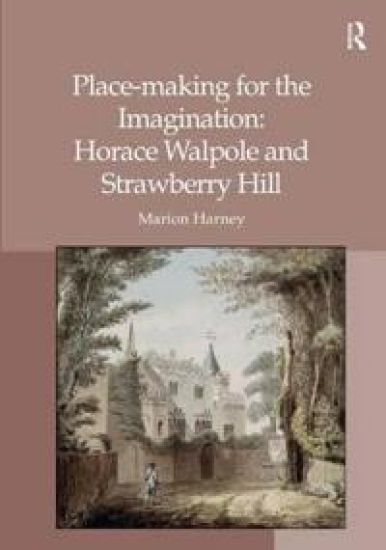
Place-making for the Imagination: Horace Walpole and Strawberry Hill
Marion Harney
Ashgate Publishing Limited
2013
sidottu
Drawing together landscape, architecture and literature, Strawberry Hill, the celebrated eighteenth-century ’Gothic’ villa and garden beside the River Thames, is an autobiographical site, where we can read the story of its creator, Horace Walpole. This 'man of taste' created private resonances, pleasure and entertainment - a collusion of the historic, the visual and the sensory. Above all, it expresses the inseparable integration of house and setting, and of the architecture with the collection, all specific to one individual, a unity that is relevant today to all architects, landscape designers and garden and country house enthusiasts. Avoiding the straightforward architectural description of previous texts, this beautifully illustrated book reveals the Gothic villa and associated landscape to be inspired by theories that stimulate 'The Pleasures of the Imagination' articulated in the series of essays by Joseph Addison (1672-1719) published in the Spectator (1712). Linked to this argument, it proposes that the concepts behind the designs for Strawberry Hill are not based around architectural precedent but around eighteenth-century aesthetics theories, antiquarianism and matters of 'Taste'. Using architectural quotations from Gothic tombs, Walpole expresses the mythical idea that it was based on monastic foundations with visual links to significant historical figures and events in English history. The book explains for the first time the reasons for its creation, which have never been adequately explored or fully understood in previous publications. The book develops an argument that Walpole was the first to define theories on Gothic architecture in his Anecdotes of Painting (1762-71). Similarly innovative, The History of the Modern Taste in Gardening (1780) is one of the first to attempt a history and theory of gardening. The research uniquely evaluates how these theories found expression at Strawberry Hill. This reassessment of the villa and its associated l
![The Collection Of Rare Prints & Illustrated Works, Removed From Strawberry Hill ... As Originally Collected By Horace Walpole ... Which Will Be Sold By Auction, By G. Robins, 13th June, 1842 And 9 Following Days. [with] Aedes Strawberrianae. Names Of](/covers/9781024477542.jpg)
The Collection Of Rare Prints & Illustrated Works, Removed From Strawberry Hill ... As Originally Collected By Horace Walpole ... Which Will Be Sold By Auction, By G. Robins, 13th June, 1842 And 9 Following Days. [with] Aedes Strawberrianae. Names Of
Twickenham Strawberry Hill
Hutson Street Press
2025
sidottu
![The Collection Of Rare Prints & Illustrated Works, Removed From Strawberry Hill ... As Originally Collected By Horace Walpole ... Which Will Be Sold By Auction, By G. Robins, 13th June, 1842 And 9 Following Days. [with] Aedes Strawberrianae. Names Of](/covers/9781024482430.jpg)
The Collection Of Rare Prints & Illustrated Works, Removed From Strawberry Hill ... As Originally Collected By Horace Walpole ... Which Will Be Sold By Auction, By G. Robins, 13th June, 1842 And 9 Following Days. [with] Aedes Strawberrianae. Names Of
Twickenham Strawberry Hill
Hutson Street Press
2025
pokkari

Finding-list of Plants at Breeze Hill Gardens, Harrisburg, Penna.: the Residence of J. Horace McFarland, Twenty-first Street Bellevue Road and Hillsid
Anonymous
Hassell Street Press
2021
nidottu

Finding-list of Plants at Breeze Hill Gardens, Harrisburg, Pa.: the Residence of J. Horace McFarland, Twenty-first Street, Bellevue Road and Hillside
Anonymous
Hassell Street Press
2021
nidottu

Finding-list of Plants at Breeze Hill Gardens, Harrisburg, Penna.: the Residence of J. Horace McFarland, Twenty-first Street Bellevue Road and Hillsid
Anonymous
Hassell Street Press
2021
nidottu