Kirjojen hintavertailu. Mukana 11 627 461 kirjaa ja 12 kauppaa.

Kirjahaku

Etsi kirjoja tekijän nimen, kirjan nimen tai ISBN:n perusteella.

1000 tulosta hakusanalla Howard Clarke; Máire Ní Laoi

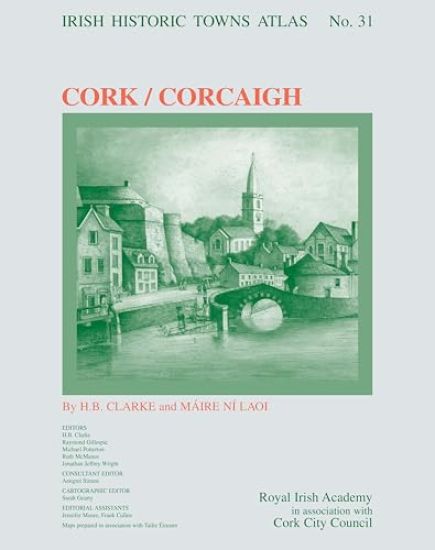
Cork/Corcaigh

Cork/Corcaigh

Howard Clarke; Máire Ní Laoi

ROYAL IRISH ACADEMY
2024
muu
This new historical atlas of Cork will explore the city from its origins to the present day. The emergence of Cork from a monastic settlement on a marshland site through to the thriving city we know today is explained in a thoroughly researched text, illustrated with newly created thematic maps, early views and photographs. Historic maps are reproduced on large-format pages showing how the topography transformed through time. A gazetteer of over 13,000 sites and accompanying essay gives the detailed topographical history of the city up to c. 1900. The Irish Historic Towns Atlas is a long-term research project of the Royal Irish Academy. Since publication began in 1986, thirty atlases of Irish towns and cities, north and south, have been published. The atlases are produced following basic principles making it possible to compare and contrast places with one another. Cork will join the cities of Dublin, Belfast, Galway and Limerick; and regional towns of Bandon and Youghal already covered in the Irish series; as well as over 580 European towns and cities produced as part of a wider International scheme. See www.ihta.ie for more information. The Irish Historic Towns Atlas of Cork is published by the Royal Irish Academy in association with Cork City Council. Maps are produced in association with Ordnance Survey Ireland.
The Gospel of Matthew and Its Readers

The Gospel of Matthew and Its Readers

Howard Clarke

Indiana University Press
2003
pokkari
The Gospel of Matthew and Its Readers is a biblical commentary with a difference. Howard Clarke first establishes contemporary scholarship's mainstream view of Matthew's Gospel, and then presents a sampling of the ways this text has been read, understood, and applied through two millennia. By referring forward to Matthew's readers (rather than back to the text's composers), the book exploits the tensions between what contemporary scholars understand to be the intent of the author of Matthew and the quite different, indeed often eccentric and bizarre ways this text has been understood, assimilated, and applied over the years. The commentary is a testament to the ambiguities and elasticity of the text and a cogent reminder that interpretations are not fixed, nor texts immutably relevant. And unlike other commentaries, this one gives space to those who have questioned, rejected, or even ridiculed Matthew's messages, since Bible-bashing, like Bible-thumping, is a historically significant part of the experience of reading the Bible.
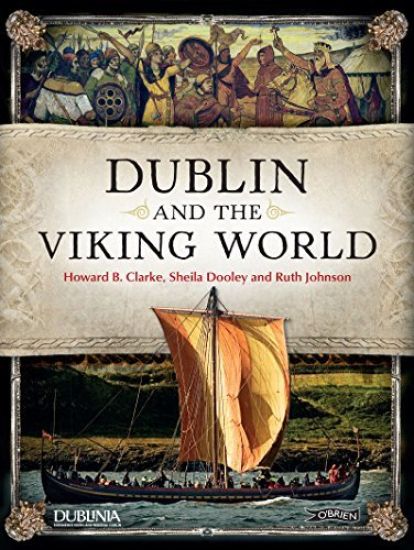
Dublin and the Viking World

Dublin and the Viking World

Howard Clarke; Ruth Johnston; Sheila Dooley

O'Brien Press Ltd
2018
nidottu
Dig through the layers of time to find the Viking past beneath our city streets. Shipbuilding, praying, raiding, trading and playing – Viking customs and habits are brought to life in this richly illustrated account of the beginnings of Dublin town. Viking Dublin was a vibrant, multicultural centre of commerce in early medieval Europe. Now Dublin is unique in the world for its enormous stock of preserved archaeological and written records. Together, they reveal intimate details of life in the city and bring us beyond the myths to a people who developed a small coastal settlement into a bustling hub of trade and craft. Fully illustrated with photographs, drawings and new maps, Dublin and the Viking World takes readers into the streets and homes of a major Viking city. Expert authors explore the acclaimed Dublinia exhibition experience and the latest in world-class scholarship to show readers the realities of the world of Viking Dublin.
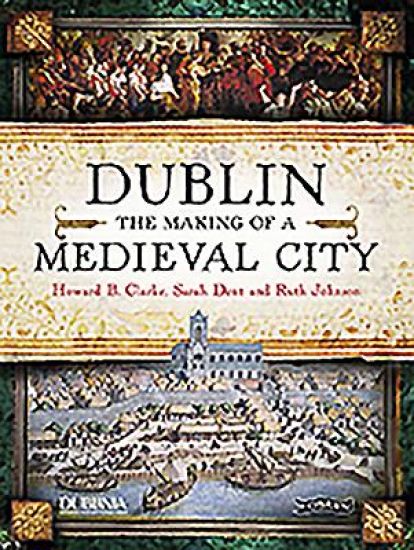
Dublin

Dublin

Howard Clarke; Sarah Dent; Ruth Johnston

O'Brien Press Ltd
2019
nidottu
Dublin: The Making of a Medieval City is the story of a unique period in Irish history told with passion, imagination and accuracy. This book leads the reader through the noise and bustle of the medieval streets of Dublin looking at all aspects of life, from religion to trade, from crafts to government and from buildings to lifestyles. Based on the hugely successful exhibition on medieval Dublin -- Dublinia -- this book is both a stand alone accessible and authoritative introduction to life in the medieval city, and also a souvenir to one of Dublin's most exciting historical experiences. Whether you are an armchair enthusiast for all things historic, a Dubliner looking for your city to surprise you, or a visitor to the city, this book will fascinate and intrigue you. Previously published as Dublinia (9780862787868)
Eternal and Soul Have Forever

Eternal and Soul Have Forever

Mary Anne Howard-Clarke Rm

Balboa Press Au
2020
pokkari
What an honour and a joy to be present and to be part of the lives of so many people at birth, the most precious of times. The experience of birth and life is so amazing, and yet the return home of a soul so wanted, is heartbreaking for those that are left. Reassurance that this soul knows that at this time its body is incompatible with its chosen path of learning, yet will return to honour another form at the right time, is so healing.
Black Activist, Black Scientist, Black Icon: The Autobiography of Dr. Howard D. McCurdy

Black Activist, Black Scientist, Black Icon: The Autobiography of Dr. Howard D. McCurdy

How Douglas McCurdy C. M. O. Ont Ph. D.; George Elliott Clarke

Nimbus Publishing Limited
2023
nidottu
The long-overdue biography of one of Canada's most iconic Black politicians and activists, written with the country's former Parliamentary Poet Laureate. "Dr. Howard McCurdy is the author of this autobiography. Period," writes George Elliott Clarke in the introduction to Black Activist, Black Scientist, Black Icon. "But in July 2017, seven months before his decease, he requested that I edit this work, which was already progressing toward a conclusion." McCurdy passed away in February 2018, and with the encouragement of McCurdy's widow, Clarke took on the challenge of editing and completing the memoir. Fortunately, says Clarke, "The man can write, good people ... Howard delighted in the extemporaneous peroration, which, issuing in electrifying combustion out of heart and head, had audiences...presenting standing ovations so often that their chair seats never had a chance to warm." McCurdy indeed lived an extraordinary life. He was Canada's first Black tenured professor; a founder of the Canadian Civil Liberties Association; a founder of the National Black Coalition of Canada; the person who named the New Democratic Party; the second Black elected to Parliament. With twenty-five photos from McCurdy's personal archive, Black Activist, Black Scientist, Black Icon illuminates and celebrates the life of one of Canada's most worthy figures. Says Clarke: "Dr. Howard McCurdy was exemplary in self-sacrifice; he was stellar in avant-garde thought and vision; he was...the most unforgettably proud Black man that I ever had the pleasure to know."
H2 Water 4 Life: The Simplest Solution for Optimum Health: Hydrogen Water Therapy (Black and White)

H2 Water 4 Life: The Simplest Solution for Optimum Health: Hydrogen Water Therapy (Black and White)

Steven Clarke Cmha; Howard Peiper Nd

Createspace Independent Publishing Platform
2018
nidottu
Humans have survived for as many as 90 days without food. But we can live only seventy-two hours without water before going into a semi-comatose state. However, drinking water saturated with inorganic minerals such as magnesium carbonate, calcium carbonate and other elements our bodies cannot use, may lead to a variety of unhealthy conditions and diseases. These inorganic minerals, toxic chemicals, fluoride and other contaminants can pollute, clog up and even turn our tissues into stone, causing pain, illness and even premature death. H2 Water, nature's healing water, may help remove inorganic mineral deposits and toxins from our joints, may remove cholesterol and fat, and create a pH balance in our body. This book unlocks the mysteries of H2 Water, which can often relieve chronic suffering. Using the miracle of H2 Water Ther-apy can now help us live healthier, happier and longer lives. - Dr. Howard Peiper, N.D. We are very fortunate to be alive during a global movement towards hydrogen water therapy and enjoy its abundance of health benefits. Hydrogen was present at the dawn of time. It is the father of all known elements in our universe. It is the most abundant gas in our galaxy. Earth could not sustain life without it because 71% of our planet's surface is covered in water (2 Hydrogen Atoms + 1 Oxygen Atom = H2O). Our human body is a "bag of H2O." For centuries, science-minded people have focused on the "O" part of H2O and either minimized or have never considered possible health benefits of the "H2" in H2O. There are millions of hydrogen atoms in every glass of water This raises two fascinating questions. First, how can the 2 hydrogen atoms connected to the 1 oxygen atom in H2O be separated from the water molecules? Second, how can we get these millions of liberated single hydrogen atoms to pair with each other and form a very safe, emerging medical gas, H2, ... and, again, get this medical gas safely infused into a glass of water? So, in this book, we have the privilege of introducing you to what may be the greatest discovery in medical-science and health-care since 1953 - Steven Clarke, C.M.H.A.
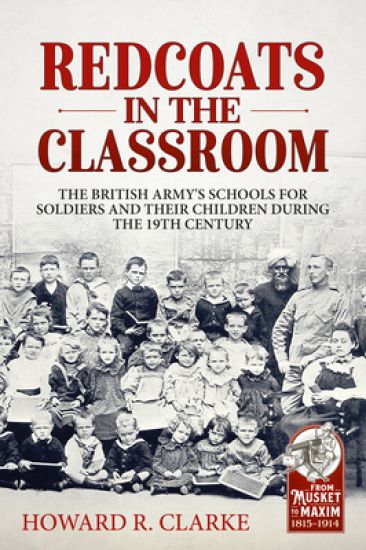
Redcoats in the Classroom

Redcoats in the Classroom

Howard R. Clarke

Helion Company
2021
nidottu
This book tells the little known story of the Army’s regimental and garrison schools established in 1812 to provide schooling for soldiers’ children and subsequently for enlisted men, some almost 30 years before public money was first provided for elementary schools in England and Wales. This is the first published work on the Army’s schools during the 19th century for almost 50 years and the author takes a fresh approach, placing the narrative within the context of contemporary opinion about the need for educated soldiers and the schooling appropriate for the lowers classes ( from which the Army predominately drew its recruits), whilst also explaining the hitherto neglected, but crucial part played by the responsible ministers at the War Office in establishing and ensuring the survival of the schools. There were no published government reports on these regimental schools until 1859 and previous literature has been largely silent on the workings of the schools during the early years, when they were conducted by untrained schoolmaster-sergeants selected by their commanding officers from within the ranks of their regiments. This book breaks new ground by drawing on the archives of more than 40 regiments of infantry and cavalry preserved in their regimental museum and county records offices, including standing orders, digests of service and personal diaries, together with and other contemporary material from a larger number of regiments in the UK National Archives, in order to construct an unprecedented account of the workings of the schools during the years. The book explains the difficulties faced by COs in securing sufficient literate men from within the ranks suitable for appointment and explains the challenges faced by even the most competent schoolmasters in keeping open the schools as their regiments marched between barracks in the United Kingdom and set out on long journeys by land and sea to stations across the Empire. The author builds on the previous literature in explaining the significance of the reforms in the Army’s schools that were introduced during the 1840s, including establishing the ‘Normal school’ at the Royal Military Asylum Chelsea to train a new class of army schoolmasters to replace the schoolmaster- sergeants, and theappointment of an Inspector to oversee the work of the schools. The approach taken in this book however differs from the previous works in a number of respects. Whilst acknowledging the important part played by Rev George Gleig, the Army’s Principal Chaplain and first Inspector of Military Schools, this book aims to provide a balanced narrative, which also recognises the decisive part played of Sidney Herbert and Lord Panmure (Fox Maule) as the responsible ministers at the War Office. Their work in securing support within their governments for the additional expenditure required and in overcoming the suspicions and potential opposition of the Dukes of Wellington and Cambridge as Commanders in Chiefs at the Horse Guards were essential to the success of the reforms. The author explains that the reforms were not always well received in all parts of the Army and argues that the changes introduced by the War Office in 1846 were only the start of a long process of creating a professional structure for the Army’s schools that extended well into the 1860s. The chapters describing the difficulties faced by Sydney Herbert and Lord Palmore in implementing the reforms provide some interesting examples of the manoeuvring for authority within the Army by the Secretary of State for War and the Commander in Chief at the Horse Guards during these years. Throughout the century a large part of the British Army was stationed overseas and a significate proportion was in India. The previous literature has little to say about the how the reforms of were implemented in the colonial garrisons and is silent on the separate arrangements for superintendence and inspection of the schools that operated for some thirty years in the three Indian Presidencies of Bengal, Bombay and Madras. This work pays particular attention to the particular circumstances of the Army’s school in India throughout the century.##The author explains that the introduction of short service enlistment following Cardwell’s reforms in 1870 and the beginnings of national system of elementary education following Forster’s Education Act in the same year, raised questions about the continuing need for a separate system of Army schools. This was the subject of intense debate within the military departments which is described in the book’s concluding chapters. The War Office decided that there were good reasons to retain the Army’s schools, but decided in 1887 that the tuition for recruits and enlisted men seeking promotion as NCOs could be more cost effectively delivered in larger garrison schools by combining soldiers from a number of regiments. It however decided to retain the regimental schools for the children for the practical reason that the battalions of the infantry and the regiments of cavalry continued to move at regular intervals between the camps and barracks at home and across the empire.##By the final decade of the century the schools had become an established part of the life of the regiments in British Army and contributed to the sense of regimental identity that was the essence of the British Army during the period. The schoolmasters and mistresses (both the trained and untrained) who taught in the regimental schools, often in the most difficult conditions, were amongst of the unsung pioneers of elementary education in Great Britain and their schools were exceptional and probably unique in providing not only for children, but also for adults, at a time when there was little continuing education for those who wished to improve their literacy after leaving school. The story of regimental and garrison schools has long deserved a place in the history the British Army during the19th century.
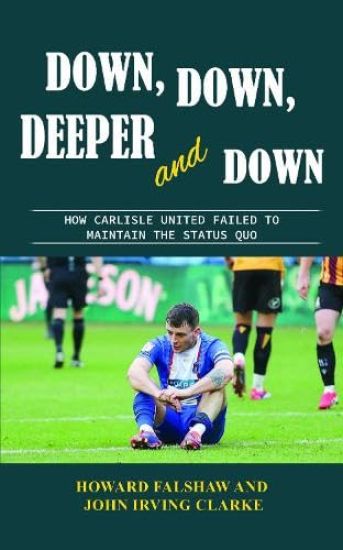
Down, Down, Deeper and Down

Down, Down, Deeper and Down

Howard Falshaw; John Irving Clarke

GROSVENOR HOUSE PUBLISHING LTD
2025
nidottu
This book was going to be a celebration of the brave new world of Carlisle United, the first full season under new American ownership. Howard Falshaw had already published an account of Carlisle's journey to promotion in 2023, and invited his fellow supporter and friend John Clarke to co-author a new book about the new era of the club. They fully expected to be writing an account of the club's glorious return to winning ways, with significant investment both on and off the pitch. The reality of the 2024-25 season turned out to be a very different matter. It saw three different coaches tasked to manage the team. It saw a massive turnover of the playing staff. It saw some dismal tactics and performances that ultimately led to the ignominy of a second successive relegation, despite a late rally. Throughout the decline the authors never questioned their sanity in regularly making the long journey from Wakefield to Carlisle. Nor did they question their belief in the club's ability to recover until it was much too late. instead, they focused on writing their individual perspectives on the travails of their team, and it is their journeys from expectation and optimism to disappointment and despair that are the narrative of this book.
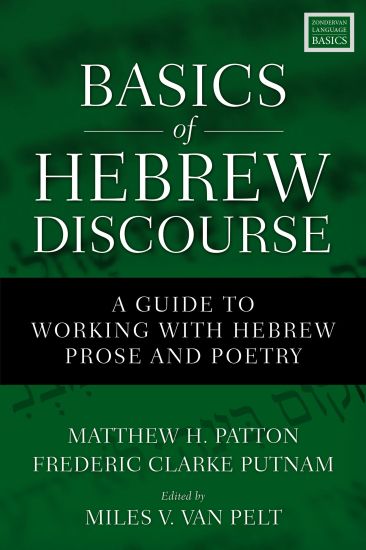
Basics of Hebrew Discourse

Basics of Hebrew Discourse

Matthew Howard Patton; Frederic Clarke Putnam

Zondervan
2019
nidottu
A syntax resource that's perfect for intermediate Hebrew students. This Basics workbook introduces students to the principles and exegetical benefits of discourse analysis (text linguistics) when applied to biblical Hebrew prose and poetry.Where standard Hebrew reference grammars have traditionally worked to describe the relationship between words and phrases within discrete clauses (micro syntax), discourse analysis works to describe those relationships that exist between clauses and texts (macro syntax).The Basics of Biblical Hebrew Workbook gives the intermediate or second-year Hebrew student the tools to work with Hebrew syntax on the macro level. Professors and pastors working with Hebrew will also find this one-of-a-kind resource highly valuable.
Essential Magistrates' Courts Law

Essential Magistrates' Courts Law

Howard Riddle; Robert Zara; Briony Clarke; Paul Goldspring

WATERSIDE PRESS
2025
nidottu
Now better than ever, the highly acclaimed Essential Magistrates' Courts Law has been updated to include developments in the law and practice of the magistrates' court since first published five years ago. Concise and accessible, it distils the law, practice and procedure of these courts in a straightforward way. All in one place it covers their framework and responsibilities and includes key changes in procedure, evidence, sentencing and the fair and efficient expediting of cases.This independent publication by experts in the field sets out information that goes beyond official or internal guidance and is based on practical experience of working in the courts. Its unique approach and readable style is invaluable for practitioners and students alike.In common use in the magistrates' courts of England and Wales.Garners core essential information in a single volume.An unrivalled aid to all who work in those courts.Praised across the summary justice system.With a new chapter on protest offences.
Nursing Interventions Classification (NIC)

Nursing Interventions Classification (NIC)

Cheryl M. Wagner; Howard K. Butcher; Mary F Clarke

Elsevier - Health Sciences Division
2023
nidottu
Select nursing interventions with the book that standardizes nursing language! Nursing Interventions Classification (NIC), 8th Edition provides a research-based clinical tool to help you choose appropriate interventions. It standardizes and defines the knowledge base for nursing practice as it communicates the nature of nursing. More than 610 nursing interventions are described - from general practice to all specialty areas. From an expert author team led by Cheryl Wagner, this book is an ideal tool for practicing nurses and nursing students, educators seeking to enhance nursing curricula, and nursing administrators seeking to improve patient care. It's the only comprehensive taxonomy of nursing-sensitive interventions available! 614 research-based nursing intervention labels - with 60 new to this edition - are included, along with specific activities used to carry out interventions. Specialty core interventions are provided for 57 specialties. Descriptions of each intervention include a definition, a list of activities, a publication facts line, and references. NEW! 60 interventions are added to this edition, including several related to the care of patients with COVID considerations. UPDATED! Approximately 220 existing interventions have been revised.
H2 Water 4 Life: The Simplest Solution for Optimum Health: Hydrogen Water Therapy (Full Color)

H2 Water 4 Life: The Simplest Solution for Optimum Health: Hydrogen Water Therapy (Full Color)

C. M. H. a. Steven Clarke; N. D. Howard Peiper

Createspace Independent Publishing Platform
2018
nidottu
Humans have survived for as many as 90 days without food. But we can live only seventy-two hours without water before going into a semi-comatose state. However, drinking water saturated with inorganic minerals such as magnesium carbonate, calcium carbonate and other elements our bodies cannot use, may lead to a variety of unhealthy conditions and diseases. These inorganic minerals, toxic chemicals, fluoride and other contaminants can pollute, clog up and even turn our tissues into stone, causing pain, illness and even premature death. H2 Water, nature's healing water, may help remove inorganic mineral deposits and toxins from our joints, may remove cholesterol and fat, and create a pH balance in our body. This book unlocks the mysteries of H2 Water, which can often relieve chronic suffering. Using the miracle of H2 Water Ther-apy can now help us live healthier, happier and longer lives. - Dr. Howard Peiper, N.D. We are very fortunate to be alive during a global movement towards hydrogen water therapy and enjoy its abundance of health benefits. Hydrogen was present at the dawn of time. It is the father of all known elements in our universe. It is the most abundant gas in our galaxy. Earth could not sustain life without it because 71% of our planet's surface is covered in water (2 Hydrogen Atoms + 1 Oxygen Atom = H2O). Our human body is a "bag of H2O." For centuries, science-minded people have focused on the "O" part of H2O and either minimized or have never considered possible health benefits of the "H2" in H2O. There are millions of hydrogen atoms in every glass of water This raises two fascinating questions. First, how can the 2 hydrogen atoms connected to the 1 oxygen atom in H2O be separated from the water molecules? Second, how can we get these millions of liberated single hydrogen atoms to pair with each other and form a very safe, emerging medical gas, H2, ... and, again, get this medical gas safely infused into a glass of water? So, in this book, we have the privilege of introducing you to what may be the greatest discovery in medical-science and health-care since 1953 - Steven Clarke, C.M.H.A.
Countering Violent Nonstate Actor Financing

Countering Violent Nonstate Actor Financing

Trevor Johnston; Erik E Mueller; Irina a Chindea; Hannah Jane Byrne; Nathan Vest; Colin P Clarke; Anusree Garg; Howard J Shatz

RAND Corporation
2023
pokkari
Violent nonstate actors must have the resources to carry out their activities. Disrupting their financing plays a critical role in degrading these groups. It is not, however, always obvious which tools are effective and which would be counterproductive. This report presents five cases describing how five groups financed their activities, the effectiveness of various tools to disrupt that financing, and how the Army can contribute to the effort.
Who Are the People of God?

Who Are the People of God?

Howard Clark Kee

Yale University Press
1997
pokkari
In this provocative book, an eminent scholar examines the complex factors that shaped Judaism and early Christianity, analyzing cardinal Judaic and Christian texts and the cultural worlds in which they were written. Howard Clark Kee's sociocultural approach emphasizes the diversity of viewpoint and belief present in Judaism and in early Christianity, as well as the many ways in which the two religions reacted to each other and to the changing circumstances of the first two centuries of the Common Era.According to Kee's interpretation of Jewish documents of the period, Jews began to adopt various models of community to bring into focus their group identity, to show their special relation to God, and to articulate their responsibilities within the community and toward the wider culture. The models they adopted—the community of the wise, the law-abiding community, the community of mystical participation, the city or temple model, and the ethnically and culturally inclusive community—were the means by which they responded to the challenges and opportunities for reinstating themselves as God's people. These models in turn influenced early Christian behavior and writing, becoming means for Christians to define their type of community, to understand the role of Jesus as God's agent in establishing the community, and to outline what their moral life and group structure, as well as their relations with the wider Jewish and Greco-Roman culture, ought to be.
What Can We Know about Jesus?

What Can We Know about Jesus?

Howard Clark Kee

Cambridge University Press
1990
sidottu
This book analyzes the evidence about Jesus in a broad range of sources, from ancient pagan and Jewish texts to the earliest Christian sources, including the New Testament apart from the gospel, the canonical gospels, and later Christian texts not included in the Christian canon. Each source is examined in light of the social and cultural context in which it was written. Kee concludes that although the various portrayals of Jesus differ, there is indeed a convergence of evidence about his activities and his message.
Medicine, Miracle and Magic in New Testament Times

Medicine, Miracle and Magic in New Testament Times

Howard Clark Kee

Cambridge University Press
1988
pokkari
This book sketches and illustrates in detail the range of understandings of the human condition and remedies for ills that prevailed when Jesus and the apostles - as well as their successors - were spreading the Christian message and launching Christian communities in the Graeco-Roman world. Healing played so prominent a part in Jesus' ministry as depicted in the New Testament that it is important to understand that aspect of his appeal in the context of the ways in which it was understood by Greeks, Romans and Jews of the time. Some saw sickness as the result of magic performed against the victims by enemies, others as the work of demons. Some saw health as the result of ordering life according to nature, emphasising the beneficial effects of natural substances. Jewish attitudes, for example, ranged widely over the centuries from hostility towards physicians to regard for them as men endowed by God with special knowledge for human benefit.
What Can We Know about Jesus?

What Can We Know about Jesus?

Howard Clark Kee

Cambridge University Press
1990
pokkari
Growing interest in the historical Jesus can be frustrated by diverse and conflicting claims about what he said and did. This series brings together in accessible form the conclusions of an international team of distinguished scholars regarding various important aspects of Jesus’ teaching. All of the authors have extensively analyzed the biblical and contextual evidence about whom Jesus was and what he taught, and they summarize their findings here in easily readable and stimulating discussions.