This book has been considered by academicians and scholars of great significance and value to literature. This forms a part of the knowledge base for future generations. We have represented this book in the same form as it was first published. Hence any marks seen are left intentionally to preserve its true nature.
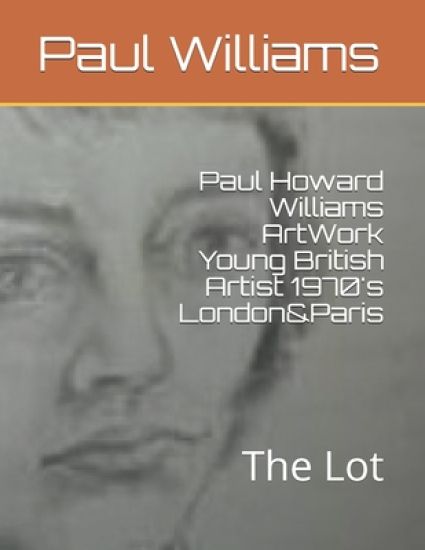
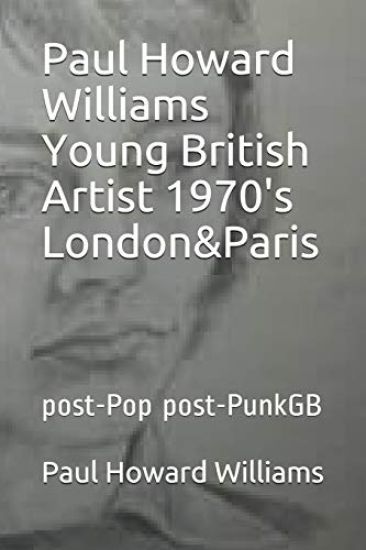
Paul Howard Williams (1954-81) ArtWorkYoung British Artist 1970's London&Paris With most of Pauls artwork there were no titles, only the materials, unsigned, as if not dispensing with any piece, just, yet... These are (mostly) abstract expressionist pieces, of their time, and also ahead of his time. Abstract and expressionist (as in not figurative), they 'can be whatever you want them to be'. Yet, there are many, many figurative references, hints and forms, that are also expressive. As the viewer takes them, how they appear, as faces, a skull, or in the built landscapes, as they chime with the viewer, clearly of Paul's worldview, and life, also of the viewer. There are wonderful vignettes. Like a milk bottle, Parisian window shutters, a deckchair to see the world, the universe, from. There is abstract Landscape, Universal Space, and the felt Transcendental. Pictures, often with near perfect, but never of course perfect, geometric shapes, trapezium and especially circles, or ellipses. Folding and gluing of paper and card as two to three and more multi-dimensional constructions, Paul would use newspaper print, discarded cigarette packets, and found packaging, plain brown or grey paper, and the blackest, reddest, bluest of colour. Occasionally green and yellow. With overdrawn marks whether of chalk, gauche, or paint, made deliberately, and over an indefinite period of time. So that the finished, discarded pieces appear as if unfinished, as every artwork must, leaving room for the viewer, the appreciator... When I'm 64 2018. The Movie. f/b Paul Williams Artwork 1954-81 Enjoy...You Tube: Landscapes Transcendental Spaces: Collage Painting Drawing Construction Sketches. Apparition Explosion Faces in the crowd Windows: Women sitting/playing a flute Paris shutters: painting drawing folded paper constructions overmarked or found as marked card/packaging Deckchair on the Titanic Earth Sky Depend de Vous Le Dancer1 Dancer2 Disque Bleu Japanese print painted copied with from originals Black/White/Grey on Brown paper packaging: Green Blue Space 1 & 2 Part lot of 15 parcels Door/Wall/Fenced-in Insect/Dancer unfolding or collapsing sketches Buildings built environment sketches Matisse Gauloise Longue Caporal L'HUMANITE...changer... Worm bullet-face emerging Milk bottle ledge shutters weather (Paris) Arched Window Battleground flag Landscape blood-lightning Ellipse paintings: Bus-Stop with Moon Cataclysm Cellular Cataclysm Earth Sun cataclysm Egg Moon cataclysm Ellipse tryptych Door/Wall photo with ellipse Starting/finishing-post ellipse painting Tower Block Skull Sun Moon Sea ellipses Landscape Leviathan red spot blood rock sea... Coat and scarf Tom Allen Centre poster 1982 Portrait of Claire Bear Self Portrait Paul Williams (1954-81) (2) Walthamstow Art College 1970-72Chelsea College of Art 1972-75Newham Community Murals 1975-81
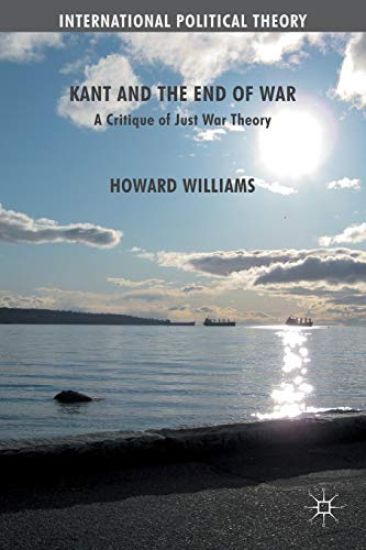
The paperback edition (published in 2016) includes a new preface with a discussion of recent examples.Kant stands almost unchallenged as one of the major thinkers of the European Enlightenment. This book brings the ideas of his critical philosophy to bear on one of the leading political and legal questions of our age: under what circumstances, if any, is recourse to war legally and morally justifiable? This issue was strikingly brought to the fore by the 2003 war in Iraq. The book critiques the tradition of just war thinking and suggests how international law and international relations can be viewed from an alternative perspective that aims at a more pacific system of states. Instead of seeing the theory of just war as providing a stabilizing context within which international politics can be carried out, Williams argues that the theory contributes to the current unstable international condition. The just war tradition is not the silver lining in a generally dark horizon but rather an integral feature of the dark horizon of current world politics. Kant was one of the first and most profound thinkers to moot this understanding of just war reasoning and his work remains a crucial starting point for a critical theory of war today.
“Now we can join Gandhi and Tolstoy and nameless others who encountered this vigorous and invigorating book. Welcome to a company of radicals who believed we could and should stop eating non-human animals. They brought vegetarianism out of history and into the here and now.” -- from the introduction Ethical vegetarianism is no recent development, as this unrivaled historical anthology dramatizes. When it was first published 120 years ago, countless people read and endorsed The Ethics of Diet. But then it became a rare book, hard to find even in libraries. For countless more readers, it is at last available again. In this classic of vegetarian writing, Howard Williams presents a line of thought, a continuous thread, a tradition, a catena of protestation against living on “Butchery.” What he finds striking is the variety of the witnesses, the prophets of “Reformed Dietetics” who have “shrunk from the régime of blood,” including Gautama Buddha, Pythagoras, Plato, Hesiod, Epicurus, Seneca, Ovid, Thomas More, Montaigne, Mandeville, Pope, Voltaire, Swedenborg, Wesley, Rousseau, Shelley, Byron, Lamar-tine, Michelet, Bentham, Sinclair, Schopenhauer, and Thoreau. Their words are accompanied by the vigorous narrative voice of Williams himself, who put to rest, once and for all, the idea that vegetarianism is a fad.
This book shows how the traditional concerns of political theory push it increasingly into the study of international relations. This is done, first, by demonstrating how many of the issues usually dealt with by political theory, such as democracy and justice, arise within an increasingly global context and, secondly, by considering how international issues, such as colonialism and war, are best illuminated by building on the work of political theorists. The book suggests that political theory and international relations theory can now both be successfully engaged in as a joint enterprise only.
This book shows how the traditional concerns of political theory push it increasingly into the study of international relations. This is done, first, by demonstrating how many of the issues usually dealt with by political theory, such as democracy and justice, arise within an increasingly global context and, secondly, by considering how international issues, such as colonialism and war, are best illuminated by building on the work of political theorists. The book suggests that political theory and international relations theory can now both be successfully engaged in as a joint enterprise only.
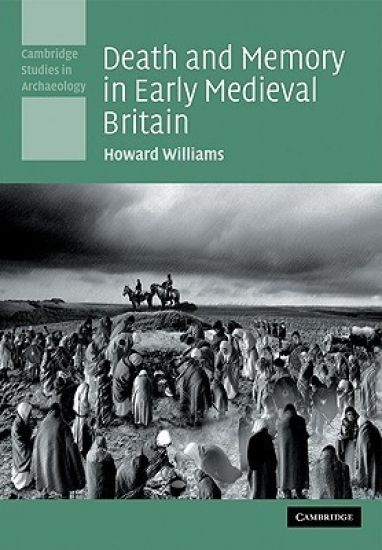
How were the dead remembered in early medieval Britain? Originally published in 2006, this innovative study demonstrates how perceptions of the past and the dead, and hence social identities, were constructed through mortuary practices and commemoration between c. 400–1100 AD. Drawing on archaeological evidence from across Britain, including archaeological discoveries, Howard Williams presents a fresh interpretation of the significance of portable artefacts, the body, structures, monuments and landscapes in early medieval mortuary practices. He argues that materials and spaces were used in ritual performances that served as 'technologies of remembrance', practices that created shared 'social' memories intended to link past, present and future. Through the deployment of material culture, early medieval societies were therefore selectively remembering and forgetting their ancestors and their history. Throwing light on an important aspect of medieval society, this book is essential reading for archaeologists and historians with an interest in the early medieval period.
How were the dead remembered in early medieval Britain? Originally published in 2006, this innovative study demonstrates how perceptions of the past and the dead, and hence social identities, were constructed through mortuary practices and commemoration between c. 400–1100 AD. Drawing on archaeological evidence from across Britain, including archaeological discoveries, Howard Williams presents a fresh interpretation of the significance of portable artefacts, the body, structures, monuments and landscapes in early medieval mortuary practices. He argues that materials and spaces were used in ritual performances that served as 'technologies of remembrance', practices that created shared 'social' memories intended to link past, present and future. Through the deployment of material culture, early medieval societies were therefore selectively remembering and forgetting their ancestors and their history. Throwing light on an important aspect of medieval society, this book is essential reading for archaeologists and historians with an interest in the early medieval period.
The paperback edition (published in 2016) includes a new preface with a discussion of recent examples.Kant stands almost unchallenged as one of the major thinkers of the European Enlightenment. This book brings the ideas of his critical philosophy to bear on one of the leading political and legal questions of our age: under what circumstances, if any, is recourse to war legally and morally justifiable? This issue was strikingly brought to the fore by the 2003 war in Iraq. The book critiques the tradition of just war thinking and suggests how international law and international relations can be viewed from an alternative perspective that aims at a more pacific system of states. Instead of seeing the theory of just war as providing a stabilizing context within which international politics can be carried out, Williams argues that the theory contributes to the current unstable international condition. The just war tradition is not the silver lining in a generally dark horizon but rather an integral feature of the dark horizon of current world politics. Kant was one of the first and most profound thinkers to moot this understanding of just war reasoning and his work remains a crucial starting point for a critical theory of war today.
A year in the life of Peartree House Bed & Breakfast describes the first year of trading of a Bed and Breakfast guest house operation in Scotland and is a cracking good read. Written with hints of the Bryson and Blackadder styles it has escapades as good as any Fawlty Towers episode and has something for everyone. For existing and aspiring B&B owners it is essential reading. Spread over 20 chapters it describes how a male ex-IT programme manager, management consultant and management executive gets to grips with mundane chores while trying to provide a superior service to tourists from around the world. From the arrival of the redundancy cheque through the first traumatic weeks of trading, subsequent quality inspection, the provision of dinner, management of websites and the Internet to the hilarious actions of guests the book is fast moving.