Kirjahaku
Etsi kirjoja tekijän nimen, kirjan nimen tai ISBN:n perusteella.
40 tulosta hakusanalla Hryhoriy Lozinskyy
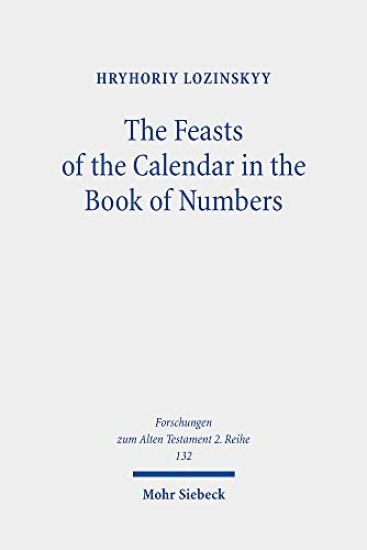
In this monograph, Hryhoriy Lozinskyy studies five feasts contained in Num 28:16-30:1. Each of them is first treated in the light of biblical calendars and other related texts. The calendar in Numbers is later than an earlier version of Leviticus 23; yet the final form of Lev 23:1-44 is also a result of some later additions that took place after Num 28:1-30:1 had been composed. The author also focuses on the history of interpretation: he examines several pseudepigrapha, the Dead Sea Scrolls, and ancient Jewish writers from 200 BCE to 100 CE. He shows how these ancient sources reworked the biblical texts by expansions, clarifications, and omissions. In sum, the calendar in Numbers employs several previous traditions that dealt with the feasts, sacrifices, and calendars in order to compose the detailed list of the offerings for the appointed times. Moreover, it is a text that has been used by many ancient sources, especially in the matter of the sacrifices.
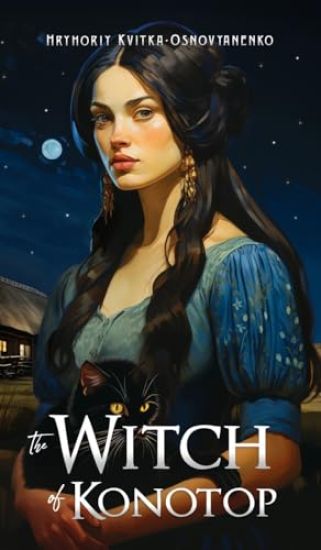
The Witch of Konotop (written in 1833 and published in 1836-37) is a beloved, classic Ukrainian comic novella that is little known outside of Ukraine. Part of the reason for this has been the difficulty in translating its complex stylistic levels that range from archaic Old Church Slavonic to colorful, colloquial Ukrainian. It shares several stylistic similarities to Mykola Hohol's (aka Nikolai Gogol's) Ukrainian horror tales in Evenings on a Farm Near Dikanka (1833). These include a folksy, rambling narrator; comical situations with moral lessons; insignificant detail; ironic asides; as well as a thematic focus on Ukrainian folk belief in witches and demons.
Grigorij Skovoroda. Stranstvujuschij filosof, znatok antichnosti, bez ustali poznajuschij tajny chelovecheskoj prirody i zagadki soznanija. I nachinal on s sebja. Ot voprosov chelovecheskogo bytija on vozvyshalsja do voprosov bytija Boga, zakonov suschestvovanija Vselennoj. Dlja nego ne bylo tem malenkikh i bolshikh, on pytlivo vgljadyvalsja v mir vokrug sebja i stremilsja razgadat: zachem vse eto suschestvuet? My predlagaem vashemu vnimaniju dva proizvedenija, kotorye mnogie issledovateli nazyvajut opredeljajuschimi dlja vsej sistemy Grigorija Skovorody. Eto "Koltso. Druzheskij razgovor o dushevnom mire" i "Razgovor, nazyvaemyj Alfavit, ili Bukvar mira". V tsentre oboikh proizvedenij problema "srodnosti" - to est sootvetstvija zhizni cheloveka ego "prirode", sledovanija svoemu prednaznacheniju. A eto problema vechnaja.
For the first time in the last hundred years, the prose of Grigory Kvitka-Osnovianenko is returning appears to the readers as she really was. With its own rhythm and specialSlobojan dialect. Vengeful witches, the dead who make Easter, enchanted treasures, a cat's field - a witness against a murderer... It appears before us a bright and mystical picture of life in the Ukrainian lands from Konotop to Kharkiv The stories of Kvitka-Osnovyanenko are also European plots, transferred on national soil, sermons, literary polemics, language game. And no one knows about it don't they write in the textbooks.
Do knigi Grigorija Skovorodi (1722-1794) "Kiltse" uvijshli traktati, dialogi, pritchi. Kharakternimi risami filosofiji mittsja je jiji dialogizm i barokovij simvolichno-obraznij stil mislennja. U jogo tvorakh biblijna problematika pereplitajetsja z idejami platonizmu ta stojitsizmu. Zokrema u dialozi "Kiltse" filosof rozvivaje ta konkretizuje svoje vchennja pro najavnist dvokh natur, obgruntovuje ideju pro te, scho cherez piznannja nevidimoji naturi rechej prokhodit shljakh do samopiznannja ta dosjagnennja schastja i spokoju dukhu. Pomitne mistse u dialozi majut j mifologichni ta folklorni sjuzheti.Vidannja zdijsnene v nalezhnomu akademichnomu formati j stane tsinnim dzherelom dlja vsikh, khto vivchaje tvorchist Skovorodi.
Do tsogo tomu vvijshli traktati, dialogi, pritchi Grigorija Skovorodi (1722-1794), napisani nim uprodovzh 70-90-kh rokiv XVIII st. V nikh Skovoroda rozvivaje vlasne filosofsko-etichne vchennja pro samopiznannja i schastja, scho gruntujetsja na sporidnenij pratsi. Sotsialni aspekti zhittjedijalnosti ljudini mislitel rozkrivaje u vlasnikh etichnikh i pedagogichnikh pogljadakh. Dejaki z napisanikh naprikintsi svogo zhittja pritch filosof prisvjativ problemi vikhovannja molodi. Vin navchav tak, jak zhiv, a zhiv tak, jak navchav. Tvori Grigorija Skovorodi uvijshli do skarbnitsi ukrajinskoji kulturi, pedagogiki j literaturi ta je aktualnimi i v nash chas.Vidannja zdijsnene v nalezhnomu akademichnomu formati j stane tsinnim dzherelom dlja vsikh, khto vivchaje tvorchist Skovorodi.
Favorite poems. Volume 3
Hryhoriy Falkovych; Lina Kostenko; Leonid Hlibov; Pavlo Tychyna; Mykola Vingranovsky; Ludwik Jerzy Kern; Karina Linova; Claude Roy; Mykola Voronyi; Neonila Stefurak
A-ba-ba-ha-la-ma-ha
2018
sidottu
The long-awaited third and final volume of "Favorite Poems"! In total, more than 150 wonderful poems by Ukrainian and foreign poets for all tastes. With drawings by the best Ukrainian illustrators. A luxurious gift for every family!
Abu Karakambada. Koliskova dlja M?shel? (Abu Karakambad. Lullaby for Michelle)
Hryhoriy Falkovych; Sofiia Tomilenko
Crocus
2022
sidottu
Rare-earth elements in the technology of obtaining A3B5 materials
Rostyslav Krukovskyi; Hryhoriy Ilchuck; Semen Krukovskyi
Lap Lambert Academic Publishing
2018
nidottu
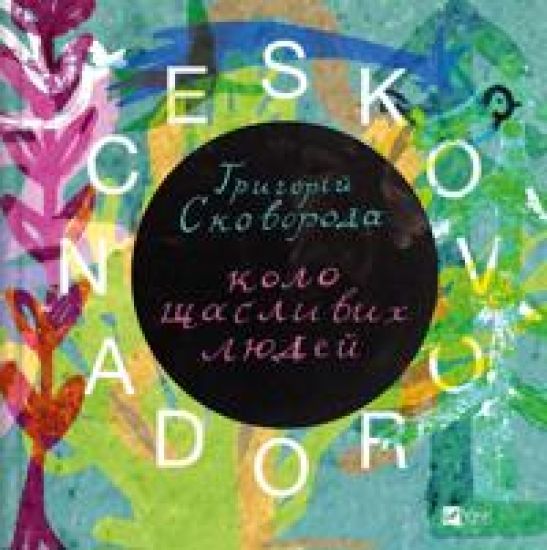
SKOVORODANCE. Kolo schaslivikh ljudej
Serhiy Zhadan; Taras Lutyy; Hryhoriy Skovoroda; Oleksandr Filonenko; Vadim Nazarenko; Nazar Fedorak
Vivat
2025
sidottu
Kniga "SKOVORODANCE. Kolo schaslivikh ljudej" - tse artbuk, do jakogo vkhodjat odinadtsjat pisen Grigorija Skovorodi, a takozh odin virsh Sergija Zhadana, jakij poet i prozajik prisvjativ mandrivnomu mudretsju. Pislja liriki Skovorodi znakhodjatsja profesijni komentari vid suchasnikh mittsiv i filosofiv, jaki dozvoljajut glibshe osmisliti fundamentalni ideji tvoriv.Vidannja oformlene iljustratsijami Vitalija Kokhana: kozhna storinka knigi - tse neperesichna sumish talantu khudozhnika v obrobtsi dizajnerki Nadiji Velichko. U vizualnomu stili vidbivajetsja unikalnist filosofiji Skovorodi ta jogo svitogljadu. Grigorij Savich keruvavsja poklikom sertsja, a u svojikh mirkuvannjakh tjagnuvsja do rozpechenogo sontsja schastja. Mislitel pokazhe, jak pravilno koristuvatisja i zmitsnjuvati glibinnij oseredok, koli vin opinivsja pid tiskom strazhdan i mli.
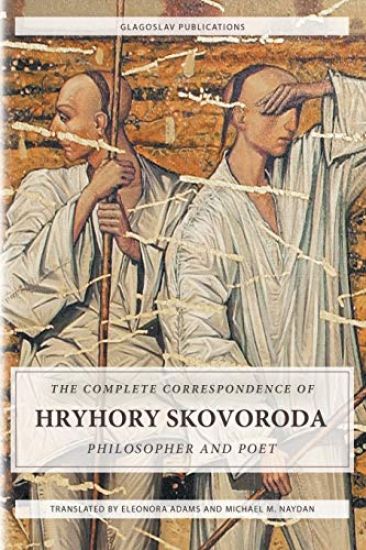
The Complete Correspondence of Hryhory Skovoroda
Hryhory Skovoroda
Glagoslav Publications B.V.
2016
pokkari
The Complete Correspondence of Hryhory Skovoroda
Hryhory Skovoroda
Glagoslav Publications B.V.
2016
sidottu
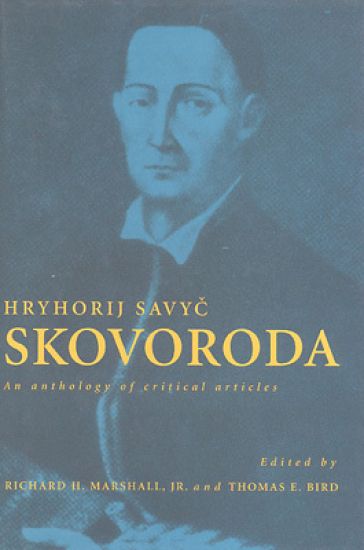
Hryhorij Savyc Skovoroda
Canadian Institute of Ukrainian Studies
1994
sidottu
The essays in this collection of symposium papers about the eminent Ukrainian philosopher and poet Hryhorij Skovoroda (1722-94) examine this unique figure from a number of perspectives: historical, social, literary, pedagogical, linguistic, theological, and philosophical. Hryhorij Skovoroda is a major figure in the history of Ukrainian and Russian literature and philosophy. Educated at the Kyiv Mohyla Academy, he served variously as music director of the Russian imperial mission in Hungary, private tutor, and instructor of ethics and poetics at the Kharkiv Collegium. The last decades of his life, which he spent wandering about eastern Ukraine, were devoted to writing and contemplation. Skovoroda's writings--verse, fables, philosophical dialogues--are profoundly steeped in biblical tradition and characterized by the striking use of symbol and metaphor, as well as sophisticated linguistic experimentation. His influence on Ukrainian and Russian writers began in his own lifetime and has continued and grown ever since. It is strongly evident in the works of such figures as Taras Shevchenko, Nikolai Gogol, Andrei Belyj, and Vasyl' Barka, among others. Skovoroda is an indelible presence in the realms of philosophy, literature, religion, and linguistics. Yet he is inadequately appreciated, particularly in the West. Contributors include Dmytro Cyzevs'kyj, Karen L. Black, Stephen Scherer, George Y. Shevelov, Bohdan Rubchak, Bohdan Struminski, George Kline, Taras Zakydalsky, Mikhail Weiskopf, Aleksandr Lavrov, and others. This volume also includes an exhaustive bibliography of Skovorodiana compiled by Richard Hantula. See Dmytro Cyzevs'kyj, Nikolai Gogol, Ballad, and Lyceum in the Encyclopedia of Ukraine.
The Garden of Divine Songs and Collected Poetry of Hryhory Skovoroda
Hryhory Skovoroda
Glagoslav Publications Ltd.
2016
pokkari
The Garden of Divine Songs and Collected Poetry of Hryhory Skovoroda
Hryhory Skovoroda
Glagoslav Publications Ltd.
2016
sidottu