Kirjojen hintavertailu. Mukana 11 241 044 kirjaa ja 12 kauppaa.

Kirjahaku

Etsi kirjoja tekijän nimen, kirjan nimen tai ISBN:n perusteella.

1000 tulosta hakusanalla Hubert Tapia

Dr. Hulda Clark Cure for Cancer

Dr. Hulda Clark Cure for Cancer

Hubert Tapia

Lulu.com
2025
pokkari
Cancer remains one of the most feared and misunderstood diseases of modern times. Traditional approaches often focus exclusively on removing or destroying tumors through surgery, chemotherapy, or radiation, yet these methods frequently fail to address the root causes of malignancy. Dr. Hulda Clark, a pioneering researcher in bioenergetics and holistic medicine, proposed a radically different perspective: cancer is not merely a collection of rogue cells, but a symptom of deeper imbalances in the body caused by parasites, viruses, toxins, and organ dysfunction. Her approach combines diagnostic precision, energetic intervention, nutritional strategy, and herbal therapy to create a comprehensive plan for both prevention and treatment. At the core of Dr. Clark's method is the recognition that disease thrives in an environment of toxicity and energetic disruption. Parasites, fungi, and viruses, often undetectable by conventional medicine, inhabit tissues and release metabolic waste that impairs cellular function. Environmental pollutants, heavy metals, and solvents further compromise organ systems, particularly the liver, kidneys, and lymphatic network, creating fertile ground for cancer to develop. By addressing these underlying contributors, Dr. Clark sought to remove the "soil" that allows malignancies to grow, rather than targeting tumors alone. To achieve this, she developed two groundbreaking tools: the Syncrometer and the Zapper. The Syncrometer acts as a highly sensitive diagnostic device, detecting the energetic signatures of pathogens, toxins, and imbalances within the body. It enables individuals to identify hidden infections, track progress, and tailor interventions with precision. The Zapper, on the other hand, uses specific electrical frequencies to disrupt the cellular energy of parasites, viruses, and fungi, rendering them inactive or causing their destruction. When used in conjunction with carefully designed herbal remedies, these devices provide a powerful synergy: the Zapper weakens harmful organisms, while herbs like Black Walnut Hull, Wormwood, and Cloves eliminate them and support organ detoxification.

Dr. Hulda Clark Zapper Frequencies Handbook
This handbook is a comprehensive exploration of one of the most fascinating frontiers in alternative medicine - the world of frequency healing and bioelectric therapy as pioneered by Dr. Hulda Regehr Clark. Rooted in the idea that every living organism resonates at a specific frequency, Dr. Clark's research proposed that many diseases - from chronic infections to degenerative conditions - may be influenced or even caused by parasitic, bacterial, or viral interference within the body's electrical system. By introducing gentle, positively offset electrical currents through the skin, her device - the zapper - sought to neutralize these pathogens without drugs, surgery, or chemical intervention. The foundation of the zapper lies in a remarkable discovery shared by earlier visionaries like Royal Raymond Rife, who in the 1930s demonstrated that microbes could be selectively destroyed by resonant electromagnetic frequencies. Decades later, Dr. Clark revived and simplified this principle, making it accessible to ordinary individuals. Her goal was not just scientific exploration but personal empowerment - to give people the means to take part in their own healing through safe, non-invasive frequency therapy. This handbook serves as both a scientific reference and a practical guide, bridging the gap between theory and application. It is designed to help readers understand the mechanisms of frequency medicine, the construction and operation of zappers, and the use of frequency tables that correspond to specific pathogens. The text unites Dr. Clark's original discoveries with the broader field of bio-resonance and frequency therapy, integrating insights from modern programmable frequency devices and Rife-inspired technologies. Throughout this volume, readers will learn how the body itself functions as a bioelectric organism, constantly pulsing with measurable voltage and frequency. Every cell communicates through microcurrents, and every organ system has a vibrational pattern that can be influenced - harmonized or disrupted - by external energy. Disease, in this context, is viewed as a distortion of the body's natural resonance. The zapper's role is to restore coherence by gently reintroducing stabilizing frequencies that weaken or disintegrate pathogenic interference. Beyond the theoretical framework, the book offers step-by-step instructions for both newcomers and advanced practitioners. You will find simple guides on how to build or customize your own zapper, p
Hubert

Hubert

Kenneth Stone; Diane Baxter Trapeni

Createspace Independent Publishing Platform
2015
nidottu
Hubert is Jack's best friend. See how much he is willing to do just to be with Jack, Forever
Hubert Harrison

Hubert Harrison

Jeffrey B Perry

Columbia University Press
2008
sidottu
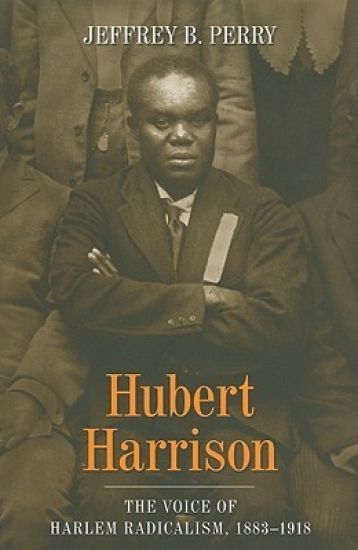
Hubert Harrison was an immensely skilled writer, orator, educator, critic, and political activist who, more than any other political leader of his era, combined class consciousness and anti-white-supremacist race consciousness into a coherent political radicalism. Harrison's ideas profoundly influenced "New Negro" militants, including A. Philip Randolph and Marcus Garvey, and his synthesis of class and race issues is a key unifying link between the two great trends of the Black Liberation Movement: the labor- and civil-rights-based work of Martin Luther King Jr. and the race and nationalist platform associated with Malcolm X. The foremost Black organizer, agitator, and theoretician of the Socialist Party of New York, Harrison was also the founder of the "New Negro" movement, the editor of Negro World, and the principal radical influence on the Garvey movement. He was a highly praised journalist and critic (reportedly the first regular Black book reviewer), a freethinker and early proponent of birth control, a supporter of Black writers and artists, a leading public intellectual, and a bibliophile who helped transform the 135th Street Public Library into an international center for research in Black culture. His biography offers profound insights on race, class, religion, immigration, war, democracy, and social change in America.
Hubert Harrison

Hubert Harrison

Jeffrey B Perry

Columbia University Press
2010
pokkari
Hubert Harrison was an immensely skilled writer, orator, educator, critic, and political activist who, more than any other political leader of his era, combined class consciousness and anti-white-supremacist race consciousness into a coherent political radicalism. Harrison's ideas profoundly influenced "New Negro" militants, including A. Philip Randolph and Marcus Garvey, and his synthesis of class and race issues is a key unifying link between the two great trends of the Black Liberation Movement: the labor- and civil-rights-based work of Martin Luther King Jr. and the race and nationalist platform associated with Malcolm X. The foremost Black organizer, agitator, and theoretician of the Socialist Party of New York, Harrison was also the founder of the "New Negro" movement, the editor of Negro World, and the principal radical influence on the Garvey movement. He was a highly praised journalist and critic (reportedly the first regular Black book reviewer), a freethinker and early proponent of birth control, a supporter of Black writers and artists, a leading public intellectual, and a bibliophile who helped transform the 135th Street Public Library into an international center for research in Black culture. His biography offers profound insights on race, class, religion, immigration, war, democracy, and social change in America.
Hubert Harrison

Hubert Harrison

Jeffrey B. Perry

Columbia University Press
2020
sidottu
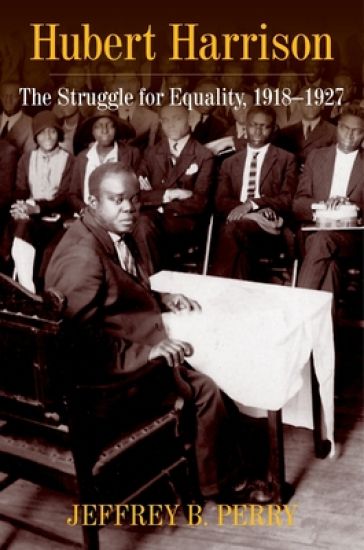
The St. Croix–born, Harlem-based Hubert Harrison (1883–1927) was a brilliant writer, orator, educator, critic, and activist who combined class consciousness and anti-white-supremacist race consciousness into a potent political radicalism. Harrison’s ideas profoundly influenced “New Negro” militants, including A. Philip Randolph and Marcus Garvey, and his work is a key link in the two great strands of the Civil Rights/Black Liberation struggle: the labor- and civil-rights movement associated with Randolph and Martin Luther King Jr. and the race and nationalist movement associated with Garvey and Malcolm X.In this second volume of his acclaimed biography, Jeffrey B. Perry traces the final decade of Harrison’s life, from 1918 to 1927. Perry details Harrison’s literary and political activities, foregrounding his efforts against white supremacy and for racial consciousness and unity in struggles for equality and radical social change. The book explores Harrison’s role in the militant New Negro Movement and the International Colored Unity League, as well as his prolific work as a writer, educator, and editor of the New Negro and the Negro World. Perry examines Harrison’s interactions with major figures such as Garvey, Randolph, J. A. Rogers, Arthur Schomburg, and other prominent individuals and organizations as he agitated, educated, and organized for democracy and equality from a race-conscious, radical internationalist perspective. This magisterial biography demonstrates how Harrison’s life and work continue to offer profound insights on race, class, religion, immigration, war, democracy, and social change in America.
Hubert Harrison

Hubert Harrison

Jeffrey B. Perry

Columbia University Press
2020
pokkari
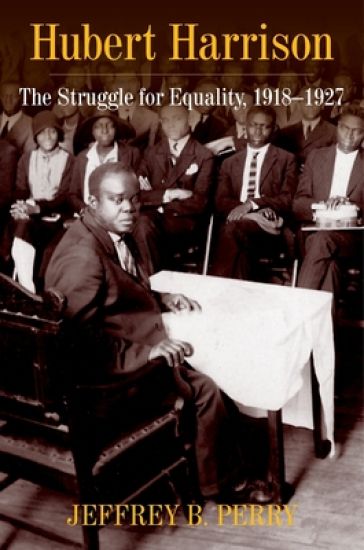
The St. Croix–born, Harlem-based Hubert Harrison (1883–1927) was a brilliant writer, orator, educator, critic, and activist who combined class consciousness and anti-white-supremacist race consciousness into a potent political radicalism. Harrison’s ideas profoundly influenced “New Negro” militants, including A. Philip Randolph and Marcus Garvey, and his work is a key link in the two great strands of the Civil Rights/Black Liberation struggle: the labor- and civil-rights movement associated with Randolph and Martin Luther King Jr. and the race and nationalist movement associated with Garvey and Malcolm X.In this second volume of his acclaimed biography, Jeffrey B. Perry traces the final decade of Harrison’s life, from 1918 to 1927. Perry details Harrison’s literary and political activities, foregrounding his efforts against white supremacy and for racial consciousness and unity in struggles for equality and radical social change. The book explores Harrison’s role in the militant New Negro Movement and the International Colored Unity League, as well as his prolific work as a writer, educator, and editor of the New Negro and the Negro World. Perry examines Harrison’s interactions with major figures such as Garvey, Randolph, J. A. Rogers, Arthur Schomburg, and other prominent individuals and organizations as he agitated, educated, and organized for democracy and equality from a race-conscious, radical internationalist perspective. This magisterial biography demonstrates how Harrison’s life and work continue to offer profound insights on race, class, religion, immigration, war, democracy, and social change in America.
Hubert's War

Hubert's War

Colin Orr

Lulu.com
2019
nidottu
The war diaries and letters home of Major John Hubert Penrose during the 1940 BEF campaign that ended at Dunkirk and the 1944 campaign in NW Europe from Normandy to Geilenkirchen.
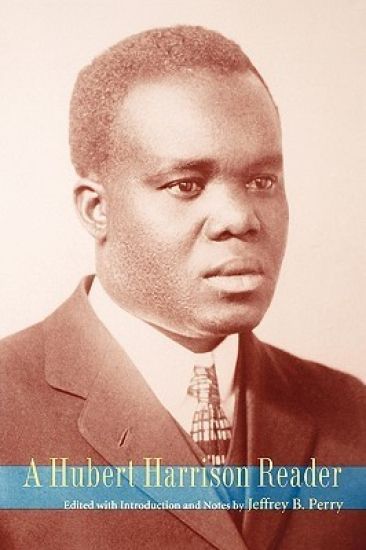
A Hubert Harrison Reader

A Hubert Harrison Reader

Hubert Harrison

Wesleyan University Press
2001
nidottu
The brilliant writer, orator, educator, critic, and activist Hubert Harrison (1883 - 1927) is one of the truly important, yet neglected, figures of early twentieth-century America. Known as "the father of Harlem radicalism,' and a leading Socialist party speaker who advocated that socialists champion the cause of the Negro as a revolutionary doctrine, Harrison had an important influence on a generation of race and class radicals, including Marcus Garvey and A. Philip Randolph. Harrison envisioned a socialism that had special appeal to African-Americans, and he affirmed the duty of socialists to oppose race-based oppression. Despite high praise from his contemporaries, Harrison's legacy has largely been neglected. This reader redresses the imbalance; Harrison's essays, editorials, reviews, letters, and diary entries offer a profound, and often unique, analysis of issues, events and individuals of early twentieth-century America. His writings also provide critical insights and counterpoints to the thinking of W. E. B. DuBois, Booker T. Washington and Marcus Garvey. The reader is organized thematically to highlight Harrison's contributions to the debates on race, class, culture, and politics of his time. The writings span Harrison's career and the evolution of his thought, and include extensive political writings, editorials, meditations, reviews of theater and poetry, and deeply evocative social commentary.