
Kirjahaku
Etsi kirjoja tekijän nimen, kirjan nimen tai ISBN:n perusteella.
1000 tulosta hakusanalla Hugh B. Chare



Hugh B. Monjar, Also Known as H. B. Monjar, Petitioner, V. the United States of America. U.S. Supreme Court Transcript of Record with Supporting Pleadings
Daniel O Hastings
Gale, U.S. Supreme Court Records
2011
pokkari

The Strange & Exciting Adventures of Mr. HB Sticky, Part 1: Part 1, of An Amusing Series of Stories by Hugh B Maguire
Hugh B. Maguire
Createspace Independent Publishing Platform
2013
nidottu

Adventure Tales #1 (Special Hugh B. Cave Issue)
Wildside Press
2004
pokkari

Vision Caster: The Story of Hugh B. Skelton
E. Amelia Billingsley
Createspace Independent Publishing Platform
2016
nidottu
Rev. Hugh B. Skelton began his missions work in Cuba and barely escaped Fidel Castro's arrest warrant in 1960. He has since set up work and traveled in over 70 countries. Read of his Cuban days and his later adventures in the "regions beyond".
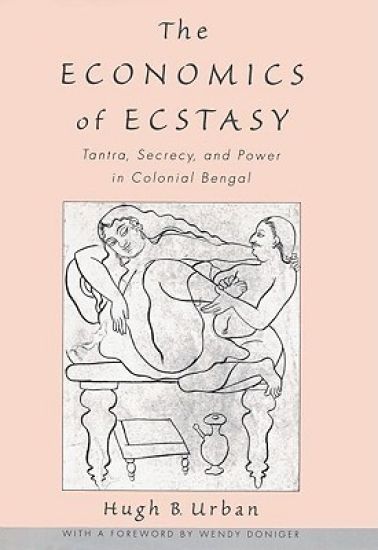
This is a study of the Bengali Kartabhaja sect and its place in the broader movement of Tantrism, an Indian religious movement employing purposely shocking sexual language and rituals. Urban looks closely at the relationship between the rise of the Kartabhajas, who flourished at the turn of the 19th century, and the changing economic context of colonial Bengal. Made up of the poor lower classes laboring in the marketplaces and factories of Calcutta, the Kartabhajas represent "the underworld of the imperial city." Urban shows that their esoteric poetry and songs are in fact saturated with the language of the marketplace and the bazaar, which becomes for them the key metaphor used to communicate secret knowledge and mystical teachings.

The powers of political secrecy and social spectacle have been taken to surreal extremes recently. Witness the twin terrors of a president who refuses to disclose dealings with foreign powers while the private data of ordinary citizens is stolen and marketed in order to manipulate consumer preferences and voting outcomes. We have become accustomed to thinking about secrecy in political terms and personal privacy terms. In this bracing, new work, Hugh Urban wants us to focus these same powers of observation on the role of secrecy in religion. With Secrecy, Urban investigates several revealing instances of the power of secrecy in religion, including nineteenth-century Scottish Rite Freemasonry, the sexual magic of a Russian-born Parisian mystic; the white supremacist BrüderSchweigen or “Silent Brotherhood” movement of the 1980s, the Five Percenters, and the Church of Scientology. An electrifying read, Secrecy is the culmination of decades of Urban’s reflections on a vexed, ever-present subject.
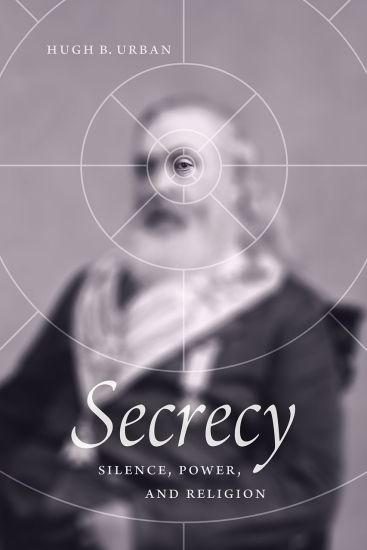
The powers of political secrecy and social spectacle have been taken to surreal extremes recently. Witness the twin terrors of a president who refuses to disclose dealings with foreign powers while the private data of ordinary citizens is stolen and marketed in order to manipulate consumer preferences and voting outcomes. We have become accustomed to thinking about secrecy in political terms and personal privacy terms. In this bracing, new work, Hugh Urban wants us to focus these same powers of observation on the role of secrecy in religion. With Secrecy, Urban investigates several revealing instances of the power of secrecy in religion, including nineteenth-century Scottish Rite Freemasonry, the sexual magic of a Russian-born Parisian mystic; the white supremacist BrüderSchweigen or “Silent Brotherhood” movement of the 1980s, the Five Percenters, and the Church of Scientology. An electrifying read, Secrecy is the culmination of decades of Urban’s reflections on a vexed, ever-present subject.

A provocative study of contemporary Tantra as a dynamic living tradition. Tantra, one of the most important religious currents in South Asia, is often misrepresented as little more than ritualized sex. Through a mixture of ethnography and history, Hugh B. Urban reveals a dynamic living tradition behind the sensationalist stories. Urban shows that Tantric desire goes beyond the erotic, encompassing such quotidian experiences as childbearing and healing. He traces these holistic desires through a series of unique practices: institutional Tantra centered on gurus and esoteric rituals; public Tantra marked by performance and festival; folk Tantra focused on magic and personal well-being; and popular Tantra imagined in fiction, film, and digital media. The result is a provocative new description of Hindu Tantra that challenges us to approach religion as something always entwined with politics and culture, thoroughly entangled with ordinary needs and desires.
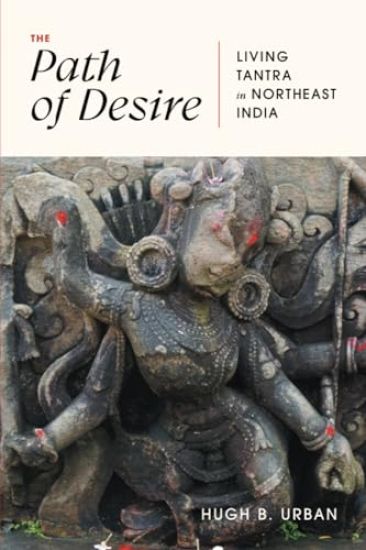
A provocative study of contemporary Tantra as a dynamic living tradition. Tantra, one of the most important religious currents in South Asia, is often misrepresented as little more than ritualized sex. Through a mixture of ethnography and history, Hugh B. Urban reveals a dynamic living tradition behind the sensationalist stories. Urban shows that Tantric desire goes beyond the erotic, encompassing such quotidian experiences as childbearing and healing. He traces these holistic desires through a series of unique practices: institutional Tantra centered on gurus and esoteric rituals; public Tantra marked by performance and festival; folk Tantra focused on magic and personal well-being; and popular Tantra imagined in fiction, film, and digital media. The result is a provocative new description of Hindu Tantra that challenges us to approach religion as something always entwined with politics and culture, thoroughly entangled with ordinary needs and desires.
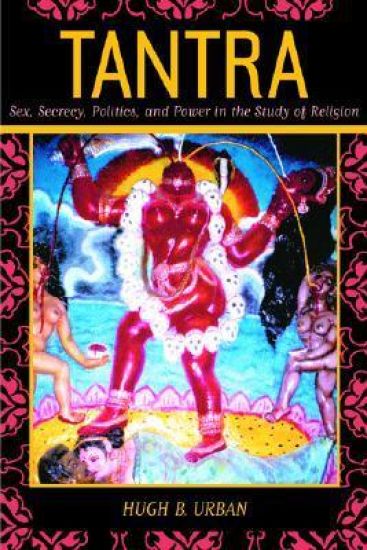
A complex body of religious practices that spread throughout the Hindu, Buddhist, and Jain traditions; a form of spirituality that seemingly combines sexuality, sensual pleasure, and the full range of physical experience with the religious life - Tantra has held a central yet conflicted role within the Western imagination ever since the first 'discovery' of Indian religions by European scholars. Always radical, always extremely Other, Tantra has proven a key factor in the imagining of India. This book offers a critical account of how the phenomenon has come to be. Tracing the complex genealogy of Tantra as a category within the history of religions, Hugh B. Urban reveals how it has been formed through the interplay of popular and scholarly imaginations. Tantra emerges as a product of mirroring and misrepresentation at work between East and West - a dialectical category born out of the ongoing play between Western and Indian minds. Combining historical detail, textual analysis, popular cultural phenomena, and critical theory, this book shows Tantra as a shifting amalgam of fantasies, fears, and wish-fulfillment, at once native and Other, that strikes at the very heart of our constructions of the exotic Orient and the contemporary West.
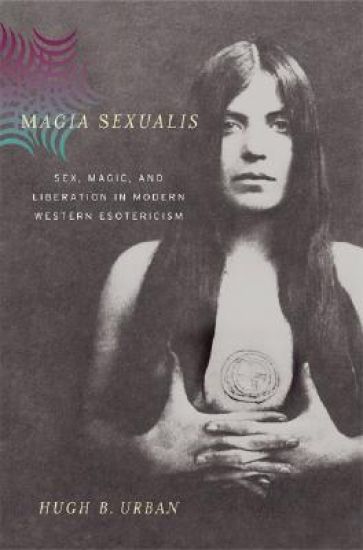
Sexuality and the occult arts have long been associated in the western imagination, but it was not until the nineteenth century that a large and sophisticated body of literature on sexual magic - the use of sex as a source of magical power - emerged. This book, the first history of western sexual magic as a modern spiritual tradition, places these practices in the context of the larger discourse surrounding sexuality in American and European society over the last 150 years to discover how sexual magic was transformed from a terrifying medieval nightmare of heresy and social subversion into a modern ideal of personal empowerment and social liberation. Focusing on a series of key figures including American spiritualist Paschal Beverly Randolph, Aleister Crowley, Julius Evola, Gerald Gardner, and Anton LaVey, Hugh Urban traces the emergence of sexual magic out of older western esoteric traditions including Gnosticism and Kabbalah, which were progressively fused with recently-discovered eastern traditions such as Hindu and Buddhist Tantra. His study gives remarkable new insight into sexuality in the modern era, specifically on issues such as the politics of birth control, the classification of sexual 'deviance', debates over homosexuality and feminism, and the role of sexuality in our own new world of post-modern spirituality, consumer capitalism, and the Internet.

New Age, Neopagan, and New Religious Movements
Hugh B. Urban
University of California Press
2015
sidottu
New Age, Neopagan, and New Religious Movements is the most extensive study to date of modern American alternative spiritual currents. Hugh B Urban covers a range of emerging religions from the mid-nineteenth century to the present, including the Nation of Islam, Mormonism, Scientology, ISKCON, Wicca, the Church of Satan, Peoples Temple, and the Branch Davidians. This essential text engages students by addressing major theoretical and methodological issues in the study of new religions and is organized to guide students in their learning. Each chapter focuses on one important issue involving a particular faith group, providing readers with examples that illustrate larger issues in the study of religion and American culture. Urban addresses such questions as, Why has there been such a tremendous proliferation of new spiritual forms in the past 150 years, even as our society has become increasingly rational, scientific, technological, and secular? Why has the United States become the heartland for the explosion of new religious movements? How do we deal with complex legal debates, such as the use of peyote by the Native American Church or the practice of plural marriage by some Mormon communities? And how do we navigate issues of religious freedom and privacy in an age of religious violence, terrorism, and government surveillance?
New Age, Neopagan, and New Religious Movements
Hugh B. Urban
University of California Press
2015
pokkari
New Age, Neopagan, and New Religious Movements is the most extensive study to date of modern American alternative spiritual currents. Hugh B. Urban covers a range of emerging religions from the mid-nineteenth century to the present, including the Nation of Islam, Mormonism, Scientology, ISKCON, Wicca, the Church of Satan, Peoples Temple, and the Branch Davidians. This essential text engages students by addressing major theoretical and methodological issues in the study of new religions and is organized to guide students in their learning. Each chapter focuses on one important issue involving a particular faith group, providing readers with examples that illustrate larger issues in the study of religion and American culture. Urban addresses such questions as, Why has there been such a tremendous proliferation of new spiritual forms in the past 150 years, even as our society has become increasingly rational, scientific, technological, and secular? Why has the United States become the heartland for the explosion of new religious movements? How do we deal with complex legal debates, such as the use of peyote by the Native American Church or the practice of plural marriage by some Mormon communities? And how do we navigate issues of religious freedom and privacy in an age of religious violence, terrorism, and government surveillance?

Zorba the Buddha is the first comprehensive study of the life, teachings, and following of the controversial Indian guru known in his youth as Bhagwan Shree Rajneesh and in his later years as Osho (1931-1990). Most Americans today remember him only as the "sex guru" and the "Rolls Royce guru," who built a hugely successful but scandal-ridden utopian community in central Oregon during the 1980s. Yet Osho was arguably the first truly global guru of the twentieth century, creating a large transnational movement that traced a complex global circuit from post-Independence India of the 1960s to Reagan's America of the 1980s and back to a developing new India in the 1990s. The Osho movement embodies some of the most important economic and spiritual currents of the past forty years, emerging and adapting within an increasingly interconnected and conflicted late-capitalist world order. Based on extensive ethnographic and archival research, Hugh Urban has created a rich and powerful narrative that is a must-read for anyone interested in religion and globalization.
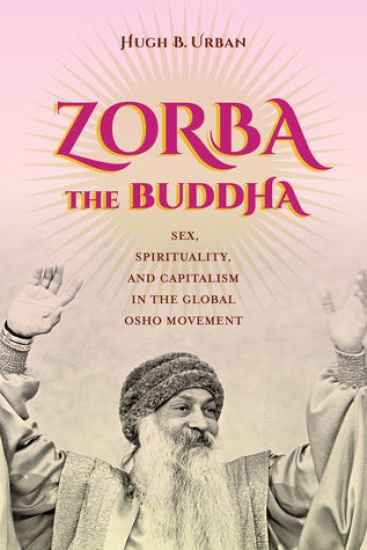
Zorba the Buddha is the first comprehensive study of the life, teachings, and following of the controversial Indian guru known in his youth as Bhagwan Shree Rajneesh and in his later years as Osho (1931-1990). Most Americans today remember him only as the "sex guru" and the "Rolls Royce guru," who built a hugely successful but scandal-ridden utopian community in central Oregon during the 1980s. Yet Osho was arguably the first truly global guru of the twentieth century, creating a large transnational movement that traced a complex global circuit from post-Independence India of the 1960s to Reagan's America of the 1980s and back to a developing new India in the 1990s. The Osho movement embodies some of the most important economic and spiritual currents of the past forty years, emerging and adapting within an increasingly interconnected and conflicted late-capitalist world order. Based on extensive ethnographic and archival research, Hugh Urban has created a rich and powerful narrative that is a must-read for anyone interested in religion and globalization.
Scientology is one of the wealthiest and most powerful new religions to emerge in the past century. To its detractors, L. Ron Hubbard's space-age mysticism is a moneymaking scam and sinister brainwashing cult. But to its adherents, it is humanity's brightest hope. Few religious movements have been subject to public scrutiny like Scientology, yet much of what is written about the church is sensationalist and inaccurate. Here for the first time is the story of Scientology's protracted and turbulent journey to recognition as a religion in the postwar American landscape. Hugh Urban tells the real story of Scientology from its cold war-era beginnings in the 1950s to its prominence today as the religion of Hollywood's celebrity elite. Urban paints a vivid portrait of Hubbard, the enigmatic founder who once commanded his own private fleet and an intelligence apparatus rivaling that of the U.S. government. One FBI agent described him as "a mental case," but to his followers he is the man who "solved the riddle of the human mind." Urban details Scientology's decades-long war with the IRS, which ended with the church winning tax-exempt status as a religion; the rancorous cult wars of the 1970s and 1980s; as well as the latest challenges confronting Scientology, from attacks by the Internet group Anonymous to the church's efforts to suppress the online dissemination of its esoteric teachings. The Church of Scientology demonstrates how Scientology has reflected the broader anxieties and obsessions of postwar America, and raises profound questions about how religion is defined and who gets to define it.
The presidency of George W. Bush contains, at its very heart, a fundamental paradox and apparent contradiction. On the one hand, this is the most outspokenly religious president in U.S. history — a man who claims to be called by God to lead our country. Yet at the same time, this is also the most secretive administration in U.S. history, displaying an intense preoccupation with information-control, an obsession with secrecy more extreme than the Nixon White House. The Secrets of the Kingdom is the first book to critically examine the complex relationship between faith and concealment in the Bush White House. The apparent contradiction between religion and secrecy in this administration, the book argues, is really only that - an apparent one. In fact, religion and secrecy not only co-existent in this White House, they are intimately intertwined. For both are, ultimately, about power — namely, the power that comes from the appeal to a divine authority, and the power that comes form the calculated control of valuable information. The result of this mix of religious fervor and obsessive secrecy has been an unprecedented assertion of executive power and defiance of public or congressional oversight. Ultimately, such a blending of religious faith and government secrecy has little in common with the model of democracy outlined in our Constitution; on the contrary, this is its very undoing.