
Kirjahaku
Etsi kirjoja tekijän nimen, kirjan nimen tai ISBN:n perusteella.
1000 tulosta hakusanalla Hugh Bailey

A biography of Alabama's first Senator, this book is also the fascinating story of Southern frontier life as portrayed in contemporary letters and documents. When Madison County, Alabama, was still wilderness, Walker trekked across the mountains from Georgia with his bride, Matilda Pope, his slaves, and all his household possessions, to build a plantation near Huntsville. Here he began his extraordinary political career: member of the first territorial legislature; speaker of the house in the second; U.S. territorial judge; president of Alabama's Constitutional Convention; and when statehood was won, first U.S. Senator. Though his term in the Senate was cut short by illness, resignation, and death, in the four years he served, he met head-on the most controversial issues of his day--the Missouri Compromise, acquisition of Florida, and land relief legislation. It was in land relief that he made his most significant contribution, for he fathered the 1821 Land Law upon which new public-lands legislation for a decade thereafter was based. His own state wildly acclaimed him upon its passage; other frontier states had good reason to make him the public hero he became. But a year later, at 40, he was dead of tuberculosis.
'Bailey's account is sharply focused on Murphy's public life and thought [and] the result is a well-researched, balanced, straightforward narrative that will serve as the standard authority.' -American Historical Review

To avoid uncontrolled climate change, greenhouse gas emissions will have to be brought under control by major emitters outside the affluent West. The authors investigate the political obstacles in BRIC countries and what their governments could do to strengthen climate policies without incurring serious political damage.
Why, despite two decades of climate policy, have affluent democracies made so little progress in cutting greenhouse gas emissions? We know that there are ways of doing this that are both practical and affordable. It is politics that is the problem. Stringent climate policies may lead companies to redirect investment elsewhere, or lead voters to retaliate at the ballot box. There are many political obstacles to stronger action. What can be done? Based on an analysis of the logic of policy making, plus observation of recent developments in climate politics, this book identifies a broad range of political strategies that are available to governments that wish to take more effective action against climate change while avoiding serious political damage. Separate chapters deal with strategies relating to unilateral action, persuasion, political exchange, and changing the terms of political exchange. This is the first book-length study of political strategy and climate change and will be of interest not only to policymakers but also to experts and activists looking to formulate politically realistic policy proposals, and scholars and students of politics and environmental studies.
Why, despite two decades of climate policy, have affluent democracies made so little progress in cutting greenhouse gas emissions? We know that there are ways of doing this that are both practical and affordable. It is politics that is the problem. Stringent climate policies may lead companies to redirect investment elsewhere, or lead voters to retaliate at the ballot box. There are many political obstacles to stronger action. What can be done? Based on an analysis of the logic of policy making, plus observation of recent developments in climate politics, this book identifies a broad range of political strategies that are available to governments that wish to take more effective action against climate change while avoiding serious political damage. Separate chapters deal with strategies relating to unilateral action, persuasion, political exchange, and changing the terms of political exchange. This is the first book-length study of political strategy and climate change and will be of interest not only to policymakers but also to experts and activists looking to formulate politically realistic policy proposals, and scholars and students of politics and environmental studies.
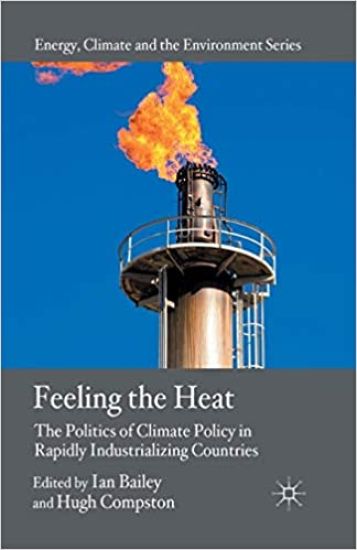
To avoid uncontrolled climate change, greenhouse gas emissions will have to be brought under control by major emitters outside the affluent West. The authors investigate the political obstacles in BRIC countries and what their governments could do to strengthen climate policies without incurring serious political damage.

Shock and Alarm: What it was really like at the U.S. Embassy in Iraq
Dave Bailey; Hugh Iwanicki
Createspace Independent Publishing Platform
2013
nidottu
Shock and Alarm: What it was really like at the US Embassy in Iraq is a riveting behind-the-scenes expos of daily life at the Baghdad Diplomatic Compound in 2009, providing an insightful look at the culture clash taking place between the Islamic world and the West. This is Hugh Iwanicki's personal story of the eleven months he served as a performance auditor for the Office of the Inspector General at the Embassy. His journal of unforgettable experiences juxtapose the mundane with the bizarre, moving from discussions of constitutional law with Sharia attorneys to several near-death experiences, as well as the strange bedfellow's tale of a regional embassy housed in a Shiite-owned "Temporary Marriage Honeymoon Hotel." For comic relief, there are also the misadventures of the Blackwater contractors, Marines, diplomats, and plumbers who inhabited the Green Zone and made the best of the Coalition embassy parties, where the women, though far outnumbered, were in full control of the men. And then there's the story of how the Embassy got an unlimited supply of free beer, thanks to a Sharia law against alcohol. Iwanicki's startling autobiographical account brings to light the human, the brutal, and the bewildering sides of life among the Iraqis, Jordanians, and Kuwaitis, as well as the mind-bending ironies and paradoxes encountered by the jumbled crew that lived within the confines known as the US Embassy in Iraq. Shock and Alarm pulls back the curtain on the bunker mentality of "the prison," where a grinding monotony was pierced by near-daily rocket attacks and week-long sand-storms. It also reflects on Iwanicki's first-hand experiences of the Middle East's Islamic culture, framing disturbing questions about America's engagement in Iraq and with Islam itself. While readers of all backgrounds and interests will enjoy the fish-out-of-water humor of Iwanicki's early adventures in Iraq, little will prepare them for his climactic awakening to a horror hiding in plain sight. Iwanicki's story ends with a silent scream, as he discovers that the menace he thought he had escaped by returning to the US was awaiting him at home. Shock and Alarm is an urgent and heartfelt memoir that provides a much needed wake-up call to all Americans.
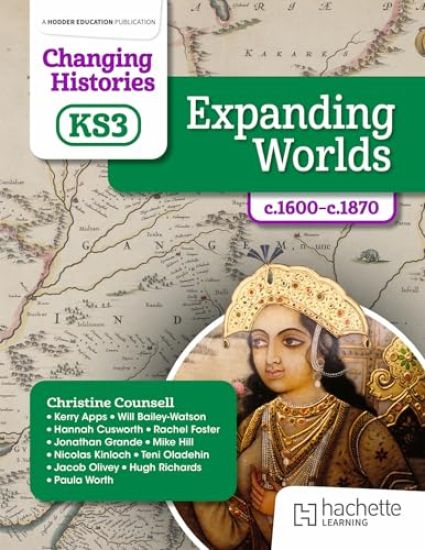
Changing Histories for KS3: Expanding Worlds, c.1600–c.1870
Christine Counsell; Kerry Apps; Will Bailey-Watson; Hannah Cusworth; Rachel Foster; Teni Gogo; Jonathan Grande; Mike Hill; Nicolas Kinloch; Jacob Olivey; Hugh Richards; Paula Worth
Hachette Learning
2025
nidottu
Change the history that pupils learn at Key Stage 3. Reframe familiar topics, discover forgotten stories and amplify unheard voices.Through an evocative, story-based approach, this ground-breaking course brings together historical scholarship and enquiry, presenting a truly diverse, inclusive and ambitious history curriculum.This is the history we owe to our pupils. This is the past for today and tomorrow.> Establish a strong foundation of British history. A clear, chronological spine underpins each book, empowering pupils with the knowledge they need to understand, question or disrupt national narratives.> Journey far beyond Britain. Move between local and global, between small details and wider developments, as the books blend depth and overview, expanding pupils' knowledge of people, places and events around the world and the links between them.> Use the power of story to transform your teaching. Captivated by vivid, intriguing narratives, pupils will remember more than they ever have before. See their literacy improve as they encounter a wide vocabulary in context, become immersed in rich, quality texts, and enjoy hearing the book read aloud or reading it themselves.> Teach a diverse curriculum with confidence. Gender, class, race and religion are treated with sensitivity and sophistication, intrinsically woven into the content to create perspective on social, economic, religious and political history.> Stay up to date with historical scholarship. The authors have undertaken extensive reading, so every chapter is informed by current research from historians such as Helen Castor, Ruby Lal and Toby Green.> Deliver the aspirational curriculum that Ofsted expects. The course embodies the requirements for scope, coherence, rigour and sequencing. The Changing Histories curriculum is a progression model. Skills and knowledge are built systematically across each lesson sequence and new material makes sense to pupils because of the content covered earlier.> Trust a meticulously planned approach. Each 'enquiry' chapter helps pupils to shape an extended answer to the overarching question, with carefully paced 'steps' that support pupils in processing substantive knowledge. Shorter 'story summary' chapters keep narratives moving in between the enquiries.> Benefit from some of the best minds in history education. Leaders in history curriculum, practice, research and debate, the authors have poured their expertise into every page, making quality history accessible to all.
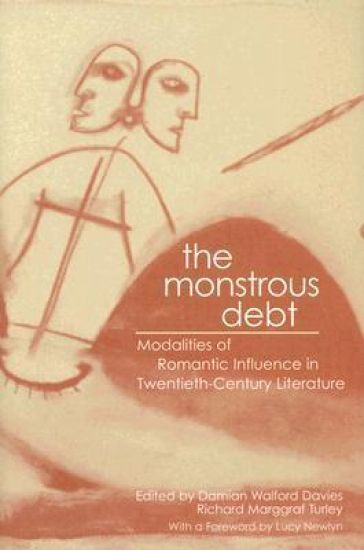
The Monstrous Debt
John Bayley; John Beer; Hugh Haughton; Harriet Devine Jump; Richard Marggraf-Turley; Emma Mason; Lucy Newlyn; Michael O'Neill
Wayne State University Press
2006
sidottu
The authors in this collection join an animated debate on the persistence of Romanticism. Even as dominant twentieth-century cultural movements have contested Romantic ""myths"" of redemptive Nature, individualism, perfectibility, the transcendence of art, and the heart's affections, the Romantic legacy survives as a point of tension and of inspiration for modern writers. Rejecting the Bloomian notion of anxious revisionism, ""The Monstrous Debt"" argues that various kinds of influences, inheritances, and indebtedness exist between well-known twentieth-century authors and canonical Romantic writers. Among the questions asked by this volume are: How does Blake's graphic mythology submit to ""redemptive translations"" in the work of Dylan Thomas? How might Ted Hughes' strong readings of a ""snaky"" Coleridge illuminate the ""mercurial"" poetic identity of Sylvia Plath? How does Shelley ""sustain"" the work of W. B. Yeats and Elizabeth Bishop with supplies of ""imaginative oxygen""? In what ways does Keats enable Bob Dylan to embrace influence? How does Keats prove inadequate for Tony Harrison as he confronts contemporary violence? How does ""cockney"" Romanticism succeed in shocking John Betjeman's poetry out of kitsch into something new and strange? ""The Monstrous Debt"" seeks to broaden our sense of what ""influence"" is by defining the complex of relations that contribute to the making of the modern literary text. Scholars and students of the Romantic era will enjoy this informative volume.


Washington state, June 1898. He's looking to pursue his career – which can’t happen on his family’s farm. She's stuck around the world from home – with nowhere to go and no way to go back. They can find each other, but can they find what they need? Hugh Weaver, the last of Calvin and Bella’s three sons, is an accomplished cook. But the enormous Weaver clan isn’t lacking for kitchen skills, and as much as he loves them, he knows his destiny lies elsewhere – running his own restaurant or café. But where? Hamasaki Ichiko doesn’t even speak English, but her family sent her and her sister from Japan to America to find work. She’s escaped the clutches of a human trafficker, only now she’s stranded in the tiny village of Nowhere, living off the charity of its citizens. She’s ready to get a job and make a life. But how? Toss in two other Japanese girls who just want to go home, a railroad detective disguised as a doting grandma, a diner owner making plans for the future, an ambitious milkmaid who has Hugh in her sights, and a town and family that put the “wild” in the Wild West, and you have the makings of an international incident … or maybe an international affair? Get the answers to all these questions and more in HUGH, the farthest-reaching Weaver adventure yet!
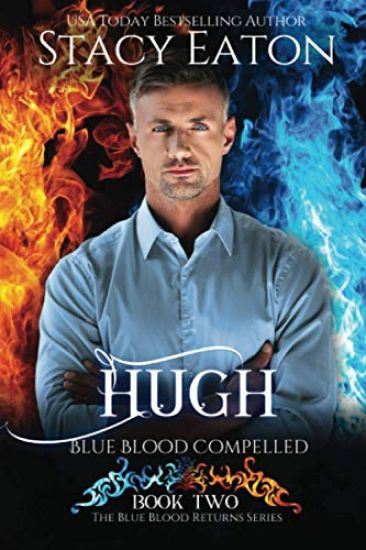
Take a short journey back one year to when Hugh McMurphy's fascination with the secret society of vampires led him to a leadership position in the newly started joint operation vampire task force. Was the allure to learn more motivated by curiosity or something deep-seated in his very soul?After almost a year, Hugh and his crew finally get the break they were waiting for and learn more about the Mistress and her rival, Joseph Portage. It's not until Portage initiates a clandestine meeting that Hugh will speak with the Mistress, and desire takes over for the two of them.Kristin knows that there is more than meets the eye when it comes to Hugh. Now she must deal with the issues of the breed and the secrets of her new and powerful mate. The ups and downs keep them all guessing, and Josh is hell-bent on figuring out what Hugh's secret is.Portage might have an in now, but he has a long way to go before he can control Kristin and take over the breed as the Master. While Zander continues to be confused by the dreams, things are starting to fall into place, and when a supposed friend tells him a story, Zander is determined to learn the rest.It's been years since Gabriel and Kristin spoke, but when he calls, she can't ignore the message he has. Striking out on her own, she heads back to where it all started and will come face to face with not only her nemesis but a piece of her soul-but is it all a set-up to take over the breed?The Blue Blood Returns is an adult paranormal romance with sexual situations, violence, language, and does contain a cliffhanger that leads right into the third book, Zander. While this is a new series, it does spin off of the My Blood Runs Blue Series.The My Blood Runs Blue Series: My Blood Runs Blue, Book 1The Pulse of Blue Blood, Book 2Blue Blood for Life, Book 3Mixing the Blue Blood, Book 4Blue Bloods Final Destiny, Book 5The Return of Blue Blood Series: Kristin: Blue Blood Returns, Book 1Hugh: Blue Blood Compelled, Book 2Zander: Blue Blood Reborn, Book 3 (March 2021)Lena: Blue Blood Desired, Book 4 (2021)
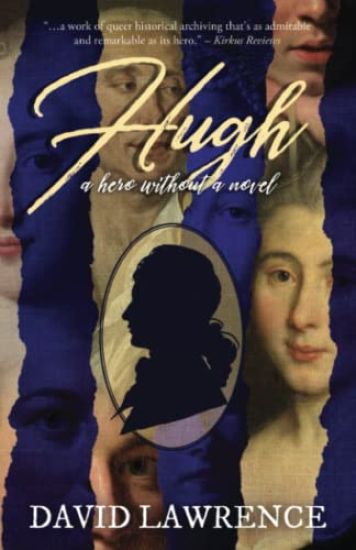
"...a work of queer historical archiving that's as admirable and remarkable as its hero." - Kirkus ReviewsThis romp through 18th century England is like nothing told in the era of Tom Jones - a sparkling, humorous, and poetical coming-of-age 242 years in the making. From an old family trunk comes a manuscript which never saw the light of day. Its pages tell of the life, times, and blackmail of a young queer aristocrat stepping into 1768 Society...A time of wig powder and heeled slippers.Duels and social climbers, when the most popular member of the government is declared an outlaw. Hugh Entwistle enters this world wealthy, witty, and well-connected. Everything to be a success - everything, except that thing stuck to the bottom of his heeled slipper.Hugh's is a story of secret encounters and significant looks. Hushed separations and sobriquets. But if he dares define Liberty, he might be asked to confront a blackmailer. Asked to confront a father. And before he can make a marriage proposal, follow his heart, and accept one.Hugh is a rollicking tale of comic angst, and a celebration of the wit, beauty, and absurdities of a glorious age.Praise for Hugh: A Hero without a Novel: "I found it absolutely fascinating...Sui generis, thoroughly interesting, fabulously vivid in place and time, and I'm glad I read it." - K.J. Charles, author of The Magpie Lord"Intriguing, ambitious, and pretty damn delightful. This is a genuinely impressive accomplishment....written with passionate conviction, and without compromise. It's so unabashedly itself that it will absolutely sweep you along if you let it, and I was very much in the mood to be swept." - Alexis Hall, author of Boyfriend Material
Born in Saxony in 1096, Hugh became an Augustinian monk and in 1115 moved to the monastery of Saint Victor, Paris, where he spent the remainder of his life, eventually becoming the head of the school there. His writings cover the whole range of arts and sacred science taught in his day. Paul Rorem offers a basic introduction to Hugh's theology, through a comprehensive survey of his works. He argues that Hugh is best understood as a teacher of theology, and that his numerous and varied writings are best appreciated as a comprehensive pedagogical program of theological education and spiritual formation. Drawing his evidence not only from Hugh's own descriptions of his work but from the earliest manuscript traditions of his writings, Rorem organizes and presents his corpus within a tri-part framework. Upon a foundation of training in the liberal arts and history, a structure of doctrine is built up, which is finally adorned with moral formation. Within this scheme of organization, Rorem treats each of Hugh's major works (and many minor ones) in its appropriate place, orienting the reader briefly yet accurately to its contents, as well as its location in Hugh's overarching program of theological pedagogy.
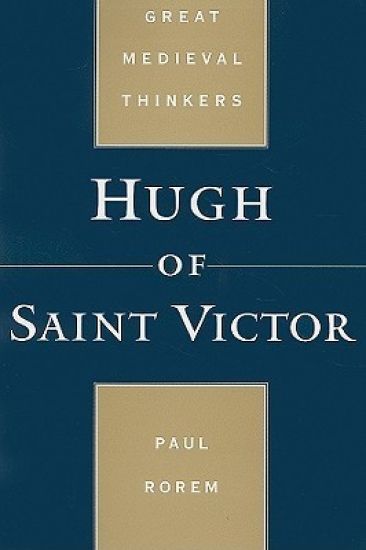
Born in Saxony in 1096, Hugh became an Augustinian monk and in 1115 moved to the monastery of Saint Victor, Paris, where he spent the remainder of his life, eventually becoming the head of the school there. His writings cover the whole range of arts and sacred science taught in his day. Paul Rorem offers a basic introduction to Hugh's theology, through a comprehensive survey of his works. He argues that Hugh is best understood as a teacher of theology, and that his numerous and varied writings are best appreciated as a comprehensive pedagogical program of theological education and spiritual formation. Drawing his evidence not only from Hugh's own descriptions of his work but from the earliest manuscript traditions of his writings, Rorem organizes and presents his corpus within a tri-part framework. Upon a foundation of training in the liberal arts and history, a structure of doctrine is built up, which is finally adorned with moral formation. Within this scheme of organization, Rorem treats each of Hugh's major works (and many minor ones) in its appropriate place, orienting the reader briefly yet accurately to its contents, as well as its location in Hugh's overarching program of theological pedagogy.