Kirjojen hintavertailu. Mukana 11 244 527 kirjaa ja 12 kauppaa.

Kirjahaku

Etsi kirjoja tekijän nimen, kirjan nimen tai ISBN:n perusteella.

1000 tulosta hakusanalla Hugo Grotius

Hugo Grotius on the Truth of Christianity; in six Books

Hugo Grotius on the Truth of Christianity; in six Books

Hugo Grotius

Gale Ecco, Print Editions
2018
sidottu
The 18th century was a wealth of knowledge, exploration and rapidly growing technology and expanding record-keeping made possible by advances in the printing press. In its determination to preserve the century of revolution, Gale initiated a revolution of its own: digitization of epic proportions to preserve these invaluable works in the largest archive of its kind. Now for the first time these high-quality digital copies of original 18th century manuscripts are available in print, making them highly accessible to libraries, undergraduate students, and independent scholars.The Age of Enlightenment profoundly enriched religious and philosophical understanding and continues to influence present-day thinking. Works collected here include masterpieces by David Hume, Immanuel Kant, and Jean-Jacques Rousseau, as well as religious sermons and moral debates on the issues of the day, such as the slave trade. The Age of Reason saw conflict between Protestantism and Catholicism transformed into one between faith and logic -- a debate that continues in the twenty-first century.++++The below data was compiled from various identification fields in the bibliographic record of this title. This data is provided as an additional tool in helping to insure edition identification: ++++British LibraryT101610Birmingham: re-printed by E. Piercy, 1797. 201, 1]p.; 12
The Truth of the Christian Religion. In six Books. By Hugo Grotius. Corrected and Illustrated With Notes, by Mr. Le Clerc. Translated by John Clarke, ... The Sixth Edition
The 18th century was a wealth of knowledge, exploration and rapidly growing technology and expanding record-keeping made possible by advances in the printing press. In its determination to preserve the century of revolution, Gale initiated a revolution of its own: digitization of epic proportions to preserve these invaluable works in the largest archive of its kind. Now for the first time these high-quality digital copies of original 18th century manuscripts are available in print, making them highly accessible to libraries, undergraduate students, and independent scholars.The Age of Enlightenment profoundly enriched religious and philosophical understanding and continues to influence present-day thinking. Works collected here include masterpieces by David Hume, Immanuel Kant, and Jean-Jacques Rousseau, as well as religious sermons and moral debates on the issues of the day, such as the slave trade. The Age of Reason saw conflict between Protestantism and Catholicism transformed into one between faith and logic -- a debate that continues in the twenty-first century.++++The below data was compiled from various identification fields in the bibliographic record of this title. This data is provided as an additional tool in helping to insure edition identification: ++++Bodleian Library (Oxford)T194686Glasgow: printed by R. Urie, 1756. xii,330p.; 12
Hugo Grotius on the Truth of Christianity; in six Books

Hugo Grotius on the Truth of Christianity; in six Books

Hugo Grotius

Gale Ecco, Print Editions
2018
sidottu
The 18th century was a wealth of knowledge, exploration and rapidly growing technology and expanding record-keeping made possible by advances in the printing press. In its determination to preserve the century of revolution, Gale initiated a revolution of its own: digitization of epic proportions to preserve these invaluable works in the largest archive of its kind. Now for the first time these high-quality digital copies of original 18th century manuscripts are available in print, making them highly accessible to libraries, undergraduate students, and independent scholars.The Age of Enlightenment profoundly enriched religious and philosophical understanding and continues to influence present-day thinking. Works collected here include masterpieces by David Hume, Immanuel Kant, and Jean-Jacques Rousseau, as well as religious sermons and moral debates on the issues of the day, such as the slave trade. The Age of Reason saw conflict between Protestantism and Catholicism transformed into one between faith and logic -- a debate that continues in the twenty-first century.++++The below data was compiled from various identification fields in the bibliographic record of this title. This data is provided as an additional tool in helping to insure edition identification: ++++British LibraryT115025With a final errata leaf.London: printed for J. Dodsley, 1782. xvi,342, 2]p.; 8
The Truth of the Christian Religion. In six Books by Hugo Grotius. Corrected and Illustrated With Notes, by Mr. Le Clerc. The Fourth Edition, With Additions. Done Into English by John Clarke
The 18th century was a wealth of knowledge, exploration and rapidly growing technology and expanding record-keeping made possible by advances in the printing press. In its determination to preserve the century of revolution, Gale initiated a revolution of its own: digitization of epic proportions to preserve these invaluable works in the largest archive of its kind. Now for the first time these high-quality digital copies of original 18th century manuscripts are available in print, making them highly accessible to libraries, undergraduate students, and independent scholars.The Age of Enlightenment profoundly enriched religious and philosophical understanding and continues to influence present-day thinking. Works collected here include masterpieces by David Hume, Immanuel Kant, and Jean-Jacques Rousseau, as well as religious sermons and moral debates on the issues of the day, such as the slave trade. The Age of Reason saw conflict between Protestantism and Catholicism transformed into one between faith and logic -- a debate that continues in the twenty-first century.++++The below data was compiled from various identification fields in the bibliographic record of this title. This data is provided as an additional tool in helping to insure edition identification: ++++British LibraryT083379With a final leaf of advertisements.London: printed for John and Paul Knapton, 1743. 32],350, 2]p.; 8
The Truth of the Christian Religion In six Books By Hugo Grotius Corrected and Illustrated With Notes by Mr Le Clerc To Which is Added, a Seventh Book, Concerning This Question, What Christian Church we Ought To Join Ourselves To
The 18th century was a wealth of knowledge, exploration and rapidly growing technology and expanding record-keeping made possible by advances in the printing press. In its determination to preserve the century of revolution, Gale initiated a revolution of its own: digitization of epic proportions to preserve these invaluable works in the largest archive of its kind. Now for the first time these high-quality digital copies of original 18th century manuscripts are available in print, making them highly accessible to libraries, undergraduate students, and independent scholars.The Age of Enlightenment profoundly enriched religious and philosophical understanding and continues to influence present-day thinking. Works collected here include masterpieces by David Hume, Immanuel Kant, and Jean-Jacques Rousseau, as well as religious sermons and moral debates on the issues of the day, such as the slave trade. The Age of Reason saw conflict between Protestantism and Catholicism transformed into one between faith and logic -- a debate that continues in the twenty-first century.++++The below data was compiled from various identification fields in the bibliographic record of this title. This data is provided as an additional tool in helping to insure edition identification: ++++National Library of WalesN014190London: printed for J. F. and C. Rivington, R. Horsefield, B. Law, R. Baldwin, E. Johnston, S. Bladon, and T. Beecroft, 1777. 32],352p.; 8
Hugo Grotius

Hugo Grotius

Florian Mühlegger

de Gruyter
2007
sidottu
This thesis presented to the University of Munich uses early theological, legal and political writings by Hugo Grotius to determine his political position and the argumentative strategies he deployed in the Arminianic controversy and the political conflicts at the beginning of the 17th century. Particular value is attached to a reading of Grotius statements in the context of contemporary politics. As a Christian humanist, he moderated the various points at issue and appealed to the warring factions to exercise tolerance and seek reconciliation."
Hugo Grotius
Hugo Grotius (1583-1645) is the most famous humanist scholar of the Dutch Golden Age. He wrote influential works on the laws of war and peace, Dutch history and the unification of the churches. His plea for a freedom of the seas in Mare liberum offered the Dutch East India Company a ready justification for the establishment of a trading empire in the East Indies. As far as his daily duties left him any spare time, he penned confidential, learned and beautifully-written letters. This voluminous correspondence offers a trove of information on Grotius’ life and works, and forms the basis of his newest biography which sketches a life caught in a fierce struggle for peace in Church and State.
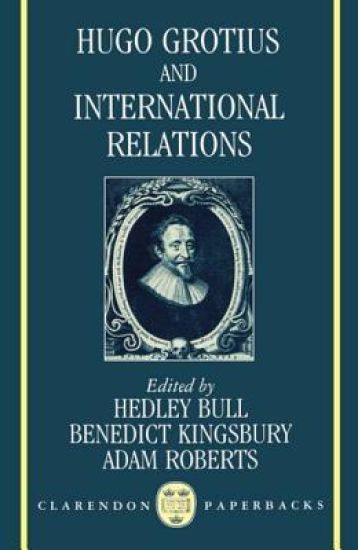
Hugo Grotius and International Relations
While the works of Hugo Grotius (1583-1645) have long been held in high esteem by international lawyers, this book addresses the broader, and neglected, theme of his contribution to the theoretical and practical aspects of international relations. It critically reappraises Grotius' thought, examining it in relation to his predecessors and in the context of the wars and controversies of his time, and assesses the strengths and weaknesses of the `Grotian' tradition of thought - one which accepts the sovereignty of states but at the same time stresses the existence of shared values and the necessity of rules.
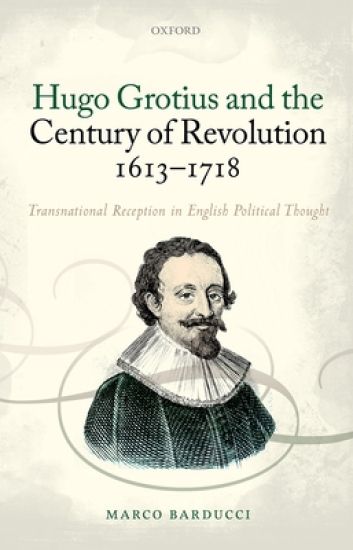
Hugo Grotius and the Century of Revolution, 1613-1718

Hugo Grotius and the Century of Revolution, 1613-1718

Marco Barducci

Oxford University Press
2017
sidottu
Hugo Grotius and the Century of Revolution, 1613-1718 is a reconstruction of the way Hugo Grotius (1583-1645) was read and used by English political and religious writers in the seventeenth and early eighteenth centuries. Engaging with the reception of all of Grotius's key works and a wide range of topics, the volume has much to say about the search for peace in an age of religious conflict and about the cultural roots of the Enlightenment. Most of all, Marco Barducci aims to deepen our understanding of the connections that made English political thought part of the history of European thought. To this end, it brings together a succinct account of Grotius's own thinking on key topics, mapping these accounts within English debates, to show why his ideas were seen to be relevant at key moments; shows awareness of the possibilities for the misappropriation inherent in reception; and adds something new to our understanding of why seventeenth-century Englishmen argued in the ways that they did.
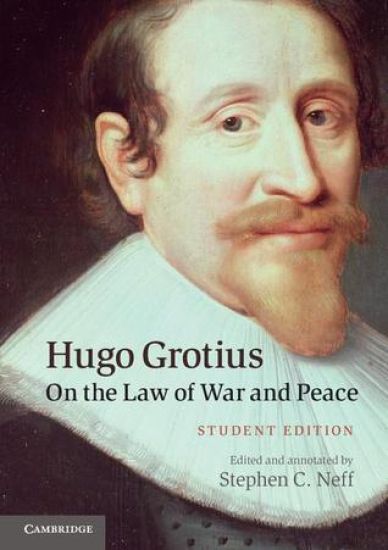
Hugo Grotius on the Law of War and Peace
Despite its significant influence on international law, international relations, natural law and political thought in general, Grotius's Law of War and Peace has been virtually unavailable for many decades. Stephen Neff's edited and annotated version of the text rectifies this situation. Containing the substantive portion of the classic text, but shorn of extraneous material, this edited and annotated edition of one of the classic works of Western legal and political thought is intended for students and teachers in four primary areas: history of international law, history of political thought, history of international relations and history of philosophy.
Hugo Grotius on the Law of War and Peace
Despite its significant influence on international law, international relations, natural law and political thought in general, Grotius's Law of War and Peace has been virtually unavailable for many decades. Stephen Neff's edited and annotated version of the text rectifies this situation. Containing the substantive portion of the classic text, but shorn of extraneous material, this edited and annotated edition of one of the classic works of Western legal and political thought is intended for students and teachers in four primary areas: history of international law, history of political thought, history of international relations and history of philosophy.