Kirjojen hintavertailu. Mukana 11 244 527 kirjaa ja 12 kauppaa.

Kirjahaku

Etsi kirjoja tekijän nimen, kirjan nimen tai ISBN:n perusteella.

1000 tulosta hakusanalla Hugo Von Hofmannsthal

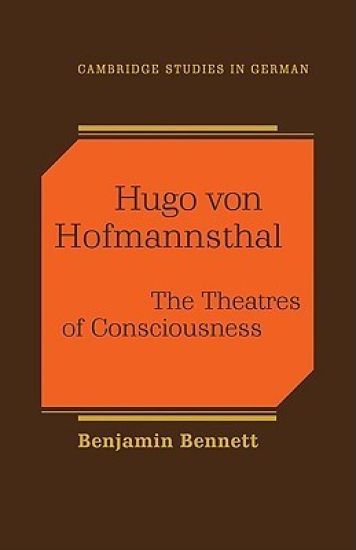
Hugo von Hofmannsthal

Hugo von Hofmannsthal

Benjamin Bennett

Cambridge University Press
2009
pokkari
This book focuses on Hugo von Hofmannsthal's intense, lifelong concentration upon a single cohesive set of poetic, philosophical and ethical concerns, a quality of his work which has been neglected in the bulk of existing scholarship. Professor Bennett examines Hofmannsthal's work in the context of literary theory and the history of philosophy, referring especially to Nietzsche, German Idealism and the poetics of German Classicism. He identifies three principal areas of concern to Hofmannsthal: the theory of genre, the question of the role of literature in society and the search for a fruitful response to the problem of the historical development of culture. The argument proceeds by way of detailed interpretation of texts, including Der Tor und der Tod, the Chandos letter, Ariadne auf Naxos, Der Schwierige, Das Salzburger Grosse Welttheater and Der Turm.
Hugo von Hofmannsthal

Hugo von Hofmannsthal

Benjamin Bennett

Cambridge University Press
1988
sidottu
This book focuses on Hugo von Hofmannsthal's intense, lifelong concentration upon a single cohesive set of poetic, philosophical and ethical concerns, a quality of his work which has been neglected in the bulk of existing scholarship. Professor Bennett examines Hofmannsthal's work in the context of literary theory and the history of philosophy, referring especially to Nietzsche, German Idealism and the poetics of German Classicism. He identifies three principal areas of concern to Hofmannsthal: the theory of genre, the question of the role of literature in society and the search for a fruitful response to the problem of the historical development of culture. The argument proceeds by way of detailed interpretation of texts, including Der Tor und der Tod, the Chandos letter, Ariadne auf Naxos, Der Schwierige, Das Salzburger Grosse Welttheater and Der Turm.
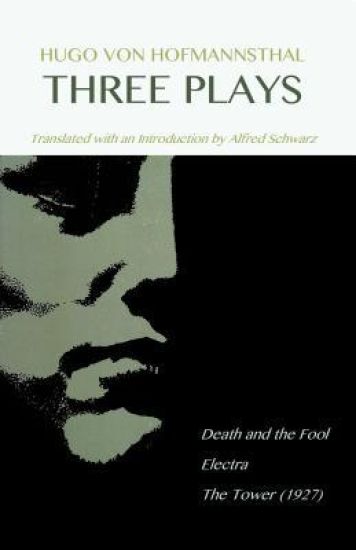
Hugo Von Hofmannsthal

Hugo Von Hofmannsthal

Wayne State University Press
2017
nidottu
Since World War II Hugo von Hofmannsthal has regained his place as a classic of modern European literature. The translations collected here - Death and the Fool, Electra, and The Tower represent different periods and interests in his career as a dramatist. Yet, as the critical introduction on Hofmannsthal's tragic theater indicates, all three plays, written in different theatrical idioms, reveal a unified and developing conception of man's estate in the modern world.Hofmannsthal rejected the current fashions of the modern stage but was nonetheless a keen observer of his time. His deliberate indebtedness to the great theaters of the past allowed him to enlarge the scope of his own dramaturgy and to use a more articulate language than that afforded by the conventions of the modern realistic theater.This book includes the 1927 theater version of Hofmannsthal's last great work, The Tower, available for the first time in English translation.
Hugo Von Hofmannsthal

Hugo Von Hofmannsthal

Hanns Hammelmann

Hassell Street Press
2021
sidottu
This work has been selected by scholars as being culturally important and is part of the knowledge base of civilization as we know it.This work is in the public domain in the United States of America, and possibly other nations. Within the United States, you may freely copy and distribute this work, as no entity (individual or corporate) has a copyright on the body of the work.Scholars believe, and we concur, that this work is important enough to be preserved, reproduced, and made generally available to the public. To ensure a quality reading experience, this work has been proofread and republished using a format that seamlessly blends the original graphical elements with text in an easy-to-read typeface.We appreciate your support of the preservation process, and thank you for being an important part of keeping this knowledge alive and relevant.
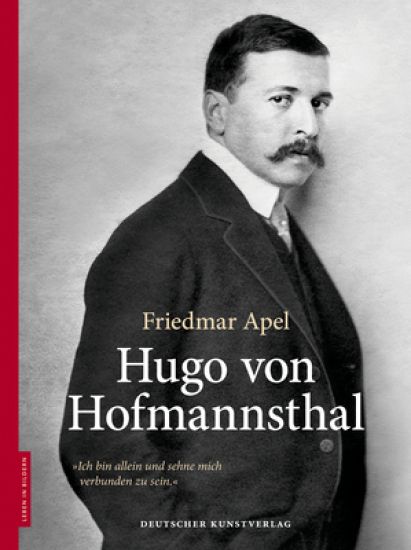
Hugo Von Hofmannsthal

Hugo Von Hofmannsthal

Friedmar Apel

Deutscher Kunstverlag
2012
sidottu
Nach Hugo von Hofmannsthals Tod 929 notierte Arthur Schnitzler: 'Der größte Dichter dieser Zeit ist mit ihm dahin." Schon als Schüler war er der umschwärmte Mittelpunkt im Kreis der Wiener Literaten, die sich im Café Griensteidl trafen. Hofmannsthal, das „Genie der Freundschaft', arbeitete mit bedeutenden Zeitgenossen wie Stefan George, Richard Strauss und Max Reinhardt und war als Schriftsteller professionell, erfolgreich und sogar geschäftstüchtig. Und doch hat er immer wieder unter Einsamkeit, Selbstzweifeln und Anflügen von Schwermut gelitten, in denen er sich nur mit Mühe 'vor dumpfem Verzagen' bewahren konnte. Umso mehr hat er die moderne Dichtung auf das Soziale verpflichtet, das er sich aber zuletzt nur als stets gefährdete Gemeinschaft von Einzelnen vorstellen konnte.
Hugo von Hofmannsthal

Hugo von Hofmannsthal

Christian Hutter

Grin Publishing
2008
nidottu
Studienarbeit aus dem Jahr 2003 im Fachbereich Germanistik - Neuere Deutsche Literatur, Note: 2,0, Universit t Augsburg (Lehrstuhl f r Neuere Deutsche Literaturwissenschaft), Veranstaltung: ber das Marionettentheater, Sprache: Deutsch, Abstract: Am 1. Februar 1874 wird Hugo Laurenz August Hoffmann Edler von Hofmannsthal in Wien geboren. Bereits mit siebzehn ver ffentlichte er, als ersten dramatischen Versuch, den Einakter "Gestern". Nach der Begegnung mit dem deutschen Dichter Stefan George ist der Stil des jungen Hugo von Hofmannsthal zur Perfektion gereift. Doch dann der Umbruch. Schon l nger zweifelte Hofmannsthal an der Kraft der Worte. Er wandte sich schlie lich ganz vom lyrischen Schreiben ab und schrieb sich nur mehr dem Theater und der Oper zu. In dieser Zeit hat eine m glicherweise entscheidende Ver nderung innerhalb der literarischen Welt stattgefunden. Die naturalistische Weltanschauung wurde vom sthetizismus weitl ufig abgel st und man neigte jetzt eher dazu, in einer bertrieben sch nen Ausdrucksweise zu schreiben. Hugo von Hofmannsthal war ein Dichter der alten Schule und wollte sich diesem Prozess der literarischen berfeinerung nicht hingeben. Gegenstand dieser Arbeit soll es also sein, diese Wandlung herauszustellen und die Flucht Hofmannsthals zu analysieren. Dies geschieht am Beispiel der fiktiven Figuren Philip Lord Chandos und Niklas, einem Puppenspieler. So wurde einf hrend eine Zusammenfassung des "Chandos - Briefes" gegeben und daran anschlie end eine Darstellung der verschiedenen Gesichter dieser Gestalt. Weiter m chte ich die "Sprachkrise" Hofmannsthals mit denen durch den "Chandos - Brief" gegeben M glichkeiten analysieren und im letzten Teil der Arbeit, mittels der Marionettenpantomime "Die gr ne Fl te", analysieren, ob die Figur "Niklas" eine Weiterf hrung des "Lord Chandos" in Bezug auf Hofmannsthals Auffassung von Sprache und Wort darstellt.
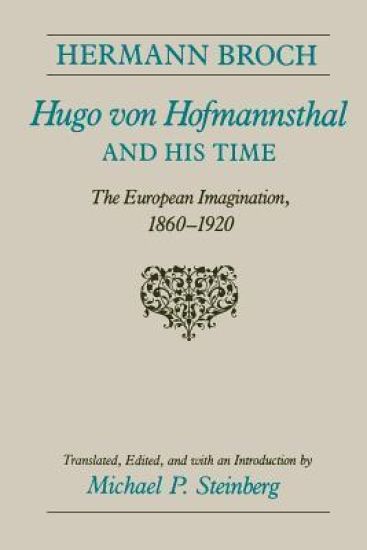
Hugo Von Hofmannsthal and His Time

Hugo Von Hofmannsthal and His Time

Hermann Broch

University of Chicago Press
1984
nidottu
Hermann Broch (1886-1951) is remembered among English-speaking readers for his novels The Sleepwalkers and The Death of Virgil, and among German-speaking readers for his novels as well as his works on moral and political philosophy, his aesthetic theory, and his varied criticism. This study reveals Broch as a major historian as well, one who believes that true historical understanding requires the faculties of both poet and philosopher. Through an analysis of the changing thought and career of the Austrian poet, librettist, and essaist Hugo von Hofmannsthal (1874-1929), Broch attempts to define and analyze the major intellectual issues of the European fin de siecle, a period that he characterizes according to the Nietzschean concepts of the breakdown of rationality and the loss of a central value system. The result is a major examination of European thought as well as a comparative study of political systems and artistic styles.
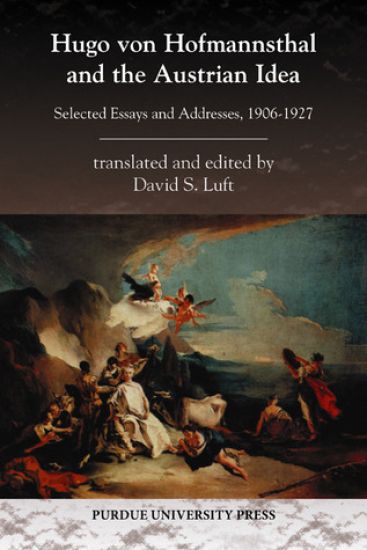
Hugo Von Hofmannsthal and the Austrian Ideal
The Austrian writer Hugo von Hofmannsthal (1874-1929) was one of the great modernists in the German language, but his importance as a major intellectual of the early twentieth century has not received adequate attention in the English-speaking world. One distinguished literary scholar of his generation called Hofmannsthal a spiritual-moral authority of a kind German culture had only rarely produced. This volume provides translations of essays that deal with the Austrian idea and with the distinctive position of German-speaking Austrians between German nationalism and peoples to the East, whether in the Habsburg Monarchy or beyond it, as well as essays that locate Hofmannsthal's thinking about Austria in relation to the broader situation of German and European culture. It is the true accomplishment of this translation that Hofmannsthal's language, recreated in a clear and elegant English, regains its melody of an earlier time. If there ever was a captivating documentation of the European potential of Austria beyond the stereotypes of Vienna at 1900, it has been brought together in this volume of essays that responded to the tragic challenges of World War I in a constructive way. Frank Trommler, University of Pennsylvania
Hugo von Hofmannsthal und sein "Jedermann"

Hugo von Hofmannsthal und sein "Jedermann"

Oliver Hoffmann

Grin Verlag Gmbh
2008
pokkari
Studienarbeit aus dem Jahr 2006 im Fachbereich Germanistik - Neuere Deutsche Literatur, Note: 1,0, Universität Zürich, 19 Quellen im Literaturverzeichnis, Sprache: Deutsch, Abstract: Es wird sich mit dem Phänomen "Jedermann" und seinem Erschaffer, Hugo von Hofmannsthal, beschäftigt. Dazu wird zuerst das vielschichtige Leben und Werk von von Hofmannsthal umfassend dargestellt, um danach auf seine zentrale Arbeit, den "Jedermann" einzugehen. Dazu gehört die Entstehungsgeschichte, literarische und geschichtliche Vorgänger sowie eine Analyse des Stückes selbst. Wenn man sich die Aufführungsgeschichte genauer ansieht, wird man feststellen, dass diese auf das engste mit der Geschichte der Salzburger Festspiele verbunden ist, bei denen auch Hofmannsthal selbst eine wichtige Rolle spielte. Zum Schluss wird noch ein kurzer Ausblick auf die zukünftige Bedeutung des "Jedermann" gegeben.
Hugo von Hofmannsthal - Biografie und Krise des Autors
Studienarbeit aus dem Jahr 2008 im Fachbereich Germanistik - Sonstiges, Note: 1,7, Helmut-Schmidt-Universit t - Universit t der Bundeswehr Hamburg, Veranstaltung: Grundlagen des Literaturverstehens, Sprache: Deutsch, Abstract: Im Herbst Trimester habe ich bereits ein Referat zur Lebensgeschichte Hugo von Hofmannsthals gehalten. Somit stellt diese Arbeit zu einem Teil auch die schriftliche Ausarbeitung dessen dar. Im zweiten Teil m chte ich dann die Verkn pfung zwischen dem im Seminar behandelten Chandos - Brief und dem, was sich in der Literatur dazu finden l sst, schaffen. Ich habe nicht den Anspruch den Chandos Brief zu Interpretieren, dazu fehlt mir das Handwerkszeug aber ich will recherchieren welcher Art die Lebenskrise war, in der sich der Autor in der Schaffensphase des Chandos - Briefes befand. Die umfassende Literatur zum Chandos Brief selbst m chte ich nicht um einen Beitrag von meiner Person erweitern, kann dies doch nur ein Versuch bleiben. Denn "Keine Arbeit zur Literatur der Jahrhundertwende, kein Buch, kein Aufsatz zu Hofmannsthal, die nicht den so genannten Chandos - Brief erw hnen. Bald wird er zur Erkl rung, ja als eine Art Geburtsurkunde der modernen Literatur, bald im Zusammenhang der Sprachkritik der Jahrhundertwende, bald zur Unterst tzung interpretatorischer Thesen, bald als wunderliches autobiographisches Dokument eines Dichters herangezogen, der alles gesagt hatte, also zu verstummen versprach, aber w hrend er das Versprechen niederschrieb, es schon vergessen hatte und weiterdichtete." ( Koch 1989, S.131) Um also die Aufgabenstellung, welche ich mir f r den Rahmen des Interdisziplin ren Studienanteiles stelle, noch einmal zu umrei en: Diese Arbeit soll den schriftlichen Part meines biographischen Referates zu Hugo von Hofmannsthal darstellen, sowie Ans tze zur Kl rung der Frage liefern wann die, von der Forschung mehrstimmig als Krise des Autors beschriebene Phase, welche sich in dem Brief niederschl gt, begonnen hat und welcher Art sie