Kirjojen hintavertailu. Mukana 11 244 527 kirjaa ja 12 kauppaa.

Kirjahaku

Etsi kirjoja tekijän nimen, kirjan nimen tai ISBN:n perusteella.

1000 tulosta hakusanalla Hussein Vaiz Kashify

Hussein

Hussein

Patrick O'Brian

HARPERCOLLINS PUBLISHERS
2001
nidottu
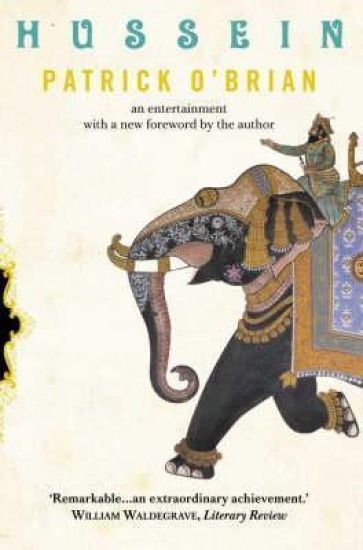
This is the story of a young mahout - or elephant handler - his childhood and life in India and his relationship and adventures with elephants.
Hussein

Hussein

Patrick O'Brian

WW Norton Co
2001
pokkari
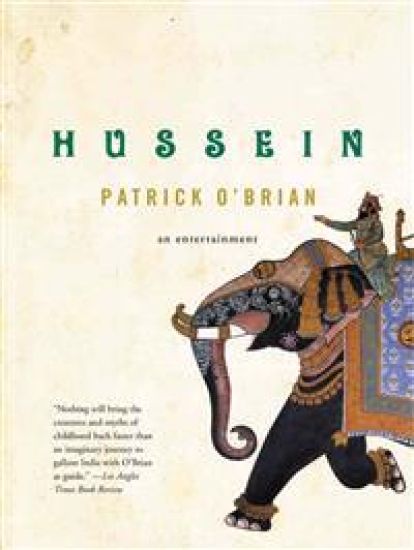
Of this early work, published when he was in his early twenties, Patrick O'Brian writes in a foreword: "In the writing of the book I learnt the rudiments of my calling: but more than that, it opened a well of joy that has not yet run dry." The story is about a young mahout or elephant handler his childhood and life in India, and his relationship and adventures with elephants. As a boy, Hussein falls in love with a beautiful and elusive girl, Sashiya, and arranges for another of her suitors to be murdered with a fakir's curse. The dead man's relatives vow vengeance. Hussein escapes and his adventures begin: snake-charming, sword-fighting, spying, stealing a fortune, and returning triumphantly to claim his bride. All of this is set against an evocatively exotic India, full of bazaars, temples, and beautiful women despite the fact that O'Brian had never been to the East when he wrote the story."
Saddam Hussein's Gulf Wars

Saddam Hussein's Gulf Wars

Miron Rezun

Praeger Publishers Inc
1992
sidottu
This book deals extensively with Iraq and Saddam Hussein--his rise to power, his mastery of Iraqi statecraft, his pan-Arab proclivities and his two Gulf wars: the first against Iran and the second against the U.S.-led multinational coalition in 1990-1991. Israeli sources, as well as materials gathered during a trip to Turkey and the Kurdish refugee areas in northern Iraq, provide additional perspective for the author and his analysis. The book portrays a multidimensional Saddam Hussein: good and bad, strategic and human. It throws light on the reasons the U.S. went to war against Saddam, and presents an in-depth analysis of the United States' policies, which at one time supported Iraq's cause, in the Gulf region. A valuable feature of the book is its detailed discussion of the psychology of Saddam, of the Arabs, the Iranians, the Israelis, and the American public before, during, and after the Gulf War.Rezun's conclusions challenge generally accepted views that lay the blame for the war on Saddam Hussein. Although Saddam is a cruel and rapacious demagogue, U.S. policymakers are to blame for having supported Saddam for so long. The author also rejects the view that General Norman Schwartzkopf was a great hero of the last war. Contrary to general opinion, Schwartzkopf conducted a no-risk operation into which Saddam Hussein was caught because of his miscalculation of U.S. intentions. Critical of U.S. policies, Rezun finds them naive and short-sighted. Although disapproving of U.S. policies during the war, Rezun praises the support and sustenance given by the Bush administration to the Kurds in the final hours of the Gulf War. This book is addressed to generalists and academic specialists, and students of Middle East politics.
Saddam Hussein

Saddam Hussein

Shiva Balaghi

Greenwood Press
2005
sidottu
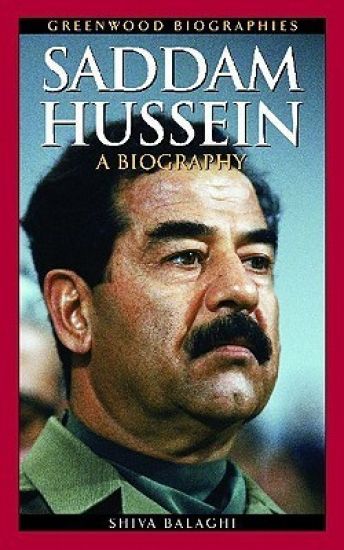
In July 1979, Saddam Hussein became the President of Iraq. His dictum was simply expressed—power through terror. During the first decade of his presidency, Saddam engaged in three wars: the Iran-Iraq War, the invasion of Kuwait, and the Gulf War of 1991. After September 11th, the war on terrorism led to the war against Iraq that began in March 2003 and the eventual capture of Sadddam Hussein effecitively ending his rule over the Iraqi people. On April 9, 2003, a handful of U.S. Marines helped a small crowd of Iraqis gathered in Firdos Square to tear down a statue of Saddam Hussein. Since his capture, Saddam has been transferred to Iraqi legal custody and awaits his trial for atrocities committed during his regime. This biography details Saddam's difficult childhood in Tikrit and his politically influential teenage years in Baghdad with his uncle. His involvement with the Iraqi Ba'ath Party led to his participation in an assassination attempt on then Prime Minister Qassem. In his early political life, Saddam retained the lessons of village life learned in his difficult Tikrit childhood, but they would become enmeshed with his discovery of Ba'athism and pan-Arabism. Once he became President of Iraq, Saddam often ruled with force and a carefully cultivated image throughout the use of visual imagery and books. Though Saddam no longer rules Iraq, the legacy of his reign will likely shape Iraqi history for years to come.
Saddam Hussein

Saddam Hussein

Shiva Balaghi

Greenwood Press
2005
nidottu
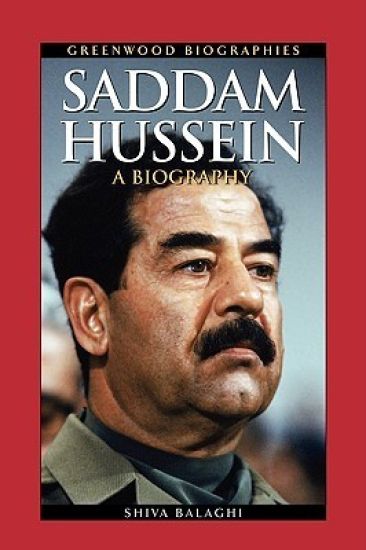
In July 1979, Saddam Hussein became the President of Iraq. His dictum was simply expressed—power through terror. During the first decade of his presidency, Saddam engaged in three wars: the Iran-Iraq War, the invasion of Kuwait, and the Gulf War of 1991. After September 11th, the war on terrorism led to the war against Iraq that began in March 2003 and the eventual capture of Sadddam Hussein effecitively ending his rule over the Iraqi people. On April 9, 2003, a handful of U.S. Marines helped a small crowd of Iraqis gathered in Firdos Square to tear down a statue of Saddam Hussein. Since his capture, Saddam has been transferred to Iraqi legal custody and awaits his trial for atrocities committed during his regime. This biography details Saddam's difficult childhood in Tikrit and his politically influential teenage years in Baghdad with his uncle. His involvement with the Iraqi Ba'ath Party led to his participation in an assassination attempt on then Prime Minister Qassem. In his early political life, Saddam retained the lessons of village life learned in his difficult Tikrit childhood, but they would become enmeshed with his discovery of Ba'athism and pan-Arabism. Once he became President of Iraq, Saddam often ruled with force and a carefully cultivated image throughout the use of visual imagery and books. Though Saddam no longer rules Iraq, the legacy of his reign will likely shape Iraqi history for years to come.
Saddam Hussein's Ba'th Party

Saddam Hussein's Ba'th Party

Sassoon Joseph

Cambridge University Press
2011
pokkari
The Ba'th Party came to power in 1968 and remained for thirty-five years, until the 2003 US invasion. Under the leadership of Saddam Hussein, who became president of Iraq in 1979, a powerful authoritarian regime was created based on a system of violence and an extraordinary surveillance network, as well as reward schemes and incentives for supporters of the party. The true horrors of this regime have been exposed for the first time through a massive archive of government documents captured by the United States after the fall of Saddam Hussein. It is these documents that form the basis of this extraordinarily revealing book and that have been translated and analyzed by Joseph Sassoon, an Iraqi-born scholar and seasoned commentator on the Middle East. They uncover the secrets of the innermost workings of Hussein's Revolutionary Command Council, how the party was structured, how it operated via its network of informers and how the system of rewards functioned.
Saddam Hussein's Ba'th Party

Saddam Hussein's Ba'th Party

Joseph Sassoon

Cambridge University Press
2011
sidottu
The Ba'th Party came to power in 1968 and remained for thirty-five years, until the 2003 US invasion. Under the leadership of Saddam Hussein, who became president of Iraq in 1979, a powerful authoritarian regime was created based on a system of violence and an extraordinary surveillance network, as well as reward schemes and incentives for supporters of the party. The true horrors of this regime have been exposed for the first time through a massive archive of government documents captured by the United States after the fall of Saddam Hussein. It is these documents that form the basis of this extraordinarily revealing book and that have been translated and analyzed by Joseph Sassoon, an Iraqi-born scholar and seasoned commentator on the Middle East. They uncover the secrets of the innermost workings of Hussein's Revolutionary Command Council, how the party was structured, how it operated via its network of informers and how the system of rewards functioned.
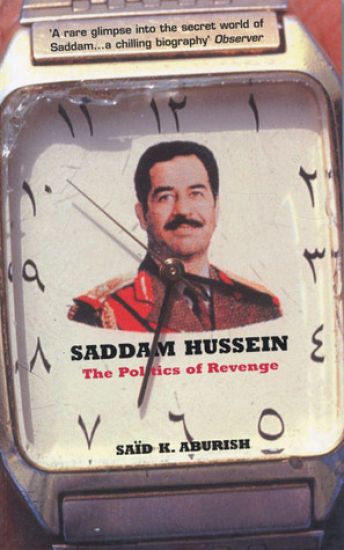
Saddam Hussein

Saddam Hussein

Said K. Aburish

Bloomsbury Publishing PLC
2001
nidottu
In "Saddam Hussein: The Politics of Revenge", the author draws on his own knowledge of and extensive contacts within the Arab world to produce both a thorough biography and a penetrating psychological profile of the most powerful and unpredictable man in the world today. He explains why Saddam behaves as he does by suggesting that his life has been marked by a series of personal quests: for recognition after being orphaned and brought up by a destitute uncle; for control of his country; for leadership of the Arab world; for mastery of the technology of destruction, and who now fights for Iraq's survival. This is the chilling story of how the man who, with the encouragement of western governments, made his country the most advanced in the Arab world in the 1970s, and through personal ambition led it to disaster at the end of the 1980s, now fights for its survival.
Barack Hussein Obama’s Presidency
This book presents research-based investigations of the communicative aspects of Barack Obama’s presidency, with a focus on ethnicity, gender, and culture as they interact with communication. It examines Obama’s rhetorical strengths, that also inform his visual rhetorical control, and looks beyond Obama’s messaging to examine how the news framed his presidency.The book opens by exploring the racio-rhetorical humour applied by President Obama during his presidency. Chapters investigate topics such as Obama’s use of visual rhetoric, how the media framed Obama using racialized lens, and offer iconographical analysis of satires featured in The New Yorker that symbolized the politics of racial fear erupting prior to the start of Obama’s presidency. They also examine how the White House used YouTube messaging to rebuild the first lady Michelle Obama’s image in ways that became acceptable to a wider American public, Obama’s rhetorical struggles to work within tensions created by the intersection of race and violence and analyze President Obama’s speeches at Tribal Nations Conferences.Barack Hussein Obama’s Presidency will be a key resource for scholars and researchers of communication studies, political communication, media and cultural studies, race and ethnic studies, and political science, while also appealing to anyone interested in the communicative aspects of Obama’s presidency and American politics. This book was originally published as a special issue of the Howard Journal of Communications.