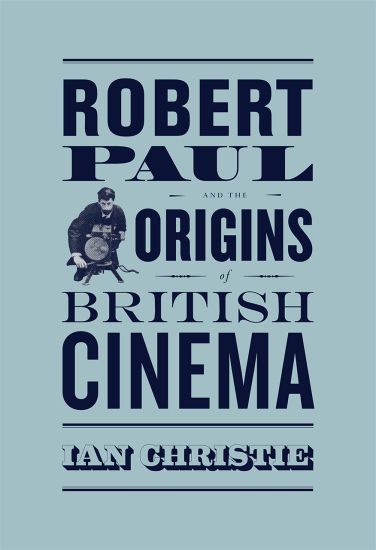
The early years of film were dominated by competition between inventors in America and France, especially Thomas Edison and the Lumiere brothers . But while these have generally been considered the foremost pioneers of film, they were not the only crucial figures in its inception. Telling the story of the white-hot years of filmmaking in the 1890s, Robert Paul and the Origins of British Cinema seeks to restore Robert Paul, Britain's most important early innovator in film, to his rightful place. From improving upon Edison's Kinetoscope to cocreating the first movie camera in Britain to building England's first film studio and launching the country's motion-picture industry, Paul played a key part in the history of cinema worldwide. It's not only Paul's story, however, that historian Ian Christie tells here. Robert Paul and the Origins of British Cinema also details the race among inventors to develop lucrative technologies and the jumbled culture of patent-snatching, showmanship, and music halls that prevailed in the last decade of the nineteenth century. Both an in-depth biography and a magnificent look at early cinema and fin-de-siecle Britain, Robert Paul and the Origins of British Cinema is a first-rate cultural history of a fascinating era of global invention, and the revelation of one of its undervalued contributors.
For a large proportion of the electorate, national politics misses the real issues. As a result, membership of campaigning organizations has soared whilst party numbers have declined. This work distils the principles and priorities of many of the leading voluntary groups into a strong and coherent programme of political aims and actions. The problem can be measured as a sustainability gap - between official policies and achievements and actual democratic participation, environmental restoration and the eradication of poverty. With examples and short case studies, the book translates the gap into practical and realistic recommendations for progress.
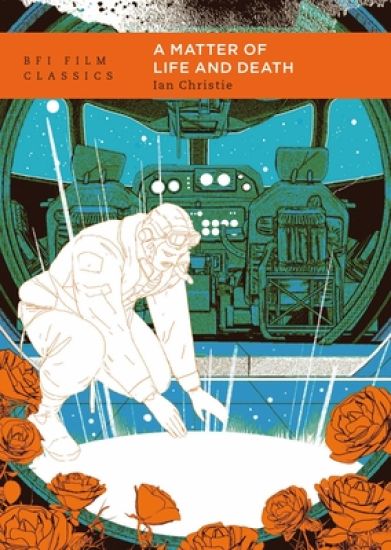
Produced in the aftermath of the Second World War, Michael Powell and Emeric Pressburger's A Matter of Life and Death (1946) stars David Niven as an RAF pilot poised between life and death, his love for the American radio operator June (Kim Hunter) threatened by medical, political and ultimately celestial forces. The film is a magical, profound fantasy and a moving evocation of English history and the wartime experience, with virtuoso Technicolor special effects. In the United States it was released under the title Stairway to Heaven, referencing one of its most famous images, a moving stairway between earth and the afterlife.Ian Christie's study of the film shows how its creators drew upon many sources and traditions to create a unique form of modern masque, treating contemporary issues with witty allegory and enormous visual imagination. He stresses the teamwork of Powell and Pressburger's gifted collaborators, among them Director of Photography Jack Cardiff, production designer Alfred Junge, and costume designer Hein Heckroth, and explores the history of both British and international responses to the film. Christie argues that the film deserves to be thought of as one of the greatest achievements of British cinema, but of all cinema.
With Helen Franklin, the way is never smooth! Her space pilot's skills get her a place on the Discovery mission - just - and a passionate affair with a colleague, Jack Watkins, gets her a beautiful young son. but fate seems to follow her like a cat's paw to Acarian, Mars and back to her roots on Tiwana. Has the gnome-like Kaza, of the emerald temples of Kazan, any part in the apocalyptic vision that lies ahead of the Franklin clan - and indeed the entire universe? Helen's Way explores how prophecy can impact on a gifted, sensual and courageous woman, marked for her beauty, and marked, like many Franklins, for a special role in planetary destiny.
Five years after the Russian Revolution, a couple of youngsters from Ukraine drove around the frozen streets of Petersburg, hurling copies of their manifesto Eccentrism into the streets. The former imperial capital was still called Petrograd, renamed in 1914 to sound less German at the start of the Great War, but these young firebrands proclaimed it 'Eccentropolis', the capital of their bid to topple 'art with a capital A', and replace it with art that would be 'hyperbolically crude, startling, nerve-wracking, functional, of the moment'. Otherwise, they claimed, 'no-one will hear, see or stop'. They called themselves the 'Factory of the Eccentric Actor' or FEKS, drawing on the circus, pulp novels, jazz, music-hall, cinema, for its inspiration. And above all, fired by the dynamic of American popular culture, mixed with Futurism and Dada.This new book contains the first full translation of their manifesto, with many illustrations, stills from their early lost film The Adventures of Oktyabrina (1924), reminiscences by the filmmakers, and appreciations by their contemporaries. A window into the little-known, vibrant culture of the early Soviet era - when FEKS proclaimed it was 'better to be a young pup than an old bird of paradise'.
Five years after the Russian Revolution, a couple of youngsters from Ukraine drove around the frozen streets of Petersburg, hurling copies of their manifesto Eccentrism into the streets. The former imperial capital was still called Petrograd, renamed in 1914 to sound less German at the start of the Great War, but these young firebrands proclaimed it 'Eccentropolis', the capital of their bid to topple 'art with a capital A', and replace it with art that would be 'hyperbolically crude, startling, nerve-wracking, functional, of the moment'. Otherwise, they claimed, 'no-one will hear, see or stop'. They called themselves the 'Factory of the Eccentric Actor' or FEKS, drawing on the circus, pulp novels, jazz, music-hall, cinema, for its inspiration. And above all, fired by the dynamic of American popular culture, mixed with Futurism and Dada.This new book contains the first full translation of their manifesto, with many illustrations, stills from their early lost film The Adventures of Oktyabrina (1924), reminiscences by the filmmakers, and appreciations by their contemporaries. A window into the little-known, vibrant culture of the early Soviet era - when FEKS proclaimed it was 'better to be a young pup than an old bird of paradise'.
"Immersion" is everywhere in entertainment today. But this promise didn't start with digital media - it was over two hundred years ago that Georgian London became the world centre of such immersive spectacles as the Leicester Square Panorama, the Eidophusikon's magical moving pictures with music, and a hundred years later, cinema itself was born in the capital's giant music halls. No - not in Paris or New York, but first and foremost at the Empire and the Alhambra in Leicester Square.In essays written across thirty years, Ian Christie explores how these novelties gave London an appetite for media innovation, with the earliest film studios ringed around the city - as their successors are once again. Discover Queen Victoria as a connoisseur of early photography, Fred Karno as the architect of slapstick comedy, and how Ancient Rome was reborn on screen, giving cinema its first box-office hits.Having written The Last Machine, Terry Gilliam's 1994 series for BBC Television that marked the centenary of moving pictures, and a prize-winning 2019 book about Britain's overlooked film pioneer Robert Paul, Ian Christie adds a fresh account of how early cinema opened new windows onto the 20th-century world, drawing on new digital access to many of its treasures and curiosities.Ian Christie's unique expertise and his magnificent and unappeasable curiosity lead him again and again to open new vistas from unusual angles. He is a brilliant and innovative chronicler of cinema's development, a supreme archaeologist of proto-cinema's wonder-working machines, a diagnostician of how cinema carries values and shapes society, and an open-eyed prophet of how it continues to model and inspire entertainment. This exciting collection maps a lifetime of remarkable, generous, incisive inquiry into the medium that dominates the collective imaginary. - Marina Warner An invaluable testament to Ian Christie as a leading historian of early cinema. This collection reveals the amazing range of Christie's interests in exploring so many subjects with fresh eyes. Empire and film, early filmmaking practices and theatre programming. Innovators like Robert Paul and others less known. Popular genres like trick films. Legal controversies and questions of cultural ephemerality and memory. - Richard Abel, University of MichiganIan Christie's cabinet of curiosities about early cinema as the last machine' is a wonder of a book. The sparkling, erudite, and entertaining essays are crammed with creators and audiences, technologies, images and ideas that contributed so significantly to the making of our modern world. - John Wyver, University of Westminster
"Immersion" is everywhere in entertainment today. But this promise didn't start with digital media - it was over two hundred years ago that Georgian London became the world centre of such immersive spectacles as the Leicester Square Panorama, the Eidophusikon's magical moving pictures with music, and a hundred years later, cinema itself was born in the capital's giant music halls. No - not in Paris or New York, but first and foremost at the Empire and the Alhambra in Leicester Square.In essays written across thirty years, Ian Christie explores how these novelties gave London an appetite for media innovation, with the earliest film studios ringed around the city - as their successors are once again. Discover Queen Victoria as a connoisseur of early photography, Fred Karno as the architect of slapstick comedy, and how Ancient Rome was reborn on screen, giving cinema its first box-office hits.Having written The Last Machine, Terry Gilliam's 1994 series for BBC Television that marked the centenary of moving pictures, and a prize-winning 2019 book about Britain's overlooked film pioneer Robert Paul, Ian Christie adds a fresh account of how early cinema opened new windows onto the 20th-century world, drawing on new digital access to many of its treasures and curiosities.Ian Christie's unique expertise and his magnificent and unappeasable curiosity lead him again and again to open new vistas from unusual angles. He is a brilliant and innovative chronicler of cinema's development, a supreme archaeologist of proto-cinema's wonder-working machines, a diagnostician of how cinema carries values and shapes society, and an open-eyed prophet of how it continues to model and inspire entertainment. This exciting collection maps a lifetime of remarkable, generous, incisive inquiry into the medium that dominates the collective imaginary. - Marina Warner An invaluable testament to Ian Christie as a leading historian of early cinema. This collection reveals the amazing range of Christie's interests in exploring so many subjects with fresh eyes. Empire and film, early filmmaking practices and theatre programming. Innovators like Robert Paul and others less known. Popular genres like trick films. Legal controversies and questions of cultural ephemerality and memory. - Richard Abel, University of MichiganIan Christie's cabinet of curiosities about early cinema as the last machine' is a wonder of a book. The sparkling, erudite, and entertaining essays are crammed with creators and audiences, technologies, images and ideas that contributed so significantly to the making of our modern world. - John Wyver, University of Westminster
The Film Factory provides a comprehensive documentary history of Russian and Soviet cinema. It provokes a major reassessment of conventional Western understanding of Soviet cinema. Based on extensive research and in original translation, the documents selected illustrate both the aesthetic and political development of Russian and Soviet cinema, from its beginnings as a fairground novelty in 1896 to its emergence as a mass medium of entertainment and propaganda on the eve of World War II.
The Film Factory provides a comprehensive documentary history of Russian and Soviet cinema. It provokes a major reassessment of conventional Western understanding of Soviet cinema. Based on extensive research and in original translation, the documents selected illustrate both the aesthetic and political development of Russian and Soviet cinema, from its beginnings as a fairground novelty in 1896 to its emergence as a mass medium of entertainment and propaganda on the eve of World War II.
These proceedings of the 16th conference of the international society for the study of early cinema Domitor includes 26 studies and numerous rarely seen figures dealing with the often overlooked history of the crafts, trades and techniques of early cinema. By examining material culture and the institutionalization of practices into trades during the late 19th and early 20th centuries, this new investigation into the skills and the techniques that defined the cinema in its early decades aims to foster a better understanding of the medium in its varied industrial and professional aspects. The art and gestures of craftspersons—including performers, camera operators, editors, directors, designers, engineers, projectionists, programmers, and critics—, like those of the factory or laboratory workers, are considered for their emerging specificity, as well as in relation to existing cultural, material and technological forms. This book shows how the industrialization of cinema, the professionalization of workers, and the standardization of techniques led to the creation (or at times, subversion) of norms, and consequently legitimized certain skills, crafts and techniques at the expense of others. The intermedial approaches deployed in this collection bring into focus the influence of multiple professional worlds and cultural practices on the nascent film medium, as well as the necessary adaptations and transformations required by the latter. This circulatory dynamic concerns people and practices, studied in a non-diffusionist approach taking into account transcultural interactions. Chapters examine the mechanisms of professionalization and identity-building as they relate to professions such as filmmaker or colorist, as well as to more unexpected occupations such as accountant, censor, or chemical engineer. The notion of technique is broadly defined. Several of the volume’s chapters deal with cameras or special effects, as well as with new historical investigation into mysterious technical devices such as shutters, cue systems or working samples. Going beyond this preoccupation with materiality, the collected studies also approach technique as a human and cultural activity, and thus as a set of gestures, crafts, and expertise. The book more specifically opens up a reflection on the skills of screen performers and on the training that brought the institutionalization of body techniques and film acting. The book further illustrates to an unprecedented extent that the first film workers were frequently women. Several chapters are dedicated to the unconventional careers of specific film workers, with particular attention being given to the diversity and complexity of professional trajectories. Indeed, this book demonstrates that the invention of cinema was deeply enmeshed with the rise of international networks, which resulted in the standardization of technical practices within corporate and national contexts being ultimately shaped by globalization.
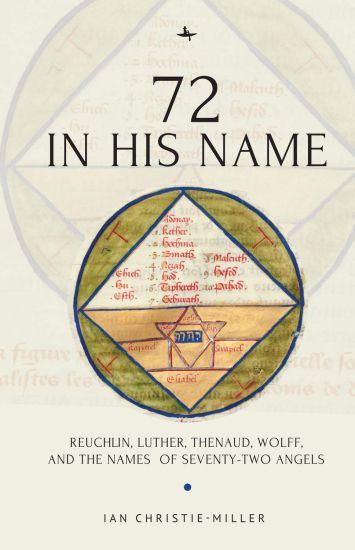
Leading figures at the dawn of the sixteenth-century Reformation commonly faced the charge of "judaizing": 72 In His Name concerns the changing views of four such men starting with their kabbalistic treatment of the 72 divine names of angels.Johann Reuchlin, the first of the four men featured in this book, survived the charge; Martin Luther's increasingly anti-semitic stance is contrasted with the opposite movement of the French Franciscan Jean Thenaud whose kabbalistic manuscripts were devoted to Francis I; Philipp Wolff, the fourth, had been born into a Jewish family but his recorded views were decidedly anti-semitic.72 In His Name also includes evidence that kabbalistic beliefs and practices, such as the service for exorcism recorded by Thenaud, were unwittingly recorded by Christians. Although the book concerns early modern Europe, the religious interactions, the shifting spiritual attitudes, and the shadows cast linger on.
Watermarks reflect the very stuff of the origin, date, distribution, composition, history and culture of paper-based items. Digital imaging of watermarks releases the research potential as widely as the internet itself. One example is the digital "fingerprinting" of paper in order to enhance the security of items, such as valuable and vulnerable maps. Revealing Watermarks, by means of the case study of one sixteenth century watermark—a crown from the arms of Danzig—illustrates how cultural influences spread and have endured across the centuries, in this case from Sweden to Russia.
In a world where environmental problems spill across political, administrative and disciplinary boundaries, there is a pressing need for a clear understanding of the kinds of organizations, management structures and policy-making approaches required to bring about socially equitable and ecologically sustainable development. In this second edition, the authors incorporate lessons from a decade of work on the conditions of sustainability in both developed and developing countries. They prescribe action networks - partnerships of flexible, achievement-oriented actors - and present new case studies demonstrating the success of organizations that have applied this approach. They also introduce case studies on action networks that work simultaneously on international, national and local levels.
The late Jan Fairley (1949-2012) was a key figure in making world music a significant topic for popular music studies and an influential contributor to such world music magazines as fRoots and Songlines. This book celebrates her contribution to popular music scholarship by gathering her most important work together in a single place. The result is a richly informed and entertaining volume that will be of interest to all scholars in the field while also serving as an excellent introduction for students interested in popular music as a global phenomenon. Fairley’s work was focused on the problems and possibilities of cross-cultural musical influences, fantasies and flows and on the importance of performing circuits and networks. Her interest in the details of music-making and in the lives of music-makers means that this collection is also an original and illuminating study of music and politics. In drawing on Jan Fairley’s journalism, this volume also offers students a guide to various genres of world music, from Cuban son to flamenco, as well as an insight into the lives of such world music stars as Mercedes Sosa and Silvio RodrÃguez. This is inspiring as well as essential reading.