Kirjahaku
Etsi kirjoja tekijän nimen, kirjan nimen tai ISBN:n perusteella.
1000 tulosta hakusanalla Ian Collinson
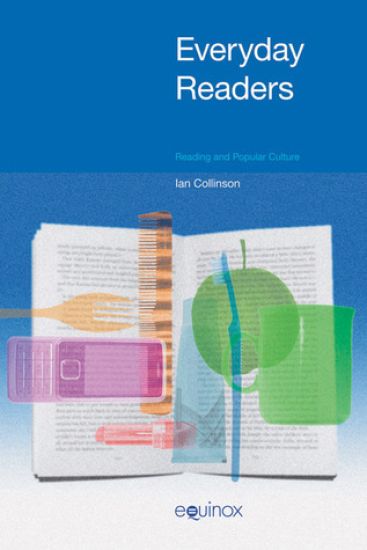
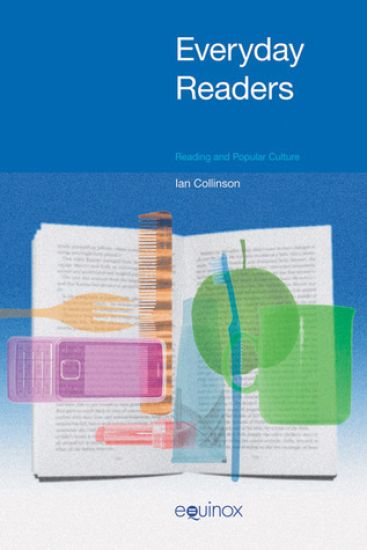
Book reading often seems to function as a barometer of cultural vitality. For those who wish to argue that we live in a dumbed-down age, the alleged decline in book reading often becomes the benchmark of falling cultural standards. Although pessimistic critics and commentators may shout that the time of the book is over, as they have since the fifteenth century, millions of readers worldwide are not listening to them. Despite the allure of television and the internet, book reading remains a popular activity. However, despite the huge global audiences for books, it is surprising that the complexity of everyday book culture is not readily comprehended. To the apparently simple and perennial question: 'what do people do with books?', this research offers a sophisticated response that goes beyond the narrow perception that reading is solely the consumption of narrative.It combines a number of different academic approaches (cultural geography and sociology; literary and cultural studies; and cultural history) in order to better understand the complex nature of readers' everyday encounters with their books. Through the use of an ethnographic method, which grounds the analysis firmly in the experience of real embodied readers, this work reveals the rich textures of everyday reading culture. It demonstrates how seemingly mundane acts of popular reading are, in fact, complex performances enabled and curtailed simultaneously by three cultural economies: the spatio-temporal, the social and the textual. While the consumption of narrative (often thought to be an entirely adequate definition of reading) remains significant, it is only a single element in an everyday reading practice that is, as this book shows, anything but ordinary.
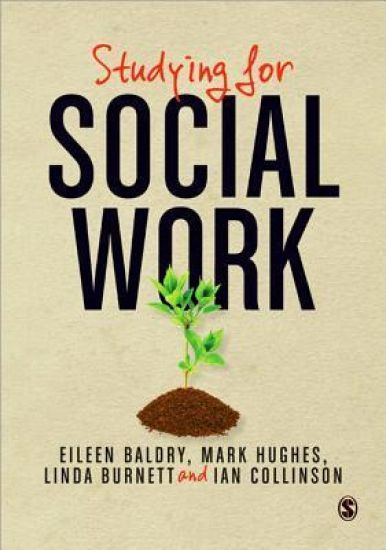
Studying for Social Work
Eileen Baldry; Mark Hughes; Linda Burnett; Ian Collinson
SAGE Publications Ltd
2011
sidottu
This essential guide to study skills takes social work students through every step of their degree journey, providing them with the academic tools they will need to thrive along the way. Inventively informed by the insights and reflections of qualifying students, the book offers effective guidance that is grounded in real experience of the social work degree. It is particularly suited to those in their early years of study and supports students as 'social workers in the making'. The book covers a comprehensive range of the core study skills, including: -Time management -Literature searches -Engaging with research -Responding to new styles of social work learning and teaching -Critical thinking -Academic writing and -Presentations With reflective questions, handy practical tips and links to helpful websites, this accessible handbook is the perfect study companion for every student on the path to professional qualification.
Studying for Social Work
Eileen Baldry; Mark Hughes; Linda Burnett; Ian Collinson
SAGE Publications Ltd
2011
nidottu
This essential guide to study skills takes social work students through every step of their degree journey, providing them with the academic tools they will need to thrive along the way. Inventively informed by the insights and reflections of qualifying students, the book offers effective guidance that is grounded in real experience of the social work degree. It is particularly suited to those in their early years of study and supports students as 'social workers in the making'. The book covers a comprehensive range of the core study skills, including: -Time management -Literature searches -Engaging with research -Responding to new styles of social work learning and teaching -Critical thinking -Academic writing and -Presentations With reflective questions, handy practical tips and links to helpful websites, this accessible handbook is the perfect study companion for every student on the path to professional qualification.
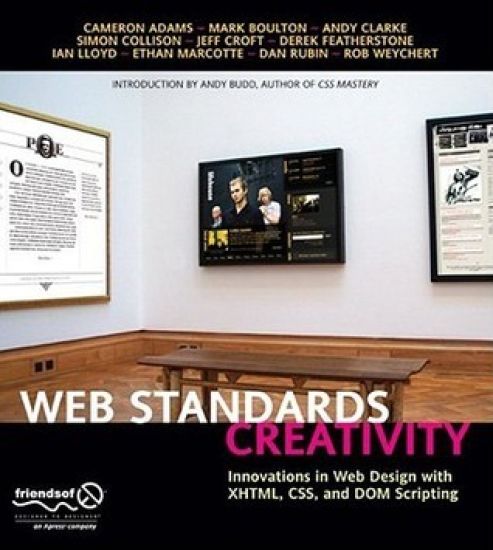
Web Standards Creativity
Andy Budd; Rob Weychert; Dan Rubin; Ian Lloyd; Derek Featherstone; Jeffrey Croft; Andy Clarke; Mark Boulton; Cameron Adams; Simon Collison
APress
2007
nidottu
Be inspired by 10 web design lessons from 10 of the world's best web designers Get creative with cutting-edge XHTML, CSS, and DOM scripting techniques Learn breathtaking design skills while remaining standards-compliant Here at friends of ED, we know that as a web designer or developer, your work involves more than just working to pay the bills. We know that each day, you strive to push the boundaries of your medium, unleashing your creativity in new ways to make your websites more engaging and attractive to behold, while still maintaining cross-browser support, standards compliance, and accessibility. That's why we got together 10 of the world's most talented web designers to share their secrets with you. Web Standards Creativity is jam-packed with fresh, innovative design ideas. The topics range from essential CSS typography and grid design, effective styling for CMS-driven sites, and astonishing PNG transparency techniques, to DOM scripting magic for creating layouts that change depending on browser resolution and user preference, and better print layouts for web pages. We're sure you will find something here to inspire you! This full-color book's examples are not just stunning to look at, but also fully standards-compliant, up-to-date, and tested in current browsers including Internet Explorer 7. Playing by the rules doesn't have to mean drab or dull websites—Web Standards can be fun!
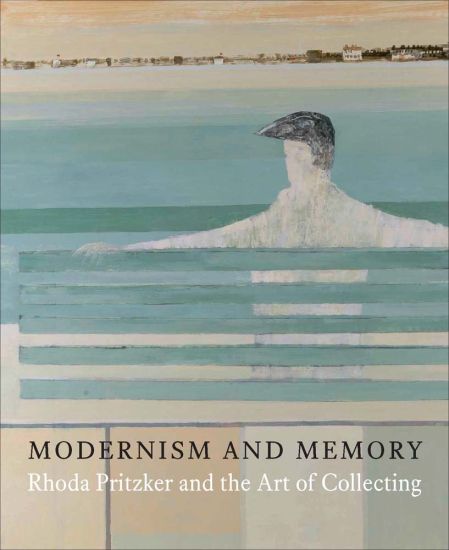
This book is a glorious celebration of Rhoda Pritzker’s collection of 20th-century British art, much of which has been donated to the Yale Center for British Art. Pritzker, who was born in Manchester in1914 and emigrated to the United States during the Blitz, was an avid and daring collector of paintings, sculptures, and drawings. Keen to support artists whose reputations were still emerging, and loyal to no single school or style, she developed a unique and impressively diverse collection. While Pritzker most actively purchased pieces in the 1950s and 1960s, her collection offers a fascinating window onto postwar artistic production. Beautifully illustrated, this catalogue features a number of unpublished works and archival materials. Among the artists discussed are key figures, including L. S. Lowry, Barbara Hepworth, Anthony Caro, and Henry Moore, as well as lesser-known artists. The texts elucidate the factors that made Pritzker’s method of collecting so singular—namely her relationship to an evolving transatlantic artistic community and the deeply personal nature of the works she procured.Distributed for the Yale Center for British ArtExhibition Schedule:Yale Center for British Art, New Haven (05/11/2016-08/21/2016)
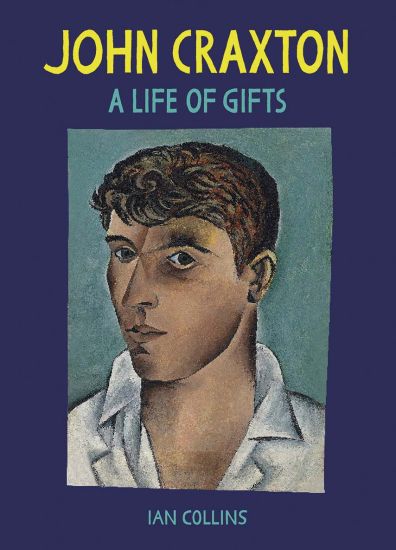
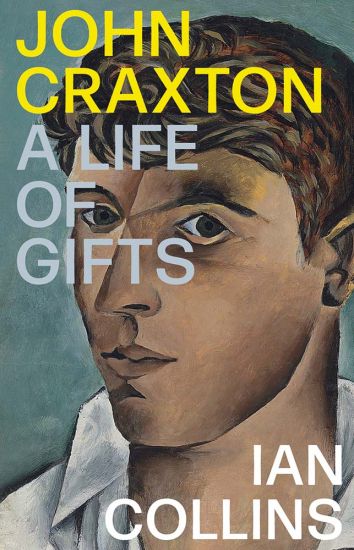
Uplifting and engaging, this story recounts the life and career of a rebellious 20th-century British artist Born into a large, musical, and bohemian family in London, the British artist John Craxton (1922–2009) has been described as a Neo-Romantic, but he called himself a “kind of Arcadian”. His early art was influenced by Blake, Palmer, Miró, and Picasso. After achieving a dream of moving to Greece, his work evolved as a personal response to Byzantine mosaics, El Greco, and the art of Greek life. This book tells his adventurous story for the first time. At turns exciting, funny, and poignant, the saga is enlivened by Craxton’s ebullient pictures. Ian Collins expands our understanding of the artist greatly—including an in-depth exploration of the storied, complicated friendship between Craxton and Lucian Freud, drawing on letters and memories that Craxton wanted to remain private until after his death.
Born into a large, musical, and bohemian family in London, the British artist John Craxton (1922–2009) has been described as a Neo-Romantic, but he called himself a “kind of Arcadian”. His early art was influenced by Blake, Palmer, Miró, and Picasso. After achieving a dream of moving to Greece, his work evolved as a personal response to Byzantine mosaics, El Greco, and the art of Greek life. This book tells his adventurous story for the first time. At turns exciting, funny, and poignant, the saga is enlivened by Craxton’s ebullient pictures. Ian Collins expands our understanding of the artist greatly—including an in-depth exploration of the storied, complicated friendship between Craxton and Lucian Freud, drawing on letters and memories that Craxton wanted to remain private until after his death.
The English Language Common Law Workbook
Ian Collins; David Brody
THE UNIVERSITY OF MICHIGAN PRESS
2025
nidottu
While thousands of international students study for Masters of Laws (LLM) degrees or other legal qualifications every year in the U.S. and other common law jurisdictions, many struggle to acculturate to the language demands of law school. Even with international exam scores demonstrating high levels of English, these students need to understand the concepts of common law to be successful. Since the hurdles to achieving success in EMI Law courses are greater than simply the challenge of mastering discipline-specific terminology, or learning particular grammar structures in legal texts, students need a resource that will help them learn to “think like a common law lawyer.”The English Language Common Law Workbook is designed to support students in developing the core competencies necessary for studying in a common law context. It provides readings and exercises based on authentic legal materials for practicing critical reading and writing skills. In particular, it includes an extensive number of statutes and cases and accompanying exercises that give students an opportunity to work with the type of sources they will encounter in English-medium law degree programs. By emphasizing common law principles throughout, the book helps international students coming from non–common law jurisdictions familiarize themselves with how statutes and cases in common law countries are written and structured. Students are supported in critically reading statutes and cases by focusing on key terminology and language structures. Finally, the book supports students in applying the skills they learn to construct basic case briefs and answer hypothetical legal questions using the IRAC structure. CEFR Levels: B2–C2
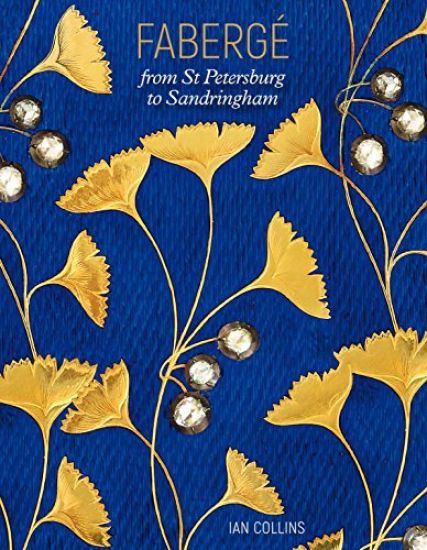
This is a glittering and haunting saga of the artist-jeweller to the Russian and British courts and his chief patrons - sisters and queen-empresses Alexandra and Maria Feodorovna, who commissioned fabulous objects and changed the world. Norfolk's Sandringham Estate, royal retreat and global powerhouse, was central to their bittersweet story.
The 3rd Eye Compendium is a comprehensive insight into the mind and emotions of an introvert. An empathetic channeling of words, illustrations, and thoughts presented in a collection to be shared and discussed. Inside you will be presented with the author's struggles to overcome pain, dispair, and depression. You will journey through settings that only the imagination can conjure and the soul can long for. Inside the author reveals his most guarded thoughts and feelings on subjects such as religon and escapism. Close your eyes and open your eye!
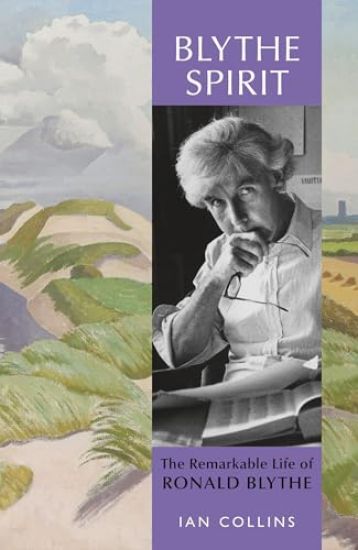
'Moving, candid, vivid, it is all that we could hope for in a memoir of this unique and treasured writer' ROWAN WILLIAMS'An unusually intimate and affectionate portrait' PATRICK BARKHAM, GUARDIAN'As a boy I dreamed of scholars and saints wandering around markets and cornfields, and of artists and poets sitting under the trees.'Ronald Blythe (1922-2023), author of the inimitable Akenfield, was a prolific and poetic chronicler of rural and spiritual life, nature and literature. He spent a joyful century close to his Suffolk roots, time travelling in his imagination and publishing forty books and thousands of essays. His wide creative network included John and Christine Nash, Cedric Morris, Benjamin Britten, E. M. Forster, Patricia Highsmith and Richard Mabey.From finding Thomas Hardy in February rain and John Clare in country tracks, to talking to his white cat and reading through a dragonfly's wings, the Blythe gift was to marvel in the everyday. His writing was intimate, meditative and often laced with a wry humour, inviting readers to share his enchanting perspective on the world. Yet few knew the 'real' Ronald Blythe. Leaving school at 14, he educated himself in libraries, churches and walks in the East Anglian landscape. He never spoke about early poverty and traumatic experience in the war, while his sexuality was kept private except from those closest to him.Drawing on unparalleled access to letters, notebooks, published works, drafts, and conversations from decades of friendship, Ian Collins tells the full story of Ronald Blythe for the first time. The result is a sensitive, revelatory portrait which celebrates a fascinating, complex man and casts new light on one of our greatest writers.
67 People I'd Like to Slap is one man's journey through the labyrinthine world of human angst and annoyance. The comedy writer, broadcaster and journalist Ian Collins lists, exposes and mocks that irritating contingent of the human race whose job, it seems, is to make life just a tad more infuriating than it needs to be.From psychics to exotic pet owners, Brits using chopsticks and over-35s at music festivals, through to middle-class protesters, elderly people in small cars and the billion cringe-crimes that are committed on social media every day (plus a healthy dose of well-known names too), Collins's often brutal but hilarious search into the pit of human idiocy leaves few stones unturned. He also addresses some of life's most serious questions:* Is Jeremy Clarkson part of a completely different gene pool?* What happens when you upset every Beyonce fan on the planet?* Why is Andrew Marr's sofa an affront to intelligent thinking?* How could a nice guy like Benedict Cumberbatch annoy anyone?* Has social media shrunk our brains?* What happens to a sense of shame when men visit the gym?Part polemic and part diary, Collins spent a year documenting all those areas (and people) that could bug the hell out of the calmest of souls. Armed only with a sensible pen, notepad and a standard High Street blood pressure monitor, he sets out to create the ultimate list.In the author's words, 67 People I'd Like to Slap is the non-negotiable oracle of all things bamboozling when it comes to human behaviour - the definitive guide that no sane person could ever argue against. Or could you...?
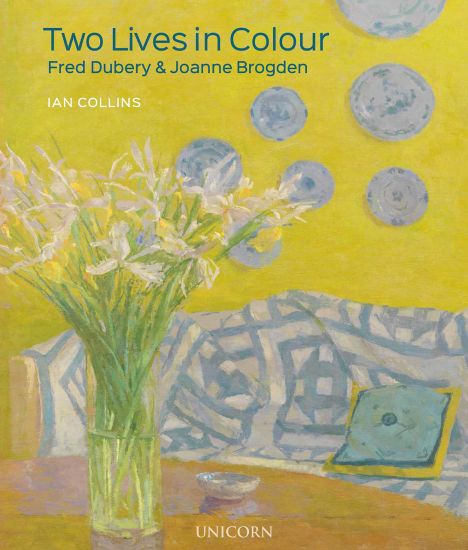
The painted world of Fred Dubery was all about warmth and colour – a bright pattern of life reflecting a private place of beauty, pleasure and merriment. Known from numerous solo exhibitions, and from regular showings at the Royal Academy and New English Art Club, the pictures are a record of joyful travels in France and Italy and, best of all, of domestic contentment via a long and happy marriage amid a visual feast, and a procession of amazing meals, in a lovely Suffolk setting. Fred Dubery was teaching at Walthamstow Art School when he had a fateful meeting with fashion tutor Joanne Brogden. She had trained under Christian Dior and would become a pioneering Professor of Fashion at the Royal College of Art while Fred was appointed Professor of Perspective at the Royal Academy Schools. Adding a large adopted family of former students, their life together was the heart of everything. Fred and Joanne left a legacy for art and fashion education and the paintings richly illustrated in this volume – images technically so clever and so subtle – offer a lasting lesson in how to live.
The Art of Jeremy Gardiner
Wendy Baron; Ian Collins; William Varley; Peter Davies; Christiana Payne; Simon Martin
Lund Humphries Publishers Ltd
2013
muu
Providing a comprehensive assessment of Jeremy Gardiner's career to date, this monograph, the first of its kind, explains how this distinctive artist has taken the exploratory landscape vision of mid-century St Ives modernists like Ben Nicholson, Peter Lanyon and John Tunnard into a new post-millennial era. Gardiner's unique geological interpretation of landscape not only describes the current lie of the land but portrays it as a complex outcome of natural processes over vast periods of time. While indebted to British and American modernism, Gardiner's new conceptual rigour and technical repertoire is informed by science, geomorphology, new technologies and direct physical engagement with ancient landscapes. Following a distinguished international teaching career, based in Britain and the United States, Gardiner's landscape subjects have included geographically varied locations from the Jurassic Coast in his native Dorset and the rugged Atlantic seaboard of Cornwall, to the jagged volcanic topographies of the Brazilian oceanic islands and the Lake District. Including essays from leading art writers, this book provides an insight into the career of one of Britain's most innovative contemporary landscape artists.
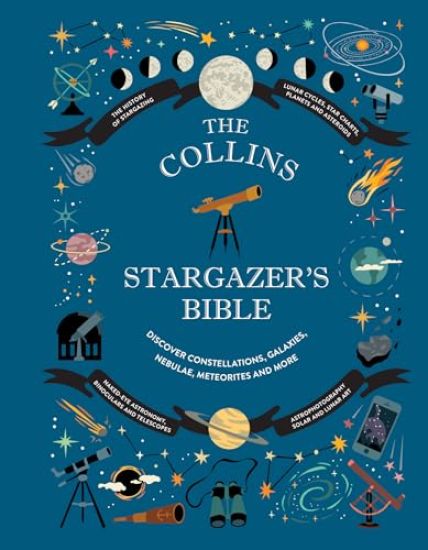
The classic guide to the night sky, now in its fifth edition as part of the authoritative 'Collins Guide' series.
Collins Stargazer’s Bible
Ian Ridpath; Mary McIntyre; Rachel Federman; Stephen Maran
HARPERCOLLINS PUBLISHERS
2024
sidottu
Combining practical stargazing information and advice, the insights of internationally renowned astronomers and the history, technological advances and art revering the night sky, Collins Stargazer's Bible is a stunning celebration of the remarkable sky above. Brimming with full-colour photography and artwork, Collins Stargazer's Bible offers engaging tips on identifying stars, planetary bodies and celestial events, as well as discovering more about the history, technological advances and art of the night sky. With detailed star charts and constellation profiles, plus visual accounts of the planets, comets, galaxies and eclipses, readers will learn how to identify the phenomena of the night sky, the best equipment to use and how to care for it, as well as how to create stunning astrophotography and art, how to avoid light pollution and make the most of the sky above in urban and suburban surroundings, and how to be dark-sky and conservation advocates. Full of stunning illustrations and packed with practical advice and hands-on projects, Collins Stargazer's Bible is the ultimate guide for novice stargazers, eagers astronomers, budding astrophotographers and astrophysicists, nature-lovers and anyone seeking to learn more about the wonder of the night sky.
This book is a comprehensive introduction to electron-atom collisions, covering both theory and experiment. The interaction of electrons with atoms is the field that most deeply probes both the structure and reaction dynamics of a many-body system. The book begins with a short account of experimental techniques of cross-section measurement. It then introduces the essential quantum mechanics background needed. The following chapters cover one-electron problems (from the classic particle in a box to a relativistic electron in a central potential), the theory of atomic bound states, formal scattering theory, calculation of scattering amplitudes, spin-independent and spin-dependent scattering observables, ionisation and electron momentum spectroscopy. The connections between experimental and theoretical developments are emphasised throughout.