Kirjojen hintavertailu. Mukana 11 213 693 kirjaa ja 11 kauppaa.

Kirjahaku

Etsi kirjoja tekijän nimen, kirjan nimen tai ISBN:n perusteella.

1000 tulosta hakusanalla Ian Donaldson

Ben Jonson

Ben Jonson

Ian Donaldson

Oxford University Press
2011
sidottu
Ben Jonson was the greatest of Shakespeare's contemporaries. In the century following his death he was seen by many as the finest of all English writers, living or dead. His fame rested not only on the numerous plays he had written for the theatre, but on his achievements over three decades as principal masque-writer to the early Stuart court, where he had worked in creative, and often stormy, collaboration with Inigo Jones. One of the most accomplished poets of the age, he had become - in fact if not in title - the first Poet Laureate in England. Jonson's life was full of drama. Serving in the Low Countries as a young man, he overcame a Spanish adversary in single combat in full view of both the armies. His early satirical play, The Isle of Dogs, landed him in prison, and brought all theatrical activity in London to a temporary -- and very nearly to a permanent -- standstill. He was 'almost at the gallows' for killing a fellow actor after a quarrel, and converted to Catholicism while awaiting execution. He supped with the Gunpowder conspirators on the eve of their planned coup at Westminster. After satirizing the Scots in Eastward Ho! he was imprisoned again; and throughout his career was repeatedly interrogated about plays and poems thought to contain seditious or slanderous material. In his middle years, twenty stone in weight, he walked to Scotland and back, seemingly partly to fulfil a wager, and partly to see the land of his forebears. He travelled in Europe as tutor to the mischievous son of Sir Walter Ralegh, who 'caused him to be drunken and dead drunk' and wheeled provocatively through the streets of Paris. During his later years he presided over a sociable club in the Apollo Room in Fleet Street, mixed with the most learned scholars of his day, and viewed with keen interest the political, religious, and scientific controversies of the day. Ian Donaldson's new biography draws on freshly discovered writings by and about Ben Jonson, and locates his work within the social and intellectual contexts of his time. Jonson emerges from this study as a more complex and volatile character than his own self-declarations (and much modern scholarship) would allow, and as a writer whose work strikingly foresees - and at times pre-emptively satirizes - the modern age.
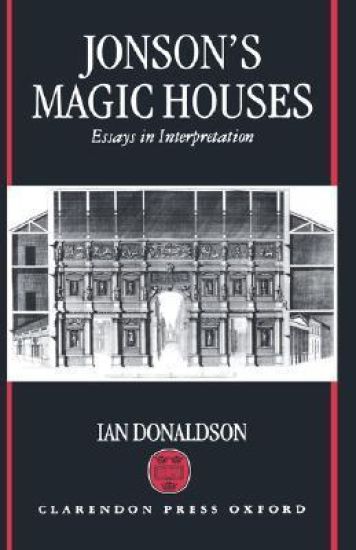
Jonson's Magic Houses

Jonson's Magic Houses

Ian Donaldson

Clarendon Press
1997
sidottu
Ben Jonson was commonly regarded during his lifetime and the century following his death as a writer whose powers were equal, if not superior, to those of Shakespeare. By the middle of the eighteenth century, however, his reputation had sharply declined: while Shakespeare was increasingly venerated as a type of original genius, Jonson was contrastingly seen as a writer of patchy and derivative talents, excessively devoted to the authors of antiquity and to the social minutiae of his age, anxiously resentful of his great and 'gentle' rival. This popular, formalized contrast of the two men's characters and abilities profoundly affected the subsequent reputations of both Shakespeare and Jonson. In this new collection of biographical, critical and historical essays, Ian Donaldson challenges many long-held and recent assumptions about the nature of Jonson's personality and creative achievement, offering fresh readings of his life and art.
Loyal Dissent

Loyal Dissent

Patrick Derham; Ian Donaldson; A. C. Grayling; James Campbell; Peter Cox; Nick Clegg
The University of Buckingham Press
2016
nidottu
With origins as far back as the 14th Century, Westminster School is one of the oldest in the country with a long tradition of scholarship - and outstanding results, both in academic and public life.Over the centuries, Westminster has stood apart from other prominent schools. Firmly grounded between Westminster Abbey and the Houses of Parliament, it has remained curiously unswayed by the influence and ethos of figures such as Thomas Arnold and the Victorian public school tradition, combining a distinctive evolution with the retention of much of its unique character. A great many of the school's former pupils are famous names. At one time, some of those pupils were uncontrolled outside school hours and notoriously unruly about town, but always encouraged to question, challenge and debate - and above all to respect genuine scholarship. They rank among this country's most distinguished thinkers, writers, theologians, scientists, politicians, artists and musicians. Ben Jonson, George Herbert, Richard Busby, John Locke, Christopher Wren, Robert Hooke, Lord Mansfield, Charles Wesley, Warren Hastings, Jeremy Bentham, Henry Mayhew, A. A. Milne, John Spedan Lewis, Richard Doll and Tony Benn are the individuals the authors recognise as 'loyal dissenters', at once respectful of peers, staff and principles, yet unafraid to forge their own direction.
An Analysis of David Hume's Dialogues Concerning Natural Religion

An Analysis of David Hume's Dialogues Concerning Natural Religion

John Donaldson; Ian Jackson

Macat International Limited
2017
nidottu
David Hume’s Dialogues Concerning Natural Religion is a philosophical classic that displays a powerful mastery of the critical thinking skills of reasoning and evaluation. Hume’s subject, the question of the existence and possible nature of God, was, and still is, a persistent topic of philosophical and theological debate. What makes Hume’s text a classic of reasoning, though, is less what he says, than how he says it. As he noted in his preface to the book, the question of ‘natural religion’ was unanswerable: so ‘obscure and uncertain’ that ‘human reason can reach no fixed determination with regard to it.’ Hume chose, as a result, to cast his thoughts on the topic in the form of a dialogue – allowing different points of view to be reasoned out, evaluated and answered by different characters. Considering and judging different or opposing points of view, as Hume’s characters do, is an important part of reasoning, and is vital to building strong persuasive arguments. Even if, as Hume suggests, there can be no final answer to what a god might be like, Dialogues Concerning Natural Religion shows high-level reasoning and evaluation at their best.
An Analysis of David Hume's Dialogues Concerning Natural Religion

An Analysis of David Hume's Dialogues Concerning Natural Religion

John Donaldson; Ian Jackson

Macat International Limited
2017
sidottu
David Hume’s Dialogues Concerning Natural Religion is a philosophical classic that displays a powerful mastery of the critical thinking skills of reasoning and evaluation. Hume’s subject, the question of the existence and possible nature of God, was, and still is, a persistent topic of philosophical and theological debate. What makes Hume’s text a classic of reasoning, though, is less what he says, than how he says it. As he noted in his preface to the book, the question of ‘natural religion’ was unanswerable: so ‘obscure and uncertain’ that ‘human reason can reach no fixed determination with regard to it.’ Hume chose, as a result, to cast his thoughts on the topic in the form of a dialogue – allowing different points of view to be reasoned out, evaluated and answered by different characters. Considering and judging different or opposing points of view, as Hume’s characters do, is an important part of reasoning, and is vital to building strong persuasive arguments. Even if, as Hume suggests, there can be no final answer to what a god might be like, Dialogues Concerning Natural Religion shows high-level reasoning and evaluation at their best.
The Black Dreams

The Black Dreams

Ian Sansom; Jo Baker; Moyra Donaldson; Bernie McGill; Jan Carson; Ian McDonald; Sam Thompson; Michelle Gallen; Carlo Gébler; Reggie Chamberlain-King; John Patrick Higgins; Gerard McKeown; Aislínn Clarke; Emma Devlin

Colourpoint Creative Ltd
2021
sidottu
I don’t recall if I saw my first gunman in my childhood nightmares or on my childhood streets. There were plenty in both and they looked very much like each other. So begins Reggie Chamberlain-King’s introduction to The Black Dreams, a thrilling and compelling collection of specially commissioned stories that explore the emotional geography of growing up and living in Northern Ireland. The fourteen stories gathered here criss-cross coast, border and city as they map a ‘strange’ territory of in-between states and unstable realities in which understanding is unreliable. Obsessions, death and rebirth, violence, sexuality, retribution and apocalypse are all part of the rich fabric of The Black Dreams. Bringing together some of Northern Ireland’s finest writers, along with some of the best new talents, The Black Dreams celebrates and extends the rich tradition of the weird, surreal and dream-like in Northern Irish writing. It is also a powerful act of imagining and storytelling – a vibrant, vivid and exhilarating exploration of a world we cannot, or choose not, to see. Contributors: Jo Baker, Jan Carson, Reggie Chamberlain-King, Aislínn Clarke, Emma Devlin, Moyra Donaldson, Michelle Gallen, Carlo Gébler, John Patrick Higgins, Ian McDonald, Gerard McKeown, Bernie McGill, Ian Sansom, Sam Thompson
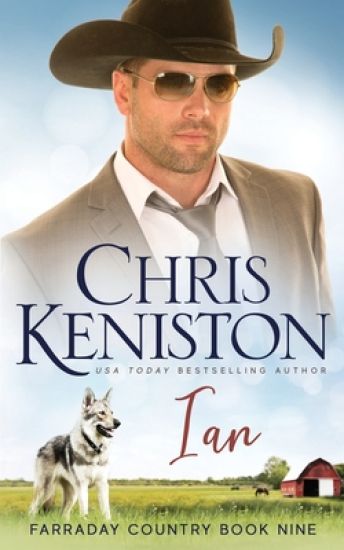
Ian

Ian

Elizabeth Rose

Createspace Independent Publishing Platform
2015
nidottu
◆ He never meant to fall in love with his best friend's sister ◆Ian MacKeefe is haunted by the demons in his head, taunting him of his tarnished past. On All Hallows' Eve he sees the face of a man in the fire. It is the image of an enemy he's killed and buried three years earlier. It is a disturbing thought since this is the night when supposedly the veil between two worlds is the thinnest and the dead can come back to life.Kyla has taken a liking to Ian, but she is his best friend's sister. They've grown up together, but now she is a woman and has caught his eye, or at least she hopes she has. Ian shouldn't be having feelings for Kyla and it scares him. If Aidan finds out, he'll have Ian's head. Meaning to frighten the girl off the way he's done in the past, Ian kisses Kyla, but it only makes things worse since she seems to be attracted to him as well.When Ian is asked to escort Kyla home, his past comes back to haunt him. He hears rumors that Tearlach MacTavish, the man he killed, has come back to life and is looking for an alliance with the MacKeefes in the form of a bride. No one, especially a man who should be dead, is going to take Kyla away from Ian. He will give his life to protect her. That is, if his past doesn't stop him first.Can Ian face his past before it's too late, now that he realizes Kyla is so much more to him than just his best friend's wee sister? Will true love give him the strength to set things right, and this time keep his dead enemies in the ground where they belong?
Ian

Ian

Chris Keniston

Indie House Publishing
2018
pokkari
Tuckers bluff isn't done playing matchmaker for the Farradays. Welcome to Ian, book 9 in the Farraday Country series set in cattle-ranching west Texas, with all the friends, family and fun that fans have come to expect from USA TODAY Bestselling author Chris Keniston. For Texas Ranger Ian Farraday, nothing beats catching bad guys, except family time in Tuckers Bluff. When fate steps in and brings him face-to-face with one curvy-and unforgettable-damsel in distress, all it takes is a stray puppy and a few missing cows to turn his ranch vacation upside down. Attending a wedding isn't supposed to land Kelly Morgan in jail. Lucky for her, the Farraday men are always ready to save the day-especially one long, tall Texan. Too bad the embarrassing mishap turns out to be the least of her worries. After all, every woman needs a knight in shining armor once-or twice-in a lifetime. Praise for the Farraday Series: "Loved it. Fast moving and fun." Jodi Thomas, New York Times Bestselling Author on DECLAN "My kind of read Spend an afternoon with a great romance story, a feisty heroine, and one unforgettable hero." Lindsay McKenna, New York Times Bestselling Author on ADAM "Chris Keniston gives us a world you'll never want to leave." Emily March, New York Times Bestselling Author of Eternity Springs series on FARRADAY COUNTRY SERIES "Spellbinding " Lori Wilde, New York Times Bestselling Author on ETHAN More Books in the Farraday Country Series: Adam - Book 1 Brooks - Book 2 Connor - Book 3 Declan - Book 4 Ethan - Book 5 Finn - Book 6 Grace - Book 7 Hannah - Book 8 Ian - Book 9 Jamison Book 10 - arriving in 2018 For more on Chris and her other series check out her website Or follow her on facebook Chris Keniston Author
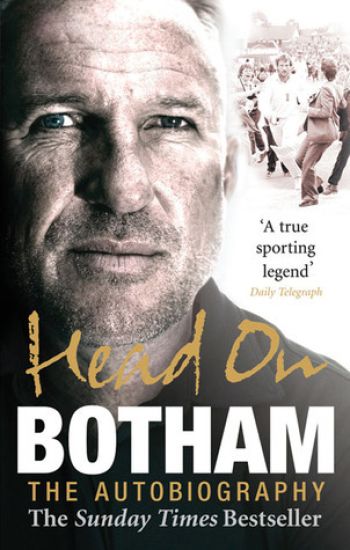
Head On - Ian Botham: The Autobiography
Voted the greatest English cricketer of the 20th century by the fans, Sir Ian Botham is the English game's one true living legend and his story both on and off the pitch reads like a Boy's Own rollercoaster ride.Born with a natural genius for cricket, Botham began breaking records with bat and ball from a young age and soon became the man English cricket expected most from. After a troubled period as England's captain, Botham rose once again to become a national hero with his display in the Miracle Ashes of 1981. But, with his confrontational nature and wild streak, he began regularly making the wrong kind of headlines. With accusations of drink and drugs, affairs and ball-tampering, he became hounded by the tabloid pack, never sure whether they wanted him to triumph or implode. Now a Knight and just as famous for his tireless charity work, Beefy gives us the definitive story of his never-dull life and times in his own no-nonsense words.
Ian Watt

Ian Watt

Marina MacKay

Oxford University Press
2018
sidottu
Before his masterpiece The Rise of the Novel made him one of the most influential post-war British literary critics, Ian Watt was a soldier, a prisoner of war of the Japanese, and a forced labourer on the notorious Burma-Thailand Railway. Both an intellectual biography and an intellectual history of the mid-century, this book reconstructs Watt's wartime world: these were harrowing years of mass death, deprivation, and terror, but also ones in which communities and institutions were improvised under the starkest of emergency conditions. Ian Watt: The Novel and the Wartime Critic argues that many of our foundational stories about the novel—about the novel's origins and development, and about the social, moral, and psychological work that the novel accomplishes—can be traced to the crises of the Second World War and its aftermath.