Practice and Research is an overview of Professor Ian Shaw's analysis of the complexity and challenges of the practice/research relationship in social work - a theme that has been the focus of much of his writing over his career. Introduced with a new essay that reflects on the 'serendipity, misfires and occasional patterns' in his work, the book is grouped into five sections. It covers the following themes, each of which is fully contextualized: ¢ Perspectives on Social Work Research ¢ Evaluation ¢ Qualitative Social Work Research ¢ Practice and Research ¢ The Receiving End: Service Users and Research This book has much to say about the relationship between social work practice and research and is a must-read for any social work student or practitioner.
Practice and Research is an overview of Professor Ian Shaw's analysis of the complexity and challenges of the practice/research relationship in social work - a theme that has been the focus of much of his writing over his career. Introduced with a new essay that reflects on the 'serendipity, misfires and occasional patterns' in his work, the book is grouped into five sections. It covers the following themes, each of which is fully contextualized: ¢ Perspectives on Social Work Research ¢ Evaluation ¢ Qualitative Social Work Research ¢ Practice and Research ¢ The Receiving End: Service Users and Research This book has much to say about the relationship between social work practice and research and is a must-read for any social work student or practitioner.
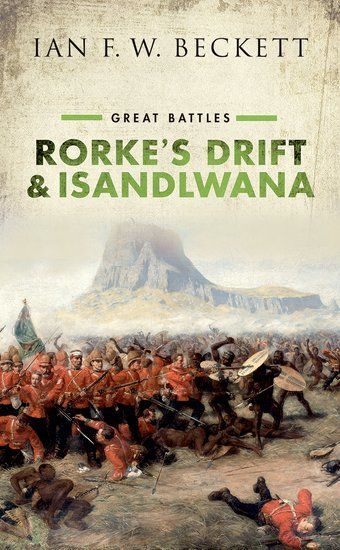
The battle of Isandlwana on 22 January 1879, the first major encounter in the Anglo-Zulu War, witnessed the worst single day's loss of British troops between the battle of Waterloo in 1815 and the opening campaigns of the First World War in August 1914. Moreover, decisive defeat at the hands of the Zulu came as an immense shock to a Victorian public that had become used to easy victories over less technologically advanced indigenous foes in an expanding empire. The successful defence of Rorke's Drift, which immediately followed the encounter at Isandlwana (and for which 11 Victoria Crosses were awarded), averted military disaster and went some way to restore wounded British pride, but the sobering memory of defeat at Isandlwana lingered for many years, while the legendary tale of the defence of Rorke's Drift was re-awakened for a new generation in the epic 1964 film Zulu, starring Michael Caine. In this new volume in the Great Battles series, Ian F. W. Beckett tells the story of both battles, investigating not only their immediate military significance but also providing the first overarching account of their continuing cultural impact and legacy in the years since 1879, not just in Britain but also from the once largely inaccessible and overlooked Zulu perspective.
This volume recounts the battles of Isandlwana and Rorke's Drift, exploring how they were fought, how they have been remembered, and what they mean for us today. The battle of Isandlwana on 22 January 1879, the first major battle in the Anglo-Zulu war, witnessed the worst single day's loss of British troops between the battle of Waterloo in 1815 and the opening campaignns of the First World War in August 1914. Moreover, decisive defeat at the hands of the Zulu came as an immense shock to a Victorian public that had become used to easy victories over less technologically advanced indigenous foes in an expanding empire. The successful defence of Rorke's Drift, which immediately followed the encounter at Isandlwana (and for which 11 Victoria Crosses were awarded), averted military disaster and went some way to restore wounded British pride, but the sobering memory of defeat at Isandlwana lingered for many years, while the legendary tale of the defence of Rorke's Drift was reawakened for a new generation in the epic 1964 film Zulu, starring Michael Caine. In this new volume in the Great Battles series, Ian F. W. Beckett tells the story of both battles, investigating not only their immediate military significance but also providing the first overarching account of their continuing cultural impact and legacy in the years since 1879, not just in Britain but also from the once largely inaccessible and overlooked Zulu perspective.
The story of the British army, from its inception in the late seventeenth century to the present. This new concise history by one of Britain's leading military historians explores the British army from the creation of a permanent standing army in the seventeenth century to the present. It sets the institutional development of the British army, and its often ambiguous relationship with state and society, as well as the army's wider political, social, economic, and cultural role within international, imperial, national, regional, and local contexts. An army exists to fight, however, and the British army's story cannot be separated from those wars and conflicts that have punctuated its evolution. Consequently, attention is also paid to the army's commanders, operations, and battlefields from the Wars of the Three Kingdoms in the seventeenth century to Iraq and Afghanistan in the twenty-first. Beckett traces the army's evolution through five chronological phases: the standing army of the seventeenth century and its antecedents, the national army of the eighteenth century, the imperial army of the nineteenth century, the people's army of the two world wars, the era of national service, and the return to a small professional army fulfilling a global role envisaged by successive governments in the twenty-first century at a time of rapidly changing social attitudes towards the utility of force, that pose a challenge to the army's traditional core values.
The public university as we once knew it is gone and never coming back. After generations of fickle state support, public universities behave more and more like their private counterparts—charging what the market will bear, offering what consumers demand, competing relentlessly with peers, and managing their own priorities. But looking back on how we got here offers surprising reassurance. U.S. public universities emerged largely intact after a decade of disruption bookended by a financial crisis and a pandemic. Resisting widespread calls for corporate reinvention or “disruptive innovation,” they hewed to their core missions. If anything, exposure to the rigors of competition only enhanced their longstanding commitments to the public good.The University Unfettered tells the story of a single public research university that was a generation ahead of its peers in repositioning itself for an independent future. It answers eight fundamental questions about how any contemporary university balances competing missions—questions about how money is spent, how education and knowledge are pursued, and how decisions get made. Each chapter blends deeply informed reconstruction of strategic decisions at one university with concise analyses of the entire sector. An unparalleled account of how a typical public university really works, this book makes a timely and distinctive case for the nonelite institutions that educate the vast majority of America’s college students. Rebutting critiques from both left and right, it offers a refreshingly optimistic outlook on higher education today.
The public university as we once knew it is gone and never coming back. After generations of fickle state support, public universities behave more and more like their private counterparts—charging what the market will bear, offering what consumers demand, competing relentlessly with peers, and managing their own priorities. But looking back on how we got here offers surprising reassurance. U.S. public universities emerged largely intact after a decade of disruption bookended by a financial crisis and a pandemic. Resisting widespread calls for corporate reinvention or “disruptive innovation,” they hewed to their core missions. If anything, exposure to the rigors of competition only enhanced their longstanding commitments to the public good.The University Unfettered tells the story of a single public research university that was a generation ahead of its peers in repositioning itself for an independent future. It answers eight fundamental questions about how any contemporary university balances competing missions—questions about how money is spent, how education and knowledge are pursued, and how decisions get made. Each chapter blends deeply informed reconstruction of strategic decisions at one university with concise analyses of the entire sector. An unparalleled account of how a typical public university really works, this book makes a timely and distinctive case for the nonelite institutions that educate the vast majority of America’s college students. Rebutting critiques from both left and right, it offers a refreshingly optimistic outlook on higher education today.
An original and spellbinding reinterpretation of the most significant events of the Great War Nearly a century has passed since the assassination of Austria-Hungary's Archduke Ferdinand, yet the repercussions of the devastating global conflict that followed echo still. In this provocative book, historian Ian Beckett turns the spotlight on twelve particular events of the First World War that continue to shape the world today. Focusing on episodes both well known and scarcely remembered, Beckett tells the story of the Great War from a new perspective, stressing accident as much as strategy, the small as well as the great, the social as well as the military, and the long term as much as the short term.The Making of the First World War is global in scope. The book travels from the deliberately flooded fields of Belgium to the picture palaces of Britain's cinema, from the idealism of Wilson's Washington to the catastrophic German Lys offensive of 1918. While war is itself an agent of change, Beckett shows, the most significant developments occur not only on the battlefields or in the corridors of power, but also in hearts and minds. Nor may the decisive turning points during years of conflict be those that were thought to be so at the time. With its wide reach and unexpected conclusions, this book revises—and expands—our understanding of the legacy of the First World War.
Here is an intellectual extravaganza, a dazzling history of the key institutions that have shaped and channeled knowledge in the West from the classical period to the present. Fashioned with elegance and wit, this exhilarating survey carries us through the pivotal points of institutional change and cultural transformation. It is full of memorable characters, from the flamboyant founder of the great library at Alexandria and the arrogant medieval logician Peter Abelard to the dashing global adventurer von Humboldt. In its compact history we find the perfect context for understanding the vast changes we are experiencing now in the landscape of knowledge.
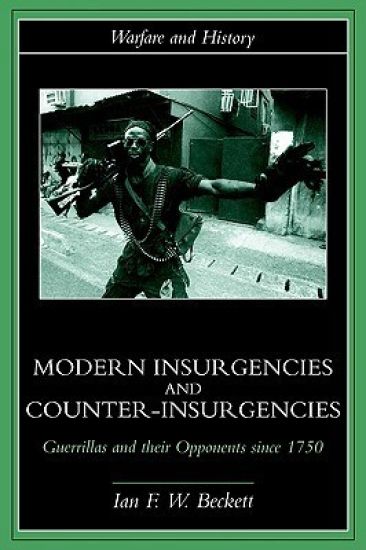
Modern Insurgencies and Counter-Insurgencies explores how unconventional warfare tactics have opposed past and present governments all over the world, from eighteenth-century guerrilla warfare to the urban terrorism of today. Insurgency remains one of the most prevalent forms of conflict and presents a crucial challenge to the international community, governments and the military.In addition to examining the tactics of guerrilla leaders such as Lawrence, Mao, Guevara and Marighela, Modern Insurgencies and Counter-Insurgencies also analyses the counter-insurgency theories of Gallieni, Callwell, Thompson and Kitson. It explores such conflicts as:* the American War of Independence* Napoleon's campaign in Spain* the wars of decolonisation* the superpowers in Vietnam and Afghanistan* conflicts in Northern Ireland, Sierra Leone and Colombia.
Modern Insurgencies and Counter-Insurgencies explores how unconventional warfare tactics have opposed past and present governments all over the world, from eighteenth-century guerrilla warfare to the urban terrorism of today. Insurgency remains one of the most prevalent forms of conflict and presents a crucial challenge to the international community, governments and the military.In addition to examining the tactics of guerrilla leaders such as Lawrence, Mao, Guevara and Marighela, Modern Insurgencies and Counter-Insurgencies also analyses the counter-insurgency theories of Gallieni, Callwell, Thompson and Kitson. It explores such conflicts as:* the American War of Independence* Napoleon's campaign in Spain* the wars of decolonisation* the superpowers in Vietnam and Afghanistan* conflicts in Northern Ireland, Sierra Leone and Colombia.
This book presents an in-depth study on the recent advances in Wireless Sensor Networks (WSNs). The authors describe the existing WSN applications and discuss the research efforts being undertaken in this field. Theoretical analysis and factors influencing protocol design are also highlighted. The authors explore state-of-the-art protocols for WSN protocol stack in transport, routing, data link, and physical layers. Moreover, the synchronization and localization problems in WSNs are investigated along with existing solutions. Furthermore, cross-layer solutions are described. Finally, developing areas of WSNs including sensor-actor networks, multimedia sensor networks, and WSN applications in underwater and underground environments are explored. The book is written in an accessible, textbook style, and includes problems and solutions to assist learning. Key Features: The ultimate guide to recent advances and research into WSNsDiscusses the most important problems and issues that arise when programming and designing WSN systemsShows why the unique features of WSNs – self-organization, cooperation, correlation -- will enable new applications that will provide the end user with intelligence and a better understanding of the environmentProvides an overview of the existing evaluation approaches for WSNs including physical testbeds and software simulation environmentsIncludes examples and learning exercises with a solutions manual; supplemented by an accompanying website containing PPT-slides. Wireless Sensor Networks is an essential textbook for advanced students on courses in wireless communications, networking and computer science. It will also be of interest to researchers, system and chip designers, network planners, technical mangers and other professionals in these fields.
"This book is not only of practical value. It's also a lot of fun to read." Michael Jackson, The Open University. Do you need to know how to create good requirements? Discovering Requirements offers a set of simple, robust, and effective cognitive tools for building requirements. Using worked examples throughout the text, it shows you how to develop an understanding of any problem, leading to questions such as: What are you trying to achieve?Who is involved, and how?What do those people want? Do they agree?How do you envisage this working?What could go wrong?Why are you making these decisions? What are you assuming? The established author team of Ian Alexander and Ljerka Beus-Dukic answer these and related questions, using a set of complementary techniques, including stakeholder analysis, goal modelling, context modelling, storytelling and scenario modelling, identifying risks and threats, describing rationales, defining terms in a project dictionary, and prioritizing. This easy to read guide is full of carefully-checked tips and tricks. Illustrated with worked examples, checklists, summaries, keywords and exercises, this book will encourage you to move closer to the real problems you're trying to solve. Guest boxes from other experts give you additional hints for your projects. Invaluable for anyone specifying requirements including IT practitioners, engineers, developers, business analysts, test engineers, configuration managers, quality engineers and project managers. A practical sourcebook for lecturers as well as students studying software engineering who want to learn about requirements work in industry. Once you've read this book you will be ready to create good requirements!
Living communities are continuously changing, both as a result of natural processes and the activities of Man. It is essential for us to have effective biological and ecological monitoring programmes in order to detect these changes and understand the factors which influence them. Monitoring Ecological Change provides a practical and thought-provoking introduction to the subject, which will be of broad interest to students and professionals in the areas of ecology, environmental science, conservation and resource management. In the first part of the book, the roles of local, national and international organisations which implement monitoring programmes are discussed and assessed. In the second section of the book, a wide range of examples are used to explain and evaluate methods of data collection, analysis and interpretation. The final section focuses on the important applications of biological monitoring, such as pollution control, land-use management, monitoring rare species, and post-environmental impact assessment.
Biogeography is about the geographical distribution, both past and present, of plants, animals and other organisms. In this undergraduate textbook Spellerberg and Sawyer bring a modern and new approach to a developing subject, writing in a lively and sometimes provocative manner. Throughout the text the applications of biogeography in conservation management, economic production, environmental assessment, sustainable use of resources, landscape planning and public health are emphasised. Applications of island biogeography in conservation, the concept of wildlife corridors and the analysis of biogeographical data are all discussed and the role of humans and their cultures in biogeography is explored. The applied approach of this textbook, along with its numerous illustrative examples and figures, make it an interesting introduction to the field for all geography, biology and environmental science students.
Biogeography is about the geographical distribution, both past and present, of plants, animals and other organisms. In this undergraduate textbook Spellerberg and Sawyer bring a modern and new approach to a developing subject, writing in a lively and sometimes provocative manner. Throughout the text the applications of biogeography in conservation management, economic production, environmental assessment, sustainable use of resources, landscape planning and public health are emphasised. Applications of island biogeography in conservation, the concept of wildlife corridors and the analysis of biogeographical data are all discussed and the role of humans and their cultures in biogeography is explored. The applied approach of this textbook, along with its numerous illustrative examples and figures, make it a unique introduction to the field for all geography, biology and environmental science students.
The state of ecosystems, biological communities and species are continuously changing as a result of both natural processes and the activities of humans. In order to detect and understand these changes, effective ecological monitoring programmes are required. This book offers an introduction to the topic and provides both a rationale for monitoring and a practical guide to the techniques available. Written in a nontechnical style, the book covers the relevance and growth of ecological monitoring, the organizations and programmes involved, the science of ecological monitoring and an assessment of methods in practice, including many examples from monitoring programmes around the world. Building on the success of the first edition, this new edition has been fully revised and updated with two additional chapters covering the relevance of monitoring to the reporting of the state of the environment, and the growth of community based ecological monitoring.
The state of ecosystems, biological communities and species are continuously changing as a result of both natural processes and the activities of humans. In order to detect and understand these changes, effective ecological monitoring programmes are required. This book offers an introduction to the topic and provides both a rationale for monitoring and a practical guide to the techniques available. Written in a nontechnical style, the book covers the relevance and growth of ecological monitoring, the organizations and programmes involved, the science of ecological monitoring and an assessment of methods in practice, including many examples from monitoring programmes around the world. Building on the success of the first edition, this edition has been fully revised and updated with two additional chapters covering the relevance of monitoring to the reporting of the state of the environment, and the growth of community based ecological monitoring.
In 1968, ten thousand students marched in protest over the terrible conditions prevalent in the high schools of East Los Angeles, the largest Mexican community in the United States. Chanting "Chicano Power," the young insurgents not only demanded change but heralded a new racial politics. Frustrated with the previous generation's efforts to win equal treatment by portraying themselves as racially white, the Chicano protesters demanded justice as proud members of a brown race. The legacy of this fundamental shift continues to this day.Ian Haney López tells the compelling story of the Chicano movement in Los Angeles by following two criminal trials, including one arising from the student walkouts. He demonstrates how racial prejudice led to police brutality and judicial discrimination that in turn spurred Chicano militancy. He also shows that legal violence helped to convince Chicano activists that they were nonwhite, thereby encouraging their use of racial ideas to redefine their aspirations, culture, and selves. In a groundbreaking advance that further connects legal racism and racial politics, Haney López describes how race functions as "common sense," a set of ideas that we take for granted in our daily lives. This racial common sense, Haney López argues, largely explains why racism and racial affiliation persist today.By tracing the fluid position of Mexican Americans on the divide between white and nonwhite, describing the role of legal violence in producing racial identities, and detailing the commonsense nature of race, Haney López offers a much needed, potentially liberating way to rethink race in the United States.