Kirjojen hintavertailu. Mukana 11 244 527 kirjaa ja 12 kauppaa.

Kirjahaku

Etsi kirjoja tekijän nimen, kirjan nimen tai ISBN:n perusteella.

1000 tulosta hakusanalla Ian Goldin

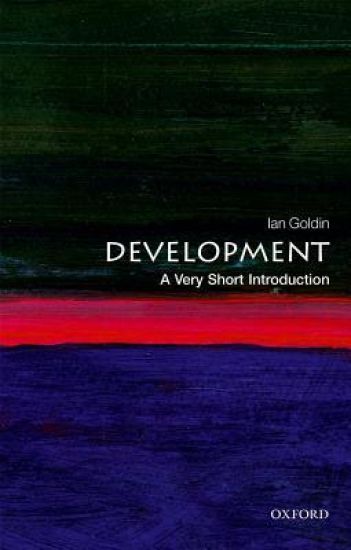
Development

Development

Ian Goldin

Oxford University Press
2018
nidottu
What do we mean by development? How can citizens, governments and the international community foster development? The process by which nations escape poverty and achieve economic and social progress has been the subject of extensive examination for hundreds of years.The notion of development itself has evolved from an original preoccupation with incomes and economic growth to a much broader understanding of development. In this Very Short Introduction Ian Goldin considers the contributions that education, health, gender, equity, and other dimensions of human well-being make to development, and discusses why it is also necessary to include the role of institutions and the rule of law as well as sustainability and environmental concerns. ABOUT THE SERIES: The Very Short Introductions series from Oxford University Press contains hundreds of titles in almost every subject area. These pocket-sized books are the perfect way to get ahead in a new subject quickly. Our expert authors combine facts, analysis, perspective, new ideas, and enthusiasm to make interesting and challenging topics highly readable.
The Pursuit of Development

The Pursuit of Development

Ian Goldin

Oxford University Press
2016
sidottu
What do we mean by development? How can citizens, governments and the international community foster development? The process by which nations escape poverty and achieve economic and social progress has been the subject of extensive examination for hundreds of years. The notion of development itself has evolved from an original preoccupation with incomes and economic growth to a much broader understanding of development. In his new book, Ian Goldin considers the contributions that education, health, gender, equity and other dimensions of human well-being make to development, and discusses why it is also necessary to take into account the role of institutions and the rule of law as well as sustainability and environmental concerns.
Divided Nations

Divided Nations

Ian Goldin

Oxford University Press
2014
nidottu
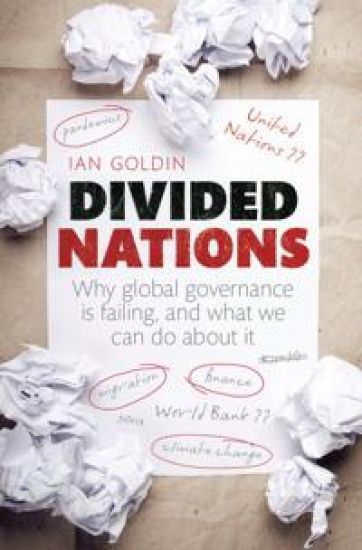
With rapid globalization, the world is more deeply interconnected than ever before. While this has its advantages, it also brings with it systemic risks that are only just being identified and understood. Rapid urbanization, together with technological leaps, such as the Internet, mean that we are now physically and virtually closer than ever in humanity's history. We face a number of international challenges - climate change, pandemics, cyber security, and migration - which spill over national boundaries. It is becoming increasingly apparent that the UN, the IMF, the World Bank - bodies created in a very different world, more than 60 years ago - are inadequate for the task of managing such risk in the 21st century. Ian Goldin explores whether the answer is to reform the existing structures, or to consider a new and radical approach. By setting out the nature of the problems and the various approaches to global governance, Goldin highlights the challenges that we are to overcome and considers a road map for the future.
Divided Nations

Divided Nations

Ian Goldin

Oxford University Press
2013
sidottu
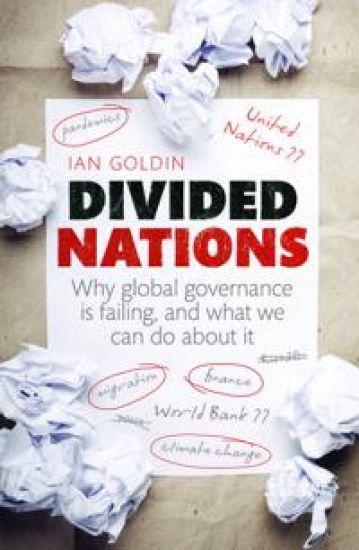
With rapid globalization, the world is more deeply interconnected than ever before. While this has its advantages, it also brings with it systemic risks that are only just being identified and understood. Rapid urbanization, together with technological leaps, such as the Internet, mean that we are now physically and virtually closer than ever in humanity's history. We face a number of international challenges - climate change, finance, pandemics, cyber security, and migration - which spill over national boundaries. It is becoming increasingly apparent that the UN, the IMF, the World Bank - bodies created in a very different world, more than 60 years ago - are inadequate for the task of managing such risk in the 21st century. Ian Goldin explores whether the answer is to reform the existing structures, or to consider a new and radical approach. By setting out the nature of the problems and the various approaches to global governance, Goldin highlights the challenges that we are to overcome and considers a road map for the future.
Rescue

Rescue

Ian Goldin

Sceptre
2021
sidottu
An optimistic vision of the future after Covid-19 by a leading professor of globalisation at the University of Oxford.We are at a crossroads. The wrecking-ball of Covid-19 has destroyed global norms. Many think that after the devastation there will be a bounce back. To Ian Goldin, Professor of Development and Globalisation at the University of Oxford, this is a retrograde notion. He believes that this crisis can create opportunities for change, just as the Second World War forged the ideas behind the Beveridge Report. Published in 1942, it was revolutionary and laid the foundations for the welfare state alongside a host of other social and economic reforms, changing the world for the better. Ian Goldin tackles the challenges and opportunities posed by the pandemic, ranging from globalisation to the future of jobs, income inequality and geopolitics, the climate crisis and the modern city. It is a fresh, bold call for an optimistic future and one we all have the power to create.
Rescue

Rescue

Ian Goldin

Hodder Stoughton
2022
pokkari
An optimistic vision of the future after Covid-19 by a leading professor of globalisation at the University of Oxford.Covid-19 left us at a crossroads: should we go back to 'normal', or use the lessons learned during the pandemic to shape a new society?But what does life after a pandemic look like, and how do we build a better, more hopeful future?Ian Goldin, Professor of Development and Globalisation at the University of Oxford, provides an urgently needed roadmap that reveals how the pandemic could lead to a better world: from globalisation to the future of jobs, income inequality, and climate change.Rescue is a bold call for an optimistic future and one we all have the power to create.
Globalization for Development

Globalization for Development

Ian Goldin; Kenneth Reinert

Oxford University Press
2012
sidottu
Globalization and its relation to poverty reduction and development are not well understood. This book explores the ways in which globalization can overcome poverty or make it worse. The book defines the big historical trends, identifies the main globalization processes - trade, finance, aid, migration, and ideas - and examines how each can contribute to economic development. By considering what helps and what does not, the book presents policy recommendations to make globalization more effective as a vehicle for shared growth and poverty reduction. It will be of interest to students, researchers, and anyone concerned with the effects of globalization on international development.
Globalization for Development

Globalization for Development

Ian Goldin; Kenneth Reinert

Oxford University Press
2012
nidottu
Globalization and its relation to poverty reduction and development are not well understood. This book explores the ways in which globalization can overcome poverty or make it worse. The book defines the big historical trends, identifies the main globalization processes - trade, finance, aid, migration, and ideas - and examines how each can contribute to economic development. By considering what helps and what does not, the book presents policy recommendations to make globalization more effective as a vehicle for shared growth and poverty reduction. It will be of interest to students, researchers, and anyone concerned with the effects of globalization on international development.
The Butterfly Defect

The Butterfly Defect

Ian Goldin; Mike Mariathasan

Princeton University Press
2014
sidottu
The Butterfly Defect addresses the widening gap between the new systemic risks generated by globalization and their effective management. It shows how the dynamics of turbo-charged globalization has the potential and power to destabilize our societies. Drawing on the latest insights from a wide variety of disciplines, Ian Goldin and Mike Mariathasan provide practical guidance for how governments, businesses, and individuals can better manage globalization and risk. Goldin and Mariathasan demonstrate that systemic risk issues are now endemic everywhere--in supply chains, pandemics, infrastructure, ecology and climate change, economics, and politics. Unless we address these concerns, they will lead to greater protectionism, xenophobia, nationalism, and, inevitably, deglobalization, rising inequality, conflict, and slower growth. The Butterfly Defect shows that mitigating uncertainty and risk in an interconnected world is an essential task for our future.
Exceptional People

Exceptional People

Ian Goldin; Geoffrey Cameron; Meera Balarajan

Princeton University Press
2012
pokkari
Throughout history, migrants have fueled the engine of human progress. Their movement has sparked innovation, spread ideas, relieved poverty, and laid the foundations for a global economy. In a world more interconnected than ever before, the number of people with the means and motivation to migrate will only increase. Exceptional People provides a long-term and global perspective on the implications and policy options for societies the world over. Challenging the received wisdom that a dramatic growth in migration is undesirable, the book proposes new approaches for governance that will embrace this international mobility. The authors explore the critical role of human migration since humans first departed Africa some fifty thousand years ago - how the circulation of ideas and technologies has benefited communities and how the movement of people across oceans and continents has fueled economies. They show that migrants in today's world connect markets, fill labor gaps, and enrich social diversity. Migration also allows individuals to escape destitution, human rights abuses, and repressive regimes. However, the authors indicate that most current migration policies are based on misconceptions and fears about migration's long-term contributions and social dynamics. Future policies, for good or ill, will dramatically determine whether societies can effectively reap migration's opportunities while managing the risks of the twenty-first century. A guide to vigorous debate and action, "Exceptional People" charts the past and present of international migration and makes practical recommendations that will allow everyone to benefit from its unstoppable future growth.
The Butterfly Defect

The Butterfly Defect

Ian Goldin; Mike Mariathasan

Princeton University Press
2015
pokkari
The Butterfly Defect addresses the widening gap between the new systemic risks generated by globalization and their effective management. It shows how the dynamics of turbo-charged globalization has the potential and power to destabilize our societies. Drawing on the latest insights from a wide variety of disciplines, Ian Goldin and Mike Mariathasan provide practical guidance for how governments, businesses, and individuals can better manage globalization and risk. Goldin and Mariathasan demonstrate that systemic risk issues are now endemic everywhere--in supply chains, pandemics, infrastructure, ecology and climate change, economics, and politics. Unless we address these concerns, they will lead to greater protectionism, xenophobia, nationalism, and, inevitably, deglobalization, rising inequality, conflict, and slower growth. The Butterfly Defect shows that mitigating uncertainty and risk in an interconnected world is an essential task for our future.
Age of the City

Age of the City

Ian Goldin; Tom Lee-Devlin

BLOOMSBURY PUBLISHING PLC
2024
nidottu
One of the Financial Times' Best Economics Books of 2023Visionary Oxford professor Ian Goldin and The Economist's Tom Lee-Devlin show why the city is where the battles of inequality, social division, pandemics and climate change must be faced.From centres of antiquity like Athens or Rome to modern metropolises like New York or Shanghai, cities throughout history have been the engines of human progress and the epicentres of our greatest achievements. Now, for the first time, more than half of humanity lives in cities, a share that continues to rise. In the developing world, cities are growing at a rate never seen before.In this book, Professor Goldin and Tom Lee-Devlin show why making our societies fairer, more cohesive and sustainable must start with our cities. Globalization and technological change have concentrated wealth into a small number of booming metropolises, leaving many smaller cities and towns behind and feeding populist resentment. Yet even within seemingly thriving cities like London or San Francisco, the gap between the haves and have-nots continues to widen and our retreat into online worlds tears away at our social fabric. Meanwhile, pandemics and climate change pose existential threats to our increasingly urban world.Professor Goldin and Tom Lee-Devlin combine the lessons of history with a deep understanding of the challenges confronting our world today to show why cities are at a crossroads – and hold our destinies in the balance.
Age of Discovery

Age of Discovery

Ian Goldin; Chris Kutarna

Bloomsbury Business
2017
nidottu
'A landmark new book.' - The Guardian Age of Discovery looks at the world on the brink of a new Renaissance and asks the question, how do we avoid chaos and disruption, and share more widely the benefits of progress? Now is humanity’s best moment. And our most fragile. Global health, wealth and education are booming. Scientific discovery is flourishing. But the same forces that make big gains possible for some of us deliver big losses to others—and tangle us together in ways that make everyone vulnerable. We’ve been here before. The first Renaissance, the time of Columbus, Copernicus, Gutenberg and others, redrew all maps of the world, liberated information and shifted Western civilization from the medieval to the early modern era. Such change came at a price: social division, political extremism, economic shocks, pandemics and other unintended consequences of human endeavour. Now is our second Renaissance. In the face of terrorism, Brexit, refugee crises and the global impact of a Trump presidency, we can flourish—if we heed the urgent lessons of history. Age of Discovery, revised and updated for this paperback edition, shows us how.
Terra Incognita

Terra Incognita

Ian Goldin; Robert Muggah

Century
2020
sidottu
'Amazing. It would be my desert island choice' Martin Rees'Fascinating, beautiful, alarming and revelatory use of mapping and infographics' Stephen Fry on EarthTime maps'An indispensable read' Arianna Huffington From the global impact of the Coronavirus to exploring the vast spread of the Australian bushfires, join authors Ian Goldin and Robert Muggah as they trace the ways in which our world has changed and the ways in which it will continue to change over the next hundred years. Map-making is an ancient impulse. From the moment homo sapiens learnt to communicate we have used them to make sense of our surroundings. But as Albert Einstein once said, 'you can't use old maps to explore a new world.' And now, when the world is changing faster than ever before, our old maps are no longer fit for purpose.Welcome to Terra Incognita. Based on decades of research, and combining mesmerising, state-of-the-art satellite maps with enlightening and passionately argued analysis, Ian and Robert chart humanity's impact on the planet, and the ways in which we can make a real impact to save it, and to thrive as a species.Learn about: fires in the arctic; the impact of sea level rise on cities around the world; the truth about immigration - and why fears in the West are a myth; the counter-intuitive future of population rise; the miracles of health and education that are waiting around the corner, and the reality about inequality, and how we end it. The book traces the paths of peoples, cities, wars, climates and technologies, all on a global scale. Full of facts that will confound you, inform you, and ultimately empower you, Terra Incognita guides readers to a new place of understanding, rather than to a physical location.
Breve Historia de Las Migraciones

Breve Historia de Las Migraciones

Ian Goldin Oxford

Antoni Bosch Editor
2025
nidottu
Durante cientos de miles de a os, la capacidad del Homo sapiens para atravesar grandes distancias y adaptarse a nuevos entornos fue clave para nuestra supervivencia como especie. Sin embargo, este profundo impulso migratorio est siendo puesto a prueba como nunca antes. Al construir muros cada vez m s altos y levantar barreras al progreso, los gobiernos est n poniendo en peligro la vida de los migrantes y amenazando el bienestar futuro de nuestras sociedades. En este libro, Ian Goldin, un pensador visionario, cuenta la historia de los desplazamientos de los pueblos, que abarca todas las pocas y continentes y llega al coraz n de lo que nos hace humanos. A partir tanto de registros antiguos como de las m s recientes investigaciones gen ticas, nos relata los extra os, terribles o edificantes periplos de los migrantes del pasado y del presente. Para concluir, nos propone c mo crear un futuro m s humano, que nos permita cosechar los enormes beneficios que pueden ofrecer las migraciones. For hundreds of thousands of years, Homo sapiens' ability to travel vast distances and adapt to new environments was key to our survival as a species. However, this profound migratory drive is being tested like never before. By building ever higher walls and erecting barriers to progress, governments are endangering the lives of migrants and threatening the future well-being of our societies. In this book, visionary thinker Ian Goldin tells the story of the movements of peoples, spanning all eras and continents and getting to the heart of what makes us human. Drawing on both ancient records and the latest genetic research, he recounts the strange, terrifying, and uplifting journeys of migrants past and present. He concludes by proposing how to create a more humane future that will allow us to reap the enormous benefits that migration can offer.
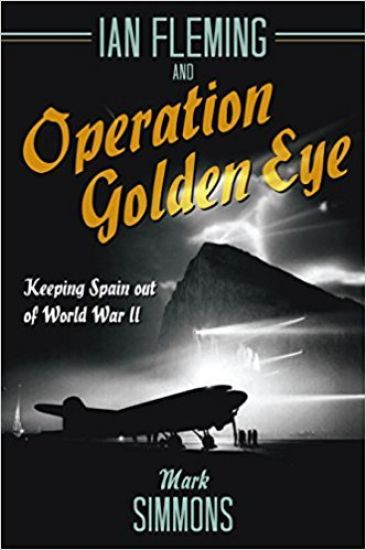
Ian Fleming and Operation Golden Eye

Ian Fleming and Operation Golden Eye

Mark Simmons

Casemate Publishers
2018
sidottu
This book tells the story of the various Allied operations and schemes instigated to keep Spain and Portugal out of WWII, which included the widespread bribery of high ranking Spanish officials and the duplicity of Admiral Wilhelm Canaris, head of the Abwehr.Ian Fleming and Alan Hillgarth were the architects of Operation Golden Eye, the sabotage and disruption scheme that would be put in place had Germany invaded Spain. Fleming visited the Iberian Peninsula and Tangiers several times during the war, arguably his greatest achievement in WWII and the closest he came to being a real secret agent. It was these visits which supplied much of the background material for his fiction - Fleming even called his home on Jamaica where he created 007 'Goldeneye'.The book begins with Hitler's dilemma about which way to move, and his meeting with Francisco Franco at Hendaye in October 1940, a major turning point in the war when an alliance between Germany and Spain seemed possible. Simmons explores the British reaction to this, with Operation Tracer being created by Admiral Godfrey, head of Naval Intelligence. This was a plan to leave a listening and observation post buried in the Rock of Gibraltar should it have fallen to the Germans. A chapter is also devoted to Portugal – the SIS and SOE operations there and the vital Wolfram wars. Operation Golden Eye was eventually put on standby in 1943 as the risk of the Nazis occupying Spain was much reduced. Simmons consulted Foreign Office, SOE, CIA and OKW files when writing this book.