
Kirjahaku
Etsi kirjoja tekijän nimen, kirjan nimen tai ISBN:n perusteella.
1000 tulosta hakusanalla Ian Hughes

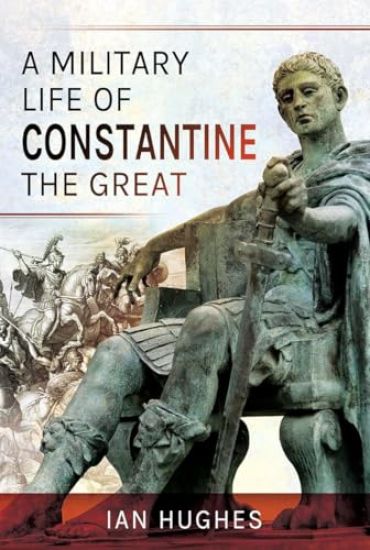
Much of Constantine I’s claim to lasting fame rests upon his sponsorship of Christianity, and many works have been published assessing whether his apparent conversion was a real religious experience or a cynical political manoeuvre. However his path to sole rule of the Roman Empire depended more upon the ruthless application of military might than upon his espousal of Christianity. He fought numerous campaigns, many of them against Roman rivals for Imperial power, most famously defeating Maxentius at the Battle of the Milvian Bridge. In this new study, Ian Hughes assesses whether Constantine would have deserved the title ‘the Great’ for his military achievements alone, or whether the epithet depends upon the gratitude of Christian historians. All of Constantine’s campaigns are narrated and his strategic and tactical decisions analysed. The organization, strengths and weaknesses of the Roman army he inherited are described and the effect of both his and his predecessors’ reforms discussed. The result is a fresh analysis of this pivotal figure in European history from a military perspective.

The latest of Ian Hughes' Late Roman biographies here tackles the careers of the brother emperors, Valentinian and Valens. Valentian was selected and proclaimed as emperor in AD 364, when the Empire was still reeling from the disastrous defeat and death in battle of Julian the Apostate (363) and the short reign of his murdered successor, Jovian (364). With the Empire weakened and vulnerable to a victorious Persia in the East and opportunistic Germanic tribes along the Rhine and Danube frontiers, not to mention usurpers and rebellions within, it was not an enviable position. Valentian decided the responsibility had to be divided (not for the first or last time) and appointed his brother as his co-emperor to rule the eastern half of the Empire. Valentinian went on to stabilize the Western Empire, quelling revolt in North Africa, defeating the 'Barbarian Conspiracy' that attacked Britain in 367 and conducting successful wars against the Germanic Alemanni, Quadi and Saxons; he is remembered by History as a strong and successful Emperor. Valens on the other hand, fare less well and is most remembered for his (mis)treatment of the Goths who sought refuge within the Empire's borders from the westward-moving Huns. Valens mishandling of this situation led to the Battle of Adrianople in 378, where he was killed and Rome suffered one of the worst defeats in her long history, often seen as the 'beginning of the end' for the Western Roman empire. Ian Hughes, by tracing the careers of both men in tandem, compares their achievements and analyzes the extent to which they deserve the contrasting reputations handed down by history.
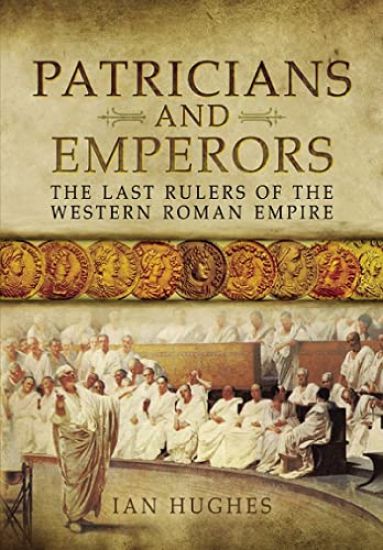
Patricians and Emperors offers concise comparative biographies of the individuals who wielded power in the final decades of the Western Roman Empire, from the assassination of Aetius in 454 to the death of Julius Nepos in 480. The book is divided into four parts. The first sets the background to the period, including brief histories of Stilicho (395-408) and Aetius (425-454), explaining the nature of the empire and the reasons for its decline. The second details the lives of Ricimer (455-472) and his great rival Marcellinus (455-468) by focusing on the stories of the numerous emperors that Ricimer raised and deposed. The third deals with the Patricians Gundobad (472-3) and Orestes (475-6), as well as explaining how the barbarian general Odoacer came to power in 476. The final part outlines and analyses the Fall of the West and the rise of barbarian kingdoms in France, Spain and Italy. This is a very welcome book to anyone seeking to make sense of this chaotic, but crucial period.

A military history of the campaigns of Belisarius, the greatest general of the Eastern Roman (Byzantine) Emperor Justinian. He twice defeated the Persians and reconquered North Africa from the Vandals in a single year at the age of 29, before going on to regain Spain and Italy, including Rome (briefly), from the barbarians. It discusses the evolution from classical Roman to Byzantine armies and systems of warfare, as well as those of their chief enemies, the Persians, Goths and Vandals. It reassesses Belisarius' generalship and compares him with the likes of Caesar, Alexander and Hannibal. It will be illustrated with line drawings and battle plans as well as photographs.
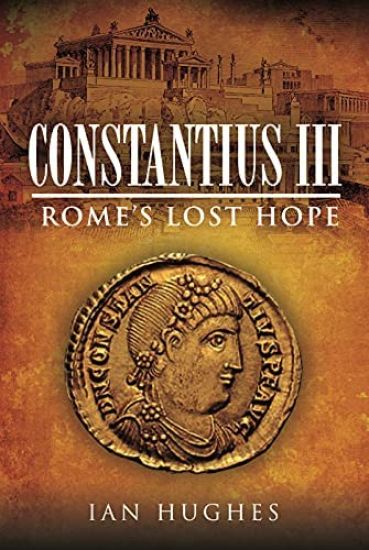
Constantius is an important, but almost forgotten, figure. He came to the fore in or around 410 when he was appointed Magister Militum (Master of Troops) to Honorius, the young Emperor of the Western Roman Empire. His predecessor, Stilicho, had been murdered by his own troops and much of Gaul and Hispania had been overrun by barbarians or usurpers. One by one Constantius eliminated the usurpers and defeated or came to terms with the various invading groups. Most notoriously, he allowed the Visigoths to settle in Gaul in return for their help in defeating the Vandals and Alans who had seized parts of Hispania, a decision with far-reaching consequences. Constantius married Honorius' sister and was eventually proclaimed his co-emperor. However, the Eastern Roman Emperor, Honorius' nephew, refused to accept his appointment and Constantius was preparing a military expedition to enforce this recognition when he died suddenly, having been emperor for just seven months. Ian Hughes considers his career, assessing his actions in the context of the difficult situation he inherited.
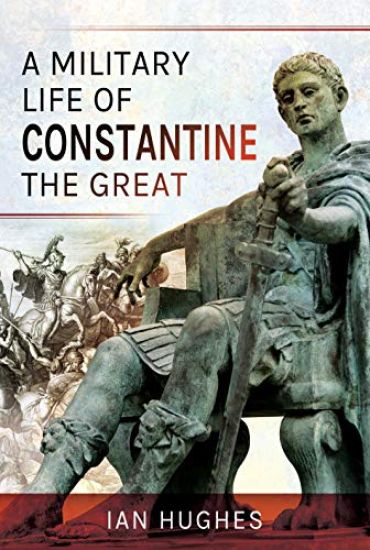
Much of Constantine I's claim to lasting fame rests upon his sponsorship of Christianity, and many works have been published assessing whether his apparent conversion was a real religious experience or a cynical political manoeuvre. However his path to sole rule of the Roman Empire depended more upon the ruthless application of military might than upon his espousal of Christianity. He fought numerous campaigns, many of them against Roman rivals for Imperial power, most famously defeating Maxentius at the Battle of the Milvian Bridge. In this new study, Ian Hughes assesses whether Constantine would have deserved the title 'the Great' for his military achievements alone, or whether the epithet depends upon the gratitude of Christian historians. All of Constantine's campaigns are narrated and his strategic and tactical decisions analysed. The organization, strengths and weaknesses of the Roman army he inherited are described and the effect of both his and his predecessors' reforms discussed. The result is a fresh analysis of this pivotal figure in European history from a military perspective.

There is no doubt that Rome developed one of the most efficient and successful military systems of the ancient world. The famous legions conquered from the Atlantic to the Euphrates, from the Scottish Highlands to the sands of the Sahara, defeating all manner of enemies. Although their victories were many, they were never invincible and did suffer significant defeats. Ian Hughes looks at thirteen such occasions, narrating the course of the fighting (in as much detail as the sources allow), describing the forces involved, the strategy and tactics employed and the reasons for the Roman defeat. The chosen battles span the centuries, from the disastrous battle against invading Celts at the Allia River in (387 or 386 BC) to the naval defeat by the Vandals off Cap Bon in AD 468\. They are selected either for the magnitude of the tactical defeat or the political and strategic significance of the outcome. Apart from the inherent interest in the individual battles, this study offers a survey of the development of the Roman forces evolving to survive.
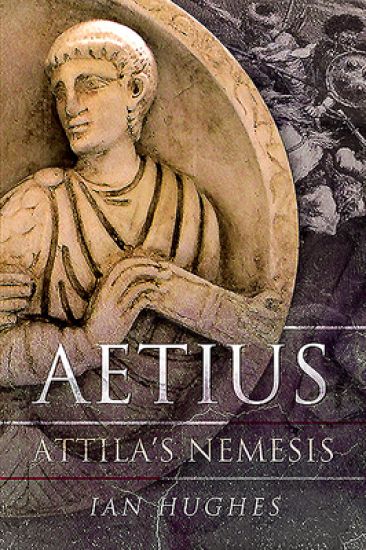
In AD 453 Attila, with a huge force composed of Huns, allies and vassals drawn from his already-vast empire, was rampaging westward across Gaul (essentially modern France), then still nominally part of the Western Roman Empire. Laying siege to Orleans, he was only a few days march from extending his empire from the Eurasian steppe to the Atlantic. He was brought to battle on the Cataluanian Plain and defeated by a coalition hastily assembled and led by Aetius. Who was this man that saved Western Europe from the Hunnic yoke? While Attila is a household name, his nemesis remains relatively obscure. Aetius is one of the major figures in the history of the Late Roman Empire and his actions helped maintain the integrity of the West in the declining years of the Empire. During the course of his life he was a hostage, first with Alaric and the Goths, and then with Rugila, King of the Huns. His stay with these two peoples helped to give him an unparalleled insight into the minds and military techniques of these barbarians which he was to use in later years to halt the depredations of the Huns. That this saviour of Rome was himself half Scythian is indicative of the complexity of the late Roman world. Ian Hughes assesses his fascinating career and campaigns with the same accessible narrative and analysis he brought to bear on Belisarius and Stilicho. This is a long-overdue biography of a major, yet neglected, player in the Late Classical world.

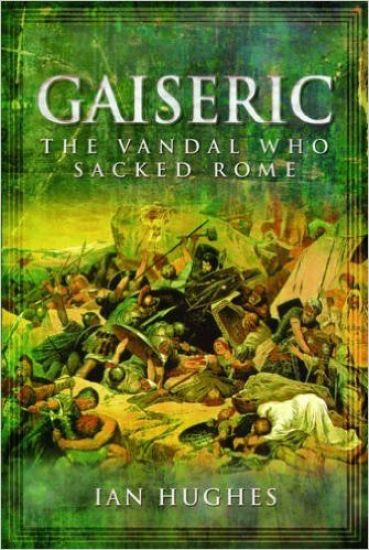
While Gaiseric has not become a household name like other 'barbarian' leaders such as Attila or Genghis Khan, his sack of Rome in AD455 has made his tribe, the Vandals, synonymous with mindless destruction. Gaiseric, however, was no moronic thug, proving himself a highly skilful political and military leader and was one of the dominant forces in Western Mediterranean region for almost half a century. The book starts with a concise history of the Vandals before Gaiseric's reign and analyses the tactics and weaponry with which they carved a path across the Western Roman Empire to Spain. It was in Spain that Gaiseric became their king and he that led the Vandals across the straits of Gibraltar to seize a new home in North Africa, depriving Rome of one of its most important remaining provinces and a key source of grain. Roman attempts at reconquest were defeated and the Balearic Islands, Sicily, Corsica and Sardinia were all added to Gaiseric's kingdom. His son, Huneric, was even betrothed to Eudoxia, daughter of the Emperor Valentinian III and it was her appeal for help after her father's murder that led Gaiseric to invade and sack Rome. He took Eudoxia and the other imperial ladies back to Africa with him, subsequently defeating further attempts by the Eastern Roman Empire to recapture the vital North African territory. Ian Hughes' anaylsis of the Gaiseric as king and general reveals him as the barbarian who did more than anyone else to bring down the Western Roman Empire, but also as a great leader in his own right and one of the most significant men of his age.

Disordered Minds – How Dangerous Personalities Are Destroying Democracy
Ian Hughes
John Hunt Publishing
2018
nidottu
Disordered Minds offers a compelling and timely account of the dangers posed by narcissistic leaders, and provides a stark warning that the conditions in which this psychopathy flourishes - extremes of social inequality and a culture of hyper-individualism - are the hallmarks of our present age. 'An excellent account of how malignant narcissism is evident in the lives of the great dictators, and how the conditions in which this psychopathy flourishes have returned to haunt us.' Dr Kieran Keohane, editor of The Social Pathologies of Contemporary Civilization
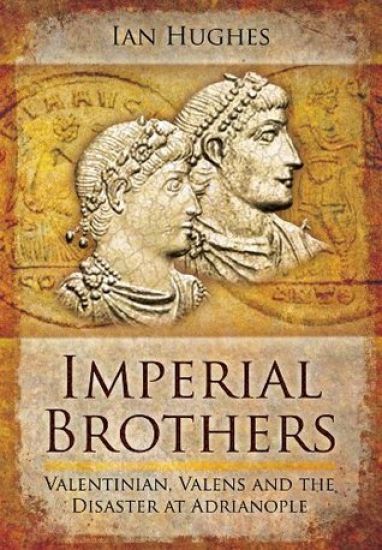
The latest of Ian Hughes' Late Roman biographies here tackles the careers of the brother emperors, Valentinian and Valens. Valentian was selected and proclaimed as emperor in AD 364, when the Empire was still reeling from the disastrous defeat and death in battle of Julian the Apostate (363) and the short reign of his murdered successor, Jovian (364). With the Empire weakened and vulnerable to a victorious Persia in the East and opportunistic Germanic tribes along the Rhine and Danube frontiers, not to mention usurpers and rebellions within, it was not an enviable position. Valentian decided the responsibility had to be divided (not for the first or last time) and appointed his brother as his co-emperor to rule the eastern half of the Empire. Valentinian went on to stabilize the Western Empire, quelling revolt in North Africa, defeating the 'Barbarian Conspiracy' that attacked Britain in 367 and conducting successful wars against the Germanic Alemanni, Quadi and Saxons; he is remembered by History as a strong and successful Emperor. Valens on the other hand, fare less well and is most remembered for his (mis)treatment of the Goths who sought refuge within the Empire's borders from the westward-moving Huns. Valens mishandling of this situation led to the Battle of Adrianople in 378, where he was killed and Rome suffered one of the worst defeats in her long history, often seen as the 'beginning of the end' for the Western Roman empire. Ian Hughes, by tracing the careers of both men in tandem, compares their achievements and analyzes the extent to which they deserve the contrasting reputations handed down by history.

Attila the Hun is a household name. Rising to the Hunnic kingship around 434, he dominated European history for the next two decades. Attila bullied and manipulated both halves of the Roman empire, forcing successive emperors to make tribute payments or face invasion. Ian Hughes recounts Attila's rise to power, attempting to untangle his character and motivations so far as the imperfect sources allow. A major theme is how the two halves of the empire finally united against Attila, prompting his fateful decision to invade Gaul and his subsequent defeat at the Battle of the Catalaunian Plain in 451. Integral to the narrative is analysis of the history of the rise of the Hunnic Empire; the reasons for the Huns' military success; relations between the Huns and the two halves of the Roman Empire; Attila's rise to sole power; and Attila's doomed attempt to bring both halves of the Roman Empire under his dominion.
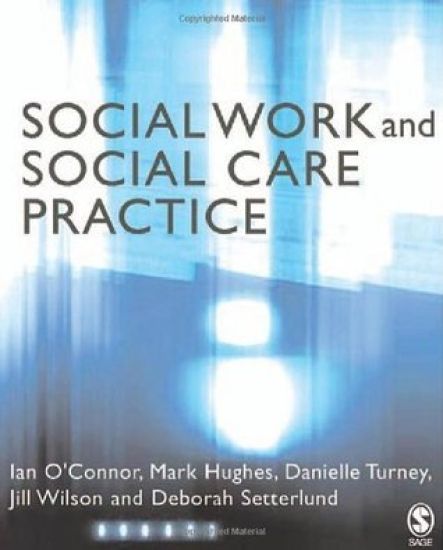
Social Work and Social Care Practice
Ian O'Connor; Mark Hughes; Danielle Turney; Jill Wilson; Deborah Setterlund
SAGE Publications Inc
2006
sidottu
'For many readers, especially trainers and educationalists, the thoroughness of this book is likely to be attractive. The added advantage of O'Connor et al's book is that it covers social work for both adults and children. [This book] is likely to appear on many social work reading lists. [It has] the potential to provide good learning opportunities for post-qualifying as well as pre-qualifying training' - Health and Social Care in the Community `A useful framework for practice to accompany undergraduate learning, and also the post-qualifying consolidation of social work knowledge, theory, and skills' - Dr Patricia Higham This lively and engaging textbook is an adaptation of the bestselling introductory social work book available in Australia. This edition has been thoroughly revised to reflect wider changes that have characterized social work training and practice in recent years. It offers the reader an essential grounding in the core knowledge, values and skills needed for successful completion of their degree. Key features of the book include: - Comprehensive content - includes discussion of theoretical perspectives, policy; assessment; intervention, the ethics and values framework; and practice-learning. - A student-friendly approach - includes case-studies, chapter summaries, further reading sections, and discussion questions. - A multi-professional perspective - recognises the experiences of all those working across the field of social care and incorporates service-user's voices. - Practice-oriented - offers specific guidance to overcome challenges and provides an effective framework for practice. This authoritative textbook will be an essential guide to the challenges and concepts underpinning social work practice. It offers a flavour of what social work entails and engages with recent debates about the nature of practice. It will be an invaluable text for social work trainees, and will also be useful reading for post-qualifying students and practitioners.
Social Work and Social Care Practice
Ian O'Connor; Hughes Mark; Turney Danielle; Wilson Jill; Setterlund Deborah
SAGE Publications Inc
2006
nidottu
'For many readers, especially trainers and educationalists, the thoroughness of this book is likely to be attractive. The added advantage of O'Connor et al's book is that it covers social work for both adults and children. [This book] is likely to appear on many social work reading lists. [It has] the potential to provide good learning opportunities for post-qualifying as well as pre-qualifying training' - Health and Social Care in the Community `A useful framework for practice to accompany undergraduate learning, and also the post-qualifying consolidation of social work knowledge, theory, and skills' - Dr Patricia Higham This lively and engaging textbook is an adaptation of the bestselling introductory social work book available in Australia. This edition has been thoroughly revised to reflect wider changes that have characterized social work training and practice in recent years. It offers the reader an essential grounding in the core knowledge, values and skills needed for successful completion of their degree. Key features of the book include: - Comprehensive content - includes discussion of theoretical perspectives, policy; assessment; intervention, the ethics and values framework; and practice-learning. - A student-friendly approach - includes case-studies, chapter summaries, further reading sections, and discussion questions. - A multi-professional perspective - recognises the experiences of all those working across the field of social care and incorporates service-user's voices. - Practice-oriented - offers specific guidance to overcome challenges and provides an effective framework for practice. This authoritative textbook will be an essential guide to the challenges and concepts underpinning social work practice. It offers a flavour of what social work entails and engages with recent debates about the nature of practice. It will be an invaluable text for social work trainees, and will also be useful reading for post-qualifying students and practitioners.