Can the intellect or the intellectual faculty be its own object of thought, or can it not think or apprehend itself? This book explores the ancient treatments of the question of self-intellection - an important theme in ancient epistemology and of considerable interest to later philosophical thought. The manner in which the ancients dealt with the intellect apprehending itself, took them into both the metaphysical and epistemological domains with reflections on questions of thinking, identity and causality. Ian Crystal traces the origins from which the concept of self-intellection springs, by examining Plato's account of the epistemic subject and the emergence of self-intellection through the Aristotelian account, before the final part of the book explores the problem of how the intellect apprehends itself, and its resolution including Plotinus' reformulation and the dilemma raised by Sextus Empiricus. Crystal concludes that Plotinus recasts the metaphysical structures of Plato and Aristotle in such a way that he casts the concept of self-intellection in an entirely new light and offers a solution to the problem.
This clear and concise textbook introduces the huge field of polymer science to students taking degree courses in chemistry, material science and related subjects covering polymers. By focusing on the few major polymers, for example polystyrene and PVC, which are in common use and which the students will recognise, the book illustrates simply the basic principles of polymer science. It looks at the factors which give rise to the special properties of polymers, and emphasizes how polymer molecules can be synthesised with different sizes and architectures to tailor the properties of the resulting material. The later chapters then introduce a wide range of polymers some with special applications now and others with exciting potential for the future. There are exercises at the end of each chapter.
Genetic Counseling Research: A Practical Guide is the first text devoted to research methodology in genetic counseling. This text offers step-by-step guidance for conducting research, from the development of a question to the publication of findings. Genetic counseling examples, user-friendly worksheets, and practical tips guide readers through the research and publication processes. With a highly accessible, pedagogical approach, this book will help promote quality research by genetic counselors and research supervisors--and in turn, increase the knowledge base for genetic counseling practice, other aspects of genetic counseling service delivery, and professional education. It will be an invaluable resource to the next generation of genetic counseling and its surrounding disciplines.
Cognitive therapy, a core approach within a collection of psychotherapeutic techniques known as cognitive behavioral therapy (CBT), is fundamentally about changing peoples' thoughts-helping them overcome difficulties by recognizing and changing dysfunctional thinking styles. Among other strategies, it requires encouraging the development of skills for rehearsing new habits of thought, modifying biases in judging and interpreting social and emotional information, and for testing assumptions underlying dysfunctional and negative, distorted thinking. In How and Why Thoughts Change, Dr. Ian Evans deconstructs the nature of cognitive therapy by examining the cognitive element of CBT, that is, how and why thoughts change behavior and emotion. There are a number of different approaches to cognitive therapy, including the classic Beck approach, the late Albert Ellis's rational-emotive psychotherapy, Young's schema-focused therapy, and newer varieties such as mindfulness training, Acceptance and Commitment Therapy (ACT), and problem-solving strategies. Evans identifies the common principles underlying these methods, attempts to integrate them, and makes suggestions as to how our current cognitive therapies might be improved. He draws on a broad survey of contemporary research on basic cognitive processes and integrates these with therapeutic approaches. While it may seem obvious that how and what we think determines how and in what manner we behave, the relationship between thought and action is not a simple one. Evans addresses questions such as: What is the difference between a thought and a belief? How do we find the cause of a thought? And can it really be that thought causes behavior and emotion, or could it be the other way around? In a reader-friendly style that avoids jargon, this innovative book answers some pertinent questions about cognitive therapy in a way that clarifies exactly how and why thoughts change. Evans demonstrates that understanding these concepts is a linchpin to providing and improving therapy for clients.
Human beings change constantly; we are in an endless state of flux as we grow, mature, learn, and adapt to a myriad of physical, environmental, social, educational, and cultural influences. Change can be thought of as planful when it is motivated by the desire to be and feel different, such as the change that comes about as a result of deliberate intervention, usually initiated by a troubled individual and aided by another, typically a professional. In How and Why People Change Dr. Ian M. Evans revisits many of the fundamental principles of behavior change in order to deconstruct what it is we try to achieve in psychological therapies. All of the conditions that impact people when seeking therapy are brought together in one cohesive framework: assumptions of learning, motivation, approach and avoidance, barriers to change, personality dynamics, and the way that individual behavioral repertoires are inter-related. Special emphasis is placed on environmental, social, and cultural influences that allow people to manage their feelings and promote adaptive thoughts and activities. The result is a novel and refreshing look at factors that help people change, which can be mobilized by individuals themselves or their therapists. By looking past the formal techniques of cognitive-behavior therapy, this book explores the processes of therapy as well as the nature of meaningful, long-range, and lasting change. Drawing on a variety of classic and new research studies, this unifying approach is evidence-based, but in a different way from the empirical validation of standardized protocols and manuals. The aim is to encourage both novice therapists and experienced clinicians to re-evaluate basic psychological assumptions in order to promote innovative, individualized, and culturally acceptable interventions. By understanding the sources of change that most influence clients' functioning, the commonalities in apparently different therapeutic theories are recognized, providing a critical perspective for clinical researchers. Rather than suggesting how therapy should be conducted, Evans shows how many different approaches can be understood on the basis of common underlying principles.
This work examines the evolution of the British Expeditionary Force's (BEF's) logistic and administrative infrastructure in France and its impact on operations. In so doing, it challenges the popular notion of British generals as bungling incompetents by analyzing an all too often ignored, but crucial, facet of military campaigns. While the BEF may be found wanting in some areas, administration was not one of them. The British generals proved themselves to be thoroughly modern professional officers in the manner in which they solved the ongoing crises that attended the explosive growth of the BEF and its artillery-intensive style of warfare. This study reinvigorates the debate about World War I by examining the understudied field of logistics.
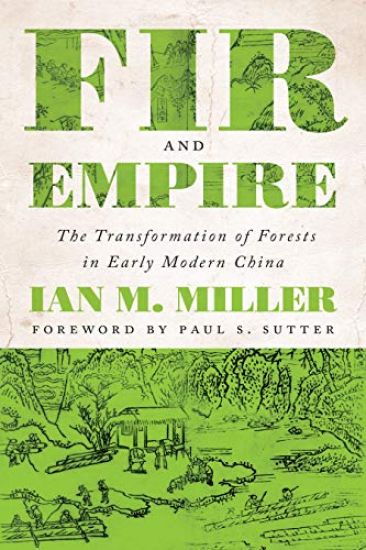
A CHOICE OUTSTANDING ACADEMIC TITLERestores China's place in forest historyThe disappearance of China's naturally occurring forests is one of the most significant environmental shifts in the country's history, one often blamed on imperial demand for lumber. China's early modern forest history is typically viewed as a centuries-long process of environmental decline, culminating in a nineteenth-century social and ecological crisis. Pushing back against this narrative of deforestation, Ian Miller charts the rise of timber plantations between about 1000 and 1700, when natural forests were replaced with anthropogenic ones. Miller demonstrates that this form of forest management generally rested on private ownership under relatively distant state oversight and taxation. He further draws on in-depth case studies of shipbuilding and imperial logging to argue that this novel landscape was not created through simple extractive pressures, but by attempts to incorporate institutional and ecological complexity into a unified imperial state.Miller uses the emergence of anthropogenic forests in south China to rethink both temporal and spatial frameworks for Chinese history and the nature of Chinese empire. Because dominant European forestry models do not neatly overlap with the non-Western world, China's history is often left out of global conversations about them; Miller's work rectifies this omission and suggests that in some ways, China's forest system may have worked better than the more familiar European institutions.The open access publication of this book was made possible by a grant from the James P. Geiss and Margaret Y. Hsu Foundation.
A CHOICE OUTSTANDING ACADEMIC TITLERestores China's place in forest historyThe disappearance of China's naturally occurring forests is one of the most significant environmental shifts in the country's history, one often blamed on imperial demand for lumber. China's early modern forest history is typically viewed as a centuries-long process of environmental decline, culminating in a nineteenth-century social and ecological crisis. Pushing back against this narrative of deforestation, Ian Miller charts the rise of timber plantations between about 1000 and 1700, when natural forests were replaced with anthropogenic ones. Miller demonstrates that this form of forest management generally rested on private ownership under relatively distant state oversight and taxation. He further draws on in-depth case studies of shipbuilding and imperial logging to argue that this novel landscape was not created through simple extractive pressures, but by attempts to incorporate institutional and ecological complexity into a unified imperial state.Miller uses the emergence of anthropogenic forests in south China to rethink both temporal and spatial frameworks for Chinese history and the nature of Chinese empire. Because dominant European forestry models do not neatly overlap with the non-Western world, China's history is often left out of global conversations about them; Miller's work rectifies this omission and suggests that in some ways, China's forest system may have worked better than the more familiar European institutions.The open access publication of this book was made possible by a grant from the James P. Geiss and Margaret Y. Hsu Foundation.
This issue of Gastroenterology Clinics of North America is all about acute upper GI bleeding and is divided into two distinct sections: section I is devoted to nonvariceal upper GI bleeding and section II is devoted to variceal upper GI bleeding. Acute nonvariceal upper GI bleeding may originate from the esophagus, stomach, or duodenum, essentially anywhere proximal to the Ligament of Treitz. In Section I, Dr Gianluca Rotondano, Hospital Maresca, Torre del Greco, Italy, begins with a review of the epidemiology and diagnosis of acute nonvariceal upper GI bleeding. We then turn to patient presentation, risk stratification, and how to initially medically manage these bleeding patients. I am pleased to have one of our emergency medicine colleagues, Dr Andrew Meltzer, Department of Emergency Medicine, George Washington University, contribute this important article and provide a unique viewpoint from the emergency department where most of these patients initially present. As we all know, endoscopic hemostasis is the accepted standard of care for patients with acute nonvariceal upper GI bleeding. Moreover, peptic ulcer bleeding is the most common nonvariceal cause of acute upper GI bleeding; thus, Drs Yidan Lu, Yen-I Chen, and Alan Barkun from McGill University, Montreal, Canada, provide an in-depth review of the endoscopic management of peptic ulcer bleeding. Drs Eric Tjwa, I. Lisanne Holster, and Ernst Kuipers from the Erasmus Medical Center University Hospital, Rotterdam, The Netherlands, review the endoscopic management of all other causes of acute nonvariceal upper GI bleeding, and in addition, Drs Louis Wong Kee Song and Michael Levy from the Mayo Clinic, Rochester, Minnesota discuss emerging endoscopic hemostasis treatments, such as topical sprays and over-the-scope clipping devices. Although endoscopic hemostasis is very highly effective, there are unfortunately cases where bleeding is unable to be controlled or when significant rebleeding occurs that is not amenable to endoscopic therapy. Therefore, I have included two articles that provide insight into the question.what if endoscopic hemostasis fails? The first article, written by Drs Philip Wai Yan Chiu and James Yun Wong Lau, from Prince of Wales Hospital, The Chinese University of Hong Kong, focuses on tried and true surgical treatment options. The second article, by Dr Sujal Nanavati, University of California at San Francisco, Department of Radiology and Biomedical Imaging, addresses the alternative treatment strategy of angiographic embolization, which has now emerged as the often preferred salvage treatment strategy. One of the most feared complications of cirrhosis and portal hypertension is variceal hemorrhage. In Section II of this issue, the focus is on variceal causes of acute upper GI bleeding. Usually due to esophageal variceal rupture, this complication occurs in an entirely different epidemiologic and clinical setting than nonvariceal upper GI bleeding. Thus, this topic requires an understanding of many critical issues, including diagnosis and management. We begin Section II with a review of the epidemiology, diagnosis, and early patient management strategies in bleeding esophagogastric varices by Drs Sumit Kumar, Sumeet Asrani, and Patrick Kamath from Mayo Clinic, Rochester, Minnesota. Drs Jawad Ilyas and Fasiha Kanwal from the Baylor College of Medicine, Houston, Texas go on to present the latest evidence on primary prophylaxis of variceal bleeding, both medical and endoscopic. However, for those patients who present with acute esophagogastric variceal bleeding, endoscopic management is the cornerstone of patient management. Drs Andrés Cárdenas, Anna Baiges, Virginia Hernandez-Gea, and Juan Carlos Garcia-Pagan from the GI/Endoscopy Unit and Barcelona Hepatic Hemodynamic Laboratory, Liver Unit, Barcelona, Spain, provide an evidence-based review of endoscopic hemostasis techniques in acute esophageal variceal bleeding, and Drs Frank Weilert and Kenneth Binmoeller from Waikato Hospital, Hamilton, New Zealand and the California Pacific Medical Center, San Francisco, respectively, discuss the recommended endoscopic management of bleeding gastric varices, including emerging techniques such as EUS-guided intravascular therapies. Next, Drs Sanjaya Satapathy and Arun Sanyal contribute a comprehensive review of nonendoscopic management strategies for esophagogastric variceal bleeding, and last but not least, Drs Kamran Qureshi and Abdullah Al-Osaimi, from Temple University, Philadelphia, Pennsylvania, discuss how to manage the patient with portal hypertensive gastropathy and gastric antral vascular ectasia (also known as watermelon stomach).
Dr. Gralnek is considered an authority on GI bleeding, and he has invited experts in their respective fields to contribute to this issue. The content is divided up between Acute Non-Variceal Upper GI Hemorrhage and Acute Lower Gastrointestinal Hemorrhage. Articles are devoted to the follow topics: Initial assessment, risk stratification and early management; Endotherapy of peptic ulcer bleeding; Endoscopic hemostasis of non-variceal, non-ulcer UGIH; Emerging endoscopic treatments for NVUGIH; The cutting edge: doppler ultrasound in guiding endoscopic hemostasis; The role of interventional radiology in NVUGIH; Managing antithrombotic agents in the setting of acute GI bleeding; Patient presentation, risk stratification and initial management; Colonoscopy: Diagnosis, timing and bowel preparation; The role of endoscopic hemostasis therapy; and Prevention of recurrent lower GI hemorrhage. Readers will come away with the most current clinical infomration on how to manage and prevent GI bleeding.
Although the authors believe that the level of conventional and nuclear forces in Europe should and will be reduced, they do not consider that the military instrument will have lost all of its value in European political affairs. They still see a need to be prepared for tension and conflict.
Exploring what academic podcasting is and what it could be, this book is the first to consider the why, what, and how academics engage with this insurgent, curious craft.Featuring interviews with 101 podcasting academics, including scholars and teachers of podcasting, this book explores the motivations of scholarly podcasters, interrogates what podcasting does to academic knowledge, and leads potential podcasters through the creation process from beginning to end. With scholarship often trapped inside expensive journals, wrapped in opaque language, and laced with a standoffish tone, this book analyses the implications of moving towards a more open and accessible form. This book will also inform, inspire, and equip scholars of any discipline, rank, or affiliation who are considering making a podcast or who make podcasts with the background knowledge and technical and conceptual skills needed to produce high-quality podcasts through a reflexive critique of current practices.
Exploring what academic podcasting is and what it could be, this book is the first to consider the why, what, and how academics engage with this insurgent, curious craft.Featuring interviews with 101 podcasting academics, including scholars and teachers of podcasting, this book explores the motivations of scholarly podcasters, interrogates what podcasting does to academic knowledge, and leads potential podcasters through the creation process from beginning to end. With scholarship often trapped inside expensive journals, wrapped in opaque language, and laced with a standoffish tone, this book analyses the implications of moving towards a more open and accessible form. This book will also inform, inspire, and equip scholars of any discipline, rank, or affiliation who are considering making a podcast or who make podcasts with the background knowledge and technical and conceptual skills needed to produce high-quality podcasts through a reflexive critique of current practices.