

Kirjahaku
Etsi kirjoja tekijän nimen, kirjan nimen tai ISBN:n perusteella.
1000 tulosta hakusanalla Ian M.G. Quimby






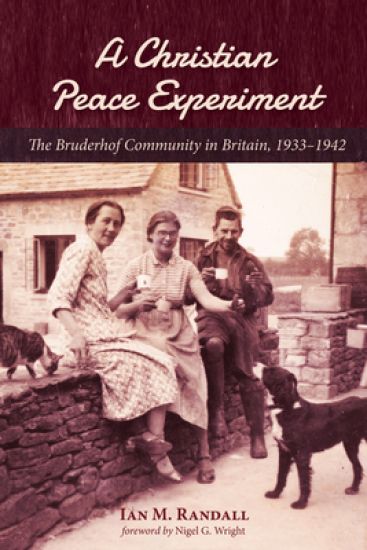
This book examines part of the development of the Bruderhof community, which emerged in Germany in 1920. Community members sought to model their life on the New Testament. This included sharing goods. The community became part of the Hutterite movement, with its origins in sixteenth-century Anabaptism. After the rise to power of the Nazi regime, the Bruderhof became a target and the community was forcibly dissolved. Members who escaped from Germany and travelled to England were welcomed as refugees from persecution and a community was established in the Cotswolds. In the period 1933 to 1942, when the Bruderhof's witness was advancing in Britain, its members were in touch with many individuals and movements. This book covers the Bruderhof's connections with (among others) the Fellowship of Reconciliation, Dietrich Bonhoeffer, the Peace Pledge Union, the social work of Muriel and Doris Lester in East London, Jewish refugee groups, and artistic pioneers like Eric Gill. As significant numbers of British people joined the Bruderhof, its farming, publishing and arts and crafts activities extended considerably. But with the outbreak of the Second World War, German members came to be regarded with suspicion and British members became unpopular locally because they were pacifists. Although the Bruderhof was defended in Parliament, notably by Lady Astor, it seemed that German members would be interned as enemy aliens. The consequence was that by 1942 over 300 community members had left England. With Mennonite assistance, they began to forge a new life in South America. This book traces a remarkable Christian peace experiment being undertaken in a time of great political upheaval. ""The Bruderhof was a community of Christians who tried to live a simple life dedicated to the ideal of peace. Their visionary German founder Eberhard Arnold had started the movement in the wake of the disasters that enveloped Germany after the First World War. . . Ian Randall has written a full, evocative, and appealing account of a group who in troubled times 'wanted to follow Jesus and do his will.'"" --David Bebbington, Professor of History, University of Stirling, Scotland ""This detailed narrative fills a longstanding gap in Bruderhof historiography--the story of the Cotswold Bruderhof in England, particularly during the formative years as it took shape between the Nazi confiscation of the Rhoen community in 1937 and the Bruderhof's transition to Paraguay in 1940 . . . As images of refugees, racial violence, and warfare once again dominate the news media, the Cotswold story is powerful and timely testimony to an alternative vision for humanity."" --John D. Roth, Professor of History, Goshen College ""This absorbing book is an important contribution to the history of the Anabaptist movement. Based on thorough research and drawing on a wide variety of sources, it charts the early years of the Bruderhof in Germany and England during a turbulent period of their history and explores the remarkable commitment of the founders and community members to peace witness, shared lifestyle, and mission. Through this sympathetic historical study, Ian Randall highlights issues which remain relevant today."" --Linda Wilson, Research Fellow, Bristol Baptist College ""Christians from many traditions have been learning from the Anabaptists in recent years. The Bruderhof communities embody a distinctive and enduring witness to principles and practices inspired by the Anabaptist vision. Ian Randall's detailed study tells the story of the Bruderhof in a crucial early phase of their life in England, inviting us to learn from their faithfulness in the midst of struggles."" --Stuart Murray Williams, Anabaptist Network, Chair, Mennonite Trust, United Kingdom ""In A Christian Peace Experiment, Ian Randall offers a scholarly and approachable case study of the Bruderhof, a significant Christian movement, at an important stage in its development and growth when it moved from
This book examines part of the development of the Bruderhof community, which emerged in Germany in 1920. Community members sought to model their life on the New Testament. This included sharing goods. The community became part of the Hutterite movement, with its origins in sixteenth-century Anabaptism. After the rise to power of the Nazi regime, the Bruderhof became a target and the community was forcibly dissolved. Members who escaped from Germany and travelled to England were welcomed as refugees from persecution and a community was established in the Cotswolds. In the period 1933 to 1942, when the Bruderhof's witness was advancing in Britain, its members were in touch with many individuals and movements. This book covers the Bruderhof's connections with (among others) the Fellowship of Reconciliation, Dietrich Bonhoeffer, the Peace Pledge Union, the social work of Muriel and Doris Lester in East London, Jewish refugee groups, and artistic pioneers like Eric Gill. As significant numbers of British people joined the Bruderhof, its farming, publishing and arts and crafts activities extended considerably. But with the outbreak of the Second World War, German members came to be regarded with suspicion and British members became unpopular locally because they were pacifists. Although the Bruderhof was defended in Parliament, notably by Lady Astor, it seemed that German members would be interned as enemy aliens. The consequence was that by 1942 over 300 community members had left England. With Mennonite assistance, they began to forge a new life in South America. This book traces a remarkable Christian peace experiment being undertaken in a time of great political upheaval. ""The Bruderhof was a community of Christians who tried to live a simple life dedicated to the ideal of peace. Their visionary German founder Eberhard Arnold had started the movement in the wake of the disasters that enveloped Germany after the First World War. . . Ian Randall has written a full, evocative, and appealing account of a group who in troubled times 'wanted to follow Jesus and do his will.'"" --David Bebbington, Professor of History, University of Stirling, Scotland ""This detailed narrative fills a longstanding gap in Bruderhof historiography--the story of the Cotswold Bruderhof in England, particularly during the formative years as it took shape between the Nazi confiscation of the Rhoen community in 1937 and the Bruderhof's transition to Paraguay in 1940 . . . As images of refugees, racial violence, and warfare once again dominate the news media, the Cotswold story is powerful and timely testimony to an alternative vision for humanity."" --John D. Roth, Professor of History, Goshen College ""This absorbing book is an important contribution to the history of the Anabaptist movement. Based on thorough research and drawing on a wide variety of sources, it charts the early years of the Bruderhof in Germany and England during a turbulent period of their history and explores the remarkable commitment of the founders and community members to peace witness, shared lifestyle, and mission. Through this sympathetic historical study, Ian Randall highlights issues which remain relevant today."" --Linda Wilson, Research Fellow, Bristol Baptist College ""Christians from many traditions have been learning from the Anabaptists in recent years. The Bruderhof communities embody a distinctive and enduring witness to principles and practices inspired by the Anabaptist vision. Ian Randall's detailed study tells the story of the Bruderhof in a crucial early phase of their life in England, inviting us to learn from their faithfulness in the midst of struggles."" --Stuart Murray Williams, Anabaptist Network, Chair, Mennonite Trust, United Kingdom ""In A Christian Peace Experiment, Ian Randall offers a scholarly and approachable case study of the Bruderhof, a significant Christian movement, at an important stage in its development and growth when it moved from

Environmental Policy in the European Union
Pamela M. Barnes; Ian G. Barnes
Edward Elgar Publishing Ltd
2000
nidottu
This important book presents a comprehensive and systematic investigation of the effectiveness of environmental policy within the European Union at the dawn of the twenty-first century.The development of environmental policy, including the policymaking process, is analysed from an historical perspective. The authors then examine implementation and enforcement and present a critical appraisal of the impact of environmental policy throughout Europe. Key issues discussed include:trade and the environmentenvironmental protection and the maintenance of industrial competitivenessagriculture and the environment energy and environmental policytransport and the environmenttourism and the environmentThe authors provide insight into the problems of reconciling differing national interests, and present a number of proposals for environmental policy in the future. They conclude that what is required for effective environmental policy is not more radical measures but the opportunity for the measures already in place to be effectively implemented.This book will be of interest to a wide audience including students interested in environmental issues and the European Union, as well as postgraduates and academics working in the fields of environmental management and environmental studies. It will also be of use to environmental policymakers, consultants, advisers and non-government organizations.

Environmental Policy in the European Union
Pamela M. Barnes; Ian G. Barnes
Edward Elgar Publishing Ltd
1999
sidottu
This important book presents a comprehensive and systematic investigation of the effectiveness of environmental policy within the European Union at the dawn of the twenty-first century.The development of environmental policy, including the policymaking process, is analysed from an historical perspective. The authors then examine implementation and enforcement and present a critical appraisal of the impact of environmental policy throughout Europe. Key issues discussed include:trade and the environmentenvironmental protection and the maintenance of industrial competitivenessagriculture and the environment energy and environmental policytransport and the environmenttourism and the environmentThe authors provide insight into the problems of reconciling differing national interests, and present a number of proposals for environmental policy in the future. They conclude that what is required for effective environmental policy is not more radical measures but the opportunity for the measures already in place to be effectively implemented.This book will be of interest to a wide audience including students interested in environmental issues and the European Union, as well as postgraduates and academics working in the fields of environmental management and environmental studies. It will also be of use to environmental policymakers, consultants, advisers and non-government organizations.

Lectures on Lie Groups and Lie Algebras
Roger W. Carter; Ian G. MacDonald; Graeme B. Segal; M. Taylor
Cambridge University Press
1995
pokkari
In this excellent introduction to the theory of Lie groups and Lie algebras, three of the leading figures in this area have written up their lectures from an LMS/SERC sponsored short course in 1993. Together these lectures provide an elementary account of the theory that is unsurpassed. In the first part Roger Carter concentrates on Lie algebras and root systems. In the second Graeme Segal discusses Lie groups. And in the final part, Ian Macdonald gives an introduction to special linear groups. Anybody requiring an introduction to the theory of Lie groups and their applications should look no further than this book.

Birds of British Columbia, Volume 3
Wayne Campbell; Neil K. Dawe; Ian McTaggart-Cowan; John M. Cooper; Gary W. Kaiser; Michael C.E. McNall; G. E. John Smith
University of British Columbia Press
1997
sidottu
British Columbia has one of the richest assemblages of bird species in the world. The four volumes of The Birds of British Columbia provide unprecedented coverage of this region's birds, presenting a wealth of information on the ornithological history, habitat, breeding habits, migratory movements, seasonality, and distribution patterns of each of the 472 species of birds.This third volume, covering the first half of the passerines, builds on the authoritative format of the previous bestselling volumes. It contains 89 species, including common ones such as swallows, jays, crows, wrens, thrushes, and starlings. The text is supported by hundreds of full-colour pictures, including unique habitat photographs, detailed distribution maps, and beautiful illustrations of the birds, their nests, eggs, and young.The Birds of British Columbia is a complete reference work for bird-watchers, ornithologists, and naturalists who want in-depth information on the province's regularly occurring and rare birds.

Knowledge Management in Law Firms
Nick Milton; Chris Boyd; Amy Halverson; Ian Rodwell; Joe Cohen; Andrea Miskolczi; Jonna Vainikainen; Elisabeth Cappuyns; James Loft; Jon Beaumont; James G Perkins; Gordon Vala-Webb; Mark Gediman; Kevin Miles; Tara Pichardo-Angadi; Orla Bingham; Katherine Lang; Kathy Skinner; Anthony J Rhem; Tiffany M. O’Neil
Globe Law and Business Ltd
2023
nidottu
Strategies for gathering and harnessing knowledge have existed in law firms for decades. However, knowledge management suddenly found itself in the spotlight as a result of the COVID-19 pandemic. Enforced remote working reduced opportunities for knowledge sharing between colleagues and this gap was filled with knowledge databases and experienced knowledge lawyers. Now that hybrid and virtual workforces are here to stay, these new working practices have combined with technological developments, enhanced demand, and the transformation of how to access knowledge to drive the advancement of knowledge management into a new era. Knowledge Management in Law Firms: Challenges and Opportunities Post-Pandemic is the essential guide to the evolution of law firm knowledge management. It covers how to revisit your strategy in light of recent and future changes, the expansion of knowledge management to encompass legal tech and innovation, the rise of the importance of data, strategies for overcoming the challenges hybrid and virtual working pose to knowledge management, managing knowledge teams, and much more. Chapters are written by an international group of KM experts from a range of organisations and leading law firms, including DLA Piper, Linklaters, and Dentons. Pandemic experiences and lessons learnt are shared as well as ways to approach the future. Knowledge is at the heart of the legal profession, and this book provides guidance on how to prepare for and thrive in the knowledge management practices of the future, overcoming the obstacles and embracing the opportunities that have arisen from or been accelerated by the pandemic. Through demonstrating how effective knowledge management can help firms exceed client expectations, differentiate themselves in the competitive market, and, ultimately, improve their bottom line, this title will be of interest to knowledge management professionals including professional support lawyers, law firm leaders, partners and fee earners, and, outside of law firms, in-house lawyers and consultants.

New South African Review 4
Clare Ballard; Ahmed Bawa; Claassens Aninka; John G.I. Clarke; Cornelissen Scarlett; Miriam Di Paola; Gottschalk Keith; Greenstein Ran; Kenny Bridget; Khadiagala Gilbert M.; Ian Macun; Mangcu Xolela; Zethu Matebeni; Boitumelo Matlala; Dale T McKinley; Mopeli L. Moshoeshoe; Mosoetsa Sarah; Naidoo Prishani; Pillay Devan; Pons-Vignon Nicolas; Prew Martin; Southall Roger; Justin van der Merwe; Wakeford Jeremy
Wits University Press
2014
nidottu
The death of Nelson Mandela on 5 December 2013 was in a sense a wake-up call for South Africans, and a time to reflect on what has been achieved since `those magnificent days in late April 1994’ (as the editors of this volume put it) `when South Africans of all colours voted for the first time in a democratic election’. In a time of recall and reflection it is important to take account, not only of the dramatic events that grip the headlines, but also of other signposts that indicate the shape and characteristics of a society. The New South African Review looks, every year, at some of these signposts, and the essays in this fourth volume of the series again examine and analyse a broad spectrum of issues affecting the country. They tackle topics as diverse as the state of organised labour; food retailing; electricity generation; access to information; civil courage; the school system; and – looking outside the country to its place in the world – South Africa’s relationships with north-east Asia, with Israel and with its neighbours in the southern African region. Taken together, these essays give a multidimensional perspective on South Africa’s democracy as it turns twenty, and will be of interest to general readers while being particularly useful to students and researchers.

This clear and concise textbook introduces the huge field of polymer science to students taking degree courses in chemistry, material science and related subjects covering polymers. By focusing on the few major polymers, for example polystyrene and PVC, which are in common use and which the students will recognise, the book illustrates simply the basic principles of polymer science. It looks at the factors which give rise to the special properties of polymers, and emphasizes how polymer molecules can be synthesised with different sizes and architectures to tailor the properties of the resulting material. The later chapters then introduce a wide range of polymers some with special applications now and others with exciting potential for the future. There are exercises at the end of each chapter.

Genetic Counseling Research: A Practical Guide
Ian M. MacFarlane; Patricia McCarthy Veach; Bonnie S. LeRoy
Oxford University Press Inc
2014
nidottu
Genetic Counseling Research: A Practical Guide is the first text devoted to research methodology in genetic counseling. This text offers step-by-step guidance for conducting research, from the development of a question to the publication of findings. Genetic counseling examples, user-friendly worksheets, and practical tips guide readers through the research and publication processes. With a highly accessible, pedagogical approach, this book will help promote quality research by genetic counselors and research supervisors--and in turn, increase the knowledge base for genetic counseling practice, other aspects of genetic counseling service delivery, and professional education. It will be an invaluable resource to the next generation of genetic counseling and its surrounding disciplines.

Cognitive therapy, a core approach within a collection of psychotherapeutic techniques known as cognitive behavioral therapy (CBT), is fundamentally about changing peoples' thoughts-helping them overcome difficulties by recognizing and changing dysfunctional thinking styles. Among other strategies, it requires encouraging the development of skills for rehearsing new habits of thought, modifying biases in judging and interpreting social and emotional information, and for testing assumptions underlying dysfunctional and negative, distorted thinking. In How and Why Thoughts Change, Dr. Ian Evans deconstructs the nature of cognitive therapy by examining the cognitive element of CBT, that is, how and why thoughts change behavior and emotion. There are a number of different approaches to cognitive therapy, including the classic Beck approach, the late Albert Ellis's rational-emotive psychotherapy, Young's schema-focused therapy, and newer varieties such as mindfulness training, Acceptance and Commitment Therapy (ACT), and problem-solving strategies. Evans identifies the common principles underlying these methods, attempts to integrate them, and makes suggestions as to how our current cognitive therapies might be improved. He draws on a broad survey of contemporary research on basic cognitive processes and integrates these with therapeutic approaches. While it may seem obvious that how and what we think determines how and in what manner we behave, the relationship between thought and action is not a simple one. Evans addresses questions such as: What is the difference between a thought and a belief? How do we find the cause of a thought? And can it really be that thought causes behavior and emotion, or could it be the other way around? In a reader-friendly style that avoids jargon, this innovative book answers some pertinent questions about cognitive therapy in a way that clarifies exactly how and why thoughts change. Evans demonstrates that understanding these concepts is a linchpin to providing and improving therapy for clients.

Human beings change constantly; we are in an endless state of flux as we grow, mature, learn, and adapt to a myriad of physical, environmental, social, educational, and cultural influences. Change can be thought of as planful when it is motivated by the desire to be and feel different, such as the change that comes about as a result of deliberate intervention, usually initiated by a troubled individual and aided by another, typically a professional. In How and Why People Change Dr. Ian M. Evans revisits many of the fundamental principles of behavior change in order to deconstruct what it is we try to achieve in psychological therapies. All of the conditions that impact people when seeking therapy are brought together in one cohesive framework: assumptions of learning, motivation, approach and avoidance, barriers to change, personality dynamics, and the way that individual behavioral repertoires are inter-related. Special emphasis is placed on environmental, social, and cultural influences that allow people to manage their feelings and promote adaptive thoughts and activities. The result is a novel and refreshing look at factors that help people change, which can be mobilized by individuals themselves or their therapists. By looking past the formal techniques of cognitive-behavior therapy, this book explores the processes of therapy as well as the nature of meaningful, long-range, and lasting change. Drawing on a variety of classic and new research studies, this unifying approach is evidence-based, but in a different way from the empirical validation of standardized protocols and manuals. The aim is to encourage both novice therapists and experienced clinicians to re-evaluate basic psychological assumptions in order to promote innovative, individualized, and culturally acceptable interventions. By understanding the sources of change that most influence clients' functioning, the commonalities in apparently different therapeutic theories are recognized, providing a critical perspective for clinical researchers. Rather than suggesting how therapy should be conducted, Evans shows how many different approaches can be understood on the basis of common underlying principles.

This work examines the evolution of the British Expeditionary Force's (BEF's) logistic and administrative infrastructure in France and its impact on operations. In so doing, it challenges the popular notion of British generals as bungling incompetents by analyzing an all too often ignored, but crucial, facet of military campaigns. While the BEF may be found wanting in some areas, administration was not one of them. The British generals proved themselves to be thoroughly modern professional officers in the manner in which they solved the ongoing crises that attended the explosive growth of the BEF and its artillery-intensive style of warfare. This study reinvigorates the debate about World War I by examining the understudied field of logistics.

A CHOICE OUTSTANDING ACADEMIC TITLERestores China's place in forest historyThe disappearance of China's naturally occurring forests is one of the most significant environmental shifts in the country's history, one often blamed on imperial demand for lumber. China's early modern forest history is typically viewed as a centuries-long process of environmental decline, culminating in a nineteenth-century social and ecological crisis. Pushing back against this narrative of deforestation, Ian Miller charts the rise of timber plantations between about 1000 and 1700, when natural forests were replaced with anthropogenic ones. Miller demonstrates that this form of forest management generally rested on private ownership under relatively distant state oversight and taxation. He further draws on in-depth case studies of shipbuilding and imperial logging to argue that this novel landscape was not created through simple extractive pressures, but by attempts to incorporate institutional and ecological complexity into a unified imperial state.Miller uses the emergence of anthropogenic forests in south China to rethink both temporal and spatial frameworks for Chinese history and the nature of Chinese empire. Because dominant European forestry models do not neatly overlap with the non-Western world, China's history is often left out of global conversations about them; Miller's work rectifies this omission and suggests that in some ways, China's forest system may have worked better than the more familiar European institutions.The open access publication of this book was made possible by a grant from the James P. Geiss and Margaret Y. Hsu Foundation.