Kirjojen hintavertailu. Mukana 11 244 527 kirjaa ja 12 kauppaa.

Kirjahaku

Etsi kirjoja tekijän nimen, kirjan nimen tai ISBN:n perusteella.

1000 tulosta hakusanalla Ian W. Hamley

The Physics of Block Copolymers

The Physics of Block Copolymers

Ian W. Hamley

Oxford University Press
1998
sidottu
This comprehensive and systematic text is the first of its kind to deal with the fundamental physics underlying the remarkable structural and dynamical properties of block copolymers. It provides the polymer scientist and technologist with a firm grounding in the principles underlying the wide applications of these important materials. It also highlights the intrinsically fascinating properties of block copolymers, such as nanoscale self-assembly in bulk and two-dimensions. The first text of its kind on the subject since the mid-1980s, this book stands alone - previous texts have focused on the chemical and material properties of block copolymers. During the last decade, there have been major developments in the field, and these experimental and theoretical advances are discussed in depth. Topics covered include: the thermodynamics and dynamics of block copolymer melts, block copolymers in dilute, semidilute and concentrated solutions, the structure of crystalline block copolymers and block copolymers in blends with other polymers. This informative book is essential to the polymer physics and materials science researcher in industry and academia, and postgraduates in related fields. Final year undergraduate students in chemistry, physics and materials science will also find this book useful as a reference text.
Block Copolymers in Solution

Block Copolymers in Solution

Ian W. Hamley

John Wiley Sons Inc
2005
sidottu
This unique text discusses the solution self-assembly of block copolymers and covers all aspects from basic physical chemistry to applications in soft nanotechnology. Recent advances have enabled the preparation of new materials with novel self-assembling structures, functionality and responsiveness and there have also been concomitant advances in theory and modelling. The present text covers the principles of self-assembly in both dilute and concentrated solution, for example micellization and mesophase formation, etc., in chapters 2 and 3 respectively. Chapter 4 covers polyelectrolyte block copolymers - these materials are attracting significant attention from researchers and a solid basis for understanding their physical chemistry is emerging, and this is discussed. The next chapter discusses adsorption of block copolymers from solution at liquid and solid interfaces. The concluding chapter presents a discussion of selected applications, focussing on several important new concepts. The book is aimed at researchers in polymer science as well as industrial scientists involved in the polymer and coatings industries. It will also be of interest to scientists working in soft matter self-assembly and self-organizing polymers.
Introduction to Soft Matter

Introduction to Soft Matter

Ian W. Hamley

John Wiley Sons Inc
2007
sidottu
This book provides an introduction to this exciting and relatively new subject with chapters covering natural and synthetic polymers, colloids, surfactants and liquid crystals highlighting the many and varied applications of these materials. Written by an expert in the field, this book will be an essential reference for people working in both industry and academia and will aid in understanding of this increasingly popular topic. Contains a new chapter on biological soft matter Newly edited and updated chapters including updated coverage of recent aspects of polymer science. Contain problems at the end of each chapter to facilitate understanding
Introduction to Soft Matter

Introduction to Soft Matter

Ian W. Hamley

John Wiley Sons Inc
2007
nidottu
This book provides an introduction to this exciting and relatively new subject with chapters covering natural and synthetic polymers, colloids, surfactants and liquid crystals highlighting the many and varied applications of these materials. Written by an expert in the field, this book will be an essential reference for people working in both industry and academia and will aid in understanding of this increasingly popular topic. Contains a new chapter on biological soft matter Newly edited and updated chapters including updated coverage of recent aspects of polymer science. Contain problems at the end of each chapter to facilitate understanding
Introduction to Peptide Science

Introduction to Peptide Science

Ian W. Hamley

Wiley-Blackwell
2020
nidottu
Provides an interdisciplinary introduction to peptide science, covering their properties and synthesis, as well as many contemporary applications Peptides are biomolecules comprised of amino acids which play an important role in modulating many physiological processes in our body. This book presents an interdisciplinary approach and general introduction to peptide science, covering contemporary topics including their applicability in therapeutics, peptide hormones, amyloid structures, self-assembled structures, hydrogels, and peptide conjugates including lipopeptides and polymer-peptide conjugates. In addition, it discusses basic properties and synthesis clearly and concisely. Taking a logical approach to the subject, Introduction to Peptide Science gives readers the fundamental knowledge that is required to understand the cutting-edge material which comes later in the book. It offers readers in-depth chapter coverage of the basic properties of peptides; synthesis; amyloid and peptide aggregate structures; antimicrobial peptides and cell-penetrating peptides; and peptide therapeutics and peptide hormones. Introduces readers to peptide science, including synthesis and propertiesProvides unique content covering properties, synthesis, self-assembly, aggregation, and applicationsSummarizes contemporary topics in an accessible fashion including applications in therapeutics, peptide hormones, amyloid structures, self-assembled structures, hydrogels, and peptide conjugates including lipopeptidesPresented at an introductory level for the benefit of students and researchers who are new to the subject Introduction to Peptide Science is an ideal text for undergraduate students of chemistry, biochemistry, and other related biological subjects, and will be a valuable resource for postgraduate students and researchers involved in peptide science and its applications.
Small-Angle Scattering

Small-Angle Scattering

Ian W. Hamley

Wiley-Blackwell
2021
sidottu
SMALL-ANGLE SCATTERING A comprehensive and timely volume covering contemporary research, practical techniques, and theoretical approaches to SAXS and SANSSmall-Angle Scattering: Theory, Instrumentation, Data, and Applications provides authoritative coverage of both small-angle X-ray scattering (SAXS), small-angle neutron scattering (SANS) and grazing incidence small-angle scattering (GISAS) including GISAXS and GISANS. This single-volume resource offers readers an up-to-date view of the state of the field, including the theoretical foundations, experimental methods, and practical applications of small-angle scattering (SAS) techniques including laboratory and synchrotron SAXS and reactor/spallation SANS.Organized into six chapters, the text first describes basic theory, instrumentation, and data analysis. The following chapters contain in-depth discussion on various applications of SAXS and SANS and GISAXS and GISANS, and on specific techniques for investigating structure and order in soft materials, biomolecules, and inorganic and magnetic materials. Author Ian Hamley draws from his more than thirty years’ experience working with many systems, instruments, and types of small-angle scattering experiments across most European facilities to present the most complete introduction to the field available. This book:Presents uniquely broad coverage of practical and theoretical approaches to SAXS and SANSIncludes practical information on instrumentation and data analysisOffers useful examples and an accessible and concise presentation of topicsCovers new developments in the techniques of SAXS and SANS, including GISAXS and GISANSSmall-Angle Scattering: Theory, Instrumentation, Data, and Applications is a valuable source of detailed information for researchers and postgraduate students in the field, as well as other researchers using X-ray and neutron scattering to investigate soft materials, other nanostructured materials and biomolecules such as proteins.
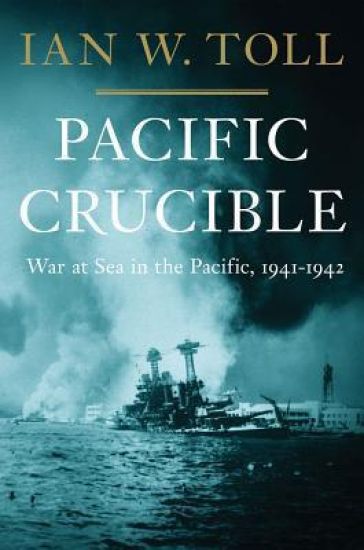
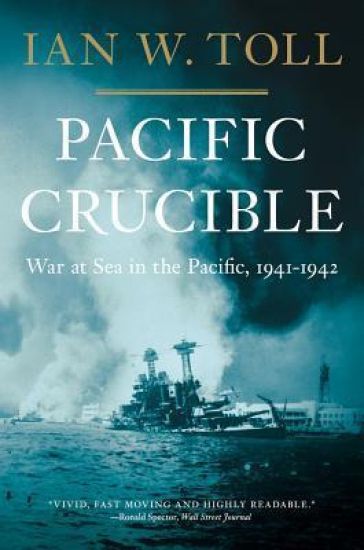
Pacific Crucible

Pacific Crucible

Ian W. Toll

WW Norton Co
2011
sidottu
On the first Sunday in December 1941, an armada of Japanese warplanes appeared suddenly over Pearl Harbor, Hawaii, and devastated the U.S. Pacific Fleet. Six months later, in a sea fight north of the tiny atoll of Midway, four Japanese aircraft carriers were sent into the abyss. Pacific Crucible tells the epic tale of these first searing months of the Pacific war, when the U.S. Navy shook off the worst defeat in American military history and seized the strategic initiative. Ian W. Toll's dramatic narrative encompasses both the high command and the "sailor's-eye" view from the lower deck. Relying predominantly on eyewitness accounts and primary sources, Pacific Crucible also spotlights recent scholarship that has revised our understanding of the conflict, including the Japanese decision to provoke a war that few in the country's highest circles thought they could win. The result is a page-turning history that does justice to the breadth and depth of a tremendous subject.
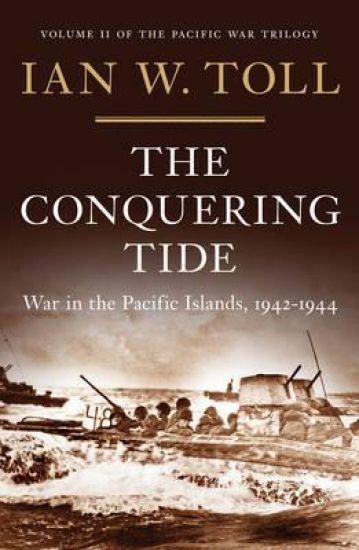
The Conquering Tide: War in the Pacific Islands, 1942-1944
This masterful history encompasses the heart of the Pacific War--the period between mid-1942 and mid-1944--when parallel Allied counteroffensives north and south of the equator washed over Japan's far-flung island empire like a "conquering tide," concluding with Japan's irreversible strategic defeat in the Marianas. It was the largest, bloodiest, most costly, most technically innovative and logistically complicated amphibious war in history, and it fostered bitter interservice rivalries, leaving wounds that even victory could not heal.Often overlooked, these are the years and fights that decided the Pacific War. Ian W. Toll's battle scenes--in the air, at sea, and in the jungles--are simply riveting. He also takes the reader into the wartime councils in Washington and Tokyo where politics and strategy often collided, and into the struggle to mobilize wartime production, which was the secret of Allied victory. Brilliantly researched, the narrative is propelled and colored by firsthand accounts--letters, diaries, debriefings, and memoirs--that are the raw material of the telling details, shrewd judgment, and penetrating insight of this magisterial history.This volume--continuing the "marvelously readable dramatic narrative" (San Francisco Chronicle) of Pacific Crucible--marks the second installment of the Pacific War Trilogy, which will stand as the first history of the entire Pacific War to be published in at least twenty-five years.
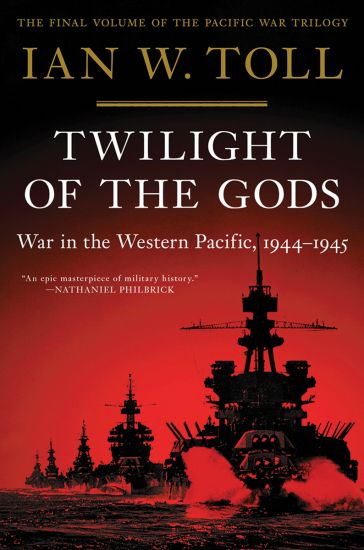
Twilight of the Gods: War in the Western Pacific, 1944-1945
In June 1944, the United States launched a crushing assault on the Japanese navy in the Battle of the Philippine Sea. The capture of the Mariana Islands and the accompanying ruin of Japanese carrier airpower marked a pivotal moment in the Pacific War. No tactical masterstroke or blunder could reverse the increasingly lopsided balance of power between the two combatants. The War in the Pacific had entered its endgame.Beginning with the Honolulu Conference, when President Franklin Delano Roosevelt met with his Pacific theater commanders to plan the last phase of the campaign against Japan, Twilight of the Gods brings to life the harrowing last year of World War II in the Pacific, when the U.S. Navy won the largest naval battle in history; Douglas MacArthur made good his pledge to return to the Philippines; waves of kamikazes attacked the Allied fleets; the Japanese fought to the last man on one island after another; B-29 bombers burned down Japanese cities; and Hiroshima and Nagasaki were vaporized in atomic blasts.Ian W. Toll's narratives of combat in the air, at sea, and on the beaches are as gripping as ever, but he also reconstructs the Japanese and American home fronts and takes the reader into the halls of power in Washington and Tokyo, where the great questions of strategy and diplomacy were decided.Drawing from a wealth of rich archival sources and new material, Twilight of the Gods casts a penetrating light on the battles, grand strategic decisions and naval logistics that enabled the Allied victory in the Pacific. An authoritative and riveting account of the final phase of the War in the Pacific, Twilight of the Gods brings Toll's masterful trilogy to a thrilling conclusion. This prize-winning and best-selling trilogy will stand as the first complete history of the Pacific War in more than twenty-five years, and the first multivolume history of the Pacific naval war since Samuel Eliot Morison's series was published in the 1950s.
Six Frigates

Six Frigates

Ian W. Toll

WW Norton Co
2008
pokkari
Before the ink was dry on the U.S. Constitution, the establishment of a permanent military became the most divisive issue facing the new government. The founders particularly Jefferson, Madison, and Adams debated fiercely. Would a standing army be the thin end of dictatorship? Would a navy protect from pirates or drain the treasury and provoke hostility? Britain alone had hundreds of powerful warships. From the decision to build six heavy frigates, through the cliff-hanger campaign against Tripoli, to the war that shook the world in 1812, Ian W. Toll tells this grand tale with the political insight of Founding Brothers and the narrative flair of Patrick O'Brian."
Pacific Crucible

Pacific Crucible

Ian W. Toll

WW Norton Co
2012
pokkari
On the first Sunday in December 1941, an armada of Japanese warplanes appeared suddenly over Pearl Harbor, Hawaii, and devastated the U.S. Pacific Fleet. Six months later, in a sea fight north of the tiny atoll of Midway, four Japanese aircraft carriers were sent into the abyss, a blow that destroyed the offensive power of their fleet. Pacific Crucible tells the epic tale of these first searing months of the Pacific war, when the U.S. Navy shook off the worst defeat in American military history and seized the strategic initiative. This dramatic narrative, relying predominantly on eyewitness accounts and primary sources, is laced with riveting details of heroism and sacrifice on the stricken ships and planes of both navies. At the war s outset, Japan s pilots and planes enjoyed a clear-cut superiority to their American counterparts, but there was a price to be paid. Japanese pilots endured a lengthy and grueling training in which they were disciplined with baseball bats, often suffering broken bones; and the production line of the Zero Japan s superbly maneuverable fighter plane ended not at a highway or railhead but at a rice paddy, through which the planes were then hauled on ox carts. Combat losses, of either pilots or planes, could not be replaced in time to match the fully mobilized American war machine. Pacific Crucible also spotlights recent scholarship that revises our understanding of the conflict, including the Japanese decision to provoke a war that few in their highest circles thought they could win. Those doubters included the flamboyantly brilliant Admiral Isokoru Yamamoto, architect of the raid on Pearl and the Midway offensive. Once again, Ian W. Toll proves himself to be a simply magnificent writer. The result here is a page-turning history that does justice to the breadth and depth of a tremendous subject."
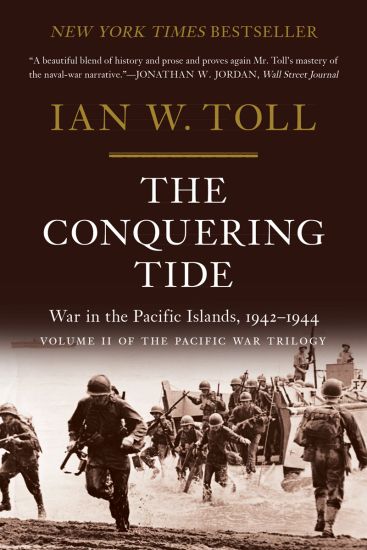
The Conquering Tide: War in the Pacific Islands, 1942-1944
This masterful history encompasses the heart of the Pacific War--the period between mid-1942 and mid-1944--when parallel Allied counteroffensives north and south of the equator washed over Japan's far-flung island empire like a "conquering tide," concluding with Japan's irreversible strategic defeat in the Marianas. It was the largest, bloodiest, most costly, most technically innovative and logistically complicated amphibious war in history, and it fostered bitter interservice rivalries, leaving wounds that even victory could not heal.Often overlooked, these are the years and fights that decided the Pacific War. Ian W. Toll's battle scenes--in the air, at sea, and in the jungles--are simply riveting. He also takes the reader into the wartime councils in Washington and Tokyo where politics and strategy often collided, and into the struggle to mobilize wartime production, which was the secret of Allied victory. Brilliantly researched, the narrative is propelled and colored by firsthand accounts--letters, diaries, debriefings, and memoirs--that are the raw material of the telling details, shrewd judgment, and penetrating insight of this magisterial history.This volume--continuing the "marvelously readable dramatic narrative" (San Francisco Chronicle) of Pacific Crucible--marks the second installment of the Pacific War Trilogy, which will stand as the first history of the entire Pacific War to be published in at least twenty-five years.
Twilight of the Gods: War in the Western Pacific, 1944-1945
In June 1944, the United States launched a crushing assault on the Japanese navy in the Battle of the Philippine Sea. The capture of the Mariana Islands and the accompanying ruin of Japanese carrier airpower marked a pivotal moment in the Pacific War. No tactical masterstroke or blunder could reverse the increasingly lopsided balance of power between the two combatants. The War in the Pacific had entered its endgame.Beginning with the Honolulu Conference, when President Franklin Delano Roosevelt met with his Pacific theater commanders to plan the last phase of the campaign against Japan, Twilight of the Gods brings to life the harrowing last year of World War II in the Pacific, when the U.S. Navy won the largest naval battle in history; Douglas MacArthur made good his pledge to return to the Philippines; waves of kamikazes attacked the Allied fleets; the Japanese fought to the last man on one island after another; B-29 bombers burned down Japanese cities; and Hiroshima and Nagasaki were vaporized in atomic blasts.Ian W. Toll's narratives of combat in the air, at sea, and on the beaches are as gripping as ever, but he also reconstructs the Japanese and American home fronts and takes the reader into the halls of power in Washington and Tokyo, where the great questions of strategy and diplomacy were decided.Drawing from a wealth of rich archival sources and new material, Twilight of the Gods casts a penetrating light on the battles, grand strategic decisions and naval logistics that enabled the Allied victory in the Pacific. An authoritative and riveting account of the final phase of the War in the Pacific, Twilight of the Gods brings Toll's masterful trilogy to a thrilling conclusion. This prize-winning and best-selling trilogy will stand as the first complete history of the Pacific War in more than twenty-five years, and the first multivolume history of the Pacific naval war since Samuel Eliot Morison's series was published in the 1950s.
Engineering Behaviour of Rocks

Engineering Behaviour of Rocks

Ian W. Farmer

Chapman and Hall
1983
nidottu
The first edition of this book was received more kindly than it deserved by some, and with some scepticism by others. It set out to present a simple, concise and reasonably comprehensive introduction to some of the theoretical and empirical criteria which may be used to define rock as a structural material. The objectives - reinforced by the change in title - remain the same, but the approach has been changed considerably and only one or two sections have been retained from the first edition. The particular aim in this edition is to provide a description of the mechanical behaviour of rocks, based firmly upon experimental data, which can be used to explain how rocks deform, fracture and yield, and to show how this knowledge can be used in design. The major emphasis is on the behaviour of rocks as materials, although in the later chapters the behaviour of discontinuities in rocks, and the way in which this can affect the behaviour of rock masses, is considered. If this edition is an improvement on the first edition it reflects the debt lowe to numerous people who have attempted to explain the rudiments of the subject to me. I should like to thank Peter Attewell and Roy Scott in particular. I should also like to thank Tony Price and Mike Gilbert whose work at Newcastle I have used shamelessly.
Obesity

Obesity

Ian W. Campbell; David Haslam

Churchill Livingstone
2004
nidottu
In the popular Q and A format of the Your Questions Answered series, this book provides succinct, expert information on obesity, and is the first to bring together all the different aspects of obesity from the primary care clinician's point of view. The authors, Dr Ian Campbell and Dr David Haslam, both of the National Obesity Forum, are practising GPs with a special interest in obesity and overweight management. With an emphasis on evidence-based, up-to-date knowledge, the authors discuss issues such as the costs of obesity to society and the individual, the role of lifestyle and drug therapies, surgical management and possible future developments. They also address many questions asked about obesity by other physicians, practice and community nurses, medical students and trainees, and indeed patients. Some frequently asked patient questions, in non-medical language, are included, and there is a list of sources of further information and patient support.Popular question-and-answer format Covers both commonplace and rarer issues Includes information on other types of headache Lists useful websites, associations, patient resources Sections on patient's frequently asked questions
Biotechnology of Microbial Exopolysaccharides

Biotechnology of Microbial Exopolysaccharides

Ian W. Sutherland

Cambridge University Press
2008
pokkari
This volume provides a thorough account of the structure and synthesis of microbial exopolysaccharides and of their widespread application across a broad range of industries, including food, oil and medicine. The successful exploitation of these polysaccharides requires a sound scientific understanding of their chemical and physical properties and also their biochemistry and biosynthesis; this volume covers all these aspects in a concise and coherent way. Interest in these polysaccharides has been fuelled by their increasing use in food, in the oil industry and in medicine. The author provides an account of all these areas as well as looking further ahead to speculate how their unique properties might be harnessed for future products and processes.
Biotechnology of Microbial Exopolysaccharides

Biotechnology of Microbial Exopolysaccharides

Ian W. Sutherland

Cambridge University Press
1990
sidottu
This volume provides a thorough account of the structure and synthesis of microbial exopolysaccharides and of their widespread application across a broad range of industries, including food, oil and medicine. The successful exploitation of these polysaccharides requires a sound scientific understanding of their chemical and physical properties and also their biochemistry and biosynthesis; this is the first volume to cover all these aspects in a concise and coherent way. Interest in these polysaccharides has been fuelled by their increasing use in food, in the oil industry and in medicine. The author provides a timely account of all these areas as well as looking further ahead to speculate how their unique properties might be harnessed for new products and processes.
Microbial Physiology

Microbial Physiology

Ian W. Dawes; Ian W. Sutherland

Blackwell Science Ltd
1991
nidottu
The first edition of Microbial Physiology achieved sales in excess of 5,700 copies and earned the reputation of being the most up-to-date and concise introduction to the physiology of prokaryotic and eukaryotic microorganisms. This new edition maintains that reputation. Written primarily for undergraduate students in microbiology, the text offers a detailed description of the basic areas of microbial structure and metabolism and also covers the dynamic aspects of growth, control and development of microorganisms. There have been significant advances in the understanding of the eukaryotic genome and this new edition takes into account the implications of this for the biochemistry of morphogenesis in the microbial life cycle. Coverage of the new developments is supported by the addition of many new illustrations.
Why Australia Prospered

Why Australia Prospered

Ian W. McLean

Princeton University Press
2012
sidottu
This book is the first comprehensive account of how Australia attained the world's highest living standards within a few decades of European settlement, and how the nation has sustained an enviable level of income to the present. Why Australia Prospered is a fascinating historical examination of how Australia cultivated and sustained economic growth and success. Beginning with the Aboriginal economy at the end of the eighteenth century, Ian McLean argues that Australia's remarkable prosperity across nearly two centuries was reached and maintained by several shifting factors. These included imperial policies, favorable demographic characteristics, natural resource abundance, institutional adaptability and innovation, and growth-enhancing policy responses to major economic shocks, such as war, depression, and resource discoveries. Natural resource abundance in Australia played a prominent role in some periods and faded during others, but overall, and contrary to the conventional view of economists, it was a blessing rather than a curse. McLean shows that Australia's location was not a hindrance when the international economy was centered in the North Atlantic, and became a positive influence following Asia's modernization. Participation in the world trading system, when it flourished, brought significant benefits, and during the interwar period when it did not, Australia's protection of domestic manufacturing did not significantly stall growth. McLean also considers how the country's notorious origins as a convict settlement positively influenced early productivity levels, and how British imperial policies enhanced prosperity during the colonial period. He looks at Australia's recent resource-based prosperity in historical perspective, and reveals striking elements of continuity that have underpinned the evolution of the country's economy since the nineteenth century.