Kirjahaku
Etsi kirjoja tekijän nimen, kirjan nimen tai ISBN:n perusteella.
1000 tulosta hakusanalla Ian Wood
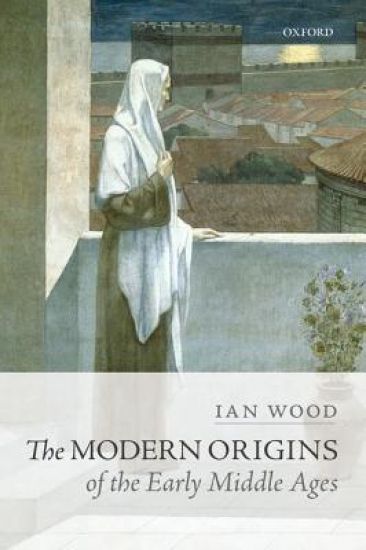
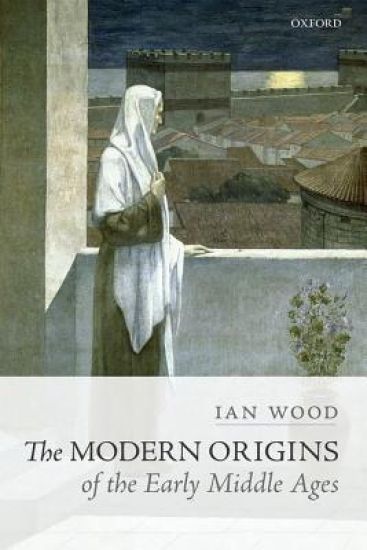
The Early Middle Ages, which marked the end of the Roman Empire and the creation of the kingdoms of Western Europe, was a period central to the formation of modern Europe. This period has often been drawn into a series of discourses that are more concerned with the eighteenth, nineteenth, and twentieth centuries than with the distant past. In The Modern Origins of the Early Middle Ages, Ian Wood explores how Western Europeans have looked back to the Middle Ages to discover their origins and the origins of their society. Using historical records and writings about the Fall of Rome and the Early Middle Ages, Wood reveals how these influenced modern Europe and the way in which the continent thought about itself. He asks, and answers, the important question: why is early-medieval history, or indeed any pre-modern history, important? This volume promises to add to the debate on the significance of medieval history in the modern world.
The Early Middle Ages, which marked the end of the Roman Empire and the creation of the kingdoms of Western Europe, was a period that was central to the formation of modern Europe. This period has often been drawn into a series of discourses that are more concerned with the eighteenth, nineteenth, and twentieth centuries than with the distant past. In The Modern Origins of the Early Middle Ages, Ian Wood explores how Western Europeans have looked back to the Middle Ages to discover their origins and the origins of their society. Using historical records and writings about the Fall of Rome and the Early Middle Ages, Wood discovers how these influenced modern Europe and how the continent thought about itself. Wood asks, and answers, the important question: why is early medieval history, or indeed any pre-modern history, important? This volume promises to add to the debate on the importance of medieval history in the modern world.
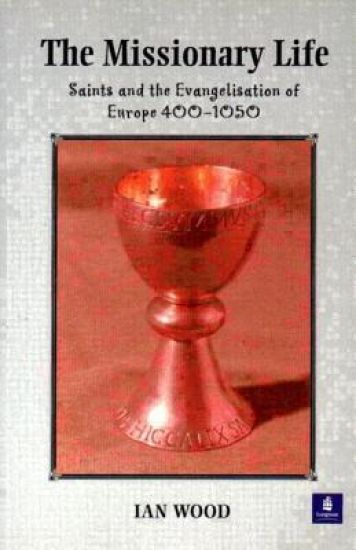
The great missionary figures were crucial to their own time and to posterity. They brought Christian belief and culture to the pagan societies of Dark Age Europe. Not only agents of change, they were also some of Europe's finest historians, leaving a detailed record of the cultures they transformed. The work of St Augustine in England is just one example. Anyone who has read Ian Wood's equally ambitious and compelling survey The Missionary Life, will rediscover his ability to bring a remote age to life. The unreliable history of the missionary life is disentangled to produce a uniquely wide-ranging account - giving a sense of the individual experience and collective ethos of the mission, the missionaries' influence on communities and their links to the rest of Christendom.
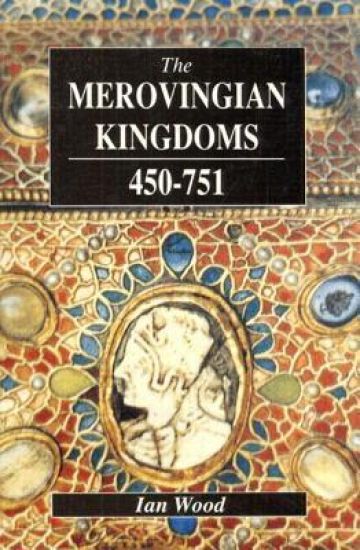
A comprehensive survey which begins with the rise of the Franks, then examines the Merovingians.
The great missionary figures were crucial to their own time and to posterity. They brought Christian belief and culture to the pagan societies of Dark Age Europe. Not only agents of change, they were also some of Europe's finest historians, leaving a detailed record of the cultures they transformed. The work of St Augustine in England is just one example. Anyone who has read Ian Wood's equally ambitious and compelling survey The Missionary Life, will rediscover his ability to bring a remote age to life. The unreliable history of the missionary life is disentangled to produce a uniquely wide-ranging account - giving a sense of the individual experience and collective ethos of the mission, the missionaries' influence on communities and their links to the rest of Christendom.
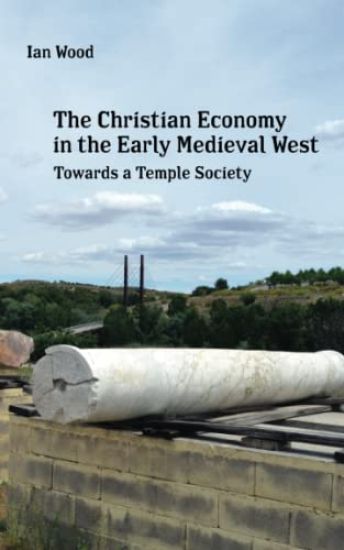
The establishment of Christianity in the late- and post-Roman world caused an economic as well as a religious revolution, but, while a great deal of attention has been paid to the religious developments of the period, the impact of the establishment of the Church on the economy has attracted remarkably little attention. The Christian Economy of the Early Medieval West: Towards a Temple Society examines the chronology of the Church's acquisition of wealth, and particularly of landed property, as well as the distribution of its income, in the period between the conversion of Constantine and the eighth century.In this book, the society that emerged as a result of the Church's acquisition of land is interpreted in the light of the anthropological model of the "Temple Society," a concept developed from Karl Marx's so-called "Asiatic Mode of Production." The emergence of a socio-economic system dominated by the Church is presented as a crucial development in the history of western Europe. Ian Wood is Emeritus Professor of Early Medieval History at the University of Leeds, where he taught from 1976 to 2015. He is the author of several books, including The Merovingian Kingdoms, 450-751 (1994), The Missionary Life: Saints and the eEangelisation of Europe 400-1050 (2001), The Modern Origins of the Early Middle Ages (2013), and The Transformation of the Roman West (2018). He is the co-author of Avitus of Vienne, Letters and Selected Prose (2002), with Danuta Shanzer, Fragments of History: Rethinking the Ruthwell and Bewcastle Monuments (2007), with Fred Orton and Clare Lees, Abbots of Wearmouth and Jarrow (2014), with Chris Grocock, and Jonas of Bobbio, Life of Columbanus, Life of John of R om , and Life of Vedast (2017), with Alexander O'Hara. He has also written numerous articles. He was a co-ordinator of the European Science Foundation project on The Transformation of the Roman World (1989-92, 1992-80). He was elected to the British Academy in 2019.
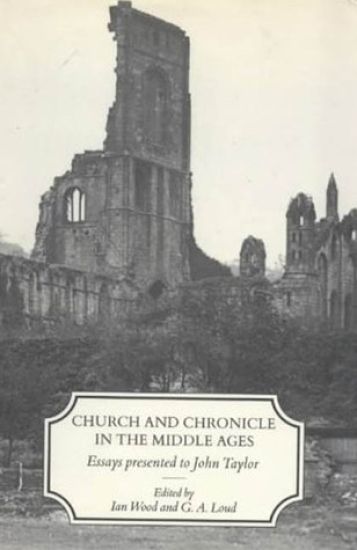
Church and Chronicle in the Middle Ages is a collection of essays presented to John Taylor, former Life Fellow and medieval scholar at the University of Leeds. The essays in the volume have two clear foci, also those of John Taylor’s own work: the study of history-writing in the middle ages and the late medieval church. With contributions key scholars on topics such as the hagiography of Saint-Wandrille, Swein Forkbeard and the historians, personal seals in 13th-century England, women in the Plumpton Correspondence and medievalism in counter-reformation Sicily, this volume is a rich and varied collection of medieval scholarship and a fitting tribute to Taylor’s work from his friends and colleagues.
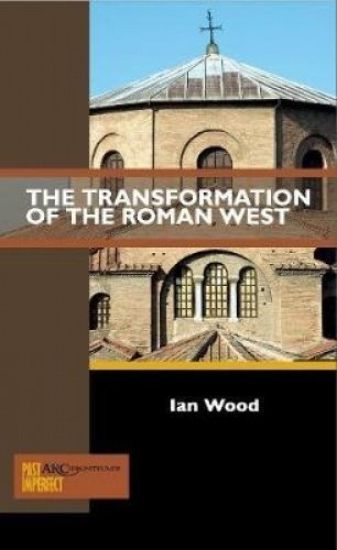
The history of the Late Roman Empire in the West has been divided into two parallel worlds, analysed either as a political and economic transformation or as a religious and cultural one. But how do these relate one to another? In this concise and effective synthesis, Ian Wood considers some ways in which religion and the Church can be reintegrated into what has become a largely secular discourse. The Church was at the heart of the changes that look place at the end of the Western Empire, not only regarding religion, but indeed every aspect of politics and society. Wood contends that the institutionalisation of the Church on a huge scale was a key factor in the transformation which began in the early fourth century with an incipiently Christian Roman Empire and ended three hundred years later in a world of thoroughly Christianised kingdoms.
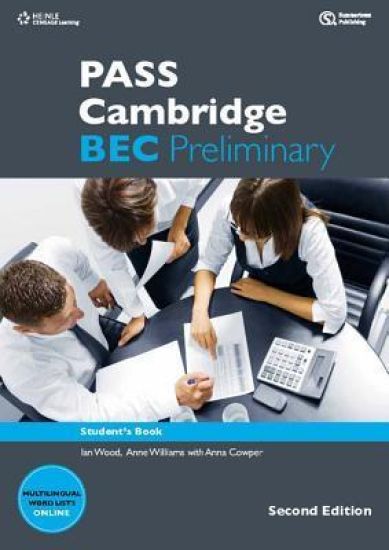
PASS Cambridge BEC Preliminary
Ian Wood; Anne Williams; Louise Pile; Russell Whitehead; Michael Black; Colin Benn; Paul Dummett; Paul Sanderson
Cengage Learning, Inc
2012
nidottu
This popular BEC series has been completely revised. PASS Cambridge BEC is a practical course for students who wish to gain a recognised business English qualification. Focusing on relevant international business situations, the course has been structured to provide students with a thorough preparation for the Business English Certificates (BEC).
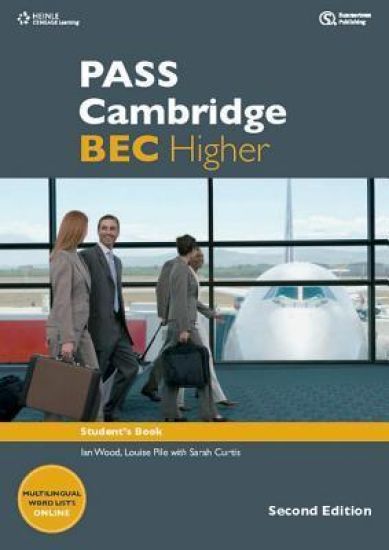
PASS Cambridge BEC Higher
Ian Wood; Anne Williams; Louise Pile; Russell Whitehead; Michael Black; Colin Benn; Paul Dummett; Paul Sanderson
Cengage Learning, Inc
2012
nidottu
This popular BEC series has been completely revised. PASS Cambridge BEC is a practical course for students who wish to gain a recognised business English qualification. Focusing on relevant international business situations, the course has been structured to provide students with a thorough preparation for the Business English Certificates (BEC).
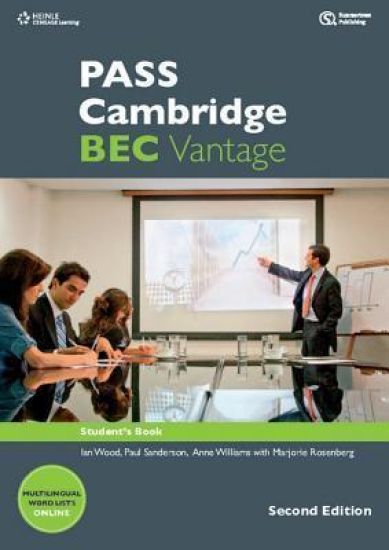
PASS Cambridge BEC Vantage
Ian Wood; Anne Williams; Paul Sanderson; Marjorie Rosenberg
Cengage Learning, Inc
2012
nidottu
This popular BEC series has been completely revised. PASS Cambridge BEC is a practical course for students who wish to gain a recognised business English qualification. Focusing on relevant international business situations, the course has been structured to provide students with a thorough preparation for the Business English Certificates (BEC).
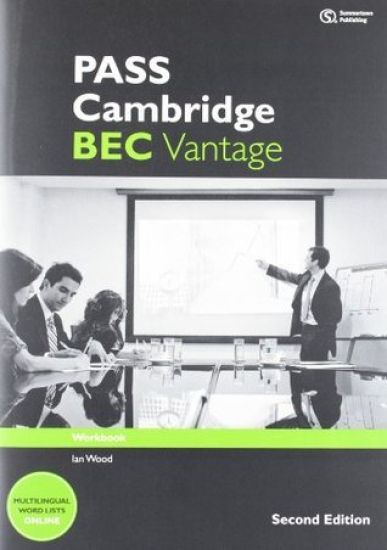
PASS Cambridge BEC Vantage: Workbook
Ian Wood; Anne Williams; Paul Sanderson; Marjorie Rosenberg
Cengage Learning, Inc
2012
lehtivihko, moniste
No other description available.
PASS Cambridge BEC Preliminary: Teacher's Book + Audio CD
Ian Wood; Anne Williams; Louise Pile; Russell Whitehead; Michael Black; Colin Benn; Paul Dummett; Paul Sanderson
Cengage Learning, Inc
2012
muu
No other description available.
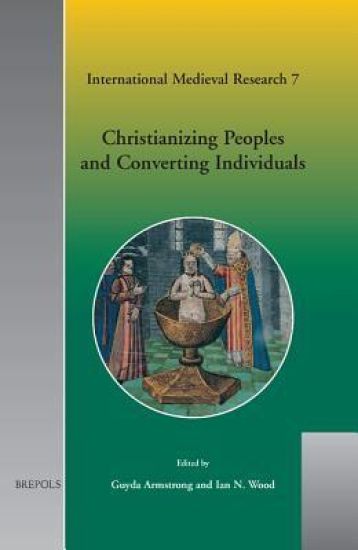
Christianizing Peoples and Converting Individuals
Ian Wood; Guyda Armstrong
Brepols N.V.
2003
sidottu