Kirjojen hintavertailu. Mukana 11 244 527 kirjaa ja 12 kauppaa.

Kirjahaku

Etsi kirjoja tekijän nimen, kirjan nimen tai ISBN:n perusteella.

1000 tulosta hakusanalla Ian Worthington

Ptolemy I

Ptolemy I

Ian Worthington

Oxford University Press Inc
2016
sidottu
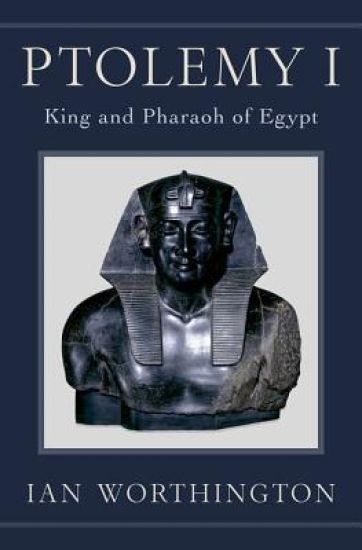
Cleopatra of Egypt is one of history's most famous rulers, but who was responsible for founding the Ptolemaic dynasty from which she came, how, and when? For the answers we go back 300 years before Cleopatra's time, to Ptolemy of Macedonia. He was a friend of Alexander the Great, fighting with him in the epic battles and sieges, which toppled the Persian Empire, and after Alexander's death taking over Egypt after the dead king's commanders carved up his vast empire among themselves. They were soon at war with each other, the co-called Wars of the Successors, as each man fought to increase his share of the spoils. They made and broke alliances with each other cynically and effortlessly, with Ptolemy showing himself no different from the others. But unlike them he had patience and cunning that arguably made him the greatest of the Successors. He built up his power base in Egypt, introduced administrative and economic reforms that made him fabulously wealthy, and as a conscious imperialist he boldly attempted to seize Greece and Macedonia and be a second Alexander. As well as his undoubted military prowess, Ptolemy was an intellectual. He founded the great Library and Museum at Alexandria, making that city the intellectual center of the entire Hellenistic age, and even patronized the mathematician Euclid. Ptolemy ruled Egypt first as satrap and then as its king and Pharaoh for forty years, until he died of natural causes in his early eighties. On his death, his son, Ptolemy II, succeeded him, and the Ptolemaic dynasty was thus established. It was the longest-lived of all the Hellenistic dynasties, falling with Cleopatra three centuries later. As a king, soldier, statesman, and intellectual, Ptolemy was one of a kind, but, unlike Alexander, he never forgot his Macedonian roots. Against all odds, Ptolemy fought off invasions, invaded opponents' territories, and established an Egyptian empire, making his adopted country a power with which to be reckoned. His achievements shaped both Egypt's history and that of the early Hellenistic world.
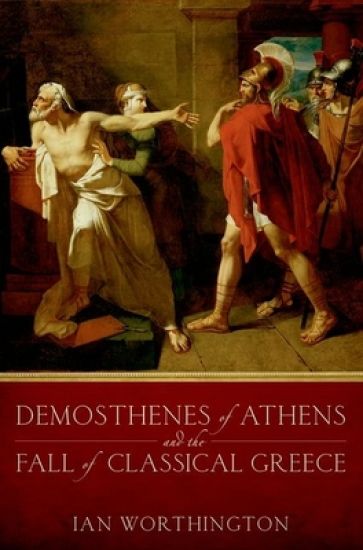
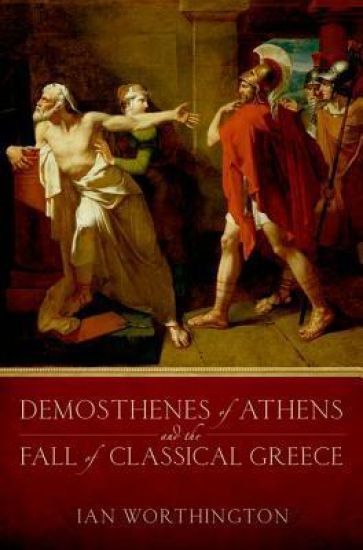
Demosthenes of Athens and the Fall of Classical Greece

Demosthenes of Athens and the Fall of Classical Greece

Ian Worthington

Oxford University Press Inc
2015
nidottu
Regarded as ancient Greece's greatest orator, Demosthenes lived through and helped shape one of the most eventful epochs in antiquity. His political career spanned three decades, during which time Greece fell victim to Macedonian control, first under Philip II and then Alexander the Great. Demosthenes' resolute and courageous defiance of Philip earned for him a reputation as one of history's outstanding patriots. He also enjoyed a brilliant and lucrative career as a speechwriter, and his rhetorical skills are still emulated today by students and politicians alike. Yet he was a sickly child with an embarrassing speech impediment, who was swindled out of much of his family's estate by unscrupulous guardians after the death of his father. His story is one of triumph over adversity. Modern studies of his life and career take one of two different approaches: he is either lauded as Greece's greatest patriot or condemned as an opportunist who misjudged situations and contributed directly to the end of Greek freedom. This biography, the first ever written in English for a popular audience, aims to determine which of these two people he was: self-serving cynic or patriot - or even a combination of both. Its chronological arrangement brings Demosthenes vividly to life, discussing his troubled childhood and youth, the obstacles he faced in his public career, his fierce rivalries with other Athenian politicians, his successes and failures, and even his posthumous influence as a politician and orator. It offers new insights into Demosthenes' motives and how he shaped his policy to achieve political power, all set against the rich backdrop of late Classical Greece and Macedonia.
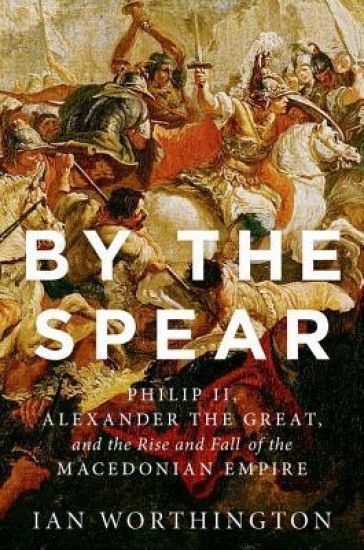
By the Spear

By the Spear

Ian Worthington

Oxford University Press Inc
2017
nidottu
Alexander the Great, arguably the most exciting figure from antiquity, waged war as a Homeric hero and lived as one, conquering native peoples and territories on a superhuman scale. From the time he invaded Asia in 334 to his death in 323, he expanded the Macedonian empire from Greece in the west to Asia Minor, the Levant, Egypt, Central Asia and "India" (Pakistan and Kashmir) in the east. Although many other kings and generals forged empires, Alexander produced one that was without parallel, even if it was short-lived. And yet, Alexander could not have achieved what he did without the accomplishments of his father, Philip II (r. 359-336). It was Philip who truly changed the course of Macedonian history, transforming a weak, disunited, and economically backward kingdom into a military powerhouse. A warrior king par excellence, Philip left Alexander with the greatest army in the Greek world, a centralized monarchy, economic prosperity, and a plan to invade Asia. For the first time, By the Spear offers an exhilarating military narrative of the reigns of these two larger-than-life figures in one volume. Ian Worthington gives full breadth to the careers of father and son, showing how Philip was the architect of the Macedonian empire, which reached its zenith under Alexander, only to disintegrate upon his death. By the Spear also explores the impact of Greek culture in the East, as Macedonian armies became avatars of social and cultural change in lands far removed from the traditional sphere of Greek influence. In addition, the book discusses the problems Alexander faced in dealing with a diverse subject population and the strategies he took to what might be called nation building, all of which shed light on contemporary events in culturally dissimilar regions of the world. The result is a gripping and unparalleled account of the role these kings played in creating a vast empire and the enduring legacy they left behind.
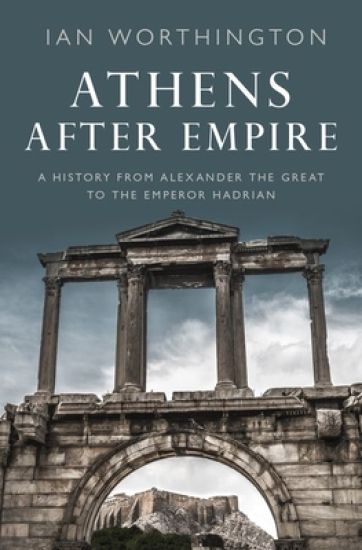
Athens After Empire

Athens After Empire

Ian Worthington

Oxford University Press Inc
2021
sidottu
A major new history of Athens' remarkably long and influential life after the collapse of its empire To many the history of post-Classical Athens is one of decline. True, Athens hardly commanded the number of allies it had when hegemon of its fifth-century Delian League or even its fourth-century Naval Confederacy, and its navy was but a shadow of its former self. But Athens recovered from its perilous position in the closing quarter of the fourth century and became once again a player in Greek affairs, even during the Roman occupation. Athenian democracy survived and evolved, even through its dealings with Hellenistic Kings, its military clashes with Macedonia, and its alliance with Rome. Famous Romans, including Julius Caesar and Mark Antony, saw Athens as much more than an isolated center for philosophy. Athens After Empire offers a new narrative history of post-Classical Athens, extending the period down to the aftermath of Hadrian's reign.
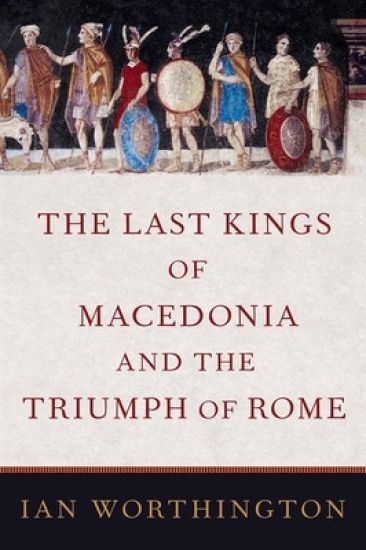
The Last Kings of Macedonia and the Triumph of Rome

The Last Kings of Macedonia and the Triumph of Rome

Ian Worthington

OXFORD UNIVERSITY PRESS INC
2023
sidottu
In the history of ancient Macedonia, the last three Antigonid kings--Philip V (r. 221-179), his son Perseus (r. 179-168), and the pretender Andriscus or Philip VI (r. 149-148)--are commonly overlooked in favor of their predecessors Philip II (r. 359-336) and his son Alexander the Great (r. 336-323), who established a Macedonian empire. By the time Philip V became king, Macedonia was no longer an imperial power and Rome was fast spreading its dominance over the Mediterranean. Viewed as postscripts to the kingdom's heyday, the last Macedonian kings are often denounced for self-serving ambitions, flawed policies, and questionable personal qualities by hostile ancient writers. They are condemned for defeats by Rome that saw both the end of the monarchy and the fall of the formidable Macedonian phalanx before the Roman legion. In The Last Kings of Macedonia and the Triumph of Rome, Ian Worthington reassesses these three kings and demonstrates how such denunciations are inaccurate. Producing the first full-scale treatment of Philip V in eighty years and the first in English of Perseus and Andriscus in more than fifty, Worthington argues that this period was far from a postscript to Macedonia's Classical greatness and disagrees that the last Antigonid kings were merely collateral damage in Rome's ascendancy in the east. Despite superior Roman manpower and resources, Philip and Perseus often had the upper hand in their wars against Rome. As Worthington asserts, these kings deserve to be remembered for striving to preserve their kingdom's independence against staggering odds.
Athens After Empire

Athens After Empire

Ian Worthington

OXFORD UNIVERSITY PRESS INC
2023
nidottu
A major new history of Athens' remarkably long and influential life after the collapse of its empire. To many the history of post-Classical Athens is one of decline. True, Athens hardly commanded the number of allies it had when hegemon of its fifth-century Delian League or even its fourth-century Naval Confederacy, and its navy was but a shadow of its former self. But Athens recovered from its perilous position in the closing quarter of the fourth century and became once again a player in Greek affairs, even during the Roman occupation. Athenian democracy survived and evolved, even through its dealings with Hellenistic Kings, its military clashes with Macedonia, and its alliance with Rome. Famous Romans, including Julius Caesar and Mark Antony, saw Athens as much more than an isolated center for philosophy. Athens After Empire offers a new narrative history of post-Classical Athens, extending the period down to the aftermath of Hadrian's reign.
Greening Business

Greening Business

Ian Worthington

Oxford University Press
2012
sidottu
Environmental protection has increasingly become a business issue at both the strategic and operational level for businesses of all sizes and across all continents. Greening Business is a comprehensive and highly contemporary analysis of the business/natural environment interface. Supported by numerous examples of current environmental practices in industry and commerce, the book examines why, when, and how businesses have responded to the growing pressures from governments, citizens, and other stakeholders to improve on their environmental performance. Focusing on the firm as the primary unit of analysis, the book examines the major drivers of corporate ecological responsiveness and critically investigates the nature and range of business responses in both theory and practice. It offers a detailed analysis of the contested business case for corporate greening, using insights from current strategy and management theory, including the resource-based view of the firm, and discusses the ways in which a firm can incorporate its concern for environmental protection into its day-to-day operations and decisions and through its strategic posture. It concludes with a discussion of the notion of the ecologically sustainable enterprise.
Greening Business

Greening Business

Ian Worthington

Oxford University Press
2012
nidottu
Environmental protection has increasingly become a business issue at both the strategic and operational level for businesses of all sizes and across all continents. Greening Business is a comprehensive and highly contemporary analysis of the business/natural environment interface. Supported by numerous examples of current environmental practices in industry and commerce, the book examines why, when, and how businesses have responded to the growing pressures from governments, citizens, and other stakeholders to improve on their environmental performance. Focusing on the firm as the primary unit of analysis, the book examines the major drivers of corporate ecological responsiveness and critically investigates the nature and range of business responses in both theory and practice. It offers a detailed analysis of the contested business case for corporate greening, using insights from current strategy and management theory, including the resource-based view of the firm, and discusses the ways in which a firm can incorporate its concern for environmental protection into its day-to-day operations and decisions and through its strategic posture. It concludes with a discussion of the notion of the ecologically sustainable enterprise.
By the Spear

By the Spear

Ian Worthington

Oxford University Press Inc
2014
sidottu
Alexander the Great, arguably the most exciting figure from antiquity, waged war as a Homeric hero and lived as one, conquering native peoples and territories on a superhuman scale. From the time he invaded Asia in 334 to his death in 323, he expanded the Macedonian empire from Greece in the west to Asia Minor, the Levant, Egypt, Central Asia and "India" (Pakistan and Kashmir) in the east. Although many other kings and generals forged empires, Alexander produced one that was without parallel, even if it was short-lived. And yet, Alexander could not have achieved what he did without the accomplishments of his father, Philip II (r. 359-336). It was Philip who truly changed the course of Macedonian history, transforming a weak, disunited, and economically backward kingdom into a military powerhouse. A warrior king par excellence Philip left Alexander with the greatest army in the Greek world, a centralized monarchy, economic prosperity, and a plan to invade Asia. For the first time, By the Spear offers an exhilarating military narrative of the reigns of these two larger-than-life figures in one volume. Ian Worthington gives full breadth to the careers of father and son, showing how Philip was the architect of the Macedonian empire, which reached its zenith under Alexander, only to disintegrate upon his death. By the Spear also explores the impact of Greek culture in the East, as Macedonian armies became avatars of social and cultural change in lands far removed from the traditional sphere of Greek influence. In addition, the book discusses the problems Alexander faced in dealing with a diverse subject population and the strategies he took to what might be called nation building, all of which shed light on contemporary events in culturally dissimilar regions of the world. The result is a gripping and unparalleled account of the role these kings played in creating a vast empire and the enduring legacy they left behind.
Demosthenes of Athens and the Fall of Classical Greece

Demosthenes of Athens and the Fall of Classical Greece

Ian Worthington

Oxford University Press Inc
2013
sidottu
Regarded as ancient Greece's greatest orator, Demosthenes lived through and helped shape one of the most eventful epochs in antiquity. His political career spanned three decades, during which time Greece fell victim to Macedonian control, first under Philip II and then Alexander the Great. Demosthenes' resolute and courageous defiance of Philip earned for him a reputation as one of history's outstanding patriots. He also enjoyed a brilliant and lucrative career as a speechwriter, and his rhetorical skills are still emulated today by students and politicians alike. Yet he was a sickly child with an embarrassing speech impediment, who was swindled out of much of his family's estate by unscrupulous guardians after the death of his father. His story is one of triumph over adversity. Modern studies of his life and career take one of two different approaches: he is either lauded as Greece's greatest patriot or condemned as an opportunist who misjudged situations and contributed directly to the end of Greek freedom. This new biography, the first ever written in English for a popular audience, aims to determine which of these two people he was: self-serving cynic or patriot - or even a combination of both. Its chronological arrangement brings Demosthenes vividly to life, discussing his troubled childhood and youth, the obstacles he faced in his public career, his fierce rivalries with other Athenian politicians, his successes and failures, and even his posthumous influence as a politician and orator. It offers new insights into Demosthenes' motives and how he shaped his policy to achieve political power, all set against the rich backdrop of late classical Greece and Macedonia.
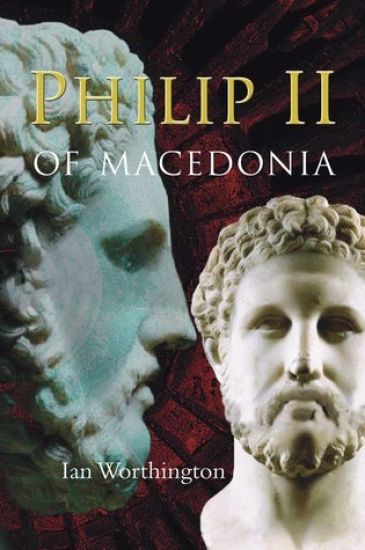
Philip II of Macedonia

Philip II of Macedonia

Ian Worthington

Yale University Press
2010
pokkari
Alexander the Great is remembered as a brilliant conqueror, but his father’s achievements as a leader were greater still Alexander the Great is probably the most famous ruler of antiquity, and his spectacular conquests are recounted often in books and films. But what of his father, Philip II, who united Macedonia, created the best army in the world at the time, and conquered and annexed Greece? This landmark biography is the first to bring Philip to life, exploring the details of his life and legacy and demonstrating that his achievements were so remarkable that it can be argued they outshone those of his more famous son. Without Philip, Greek history would have been entirely different.Taking into account recent archaeological discoveries and reinterpreting ancient literary records, Ian Worthington brings to light Philip’s political, economic, military, social, and cultural accomplishments. He reveals the full repertoire of the king’s tactics, including several polygamous diplomatic marriages, deceit, bribery, military force, and a knack for playing off enemies against one another. The author also inquires into the king’s influences, motives, and aims, and in particular his turbulent, unraveling relationship with Alexander, which may have ended in murder. Philip became in many ways the first modern regent of the ancient world, and this book places him where he properly belongs: firmly at the center stage of Greek history.
Greek Orators II: Dinarchus and Hyperides

Greek Orators II: Dinarchus and Hyperides

Ian Worthington

Aris Phillips Ltd
2000
nidottu
Hyperides was ranked in antiquity as second in greatness only to Demosthenes amongst the Ten Attic Orators. His execution in 322 BC for opposition to Macedonian rule left Dinarchus as the last of the Ten to survive. This book critically evaluates the speeches of both orators against Demosthenes and discusses Hyperides' funeral oration as an important historical source for understanding Athens in the last years of the reign of Alexander the Great. The history of the period of discussed in detail, as is the rhetorical style of the two orators. Amongst other distinctions this text provides the first commentary in English on Hyperides' two speeches. A Greek text of Dinarchus' and Hyperides' fragmented speeches is provided along with an English translation. The commentary is essentially historical, but some literary and philological points are also discussed.
Macedonia under the Argead Kings

Macedonia under the Argead Kings

Ian Worthington

OXFORD UNIVERSITY PRESS INC
2026
sidottu
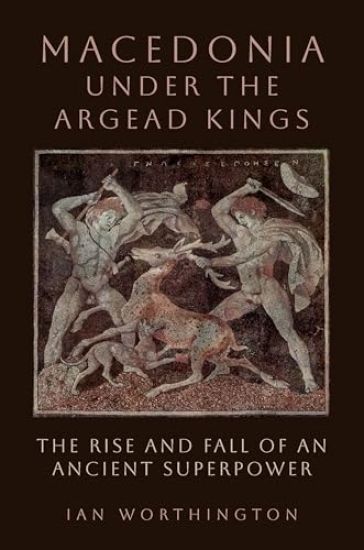
Ancient Macedonia is often synonymous with Alexander the Great. After all, his conquests stretched the Macedonian Empire thousands of miles wide, and during his reign Macedonia was without equal. Alexander and his father, Philip II, who raised Macedonia to superpower status, still dominate our perceptions of this ancient kingdom and empire. Macedonian kings before Philip and Alexander are often portrayed as their opposites--weak and ineffectual--but this book proves that this is a mistake. While Macedonia under the Argead Kings covers the reigns of Philip, Alexander, and his immediate successors, it takes an even closer look at what life was like in Macedonia before its most famous rulers. While the literary evidence speaks of Macedonia's internal disunity during this period, as well as its dynastic upheavals, it is important to note that the authors of this literature were often Greeks, who had very different perspectives of what their enemies, the Macedonians, were like. This book supplements the literary sources with archaeological evidence to tell a more complicated story. While the Argead kings certainly varied between successes and failures and faced their fair share of security crises, when viewed as a continuum, we see that Macedonia's earlier history was not a path of steady deterioration but a more subtle rise and fall. When the Argead kings are brought out from the shadows, we can see their importance in the kingdom's development and their influence on each another and the wider Mediterranean world.
Lives of the Attic Orators

Lives of the Attic Orators

Joseph Roisman; Ian Worthington

Oxford University Press
2015
sidottu
This volume provides a complete translation of, and historical and historiographical commentary on, the lives of the ten Attic orators written by Pseudo-Plutarch, Photius, and the Suda. Assessing these works as important historical sources for the individual lives and careers of the orators whose works have survived, this systematic study explores how these literary biographies were constructed, the information they provide, and their veracity. In-depth commentary notes offer contextual information, explain references and examine individual rhetorical phrases, and a glossary of technical terms provides a quick reference guide to the more obscure oratorical and political terms. The volume also includes a detailed introduction which discusses the evolution of Greek oratory and rhetoric; the so-called Canon of the Ten Orators; the authorship, dates, and sources of the biographies provided by Pseudo-Plutarch, Photius, and the Suda; and a brief consideration of orators whose speeches were either falsely attributed to Demosthenes or may be referenced in the ancient lives.
Lives of the Attic Orators

Lives of the Attic Orators

Joseph Roisman; Ian Worthington

Oxford University Press
2015
nidottu
This volume provides a complete translation of, and historical and historiographical commentary on, the lives of the ten Attic orators written by Pseudo-Plutarch, Photius, and the Suda. Assessing these works as important historical sources for the individual lives and careers of the orators whose works have survived, this systematic study explores how these literary biographies were constructed, the information they provide, and their veracity. In-depth commentary notes offer contextual information, explain references and examine individual rhetorical phrases, and a glossary of technical terms provides a quick reference guide to the more obscure oratorical and political terms. The volume also includes a detailed introduction which discusses the evolution of Greek oratory and rhetoric; the so-called Canon of the Ten Orators; the authorship, dates, and sources of the biographies provided by Pseudo-Plutarch, Photius, and the Suda; and a brief consideration of orators whose speeches were either falsely attributed to Demosthenes or may be referenced in the ancient lives.
The Business Environment: A Global Perspective

The Business Environment: A Global Perspective

Ed Thompson; Ian Worthington; Chris Britton

pearson education limited
2023
nidottu
A deep dive into the internal and external environments in which a business operates today. The Business Environment: A Global Perspective, 9th Edition, by Thompson, Worthington and Britton offers a comprehensive and accessible introduction to how local and international business environments operate. Employing a PESTLE model which is relevant to all industries, this best-selling textbook takes you through contexts, types of organisation and markets, dealing with contemporary issues in socioeconomic, political and legal structures. The new edition offers a clear explanation of economics such as why the prices of the things you buy might go up or down, or why employment might be harder or easier to find at any given time. New chapters on the global Covid-19 pandemic and de-globalising factors, including Brexit, give an all-round perspective on how factors influence one another, and convey the complexity of the business environment. The wealth of contemporary case studies from local and international organisations, helps you put theory into practice.
The Military Legacy of Alexander the Great

The Military Legacy of Alexander the Great

Michael P. Ferguson; Ian Worthington

TAYLOR FRANCIS LTD
2023
sidottu
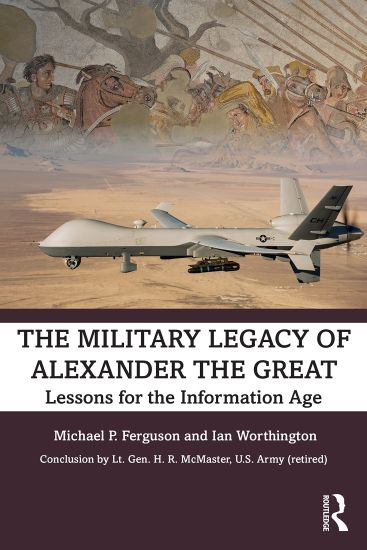
Placing Alexander the Great’s leadership, command skills, and grand strategy within the context of twenty-first century military challenges, and thus showing continuities in leadership and warfare since his time, this volume demonstrates how and why Alexander is relevant to the modern world by emphasizing the need for human leadership in our digital era.Not only does this volume explore Alexander’s rich military history, but also it provides a robust exploration of the twenty-first century security environment. Theorists and policy-makers will gain insight into how Alexander’s story informs our thinking about peace, war, and strategy, while practitioners and educators will encounter ways to improve their approaches to leader development and building curricula. Ferguson and Worthington set forth these lessons in a thematic framework that organises Alexander’s reign into distinct parts, together with chapters discussing the lessons and warnings he brings to the modern world. Twenty-fifth National Security Advisor to the President of the United States, Lt. Gen. H. R. McMaster, provides a thoughtful conclusion to this fascinating volume. Alexander’s timeless campaigns remain as germane to this age as any other and demonstrate the critical importance of dynamic leadership and historical studies in an era increasingly dominated by the culture of technology.The Military Legacy of Alexander the Great is expertly written for students and scholars in a variety of disciplines, including Classics, Ancient History, Modern History, Peace Studies, and Military Studies. It is also of great interest to senior defence leaders, military academies, leadership- and management-focused academic programmes, intelligence organizations, and senior service colleges. The volume is also suitable for the general reader interested in warfare, military history, and history more broadly.
The Military Legacy of Alexander the Great

The Military Legacy of Alexander the Great

Michael P. Ferguson; Ian Worthington

TAYLOR FRANCIS LTD
2023
nidottu
Placing Alexander the Great’s leadership, command skills, and grand strategy within the context of twenty-first century military challenges, and thus showing continuities in leadership and warfare since his time, this volume demonstrates how and why Alexander is relevant to the modern world by emphasizing the need for human leadership in our digital era.Not only does this volume explore Alexander’s rich military history, but also it provides a robust exploration of the twenty-first century security environment. Theorists and policy-makers will gain insight into how Alexander’s story informs our thinking about peace, war, and strategy, while practitioners and educators will encounter ways to improve their approaches to leader development and building curricula. Ferguson and Worthington set forth these lessons in a thematic framework that organises Alexander’s reign into distinct parts, together with chapters discussing the lessons and warnings he brings to the modern world. Twenty-fifth National Security Advisor to the President of the United States, Lt. Gen. H. R. McMaster, provides a thoughtful conclusion to this fascinating volume. Alexander’s timeless campaigns remain as germane to this age as any other and demonstrate the critical importance of dynamic leadership and historical studies in an era increasingly dominated by the culture of technology.The Military Legacy of Alexander the Great is expertly written for students and scholars in a variety of disciplines, including Classics, Ancient History, Modern History, Peace Studies, and Military Studies. It is also of great interest to senior defence leaders, military academies, leadership- and management-focused academic programmes, intelligence organizations, and senior service colleges. The volume is also suitable for the general reader interested in warfare, military history, and history more broadly.
Alexander the Great

Alexander the Great

Worthington Ian

Routledge
2004
nidottu
Alexander the Great conquered territories on a superhuman scale and established an empire that stretched from Greece to India. He spread Greek culture and education throughout his empire, and was worshipped as a living god by many of his subjects. But how great is a leader responsible for the deaths on tens of thousands of people? A ruler who prefers constant warring to administering the peace? A man who believed he was a god, who murdered his friends, and recklessly put his soldiers lives at risk? Ian Worthington delves into Alexander's successes and failures, his paranoia, the murders he engineered, his megalomania, and his constant drinking. It presents a king corrupted by power and who, for his own personal ends, sacrificed the empire his father had fought to establish.