Kirjojen hintavertailu. Mukana 11 244 527 kirjaa ja 12 kauppaa.

Kirjahaku

Etsi kirjoja tekijän nimen, kirjan nimen tai ISBN:n perusteella.

1000 tulosta hakusanalla Igor A. Razumovsky

Interference-optical Methods of Solid Mechanics

Interference-optical Methods of Solid Mechanics

Igor A. Razumovsky

Springer-Verlag Berlin and Heidelberg GmbH Co. K
2010
sidottu
This reference tutorial contains modern experimental approaches to analysis of strain-stress distribution based on interference-optical methods of registration of strain or displacement fields, including coherent-optical techniques (holographic interferometry, speckle photography, electronic digital speckle interferometry techniques) and photoelastic methods as well as the shadow optical method of caustic. The book describes the theory, efficient scope of application in the every-day practice and the problems of further development of these techniques. Much attention is paid to new and promising advanced developments in the field of observation and computational methods for study of residual stress, determination of fracture mechanics parameters and material deformation characteristics. The content corresponds to the course of lectures delivered by the author at the N.E. Bauman Moscow State Technical University. It is intended for technical university students, research engineers and postgraduate students who are doing analysis of strain-stress state and strength of structural elements.
Interference-optical Methods of Solid Mechanics

Interference-optical Methods of Solid Mechanics

Igor A. Razumovsky

Springer-Verlag Berlin and Heidelberg GmbH Co. K
2013
nidottu
This reference tutorial contains modern experimental approaches to analysis of strain-stress distribution based on interference-optical methods of registration of strain or displacement fields, including coherent-optical techniques (holographic interferometry, speckle photography, electronic digital speckle interferometry techniques) and photoelastic methods as well as the shadow optical method of caustic. The book describes the theory, efficient scope of application in the every-day practice and the problems of further development of these techniques. Much attention is paid to new and promising advanced developments in the field of observation and computational methods for study of residual stress, determination of fracture mechanics parameters and material deformation characteristics. The content corresponds to the course of lectures delivered by the author at the N.E. Bauman Moscow State Technical University. It is intended for technical university students, research engineers and postgraduate students who are doing analysis of strain-stress state and strength of structural elements.
Mass Spectrometry in Structural Biology and Biophysics

Mass Spectrometry in Structural Biology and Biophysics

Igor A. Kaltashov; Stephen J. Eyles

John Wiley Sons Inc
2012
sidottu
The definitive guide to mass spectrometry techniques in biology and biophysics The use of mass spectrometry (MS) to study the architecture and dynamics of proteins is increasingly common within the biophysical community, and Mass Spectrometry in Structural Biology and Biophysics: Architecture, Dynamics, and Interaction of Biomolecules, Second Edition provides readers with detailed, systematic coverage of the current state of the art. Offering an unrivalled overview of modern MS-based armamentarium that can be used to solve the most challenging problems in biophysics, structural biology, and biopharmaceuticals, the book is a practical guide to understanding the role of MS techniques in biophysical research. Designed to meet the needs of both academic and industrial researchers, it makes mass spectrometry accessible to professionals in a range of fields, including biopharmaceuticals. This new edition has been significantly expanded and updated to include the most recent experimental methodologies and techniques, MS applications in biophysics and structural biology, methods for studying higher order structure and dynamics of proteins, an examination of other biopolymers and synthetic polymers, such as nucleic acids and oligosaccharides, and much more. Featuring high-quality illustrations that illuminate the concepts described in the text, as well as extensive references that enable the reader to pursue further study, Mass Spectrometry in Structural Biology and Biophysics is an indispensable resource for researchers and graduate students working in biophysics, structural biology, protein chemistry, and related fields.
Probabilistic Reliability Models

Probabilistic Reliability Models

Igor A. Ushakov

John Wiley Sons Inc
2012
sidottu
Practical Approaches to Reliability Theory in Cutting-Edge Applications Probabilistic Reliability Models helps readers understand and properly use statistical methods and optimal resource allocation to solve engineering problems. The author supplies engineers with a deeper understanding of mathematical models while also equipping mathematically oriented readers with a fundamental knowledge of the engineeringrelated applications at the center of model building. The book showcases the use of probability theory and mathematical statistics to solve common, real-world reliability problems. Following an introduction to the topic, subsequent chapters explore key systems and models including: • Unrecoverable objects and recoverable systems • Methods of direct enumeration • Markov models and heuristic models • Performance effectiveness • Time redundancy • System survivability • Aging units and their related systems • Multistate systems Detailed case studies illustrate the relevance of the discussed methods to real-world technical projects including software failure avalanches, gas pipelines with underground storage, and intercontinental ballistic missile (ICBM) control systems. Numerical examples and detailed explanations accompany each topic, and exercises throughout allow readers to test their comprehension of the presented material. Probabilistic Reliability Models is an excellent book for statistics, engineering, and operations research courses on applied probability at the upper-undergraduate and graduate levels. The book is also a valuable reference for professionals and researchers working in industry who would like a mathematical review of reliability models and the relevant applications.
Optimal Resource Allocation

Optimal Resource Allocation

Igor A. Ushakov

John Wiley Sons Inc
2013
sidottu
A UNIQUE ENGINEERING AND STATISTICAL APPROACH TO OPTIMAL RESOURCE ALLOCATION Optimal Resource Allocation: With Practical Statistical Applications and Theory features the application of probabilistic and statistical methods used in reliability engineering during the different phases of life cycles of technical systems. Bridging the gap between reliability engineering and applied mathematics, the book outlines different approaches to optimal resource allocation and various applications of models and algorithms for solving real-world problems. In addition, the fundamental background on optimization theory and various illustrative numerical examples are provided. The book also features: An overview of various approaches to optimal resource allocation, from classical Lagrange methods to modern algorithms based on ideas of evolution in biologyNumerous exercises and case studies from a variety of areas, including communications, transportation, energy transmission, and counterterrorism protectionThe applied methods of optimization with various methods of optimal redundancy problem solutions as well as the numerical examples and statistical methods needed to solve the problemsPractical thoughts, opinions, and judgments on real-world applications of reliability theory and solves practical problems using mathematical models and algorithms Optimal Resource Allocation is a must-have guide for electrical, mechanical, and reliability engineers dealing with engineering design and optimal reliability problems. In addition, the book is excellent for graduate and PhD-level courses in reliability theory and optimization.
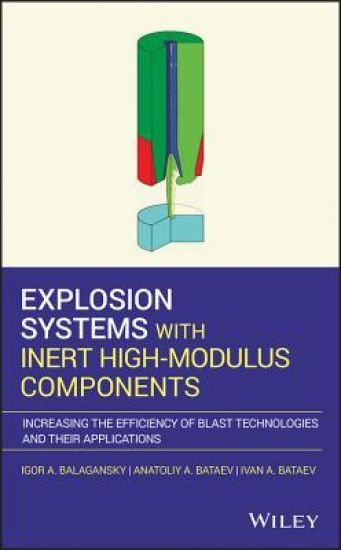
Explosion Systems with Inert High-Modulus Components

Explosion Systems with Inert High-Modulus Components

Igor A. Balagansky; Anatoliy A. Bataev; Ivan A. Bataev

Wiley-Blackwell
2019
sidottu
Describes in one volume the data received during experiments on detonation in high explosive charges This book brings together, in one volume, information normally covered in a series of journal articles on high explosive detonation tests, so that developers can create new explosive technologies. It focuses on the charges that contain inert elements made of materials in which a sound velocity is significantly higher than a detonation velocity. It also summarizes the results of experimental, numerical, and theoretical investigations of explosion systems, which contain high modulus ceramic components. The phenomena occurring in such systems are described in detail: desensitization of high explosives, nonstationary detonation processes, energy focusing, and Mach stems formation. Formation of hypersonic flows of ceramic particles arising due to explosive collapse of ceramic tubes is another example of the issues discussed. Explosion Systems with Inert High Modulus Components: Increasing the Efficiency of Blast Technologies and Their Applications also looks at the design of explosion protective structures based on high modulus ceramic materials. The structural transformations, caused in metallic materials by the energy focusing, or by the impact of hypersonic ceramic jets are also discussed. These transformations include, but not limited to adiabatic shear banding, phase transformations, mechanical twinning, melting, boiling, and even evaporation of the impacted substrates. Specifically discusses in one volume the explosions involved with inert high modules components normally scattered over numerous journal articles Covers methods to increase energy output of a weak explosive by encasing it in a higher explosiveDiscusses the specifics of explosive systems containing high modulus inert elementsDetails the process of detonation and related phenomena, as well as the design of novel highly performant explosive systemsDescribes the transformation in materials impacted due to explosion in such systems Explosion Systems with Inert High Modulus Components will be of great interest to specialists working in fields of energy of the explosion and explosion safety as well as university staff, students, and postgraduate students studying explosion phenomena, explosive technologies, explosion safety, and materials science.
Damaging Effects of Weapons and Ammunition

Damaging Effects of Weapons and Ammunition

Igor A. Balagansky

JOHN WILEY SONS INC
2022
sidottu
Comprehensive coverage of weapon damage effects on a variety of objects Damaging Effects of Weapons and Ammunition delivers a thorough exploration of a range of issues related to the effects of ammunition and weapons. The book includes coverage of the basic concepts of the theory of efficiency and the physical foundations of the functional and damaging effects of fragments, shaped charges, high-explosive and penetrating weapons. The author discusses the calculation formulas used to evaluation the parameters of damage fields and their interaction with various objects. Additionally, the book expands on the damage criteria of weapons, the characteristics of the vulnerability of objects with respect to a variety of damaging factors, dependencies for assessing safe distances, and the resistance of various structures to the effects of explosion and impact. Damaging Effects of Weapons and Ammunition also offers: Detailed calculation methods indicating areas of application and the necessary units of used quantitiesExtensive examples of classic designs of ammunition from around the worldDiscussions of the characterization of various types of ammunition, including high-explosive, fragment, penetrative, and shaped chargesA chapter on the numerical simulation of high-speed processes Perfect for technical specialists working in the fields of explosion safety and explosives, Damaging Effects of Weapons and Ammunition also belongs in the libraries of researchers and students studying explosion phenomena, explosive technologies, explosion safety, and materials science.
Photophysics of Carbon Nanotubes Interfaced with Organic and Inorganic Materials

Photophysics of Carbon Nanotubes Interfaced with Organic and Inorganic Materials

Igor A. Levitsky; William B. Euler; Victor A. Karachevtsev

Springer London Ltd
2012
sidottu
Photophysics of Carbon Nanotubes Interfaced with Organic and Inorganic Materials describes physical, optical and spectroscopic properties of the emerging class of nanocomposites formed from carbon nanotubes (CNTs) interfacing with organic and inorganic materials. The three main chapters detail novel trends in photophysics related to the interaction of light with various carbon nanotube composites from relatively simple CNT/small molecule assemblies to complex hybrids such as CNT/Si and CNT/DNA nanostructures. The latest experimental results are followed up with detailed discussions and scientific and technological perspectives to provide a through coverage of major topics including:-Light harvesting, energy conversion, photoinduced charge separation and transport in CNT based nanohybrids-CNT/polymer composites exhibiting photoactuation; and-Optical spectroscopy and structure of CNT/DNA complexes. Including original data and a short review of recent research, Photophysics of Carbon Nanotubes Interfaced with Organic and Inorganic Materials makes this emerging field of photophysics and its applications available to academics and professionals working with carbon nanotube composites in fundamental and applied fields
Photophysics of Carbon Nanotubes Interfaced with Organic and Inorganic Materials

Photophysics of Carbon Nanotubes Interfaced with Organic and Inorganic Materials

Igor A. Levitsky; William B. Euler; Victor A. Karachevtsev

Springer London Ltd
2015
nidottu
Photophysics of Carbon Nanotubes Interfaced with Organic and Inorganic Materials describes physical, optical and spectroscopic properties of the emerging class of nanocomposites formed from carbon nanotubes (CNTs) interfacing with organic and inorganic materials. The three main chapters detail novel trends in photophysics related to the interaction of light with various carbon nanotube composites from relatively simple CNT/small molecule assemblies to complex hybrids such as CNT/Si and CNT/DNA nanostructures. The latest experimental results are followed up with detailed discussions and scientific and technological perspectives to provide a through coverage of major topics including:-Light harvesting, energy conversion, photoinduced charge separation and transport in CNT based nanohybrids-CNT/polymer composites exhibiting photoactuation; and-Optical spectroscopy and structure of CNT/DNA complexes. Including original data and a short review of recent research, Photophysics of Carbon Nanotubes Interfaced with Organic and Inorganic Materials makes this emerging field of photophysics and its applications available to academics and professionals working with carbon nanotube composites in fundamental and applied fields
Theory of Arched Structures

Theory of Arched Structures

Igor A Karnovsky

Springer-Verlag New York Inc.
2011
sidottu
Theory of Arched Structures: Strength, Stability, Vibration presents detailed procedures for analytical analysis of the strength, stability, and vibration of arched structures of different types, using exact analytical methods of classical structural analysis. The material discussed is divided into four parts. Part I covers stress and strain with a particular emphasis on analysis; Part II discusses stability and gives an in-depth analysis of elastic stability of arches and the role that matrix methods play in the stability of the arches; Part III presents a comprehensive tutorial on dynamics and free vibration of arches, and forced vibration of arches; and Part IV offers a section on special topics which contains a unique discussion of plastic analysis of arches and the optimal design of arches..
Advanced Methods of Structural Analysis

Advanced Methods of Structural Analysis

Igor A. Karnovsky; Olga Lebed

Springer-Verlag New York Inc.
2014
nidottu
Advanced Methods of Structural Analysis aims to help its readers navigate through the vast field of structural analysis. The book aims to help its readers master the numerous methods used in structural analysis by focusing on the principal concepts, as well as the advantages and disadvantages of each method. The end result is a guide to mastering the many intricacies of the plethora of methods of structural analysis. The book differentiates itself from other volumes in the field by focusing on the following: • Extended analysis of beams, trusses, frames, arches and cables • Extensive application of influence lines for analysis of structures • Simple and effective procedures for computation of deflections • Introduction to plastic analysis, stability, and free vibration analysis Authors Igor A. Karnovsky and Olga Lebed have crafted a must-read book for civil and structural engineers, as well as researches and students with an interest in perfecting structural analysis. Advanced Methods of Structural Analysis also offers numerous example problems, accompanied by detailed solutions and discussion of the results.
Theory of Arched Structures

Theory of Arched Structures

Igor A Karnovsky

Springer-Verlag New York Inc.
2014
nidottu
Theory of Arched Structures: Strength, Stability, Vibration presents detailed procedures for analytical analysis of the strength, stability, and vibration of arched structures of different types, using exact analytical methods of classical structural analysis. The material discussed is divided into four parts. Part I covers stress and strain with a particular emphasis on analysis; Part II discusses stability and gives an in-depth analysis of elastic stability of arches and the role that matrix methods play in the stability of the arches; Part III presents a comprehensive tutorial on dynamics and free vibration of arches, and forced vibration of arches; and Part IV offers a section on special topics which contains a unique discussion of plastic analysis of arches and the optimal design of arches..
Reconfigurable Multipipeline Computing Structures

Reconfigurable Multipipeline Computing Structures

Igor A Kalyaev; Ilya I Levin; Evgeny A Semernikov; Vladimir I Shmoilov

Nova Science Publishers Inc
2013
sidottu
This book covers theoretical aspects of design of reconfigurable multipipeline computing structures of various types and of their practical implementation, based on large-scale integration FPGAs. This book consists of the introduction and six chapters. Topics discussed include general design principles of reconfigurable multipipeline computing structure organisation; organisation principles of multimicropipeline computing structures within homogeneous environments; structural-procedural methods of organisation of computations in multimacropipeline computing structures; and problems of practical implementation of reconfigurable multipipeline computing structures, based on large-scale integration FPGAs.
Advanced Methods of Structural Analysis

Advanced Methods of Structural Analysis

Igor A. Karnovsky; Olga Lebed

Springer Nature Switzerland AG
2021
sidottu
This revised and significantly expanded edition contains a rigorous examination of key concepts, new chapters and discussions within existing chapters, and added reference materials in the appendix, while retaining its classroom-tested approach to helping readers navigate through the deep ideas, vast collection of the fundamental methods of structural analysis. The authors show how to undertake the numerous analytical methods used in structural analysis by focusing on the principal concepts, detailed procedures and results, as well as taking into account the advantages and disadvantages of each method and sphere of their effective application. The end result is a guide to mastering the many intricacies of the range of methods of structural analysis. The book differentiates itself by focusing on extended analysis of beams, plane and spatial trusses, frames, arches, cables and combined structures; extensive application of influence lines for analysis of structures; simple and effective procedures for computation of deflections; introduction to plastic analysis, stability, and free and forced vibration analysis, as well as some special topics. Ten years ago, Professor Igor A. Karnovsky and Olga Lebed crafted a must-read book. Now fully updated, expanded, and titled Advanced Methods of Structural Analysis (Strength, Stability, Vibration), the book is ideal for instructors, civil and structural engineers, as well as researches and graduate and post graduate students with an interest in perfecting structural analysis.