Kirjojen hintavertailu. Mukana 11 244 527 kirjaa ja 12 kauppaa.

Kirjahaku

Etsi kirjoja tekijän nimen, kirjan nimen tai ISBN:n perusteella.

1000 tulosta hakusanalla India Jonassaint

College Girls After Christ: : The College Girl's Guide to Faith & Purpose

College Girls After Christ: : The College Girl's Guide to Faith & Purpose

India Jonassaint

Createspace Independent Publishing Platform
2018
nidottu
Are you really ready for college? Have you been in college for a couple of years now only to feel like you're doing it all wrong? In this guide specifically for college girls, India Jonassaint tackles what every Christian college girl needs to know. From how to develop godly friendships to handling money in college, this guide has you covered It's not about just surviving your college years but doing so with faith and purpose. This is an interactive guide to help you pinpoint your passions, identify your weaknesses, and to encourage you to endure your college years with Jesus Christ.
India

India

John Keay

Harpercollins Publishers
2010
pokkari
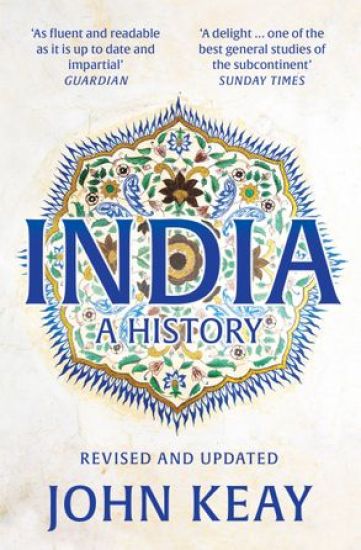
The most authoritative and highly regarded single-volume history of India â?? from ancient time to the modern day. Five millennia of the sub-continentâ??s social, economic, political and cultural history are interpreted by one of our finest writers on India and the Far East.
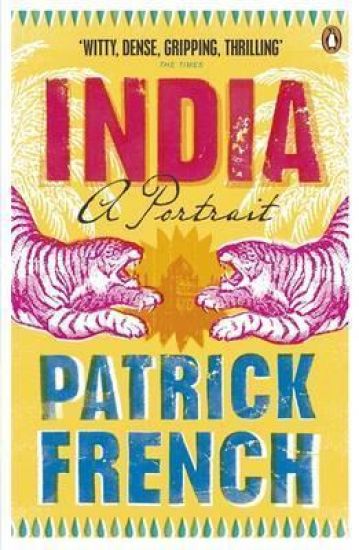
India

India

Patrick French

Penguin Books Ltd
2012
pokkari
Patrick French's India: A Portrait tells the story of how India emerged from a turbulent struggle for independence to become a vibrant democracy with one of the fastest-growing economies in the world. India is the biggest democracy on earth, a country of dynamic change, huge divisions and countless identities. Is there any way to discover the 'real' India? In this intimate biography of 1.2 billion people, Patrick French travels all over the country talking to everyone from political leaders to mafia dons, from chained quarry workers to self-made billionaire entrepreneurs, to tell the story of post-independence India as never before. 'Patrick French brings one of the globe's most dynamic nations springing to life ... he has an encyclopaedic knowledge of the country, sensitivity to its subtler nuances and a wealth of research' Sunday Times 'It's gripping ... If you're Indian, reading the book is like learning the history of your country in four days' New Indian Express 'Fizzing with wit, insight and infectious curiosity ... a thoroughly enjoyable romp through six momentous decades' Wall Street Journal Asia 'Wide-ranging, clear-sighted, warm-hearted and immensely readable ... The human tales that French finds are engrossing' Evening Standard 'A rich colouring of contemporary characters and events, many of them sharply observed at first hand. Crammed with elegant portraits' Economist Patrick French is the author of Younghusband: The Last Great Imperial Adventurer, which won the Somerset Maugham Award and the Royal Society of Literature W. H. Heinemann Prize, Liberty or Death: India's Journey to Independence and Division, which won the Sunday Times Young Writer of the Year Award, Tibet, Tibet: A Personal History of a Lost Land, The World Is What It Is: The Authorized Biography of V.S. Naipaul, which was shortlisted for the Samuel Johnson Prize and won the National Book Critics Circle Award and the Hawthornden Prize, and India: A Portrait.
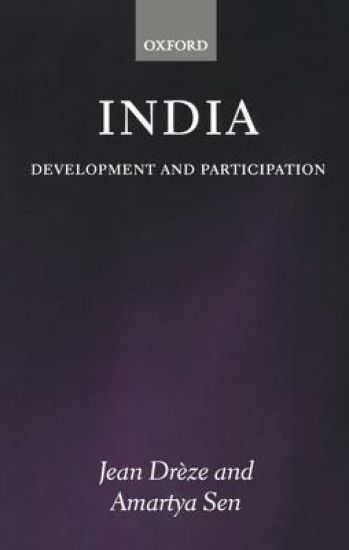
India

India

Jean Drèze; Amartya Sen

Clarendon Press
1999
nidottu
This book presents analysis of endemic deprivation in India and the role of public action in addressing the problem. The analysis is based on a broad view of economic development, focusing on human well-being and 'social opportunity' rather than the standard indicators of economic growth. India's success in reducing deprivation since Independence has been limited. Recent diagnoses of this failure of policy have concentrated on the counterproductive role of government regulation, and on the need for economic incentives to accelerate the economy. Professors Drèze and Sen argue that an assessment of India's failure to eliminate basic deprivations has to go beyond this limited focus, and to take note of the role played in that failure by inadequate public involvement in the provision of basic education, health care, social security, and related fields. Even the fostering of fast and participatory economic growth requires some basic social change, which is not addressed by liberalization and economic incentives. The authors also discuss the historical antecedents of these political and social neglects, including the distortion of policy priorities arising from inequalities of political power. Following on from this, the book considers the scope for public action to address these earlier biases and achieve a transformation of policy priorities. ` ... a fine account of India's achievements and failures ... written throughout in a fine style ... it will be a starting-point of subsequent discussions on social life in India.' Partha Dasgupta, Times Higher Education Supplement
India

India

Jean Drèze; Amartya Sen

Oxford University Press
2002
nidottu
This book explores the role of public action in eliminating deprivation and expanding human freedoms in India. The analysis is based on a broad and integrated view of development, which focuses on well-being and freedom rather than the standard indicators of economic growth.
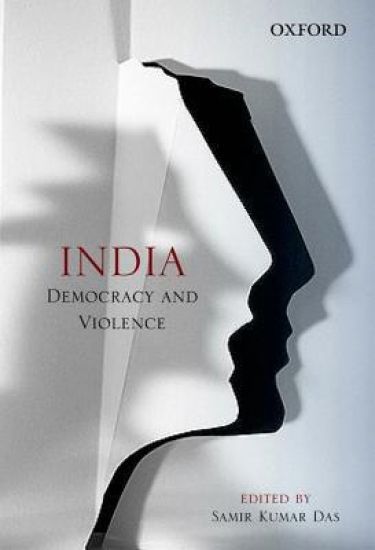
India

India

OUP India
2015
sidottu
Violence is usually located outside the democratic domain. Its recurrence is understood as a direct threat to democracy. Democracies are called upon to manage, tackle, or deal with it, not necessarily through democratic means. Today, democracy is sought to be exported across continents by waging war on countries that, according to the exporting countries of the West,are yet to become democratic. This book contests and demystifies the celebrationist understanding of democracy and argues that violence is embedded in democracy as much as democracy is embedded in violence. Their interconnected existence has only made democracy violent and violence one of the many ways of trying to make a democracy work. So, more of democracy does not necessarily mean less of violence and vice versa. Viewed in this light, this book examines the connection as organic and one of mutually spiralling nature. Democratic institutions and violence are thus implicated in an endless dialogue and confrontation. The alternative to democracy can only be a better democracy.
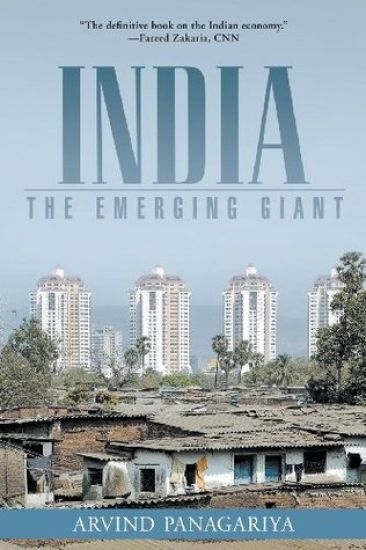
India

India

Panagariya

Oxford University Press Inc
2011
nidottu
India is not only the world's largest and fiercely independent democracy, but also an emerging economic giant. But to date there has been no comprehensive account of India's remarkable growth or the role policy has played in fueling this expansion. India: The Emerging Giant fills this gap, shedding light on one of the most successful experiments in economic development in modern history. Why did the early promise of the Indian economy not materialize and what led to its eventual turnaround? What policy initiatives have been undertaken in the last twenty years and how do they relate to the upward shift in the growth rate? What must be done to push the growth rate to double-digit levels? To answer these crucial questions, Arvind Panagariya offers a brilliant analysis of India's economy over the last fifty years--from the promising start in the 1950s, to the near debacle of the 1970s (when India came to be regarded as a "basket case"), to the phenomenal about face of the last two decades. The author illuminates the ways that government policies have promoted economic growth (or, in the case of Indira Ghandi's policies, economic stagnation), and offers insightful discussions of such key topics as poverty and inequality, tax reform, telecommunications (perhaps the single most important success story), agriculture and transportation, and the government's role in health, education, and sanitation. The dramatic change in the fortunes of 1.1 billion people has, not surprisingly, generated tremendous interest in the economy of India. Arvind Paragariya offers the first major account of how this has come about and what more India must do to sustain its rapid growth and alleviate poverty. It will be must reading for everyone interested in modern India, foreign affairs, or the world economy.
India

India

Dietmar Rothermund

Yale University Press
2009
pokkari
An authoritative analysis of the political, economic, and social developments behind India’s dramatic rise in global stature With growing economic might, new political influence, and changing social dynamics, India has emerged as a major world power in the twenty-first century. This book charts the important features of India’s development since its independence in 1947, assessing those forces that have contributed to the nation’s growth as well as those that have impeded it. Through the lens of India’s past, Dietmar Rothermund offers a new perspective on India today and a fascinating look into the nation’s future.The author explores the diverse roots of India’s economic robustness, from agriculture to the export boom. He looks closely at the country’s democratic system, nuclear decisions, and alliance with the U.S. against terror. In his review of social changes, Rothermund discusses the institution of caste, the rise of a new middle class, the persistence of poverty, the media and Bollywood, and the significance of the global diaspora of twenty million Indians. In sum, he offers an impressive profile of India, an Asian giant whose role in the world’s future will surely be unique and important.
India

India

Kamakshi Murti

Praeger Publishers Inc
2000
sidottu
Germans of various disciplines not only encouraged but actively framed a discourse that gendered India through voyeuristic descriptions of the male and female body. This study challenges the German's claim to an encounter with India projected on a spiritual plane of communion between kindred spirits and shows that such supposedly apolitical encounters are really strategies of domination. German participation in European Expansion can be perceived as collusion with the British imperialist administration inasmuch as it provided the latter with a justification for existing colonial rule and anticipated future colonial activity. Despite the optimism placed in the post of post-colonialism, the continued presence of European Orientalism can be felt in the late 20th century, hidden under the mantel of global capitalism.Although Germany did not colonize India territorially, Germans of various disciplines not only encouraged but actively framed a discourse that gendered India through voyeuristic descriptions of the male and female body. German orientalist experiences of Hindu India have typically been excluded from post-colonial debates concerning European expansion, but this study challenges the German's claim to an encounter with India projected on a spiritual plane of communion between kindred spirits and shows that such supposedly apolitical encounters are really strategies of domination. German participation can be perceived as collusion with the British imperialist administration inasmuch as it provided the latter with a justification for existing colonial rule and anticipated future colonial activity. Murti sheds light on the role that missionaries and women, two groups that have been ignored or glossed over until now, played in authorizing and strengthening the colonial discourse.The intertextual strategies adopted by the various partners in the colonialist dialog clearly show that German involvement in India was not a disinterested, academic venture. These writings also betray a bias against women that has not been regarded, until now, as a key issue in the literature discussing Orientalism. Missionaries often actively fostered the British colonial agenda, while women travelers, even those who traveled as a means of escaping patriarchal structures at home, invariably abetted the colonizer. Despite the optimism placed in the post of post-colonialism, Murti concludes that the continued presence of European Orientalism can be felt in the late 20th century, hidden under the mantel of global capitalism.
India

India

D. R. SarDesai

Routledge
2019
sidottu
This book deals with the sweep of traditional Indian history as well as with the post-independence events, judicially balancing narrative and analysis in the conceptual framework of postcolonial and postmodernist approaches, covering the process of change in India through the centuries.
India

India

Diana L Eck

Three Rivers Press
2013
pokkari
A spiritual history of the world's most religiously complex and diverse society, from one of Harvard's most respected scholars. India: A Sacred Geography is the culmination of more than a decade's work from the renowned Harvard scholar Diana L. Eck. The book explores the sacred places of India, taking the reader on an extraordinary trip through the beliefs and history of this rich and profound place, as well as providing a basic introduction to Hindu religious ideas and how those ideas influence our understanding of the modern sense of "India" as a nation.
India

India

Andrew Robinson

THAMES HUDSON LTD
2025
nidottu
‘Pithy, admirable ... a most refreshing resumé’ The Times Literary Supplement India has had many histories. To pilgrims from ancient China, India was the birthplace of the Buddha; to Alexander the Great it was a land of clever naked philosophers and indomitable, elephantine armies. At the height of the Mughal empire, India boasted nearly a quarter of the world economy, and even under colonial rule it was the jewel in the crown of the British Empire. Today it is the resurgent home to one sixth of the global population. Andrew Robinson incisively distils India’s many incarnations, from the remarkably advanced cities of the early Indus Valley to the world’s largest democracy. Anyone curious about its past, present or future will find this a fascinating introduction.
India

India

Audrey Truschke

PRINCETON UNIVERSITY PRESS
2025
sidottu
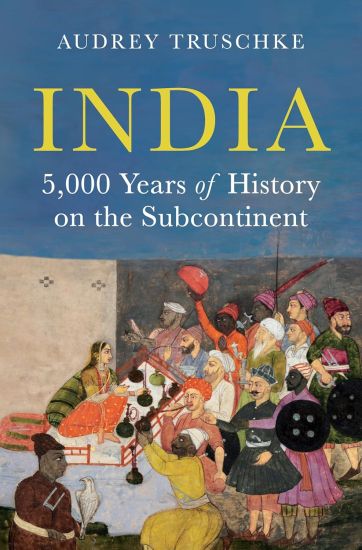
A dazzling new history of the Indian subcontinent and its diverse peoples in global context—from antiquity to todayMuch of world history is Indian history. Home today to one in four people, the subcontinent has long been densely populated and deeply connected to Asia, Africa, Europe, and the Americas through migration and trade. In this magisterial history, Audrey Truschke tells the fascinating story of the region historically known as India—which includes today’s India, Pakistan, Bangladesh, and parts of Afghanistan—and the people who have lived there.A sweeping account of five millennia, from the dawn of the Indus Valley Civilization to the twenty-first century, this engaging and richly textured narrative chronicles the most important political, social, religious, intellectual, and cultural events. And throughout, it describes how the region has been continuously reshaped by its astonishing diversity, religious and political innovations, and social stratification.Here, readers will learn about Hinduism, Buddhism, Jainism, Islam, and Sikhism; the Vedas and Mahabharata; Ashoka and the Mauryan Empire; the Silk Road; the Cholas; Indo-Persian rule; the Mughal Empire; European colonialism; national independence movements; the 1947 Partition of India; the recent rise of Hindu nationalism; the challenges of climate change; and much more. Emphasizing the diversity of human experiences on the subcontinent, the book presents a wide range of voices, including those of women, religious minorities, lower classes, and other marginalized groups.You cannot understand India today without appreciating its deeply contested history, which continues to drive current events and controversies. A comprehensive and innovative book, India is essential reading for anyone who is interested in the past, present, or future of the subcontinent.
India

India

Selig S. Harrison

Princeton University Press
2015
pokkari
Mr. Harrison warns that unless a new democratic lender arises when Nehru steps down, India will face Balkanization or authoritarian control based on army force. His disturbing book "is a study of enduring value, fully annotated and indexed and blessed by two of the finest maps in any recent work of scholarship." Originally published in 1960. The Princeton Legacy Library uses the latest print-on-demand technology to again make available previously out-of-print books from the distinguished backlist of Princeton University Press. These editions preserve the original texts of these important books while presenting them in durable paperback and hardcover editions. The goal of the Princeton Legacy Library is to vastly increase access to the rich scholarly heritage found in the thousands of books published by Princeton University Press since its founding in 1905.
India

India

Selig S. Harrison

Princeton University Press
2016
sidottu
Mr. Harrison warns that unless a new democratic lender arises when Nehru steps down, India will face Balkanization or authoritarian control based on army force. His disturbing book "is a study of enduring value, fully annotated and indexed and blessed by two of the finest maps in any recent work of scholarship." Originally published in 1960. The Princeton Legacy Library uses the latest print-on-demand technology to again make available previously out-of-print books from the distinguished backlist of Princeton University Press. These editions preserve the original texts of these important books while presenting them in durable paperback and hardcover editions. The goal of the Princeton Legacy Library is to vastly increase access to the rich scholarly heritage found in the thousands of books published by Princeton University Press since its founding in 1905.
India

India

Loti

Kegan Paul
2002
sidottu
First published in 2002. This book on India is by Pierre Loti, perhaps the world's most prolific, romantic and exotic travel writer, takes in the Rock Temple, the Buried City, Home of the Maharajah of Travancore, the land of the great palms in Tanjore, Bernares and the towards Hyderabad, the land he calls famished India.