Kirjojen hintavertailu. Mukana 11 717 486 kirjaa ja 12 kauppaa.

Kirjahaku

Etsi kirjoja tekijän nimen, kirjan nimen tai ISBN:n perusteella.

75 tulosta hakusanalla Indrajit Banerjee; Indraneel Banerjee

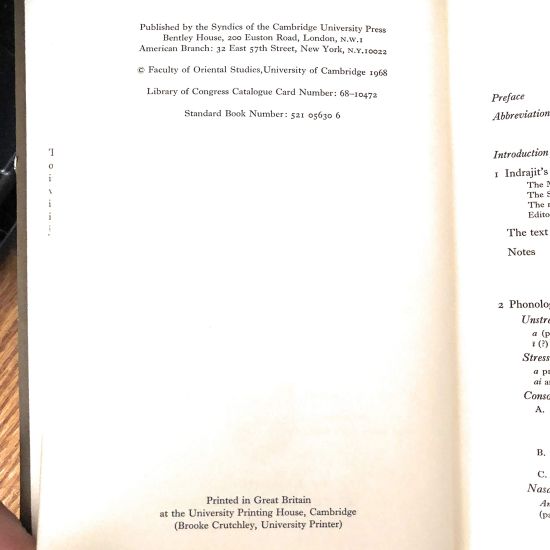
The Language of Indrajit of Orcha

The Language of Indrajit of Orcha

R. S. McGregor

Cambridge University Press
2007
pokkari
For centuries, until the consolidation of modern standard Hindi after 1900, the Hindi dialect known as Braj Bhasa enjoyed great prestige as the vehicle of the Krsna cult literature of northern India, as well as for the brilliance of its secular literature. Most of this material was in verse, although since the beginning of the last century we have had knowledge of the existence of texts in Sanskritized Braj Bhasa prose, chiefly sectarian chronicles and commentaries, from a relatively early date. In this, the earliest thorough analysis of a Braj Bhasa text, Dr McGregor presents one of the oldest known Braj Bhasa prose texts: a Braj commentary on the Sanskrit Nitisataka of Bhartrhari, originally composed about 1600. His detailed examination of the morphology, phonology and syntax of its language casts light on the types of language that underlie the Braj Bhasa used in verse literature, and provide a comparative basis for further studies of the prose produced in Braj and in other Hindi dialects before the nineteenth century.
What's My Name? Indrajit

What's My Name? Indrajit

Tiina Walsh

Independently Published
2018
nidottu
A personalised storybook for girls called INDRAJIT. The story is based on the letters of the child's own name. All books are different from one another.The girl wakes up but can't remember her name. Magic Mouse knows how to solve the problem. They go on a wonderful adventure in the Magic Bus Translated and adapted by the author from the top-selling Finnish language children's namebook series "Tytt /Poika, joka unohti nimens ". The beautiful hand-drawn pictures will delight both the young and the young-at-heart Looking for a namebook "What's my name?" but couldn't find a book for the name you are looking for? Please don't hesitate to contact me with your name request -Tiina WalshAuthorfb.me/whatsmynamestorybooks for more details about the storybooks
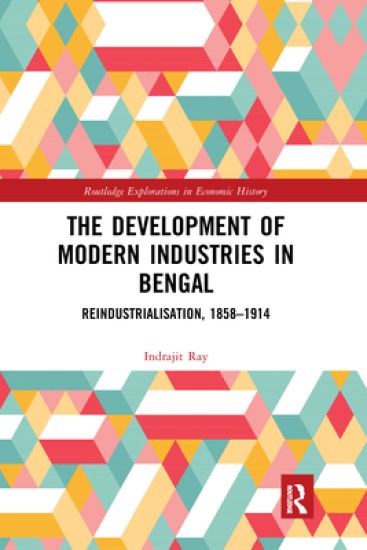
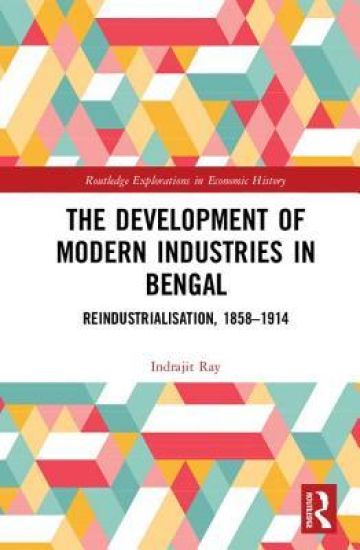
The Development of Modern Industries in Bengal
Bengal’s traditional industries, once celebrated worldwide, largely decayed under the backwash effects of the British Industrial Revolution in the first half of the nineteenth century. Although colonial ambivalence is often cited as an explanation, this study also shows that a series of new industries emerged during this period. The book reappraises the thesis of India’s deindustrialisation and discusses the development status of the traditional industries in the early nineteenth century, examines their technology, employment opportunities and marketing and, finally, analyses the underlying reasons for their decay. It offers a study of how traditional industries evolved into modern enterprises in a British colony, and contributes to the broader discussion on the global history of industrialisation.This book will be of interest to scholars of Indian economic history as well as those who seek to understand the widespread effects of industrialisation, especially in a colonial context.
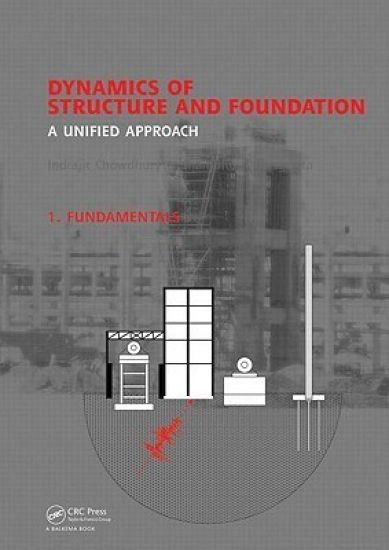
Dynamics of Structure and Foundation - A Unified Approach

Dynamics of Structure and Foundation - A Unified Approach

Indrajit Chowdhury; Shambhu P. Dasgupta

CRC Press
2008
sidottu
Designed to provide engineers with quick access to current and practical information on the dynamics of structure and foundation, this unique work, consisting of two separately available volumes, serves as a complete reference, especially for those involved with earthquake or dynamic analysis, or the design of machine foundations in the oil, gas, and energy sector. This first volume deals with theories and formulations, covering the full range of topics involved and dynamics of structure and foundation. It specifically focuses on a unified approach in dealing with dynamic soul-structure interaction and geotechnical considerations for dynamic soil-structure interaction. The authors present new insights and theories, such as the computation of Rayleigh damping for structures with a large number of degrees of freedom, and the dynamic analysis of Hammer foundations, considering non-classical soil damping. In a clear style, this well-illustrated column addresses detailed topics, grouped in the following major themes: Elasticity and numerical methods in engineeringLumped parameter vibrationSoil-structure systems under static loadStructural and soil dynamicsThis reference and design guide is intended for academics and professionals in civil and structural engineering involved with earthquake or dynamic analysis or the design of machine foundations. In combination with Volume 2: Applications (ISBN 9780415492232), it could be used as course material for advanced university and professional education in structural dynamics, soil dynamics, analysis and design of machined foundations, and earthquake engineering.
Dynamics of Structure and Foundation - A Unified Approach

Dynamics of Structure and Foundation - A Unified Approach

Indrajit Chowdhury; Shambhu P. Dasgupta

CRC Press
2008
sidottu
Designed to provide engineers with quick access to current and practical information on the dynamics of structure and foundation, this 2-volume reference work is intended for engineers involved with earthquake or dynamic analysis, or the design of machine foundations in the oil, gas, and energy sector. Whereas Volume 1 (ISBN 9780415471459) deals with theory and fundamentals, this volume is concentrated on three major application areas: dynamic soil-structure interaction (DSSI), the analysis and design of machine foundations, and on the analytical and design concepts for earthquake engineering. It presents innovative, easy-to-apply and practical solutions to various problems and difficulties a design engineer will encounter. It allows quick access to targeted information; it includes a wealth of case studies and also examines geotechnical considerations with regard to dynamic soil-structure interaction.
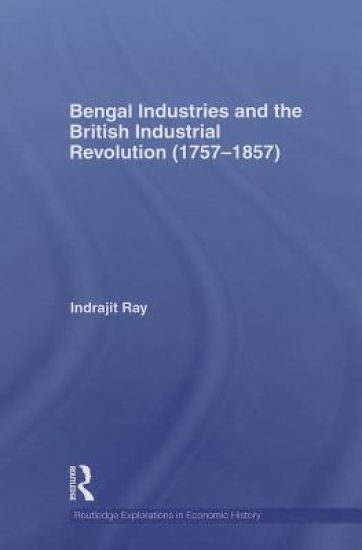
Bengal Industries and the British Industrial Revolution (1757-1857)
This book seeks to enlighten two grey areas of industrial historiography. Although Bengal industries were globally dominant on the eve of the industrial revolution, no detailed literature is available about their later course of development. A series of questions are involved in it. Did those industries decline during the spells of British industrial revolution? If yes, what were their reasons? If not, the general curiosity is: On which merits could those industries survive against the odds of the technological revolution? A thorough discussion on these issues also clears up another area of dispute relating to the occurrence of deindustrialization in Bengal, and the validity of two competing hypotheses on it, viz. i) the mainstream hypothesis of market failures, and ii) the neo-marxian hypothesis of imperialistic state interventions.
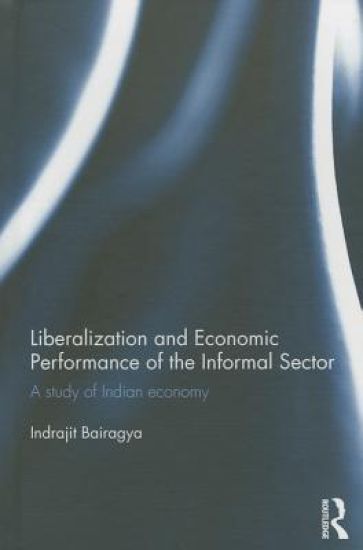
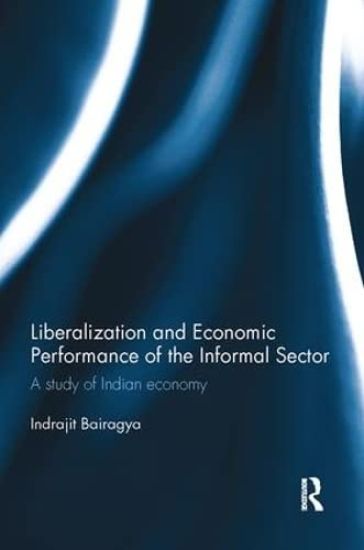
Liberalization and Economic Performance of the Informal Sector
Impact of liberalization on informality has been a subject of intense debate for many years and the major issue that has come up is whether liberalization helps to grow informal sector and informality in the economy or it is an obstruction for informal sector’s growth. Thus, in the light of the recent liberalization measure, this book sets to examine general presumptions of the development of informal sector in the context of the Indian economy. The book begins with a broad framework for analysis of output contribution and growth of the informal sector. Liberalization is measured by openness indices and inter-sectoral linkages. Impact of liberalization on growth contributions of informal sector is captured by openness indices (i.e. degree of openness to trade and principal component scores), technical efficiency (measured by Data Envelope Analysis and estimated by Tobit Censored Regression model) and components of productivity (computed by Malmquist total factor productivity index) of the informal enterprises by inter-sectoral linkages. The linkages are modeled theoretically in a neo-classical growth theory and empirically measured by sub-contracting arrangements between formal and informal enterprises. In addition, the book also provides implications on promotion of informal sector from the viewpoint of employment generation. The description and analyses of the book will help with policy implications and enlighten the readers on the development of informal sector.
The Decline of British Industrial Hegemony

The Decline of British Industrial Hegemony

Indrajit Ray

TAYLOR FRANCIS LTD
2022
sidottu
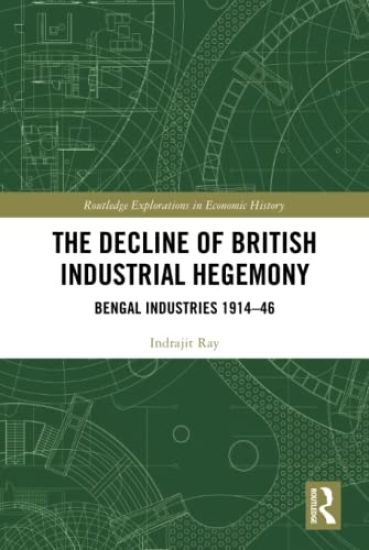
Through two World Wars and the Great Depression, this book explores the turbulent history of colonial Indian industry in the period immediately prior to independence. Focusing on five major industries in Bengal - coal mining, iron-smelting, jute manufacturing, paper making and tea plantation – the book looks at the impact of the war efforts on production, employment and capital: some industries experienced rapid growth due to additional investment, others suffered due to the dislocation of markets. Moreover, by drawing lessons from the war economy (especially the dearth of various essential commodities including war materials), the colonial government took up various measures in the inter-war period to promote India’s domestic industries for the first time. Additionally, the book also argues that many of the expatriate firms in India became financially weak because of the Depression which paved the way for the ‘Indianisation’ of corporate houses. These elements were significant factors in the decline of British industrial hegemony in India and aided the de-colonisation process which followed. This book will be of interest to scholars of Indian economic history as well as those with wider interests in decolonisation, industrial history and the first half of the twentieth century.
The Decline of British Industrial Hegemony

The Decline of British Industrial Hegemony

Indrajit Ray

TAYLOR FRANCIS LTD
2024
nidottu
Through two World Wars and the Great Depression, this book explores the turbulent history of colonial Indian industry in the period immediately prior to independence. Focusing on five major industries in Bengal - coal mining, iron-smelting, jute manufacturing, paper making and tea plantation – the book looks at the impact of the war efforts on production, employment and capital: some industries experienced rapid growth due to additional investment, others suffered due to the dislocation of markets. Moreover, by drawing lessons from the war economy (especially the dearth of various essential commodities including war materials), the colonial government took up various measures in the inter-war period to promote India’s domestic industries for the first time. Additionally, the book also argues that many of the expatriate firms in India became financially weak because of the Depression which paved the way for the ‘Indianisation’ of corporate houses. These elements were significant factors in the decline of British industrial hegemony in India and aided the de-colonisation process which followed. This book will be of interest to scholars of Indian economic history as well as those with wider interests in decolonisation, industrial history and the first half of the twentieth century.
Corporate Criminal Liability in Environmental Jurisprudence

Corporate Criminal Liability in Environmental Jurisprudence

Indrajit Dube; Mia Mahmudur Rahim

TAYLOR FRANCIS LTD
2025
sidottu
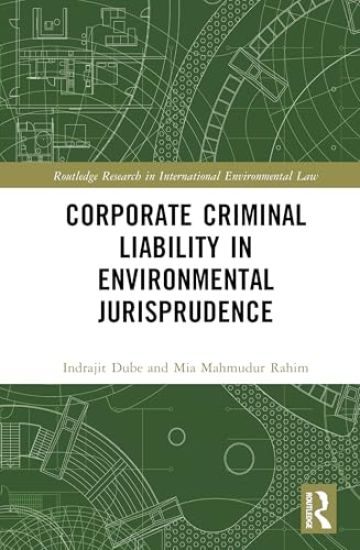
Environmental jurisprudence is a dynamic field that integrates insights from various disciplines, including basic sciences, earth science, economics, and law. At its core, this discipline emphasizes the importance of enforcing rights, as environmental pollution poses significant threats to individuals and society as a whole. The repercussions of pollution are not confined to the immediate vicinity; they can reverberate across vast regions and impact countless future generations. Addressing pollution as a wrong or crime demands a nuanced understanding of the law, making the study of environmental jurisprudence essential.This book explores corporate polluter liability within the framework of environmental jurisprudence. While protective measures for the environment have been embedded in various statutes since the early 20th century, the notion of environmental jurisprudence has only recently come to the forefront of legal discourse. This field is crucial for safeguarding the natural and legal rights of individuals, communities, and the state. With a comprehensive approach that encompasses both national and international dimensions, this book critically engages with the foundational concepts of environmental jurisprudence, exposing the rampant environmental violations perpetrated by corporations and outlining how these entities can be held accountable within regulatory frameworks. Furthermore, it provides a thorough analysis of essential international instruments aimed at combatting corporate-induced environmental degradation, offering recommendations to elevate corporate criminal liability within the realm of environmental jurisprudence scholarship.Highlighting the urgent need for accountability but also inspiring action toward a sustainable future, this book will interest legal scholars researching on criminal liability and environmental law.
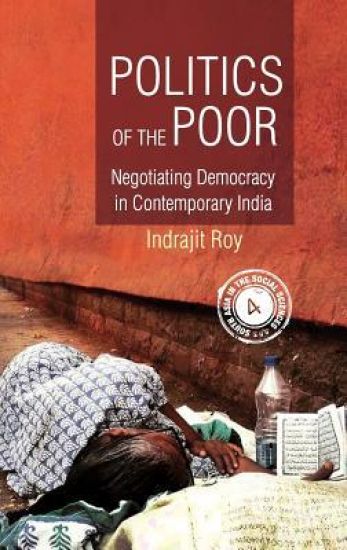
Politics of the Poor

Politics of the Poor

Indrajit Roy

Cambridge University Press
2018
sidottu
This book challenges the ongoing scholarly debates on poor people's negotiations with democracy. It demonstrates the varied ways in which the poor engage with their elected representatives, political mediators and dominant classes in order to advance their claims. Roy explains the variations by directing attention to the dynamic interaction between the opportunity structures available to the poor and the social relations of power in which they are embedded. He analyses these intersections as 'political spaces' which both enable and constrain popular practices. Through examination of the 'political spaces' available to the poor in four different localities, Roy outlines a new analytic framework to understanding poor people's politics. Based on these observations, the book makes a strong case for an approach to democracy that appreciates people's ambivalences towards democracy. Roy urges researchers of democracy to step beyond either enthusiastic narratives - the inevitability of democracy or apocalyptic accounts of democracy's impending death.
Liberalization and Economic Performance of the Informal Sector
Impact of liberalization on informality has been a subject of intense debate for many years and the major issue that has come up is whether liberalization helps to grow informal sector and informality in the economy or it is an obstruction for informal sector’s growth. Thus, in the light of the recent liberalization measure, this book sets to examine general presumptions of the development of informal sector in the context of the Indian economy. The book begins with a broad framework for analysis of output contribution and growth of the informal sector. Liberalization is measured by openness indices and inter-sectoral linkages. Impact of liberalization on growth contributions of informal sector is captured by openness indices (i.e. degree of openness to trade and principal component scores), technical efficiency (measured by Data Envelope Analysis and estimated by Tobit Censored Regression model) and components of productivity (computed by Malmquist total factor productivity index) of the informal enterprises by inter-sectoral linkages. The linkages are modeled theoretically in a neo-classical growth theory and empirically measured by sub-contracting arrangements between formal and informal enterprises. In addition, the book also provides implications on promotion of informal sector from the viewpoint of employment generation. The description and analyses of the book will help with policy implications and enlighten the readers on the development of informal sector.
The Development of Modern Industries in Bengal
Bengal’s traditional industries, once celebrated worldwide, largely decayed under the backwash effects of the British Industrial Revolution in the first half of the nineteenth century. Although colonial ambivalence is often cited as an explanation, this study also shows that a series of new industries emerged during this period. The book reappraises the thesis of India’s deindustrialisation and discusses the development status of the traditional industries in the early nineteenth century, examines their technology, employment opportunities and marketing and, finally, analyses the underlying reasons for their decay. It offers a study of how traditional industries evolved into modern enterprises in a British colony, and contributes to the broader discussion on the global history of industrialisation.This book will be of interest to scholars of Indian economic history as well as those who seek to understand the widespread effects of industrialisation, especially in a colonial context.
Bengal Industries and the British Industrial Revolution (1757-1857)
This book seeks to enlighten two grey areas of industrial historiography. Although Bengal industries were globally dominant on the eve of the industrial revolution, no detailed literature is available about their later course of development. A series of questions are involved in it. Did those industries decline during the spells of British industrial revolution? If yes, what were their reasons? If not, the general curiosity is: On which merits could those industries survive against the odds of the technological revolution? A thorough discussion on these issues also clears up another area of dispute relating to the occurrence of deindustrialization in Bengal, and the validity of two competing hypotheses on it, viz. i) the mainstream hypothesis of market failures, and ii) the neo-marxian hypothesis of imperialistic state interventions.