
Kirjahaku
Etsi kirjoja tekijän nimen, kirjan nimen tai ISBN:n perusteella.
421 tulosta hakusanalla Inka Doufrain




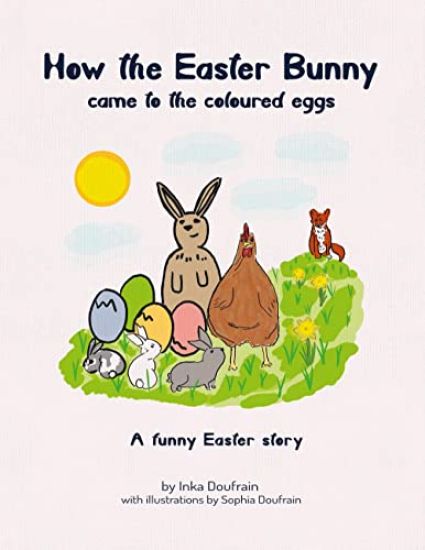
How the Easter bunny came to the coloured eggs
Inka Doufrain; Sophia Doufrain
BoD - Books on Demand
2022
sidottu

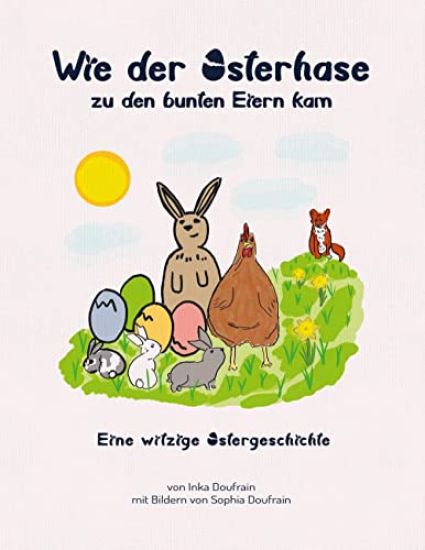
Wie der Osterhase zu den bunten Eiern kam
Inka Doufrain; Sophia Doufrain
BoD - Books on Demand
2022
sidottu

Inka
Yam Young Authors' Masterpieces Publishing
2013
nidottu

Les om den fascinerende Inka-kulturen og Inkarikets vekst og fall! Inkariket var et av verdens største riker på 1500-tallet. Inkaene bygde vakre byer og et stort nettverk av veier som sikret god kommunikasjon i det vidstrakte området. Inkariket var et pengeløst og velfungerende samfunn, der alle skulle bidra og få etter behov. Inkaene kalte seg SOLENS BARN og stammet ifølge mytologien fra selveste solguden. I dag finnes ikke Inkariket lenger, og de fleste forbinder inkaenes mektige land med den forlatte ruinbyen Machu Picchu, høyt oppe i Andesfjellene. I historietimene lærer vi lite om Inkariket og kulturen som blomstret i Sør-Amerika før europeerne plyndret og invaderte kontinentet på 1500-tallet. Torunn Berge forteller i tekst og bilder om folket og kulturen, storhetstiden og spanjolenes inntog i 1532. Berge har reist på kryss og tvers av dette kontinentet på flere lange reiser.«Det gis ut få historiebøker av denne typen for målgruppen. Den er grundig og med tillegg om blant annet kongerekken, tidstavle, ordforklaring og litteratur- og kilderegister. [...] Anbefales.» IBBY Norge, 2023PASSER FORungdom og voksne lesere – og for alle som likte forgjengeren MAYA – urfolket i Mellom-Amerika. Fra 13—16 år og oppover.

Before the Spanish conquest in the sixteenth century A.D., the Inka Empire stretched along the Pacific side of South America, all the way from Ecuador to northwest Argentina. Though today many Inka researchers focus on the imperial capital of Cuzco, Peru, and surrounding areas, ruins of Inka settlements abound throughout the vast territory of the former empire and offer many clues about how the empire was organized, managed, and defended. These outlying settlements, as well as those in the Cuzco area, form the basis for John Hyslop's detailed study Inka Settlement Planning.Using extensive aerial photography and detailed site maps, Hyslop studies the design of several dozen settlements spread throughout the empire. In addition to describing their architecture and physical infrastructure, he gives special emphasis to the symbolic aspects of each site's design. Hyslop speculates that the settlement plans incorporate much iconography expressive of Inka ideas about the state, the cosmos, and relationships to non-Inka peoples-iconography perhaps only partially related to the activities that took place within the sites. And he argues that Inka planning concepts applied not only to buildings but also to natural features (stone outcrops, water sources, and horizons) and specialized landscaping (terracing).Of interest to a wide readership in archaeology, architecture, urbanization, empire building, and Andean travel, Inka Settlement Planning charts one of Native America's greatest achievements.

Inka storage systems financed the largest prehistoric New World empire, the Inka state, which extended almost three thousand miles along the west coast of South America and into the Andean highlands. In this volume, prominent anthropologists and archaeologists explore for the first time how Inka storage was integrated into the Inka administrative system, and how Inka authorities consolidated their power by controlling access to concentrated resources.The massive wealth accumulated in Inka storehouses was legendary in sixteenth-century accounts of the Spanish invasion of the Andes. Archaeological studies reported here reveal how and why circular and rectangular Inka structures, known as qollqa, were built at high elevations where climatic conditions protected and preserved the contents.The Inkas tailored the administration of their vast economy - which was without currency - to the resources of each region and political sophistication of the local population. They filled storehouses with agricultural products, textiles and other manufactured goods, and oro from state-owned mines, through an elaborate system of taxation based on corvée labor. As organization and deployment of economic surpluses became more efficient, Inka rulers were able to tighten their control.This major contribution to Andean studies presents research from several regions and from major Inka storage archaelogical sites - Huanuco Pampa, Pumpu, Hatun Xauxa, Valle Calchaqui and Huamachuco. The discussions range from theoretical considerations of Inka political economy to excavation and analysis of individual storage structures. Inka Storage Systems is unique - focusing on storage and emphasizing archaeological data complemented by ethnohistorical interpretations.

In Inka Bodies and the Body of Christ Carolyn Dean investigates the multiple meanings of the Roman Catholic feast of Corpus Christi as it was performed in the Andean city of Cuzco after the Spanish conquest. By concentrating on the era’s paintings and its historical archives, Dean explores how the festival celebrated the victory of the Christian God over sin and death, the triumph of Christian orthodoxy over the imperial Inka patron (the Sun), and Spain’s conquest of Peruvian society. As Dean clearly illustrates, the central rite of the festival-the taking of the Eucharist-symbolized both the acceptance of Christ and the power of the colonizers over the colonized. The most remarkable of Andean celebrants were those who appeared costumed as the vanquished Inka kings of Peru’s pagan past. Despite the subjugation of the indigenous population, Dean shows how these and other Andean nobles used the occasion of Corpus Christi as an opportunity to construct new identities through tinkuy, a native term used to describe the conjoining of opposites. By mediating the chasms between the Andean region and Europe, pagans and Christians, and the past and the present, these Andean elites negotiated a new sense of themselves. Dean moves beyond the colonial period to examine how these hybrid forms of Inka identity are still evident in the festive life of modern Cuzco. Inka Bodies and the Body of Christ offers the first in-depth analysis of the culture and paintings of colonial Cuzco. This volume will be welcomed by historians of Peruvian culture, art, and politics. It will also interest those engaged in performance studies, religion, and postcolonial and Latin American studies.
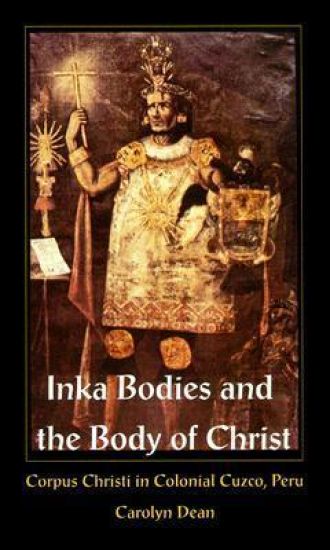
In Inka Bodies and the Body of Christ Carolyn Dean investigates the multiple meanings of the Roman Catholic feast of Corpus Christi as it was performed in the Andean city of Cuzco after the Spanish conquest. By concentrating on the era’s paintings and its historical archives, Dean explores how the festival celebrated the victory of the Christian God over sin and death, the triumph of Christian orthodoxy over the imperial Inka patron (the Sun), and Spain’s conquest of Peruvian society. As Dean clearly illustrates, the central rite of the festival-the taking of the Eucharist-symbolized both the acceptance of Christ and the power of the colonizers over the colonized. The most remarkable of Andean celebrants were those who appeared costumed as the vanquished Inka kings of Peru’s pagan past. Despite the subjugation of the indigenous population, Dean shows how these and other Andean nobles used the occasion of Corpus Christi as an opportunity to construct new identities through tinkuy, a native term used to describe the conjoining of opposites. By mediating the chasms between the Andean region and Europe, pagans and Christians, and the past and the present, these Andean elites negotiated a new sense of themselves. Dean moves beyond the colonial period to examine how these hybrid forms of Inka identity are still evident in the festive life of modern Cuzco. Inka Bodies and the Body of Christ offers the first in-depth analysis of the culture and paintings of colonial Cuzco. This volume will be welcomed by historians of Peruvian culture, art, and politics. It will also interest those engaged in performance studies, religion, and postcolonial and Latin American studies.