
Kirjahaku
Etsi kirjoja tekijän nimen, kirjan nimen tai ISBN:n perusteella.
73 tulosta hakusanalla Irad Ben Isaak

Since the start of modern computing, the studies of living organisms have inspired the progress in developing computers and intelligent machines. In particular, the methods of search and foraging are the benchmark problems for robotics and multi-agent systems. The highly developed theory of search and screening involves optimal search plans that are obtained by standard optimization techniques while the foraging theory addresses search plans that mimic the behavior of living foragers.Search and Foraging: Individual Motion and Swarm Dynamics examines how to program artificial search agents so that they demonstrate the same behavior as predicted by the foraging theory for living organisms. For cybernetics, this approach yields techniques that enable the best online search planning in varying environments. For biology, it allows reasonable insights regarding the internal activity of living organisms performing foraging tasks.The book discusses foraging theory as well as search and screening theory in the same mathematical and algorithmic framework. It presents an overview of the main ideas and methods of foraging and search theories, making the concepts of one theory accessible to specialists of the other. The book covers Brownian walks and Lévy flight models of individual foraging and corresponding diffusion models and algorithms of search and foraging in random environments both by single and multiple agents. It also describes the active Brownian motion models for swarm dynamics with corresponding Fokker–Planck equations. Numerical examples and laboratory verifications illustrate the application of both theories.

Irad and Adah, a Tale of the Flood. Poems. Specimens of a New Translation of the Psalms. Second Edition.
Thomas Dale
British Library, Historical Print Editions
2011
pokkari
For the first time, this volume by two leading historians offers a comprehensive study of drawing lots as a central institution of ancient Greek society. Drawing lots expressed an egalitarian mindset that guided selection, procedure, and distribution by lot and was eventually introduced for polis governance, a Greek innovation that appears to be of increasing relevance today. The authors explore the egalitarian, "horizonal," mindset expressed in using the lot instead of a top-down vision of authority and sovereignty. Drawing lots presupposed equality among participants deserving equal "portions" and was used for distributing land, inheritance, booty, sacrificial meat, selecting individuals, setting turns, mixing and reorganizing groups, and divining the will of the gods. Lot-oracles were used for divination; otherwise, the gods guarded the justice of the procedure but only rarely determined the outcome. It was a self-evident method broadly and ubiquitously applied. Drawing lots would crystallize community boundaries and emphasize its sovereignty. The book further investigates the transposition of the drawing of lots to the governance of the polis. The implied egalitarianism of the lot often conflicted with top-down perceptions of society and the values of inequality, status, and merit. Drawing lots was introduced into oligarchies and democracies at an uneven pace and scale. Its wide use in the democracy of classical Athens was an exceptional case, eye-catching both in antiquity and today. The book concludes with a discussion about the meaning of the Greek examples for drawing lots today and the increasing interest in using random selection in politics as a possibility for modern democracies around the world. The appendix surveys the Greek vocabulary of lottery practices.
Greek civilization and identity crystallized not when Greeks were close together but when they came to be far apart. It emerged during the Archaic period when Greeks founded coastal city states and trading stations in ever-widening horizons from the Ukraine to Spain. No center directed their diffusion: mother cities were numerous and the new settlements ("colonies") would often engender more settlements. The "Greek center" was at sea; it was formed through back-ripple effects of cultural convergence, following the physical divergence of independent settlements. "The shores of Greece are like hems stitched onto the lands of Barbarian peoples" (Cicero). Overall, and regardless of distance, settlement practices became Greek in the making and Greek communities far more resembled each other than any of their particular neighbors like the Etruscans, Iberians, Scythians, or Libyans. The contrast between "center and periphery" hardly mattered (all was peri-, "around"), nor was a bi-polar contrast with Barbarians of much significance. Should we admire the Greeks for having created their civilization in spite of the enormous distances and discontinuous territories separating their independent communities? Or did the salient aspects of their civilization form and crystallize because of its architecture as a de-centralized network? This book claims that the answer lies in network attributes shaping a "Small Greek World," where separation is measured by degrees of contact rather than by physical dimensions.
Greek civilization and identity crystallized not when Greeks were close together but when they came to be far apart. It emerged during the Archaic period when Greeks founded coastal city states and trading stations in ever-widening horizons from the Ukraine to Spain. No center directed their diffusion: mother cities were numerous and the new settlements ("colonies") would often engender more settlements. The "Greek center" was at sea; it was formed through back-ripple effects of cultural convergence, following the physical divergence of independent settlements. "The shores of Greece are like hems stitched onto the lands of Barbarian peoples" (Cicero). Overall, and regardless of distance, settlement practices became Greek in the making and Greek communities far more resembled each other than any of their particular neighbors like the Etruscans, Iberians, Scythians, or Libyans. The contrast between "center and periphery" hardly mattered (all was peri-, "around"), nor was a bi-polar contrast with Barbarians of much significance. Should we admire the Greeks for having created their civilization in spite of the enormous distances and discontinuous territories separating their independent communities? Or did the salient aspects of their civilization form and crystallize because of its architecture as a de-centralized network? This book claims that the answer lies in network attributes shaping a "Small Greek World," where separation is measured by degrees of contact rather than by physical dimensions.
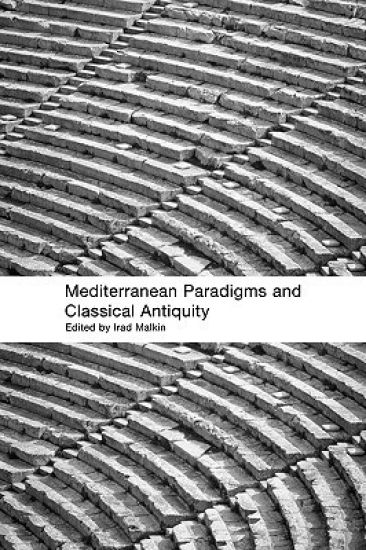
In this book, prominent historians apply Mediterranean paradigms to Classical Mediterranean Antiquty (Greece and Rome), allowing for a new approach to the ancient world and enhancing antiquity's relevance to the understanding of other historical periods as well as our contemporary world.This book was previously published as a special issue of the journal Mediterranean Historical Review.
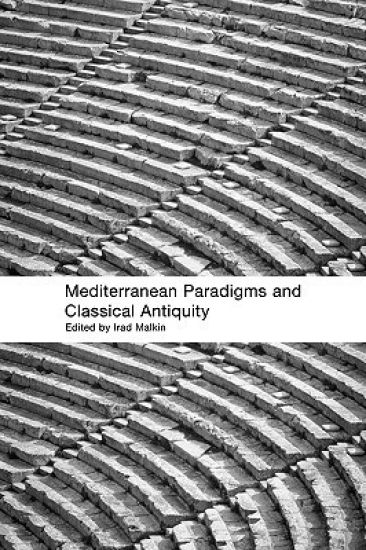
In this book, prominent historians apply Mediterranean paradigms to Classical Mediterranean Antiquty (Greece and Rome), allowing for a new approach to the ancient world and enhancing antiquity's relevance to the understanding of other historical periods as well as our contemporary world.This book was previously published as a special issue of the journal Mediterranean Historical Review.
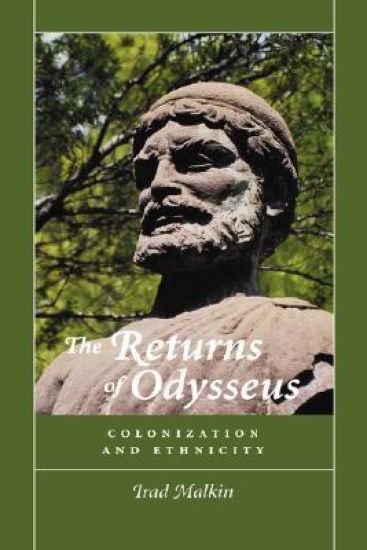
This remarkably rich and multifaceted study of early Greek exploration makes an original contribution to current discussions of the encounters between Greeks and non-Greeks. Focusing in particular on myths about Odysseus and other heroes who visited foreign lands on their mythical voyages homeward after the Trojan War, Irad Malkin shows how these stories functioned to mediate encounters and conceptualize ethnicity and identity during the Archaic and Classical periods. Synthesizing a wide range of archaeological, mythological, and literary sources, this exceptionally learned book strengthens our understanding of early Greek exploration and city-founding along the coasts of the Western Mediterranean, reconceptualizes the role of myth in ancient societies, and revitalizes our understanding of ethnicity in antiquity. Malkin shows how the figure of Odysseus became a proto-colonial hero whose influence transcended the Greek-speaking world. The return-myths constituted a generative mythology, giving rise to oral poems, stories, iconographic imagery, rituals, historiographical interpretation, and the articulation of ethnic identities. Reassessing the role of Homer and alternative return-myths, the book argues for the active historical function of myth and collective representations and traces their changing roles through a spectrum of colonial perceptions--from the proto-colonial, through justifications of expansion and annexation, and up to decolonization.
This book discusses Greek attitudes to settlement and territory as articulated through myths and cults. The emphasis is less on the poetic, timeless qualities of the myths, than on their historical function in the archaic and Classical periods, covering the spectrum from explicit charter myths legitimating conquest, displacement and settlement, to the ‘precedent-setting’ and even aetiological myths, rendering new landscapes ‘Greek’. This spectrum is broadest in the world of Spartan colonisation - the Spartan Mediterranean - where the greater challenges to territorial possession and Sparta’s acute self-awareness of her relative national youthfulness elicited explicit responses in the form of charter myths. The concept of a Spartan Mediterranean, in contrast to the image of a land-locked Sparta, is a major contribution of this book.

Opposing a long-standing orthodoxy of the Western philosophical tradition running from ancient Greek thought until the late nineteenth century, Frege argued that psychological laws of thought—those that explicate how we in fact think—must be distinguished from logical laws of thought—those that formulate and impose rational requirements on thinking. Logic does not describe how we actually think, but only how we should. Yet by thus sundering the logical from the psychological, Frege was unable to explain certain fundamental logical truths, most notably the psychological version of the law of non-contradiction—that one cannot think a thought and its negation simultaneously.Irad Kimhi’s Thinking and Being marks a radical break with Frege’s legacy in analytic philosophy, exposing the flaws of his approach and outlining a novel conception of judgment as a two-way capacity. In closing the gap that Frege opened, Kimhi shows that the two principles of non-contradiction—the ontological principle and the psychological principle—are in fact aspects of the very same capacity, differently manifested in thinking and being.As his argument progresses, Kimhi draws on the insights of historical figures such as Aristotle, Kant, and Wittgenstein to develop highly original accounts of topics that are of central importance to logic and philosophy more generally. Self-consciousness, language, and logic are revealed to be but different sides of the same reality. Ultimately, Kimhi’s work elucidates the essential sameness of thinking and being that has exercised Western philosophy since its inception.
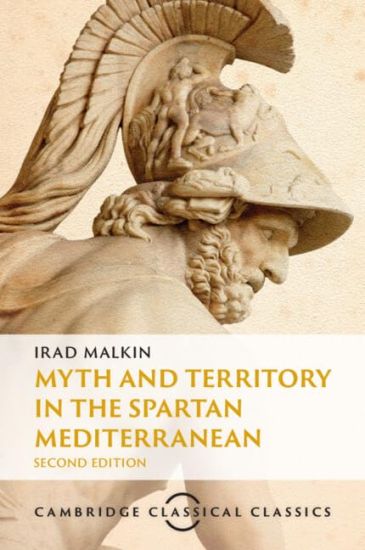
Myth and Territory in the Spartan Mediterranean
Irad Malkin; Nicholas Purcell
Cambridge University Press
2024
pokkari
Greek attitudes to settlement and territory were often articulated through myths and cults. This book emphasizes less the poetic, timeless qualities of the myths than their historical function in the archaic and Classical periods, covering the spectrum from explicit charter myths legitimating conquest, displacement, and settlement to the 'precedent-setting' and even aetiological myths, rendering new landscapes 'Greek'. This spectrum is broadest in the world of Spartan colonization – the Spartan Mediterranean – where the greater challenges to territorial possession and Sparta's acute self-awareness of its relative national youthfulness elicited explicit responses in the form of charter myths. The concept of a Spartan Mediterranean, in contrast to the image of a land-locked Sparta, is a major contribution of this book. This revised edition contains a substantial new Introduction which engages with critical and scholarly developments on Sparta since the original publication.
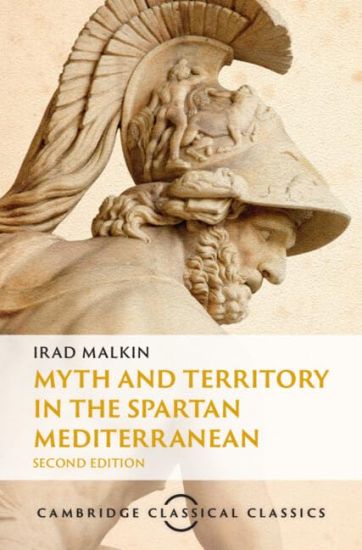
Myth and Territory in the Spartan Mediterranean
Irad Malkin; Nicholas Purcell
Cambridge University Press
2024
sidottu
Greek attitudes to settlement and territory were often articulated through myths and cults. This book emphasizes less the poetic, timeless qualities of the myths than their historical function in the archaic and Classical periods, covering the spectrum from explicit charter myths legitimating conquest, displacement, and settlement to the 'precedent-setting' and even aetiological myths, rendering new landscapes 'Greek'. This spectrum is broadest in the world of Spartan colonization – the Spartan Mediterranean – where the greater challenges to territorial possession and Sparta's acute self-awareness of its relative national youthfulness elicited explicit responses in the form of charter myths. The concept of a Spartan Mediterranean, in contrast to the image of a land-locked Sparta, is a major contribution of this book. This revised edition contains a substantial new Introduction which engages with critical and scholarly developments on Sparta since the original publication.

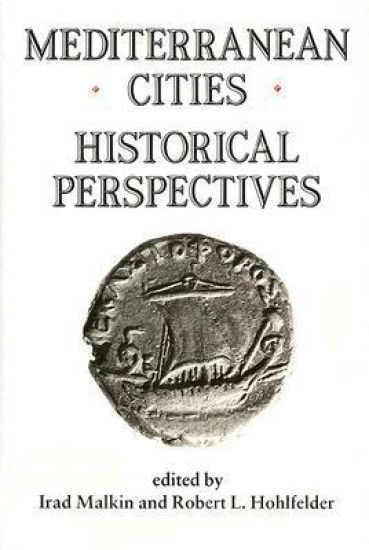
First published in 1988. This is a collection of works where the Mediterranean provides the context for all the cities which appear in this volume: all are (or have been) port cities, and as such their harbours played a significant role in shaping their histories. In essence, the question of ‘interaction between man and sea’ is one of the influence of the maritime position on the human communities constituting the ‘Mediterranean cities’: the connections between them, and the link of each city with its hinterland, as well as the influence of its position on the city’s internal development and character.

First published in 1988. This is a collection of works where the Mediterranean provides the context for all the cities which appear in this volume: all are (or have been) port cities, and as such their harbours played a significant role in shaping their histories. In essence, the question of ‘interaction between man and sea’ is one of the influence of the maritime position on the human communities constituting the ‘Mediterranean cities’: the connections between them, and the link of each city with its hinterland, as well as the influence of its position on the city’s internal development and character.

Ira W. Gruber is celebrated for the Atlantic salmon fishing techniques he developed over a lifetime of fishing on the Miramichi in New Brunswick, Canada. Ira is known for the 38 salmon fly patterns he originated and the thousands of salmon flies he tied over his lifetime, influencing such well-known contemporaries as Joe Bates, Morris Greene, Ted Niemeyer, and Leonard Wright.Ira D. Gruber, grandson of Ira W., has authored this fishing biography. A professor or history at Rice before he retired, Ira D. Gruber did the research for the book using his grandfather’s papers, annotated angling books, photographs, and notes and interviewing locals in New Brunswick and Ira W.’s native Pennsylvania. The book features stunning photographs of and the patterns for the 38 original fly creations plus an additional 92 flies from Ira W.’s personal collection.
The Delaware Primers of Ira D. Blanchard
Ives Goddard; Miles Beckwith; Ira D. Blanchard
Mundart Press
2021
nidottu
This book presents an edition of the three school primers in the Southern Unami dialect of the Delaware language (Lenape; ISO code unm) that were produced by the Baptist missionary Ira D. Blanchard in the years 1834 and 1842. Their short titles are: Linapi'e Lrkvekun (Blanchard 1834a), Linapie Lrkvekun (Blanchard 1834b) and The Delaware First Book (Blanchard and Journeycake] 1842). Blanchard was aided by two bilingual young men, James Conner and Charles Journeycake. The Delawares were at the time in a part of Indian Territory that is now eastern Kansas. The books were printed on a press at the nearby Shawnee mission. They were written entirely in Delaware and, as primers, were intended to teach reading to monolingual Delaware-speaking children. The language is written in a special alphabet devised by the printer Jotham Meeker that is long out of use, and the contents of the primers have been effectively inaccessible. The lessons include warnings against drunkenness, Bible stories, the world around us, contemporary life, and the planned Indian state. Also available from the editors are an edition of Blanchard and Conner's Delaware translation of a Harmony of the Gospels (1837-1839; Goddard 2021a), a Glossary to Blanchard's publications (Beckwith and Goddard 2021), and a Grammar of Southern Unami Delaware based on Blanchard's books and twentieth-century fieldwork with the last speakers (Goddard 2021b). Southern Unami is the heritage language of the Delaware Tribe of Indians (Bartlesville, Okla.) and the Delaware Nation of Western Oklahoma (Anadarko).
A Glossary to the Delaware Publications of Ira D. Blanchard
Mundart Press
2021
nidottu
A GLOSSARY TO THE DELAWARE PUBLICATIONS OF IRA D. BLANCHARDThis is a companion volume to the editions of Ira D. Blanchard's books that document the Southern Unami dialect of the Delaware language (Lenape; ISO code unm) as spoken in the years from 1834 to 1842: A Harmony of the Four Gospels in Delaware (Goddard 2021a) and The Delaware Primers of Ira D. Blanchard (Goddard and Beckwith 2021). It is designed to be used with A Grammar of Southern Unami Delaware (Lenape) (Goddard 2021b). The glossary includes virtually all the words from Blanchard's texts. For each word, a representative sample of forms is given with definitions, grammatical information, and text locations, as well as references to other sources on the Delaware language. Southern Unami is the heritage language of the Delaware Tribe of Indians (Bartlesville, Okla.) and the Delaware Nation of Western Oklahoma (Anadarko). Miles Beckwith has a doctorate in linguistics from Yale University and is Chair of the English Department of Iona College, where he teaches courses on literature, language, and linguistics.Ives Goddard has a doctorate in linguistics from Harvard University and is Senior Linguist Emeritus in the Department of Anthropology, National Museum of Natural History, Smithsonian Institution, where he was Linguistic Editor (1970-2007), Managing Editor (1985-1988), and Technical Editor (1989-2007) of the Handbook of North American Indians.
A Harmony of the Four Gospels in Delaware; The translation by Ira D. Blanchard and James Conner (1837-1839) Volume I
Ives Goddard
Mundart Press
2021
nidottu
A Harmony of the Gospels in Delaware, Volume I: These two volumes are an edition of the Delaware translation of a Harmony of the four Gospels of the New Testament that was done by the Baptist missionary Ira D. Blanchard aided by a young interpreter named James Conner and very likely one or more others. Blanchard's title was, in shortened form: The history of our Lord and Saviour Jesus Christ. The book was printed in the years 1837 to 1839. The text is presented in a four-line format, including the spelling as printed, a transcription into phonemic spelling, a translation of this, and the original source text. The language is specifically what was historically the Southern Unami dialect of Delaware and is now called Lenape. It is the heritage language of the Delaware Tribe of Indians (Bartlesville, Okla.) and the Delaware Nation of Western Oklahoma (Anadarko).Volume 1 includes an introduction and lists of abbreviations and other conventions.The two volumes form a continuous whole; they are separately issued because of production requirements.