Kirjojen hintavertailu. Mukana 11 244 527 kirjaa ja 12 kauppaa.

Kirjahaku

Etsi kirjoja tekijän nimen, kirjan nimen tai ISBN:n perusteella.

1000 tulosta hakusanalla Irfan Habib

Excursus in History – Essays on Some Ideas of Irfan Habib
This is the first in the series of volumes on Modern Indian Thinkers which are being brought out by Social Scientist and Tulika Books. It is an examination of Professor Irfan Habib's work in different areas and an attempt to capture the totality of his thought. The 'Modern Indian Thinkers' series seeks to celebrate those who have blazed new trails and produced new ideas outside the beaten track which serve to carry forward India's social revolution. It is only appropriate that Professor Irfan Habib should be among the first to be celebrated as such a thinker. The essays in this volume are quite heterogeneous: some are in the nature of surveys of particular areas of Professor Habib's work, some critically examine his positions, some elaborate upon his ideas and some carry his ideas forward. To familiarize the reader with Professor Habib's overall intellectual project, there is an exhaustive interview with him, in which he dwells upon a whole range of themes: from Mughal India to the freedom struggle to the problems of the Communist movement. And to give brief introductions to his seminal works, there are not only articles by particular authors, but also some book reviews that were published at the time his books came out. The fact remains, however, that the essays put together in the present volume only unlock this or that gate to the field of Professor Habib's writings, and the reader will have to make his or her own way through this field. But it is a journey we would like to invite the reader to undertake.
Nationalism in India – Past and Present

Nationalism in India – Past and Present

Irfan Habib

SEAGULL BOOKS LONDON LTD
2023
sidottu
A persuasive redefinition of nationalism by one of the most eminent historians of India. What makes a people living in a mere “geographical expression” a nation? From the French Revolution onwards, the word “nation” came to denote a people who wish to be collectively free. But free from what—colonial rule and inequality? Or religious and cultural diversity? In this timely and succinct essay, Irfan Habib charts India’s struggle to consolidate a nationalist identity, to identify what it sought to be free from. Even as the colonial regime denied the very possibility of nationalism in the subcontinent, opposition to British rule fomented just such a sentiment. But resistance against colonial exploitation alone could not unify the Indian people. Internal inequalities—caste, poverty, religious bigotry—remained (and still remain) to be tackled.
Essays in Indian History

Essays in Indian History

Irfan Habib

Anthem Press
2002
nidottu
This volume brings together, for the first time, several of Professor Habib's essays, representing three decades of scholarship and providing an insightful interpretation of the main currents in Indian history from the standpoint of Marxist historiography.
Essays in Indian History

Essays in Indian History

Irfan Habib

Anthem Press
2002
sidottu
This volume brings together, for the first time, several of Professor Habib's essays, representing three decades of scholarship and providing an insightful interpretation of the main currents in Indian history from the standpoint of Marxist historiography.
The National Movement

The National Movement

Irfan Habib

Tulika
2013
nidottu
This volume consists of five essays on the National Movement that arose to overthrow British rule in India. Three of these essays are devoted to the two men, Mahatma Gandhi and Jawaharlal Nehru, whose divergent ideas dominated the National Movement and to different degrees influenced its course. A fourth essay studies in detail how ideas and practice enmeshed to produce the civil disobedience movement in its initial phase, 1930-31, being undoubtedly the most powerful mass agitation organized by the Congress. The final essay studies the contributions made by the Left, especially the Communists, to the National Movement, seeking to fill a gap quite often found in conventional histories.
A People`s History of India 30 – The National Movement: Origins and Early Phase to 1918
The National Movement: The First Phase, till 1918 deals with popular resistance to colonial rule, a special position being given to the Revolt of 1857–58, its nature and legacy; the rise of national consciousness, and the factors leading to it; the movement for social reform and political awakening among the middle classes. It examines the critique of British rule by early economic nationalists as well as the foundation (in 1885), and development as a political party, of the Indian National Congress. It considers the rise of the Extremists (as against Moderates), describes the rise of communalism and the Partition of Bengal (1905), the opposition to it and the rift within the Congress, the rise of violence and the Ghadar movement (1913–15). It also considers the effect of British measures of 1909 and 1911 on the National Movement, the Congress–Muslim League Pact of 1916, the Home Rule Movement, and, finally, Gandhiji’s arrival and the agitations of 1917–18.The volume is authored by Irfan Habib, the general editor of the A People's History of India series.
A People`s History of India 14 – – Economic History of India, AD 1206–1526, The Period of the Delhi
This volume is devoted to the economic and social history of India from the thirteenth to the fifteenth century. The book consists of three long chapters, divided into numerous subchapters. The first chapter describes the agrarian order during the main period of the Delhi Sultanate (1206–1398), while the second chapter delves into the urban economy and trading world of the same period. The third chapter deals with the fifteenth century, 1398–1526, a period of political divisions. While describing the economy and social structure in north India during the century, the chapter pays special attention to conditions in the Vijayanagara empire, which flourished during this period in south India.A special feature of the volume, as with others in the series, is the inclusion of long extracts from sources and technical and bibliographical notes appended to each chapter.
A People's History of India 31 – The National Movement, Part 2 – The Struggle for Freedom, 1919–1947
This volume takes up the story of the Indian National Movement from 1919 when the first nationalist struggle took place on an all-India scale. It brings the Satyagraha against the Rowlatt Act, engraved in national memory by the slaughter at Jallianwala Bagh. The work ends with August 1947 when India finally attained independence. The volume stresses the importance of the ideological factor, seen in the growth of communalism that ultimately led to the Partition of the country along with independence.
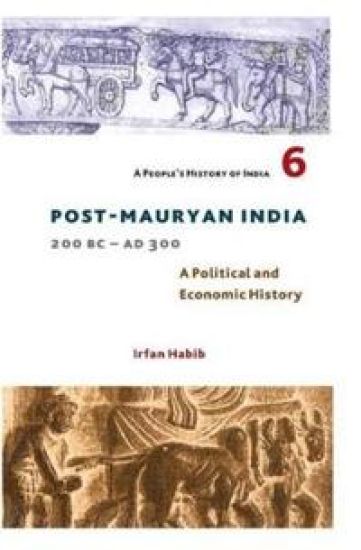
A People's History of India 6 – Post Mauryan India, 200 BC – AD 300
Post-Mauryan India, 200 BC - AD 300: A Political and Economic History, as part of the People's History of India series, deals with the five hundred years that, in the political sphere, are associated with the dominance of Indo-Greeks, Sakas, Kushans, and Satavahanas. The volume also offers a detailed survey of the economy of the period, which saw important changes, in craft production as well as overseas trade. (The changes in the caste system and cultural life during this long period will be treated in a separate volume.) A special feature of the present volume is that the information contained is based on fully updated material. As with other volumes of the series, translations of select inscriptions and extracts from texts are appended to each chapter. There are special notes (by way of technical aids) on the Puranas, the Shangam texts, and Kushan chronology; and on numismatics and economics. In addition, there are seven maps and twenty-four illustrations, being mainly reproductions of coins and sculpture.
A People's History of India 25 – Indian Economy Under Early British Rule, 1757 –1857
This volume in the People's History of India series gives a general account of Indian economy in the first century of British rule (1757-1857). It describes the changes in Indian economy brought about by the pressure for tribute, the British land settlements, and the triumph of free trade. In order to set these changes in a proper perspective, it begins by furnishing a survey of pre-colonial economic conditions. A notable feature of the book is its reference to how aspects of Indian economy were seen and interpreted by contemporary observers. This is accomplished partly by a rich collection of extracts from the sources. There are also special notes on current interpretations of eighteenth-century history, the nature of tribute or drain of wealth from India to England, and the scope and problems of historical demography.
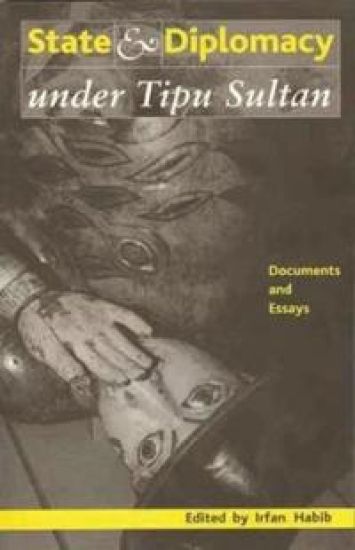
State and Diplomacy under Tipu Sultan – Documents and Essays
State and Diplomacy under Tipu Sultan: Documents and Essays supplements Confronting Colonialism: Resistance and Modernization under Haidar Ali and Tipu Sultan, which was published in 1999 by the Indian History Congress as part of the Srirangapatnam bicentennial. The main object of this volume is not only to add fresh contributions to the papers collected in Confronting Colonialism, but also to present documentary evidence that has not received its due in studies on Haidar Ali and Tipu Sultan. It is hoped that the translations of texts, commentaries on documents, and interpretive essays contained here will mark a further stage of progress in the exploration and use of source material on Tipu Sultan in both Persian and French.
A People's History of India 1 – Prehistory
Prehistory describes the earliest ages of human life in India, long before the existence of written records. It is part of a larger project, a People's History of India. In this monograph, the style is sought to be kept simple without making it 'popular', rhetorical or inexact. Chapter 1 treats in brief the geological formation of India, and changes in its climate and natural environment in so far as these relate to an understanding of our prehistory and history. Chapter 2 provides the story of man, first in the global context and then in India. Chapter 3 describes the coming of agriculture and the beginnings of exploitative relationships. Technical or controversial matters that need special attention are dealt with in notes appended to each chapter.
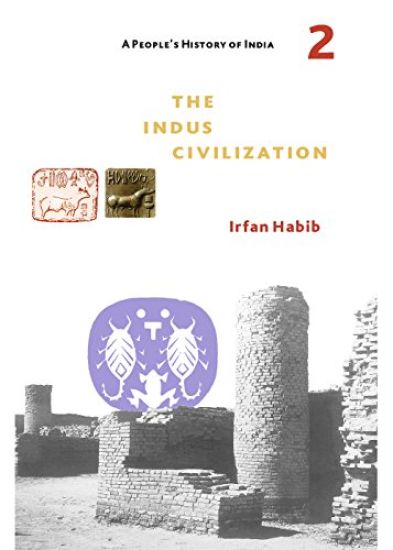
A People's History of India 2 – The Indus Civilization
The Indus Civilization by Irfan Habib forms Volume 2 of the People's History of India series. It continues the story from the point reached in the preceding volume, Prehistory, and goes on to describe in depth the Indus Civilization. In addition, other contemporary and later cultures down to about 1500 BC are surveyed, and there is a discussion on how the major language families of India have emerged.
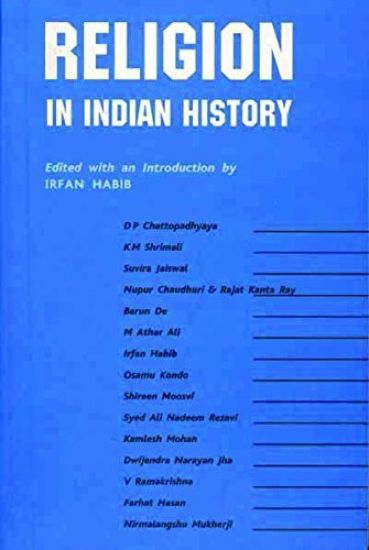
Religion in Indian History

Religion in Indian History

Irfan Habib

Tulika Book
2015
nidottu
Religion has been, and is, an important element in Indian society and history. It is, however, rare for the subject to be discussed with the necessary degree of detachment. This volume was, therefore, planned with the object of providing a collection of studies that would deal with the role of religion in Indian history on the basis of a rigorous application of academic criteria. The results may surprise those who are more familiar with chauvinistic or apologetic interpretations. The editor's introduction and the fifteen chapters range over an extensive period, from prehistory to the present day, and take up specific problems of crucial significance in exploring the inter- relationship between religion and social change. This volume draws on new research and is meant for academics as well as general readers, who may find here much that is of relevance to their social and intellectual concerns.
A People's History of India 36 – Man and Environment
Increasing interest has been shown in recent decades in matters relating to ecology, especially under the influence of the debate on climate change. The scope of ecology is, of course, much wider than that of climate alone, and involves in addition not only human relation with all species of animals and plants but also those conditions of human societies (material and intellectual) that influence our responses to the opportunities and challenges posed by nature. It is with this wider sense in mind that the history of ecology has been treated in this volume. Extensive extracts from sources have been provided; and there are special notes on ecology, climatology, zooarchaeology, natural history, and forestry.
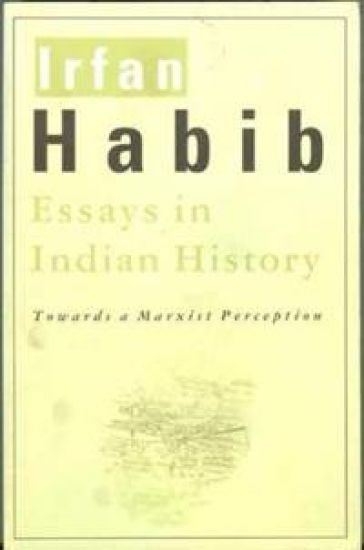
Essays in Indian History – Towards a Marxist Perception
This collection brings together, for the first time, several seminal essays by Professor Irfan Habib interpreting the main currents in Indian history from a Marxist perspective. They cover a wide range of issues: the nature of evolution of caste through the centuries, the role played by the peasantry in Indian history, the forms of class struggle and the stage of development of the economy in Mughal India, the impact of colonialism on the Indian economy, the changes in Marx's perceptions of India, the problems of Marxist historiography. Representing three decades of scholarship, each essay in this collection is painstakingly researched and unfailingly stimulating.
A People's History of India 28 – Indian Economy, 1858–1914
The monograph surveys the developments within the Indian economy during the period of the high tide of colonial domination between the 1857 Rebellion and the First World War. Its various sub-chapters deal with population, gross product and prices; tribute, imperialism of Free Trade, and the construction of railways; peasant agriculture, plantations, commercialization of agriculture and its impact on rents, peasant incomes and agricultural wages; and rural de-industrialization, modern industries, tariff and exchange policies; banking and finance; and fiscal system, tax-burden and the rise of economic nationalism. There are extracts from contemporary comments and reports; technical notes on such matters as computing national income, counterfactual analysis, etc., and short bibliographies accompanying each of the five chapters.
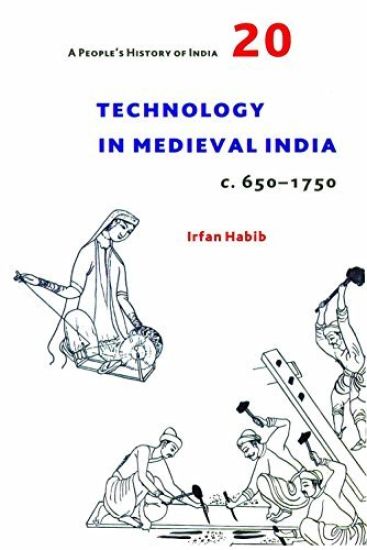
A People's History of India 20 – Technology in Medieval India, c. 650–1750
This book covers the whole range of technology, from the tools and skills of ordinary men and women to the instruments of astronomers and the equipage and weaponry of war. Changes in technology are carefully traced and their consequences examined. Larger questions, such as those of constraints on technological development and the role of the social and economic environment, are also addressed. This volume, in line with the others of A People's History of India, gives several extracts from texts, containing significant information about specific aspects of pre-modern technology. There are special notes on technical terms, sources of the history of technology, the problem of invention versus diffusion, and the development of medieval technology outside India. It includes illustrations taken from medieval sculpture, painting and book-illustrations. The volume is addressed to the general reader as well as the student, who would like to read about something on which conventional textbooks have little to offer. A special effort is made to keep the style non-technical without loss of accuracy. It is hoped that the theme is sufficiently interesting not only for the historian but for any citizen wanting to know what common people, men and women, did with their hands and tools in earlier times.
A People's History of India 14 – Economy and Society of India during the Period of the Delhi Sultanate, c. 1200 to c. 1500
Comprising No. 14 in the People's History of India series, published by Aligarh Historians Society in collaboration with Tulika Books, this volume is devoted to the economic and social history of India from the 13th to the 15th century. The book consists of three long chapters, divided into numerous sub-chapters. The first chapter describes the agrarian order during the main period of the Delhi Sultanate (1206-1398), and the second the urban economy and trading world of the same period. The third chapter deals with the fifteenth century, 1398-1526, a period of political divisions. While describing the economy and social structure in north India during the century, the chapter pays special attention to conditions in the Vijayanagara empire, which flourished during this period in south India. A special feature of the volume, as with others in the series, is the inclusion of long extracts from sources and technical and bibliographical notes appended to each chapter.