Kirjojen hintavertailu. Mukana 12 390 323 kirjaa ja 12 kauppaa.

Kirjahaku

Etsi kirjoja tekijän nimen, kirjan nimen tai ISBN:n perusteella.

52 tulosta hakusanalla Irit Ruth Kleiman

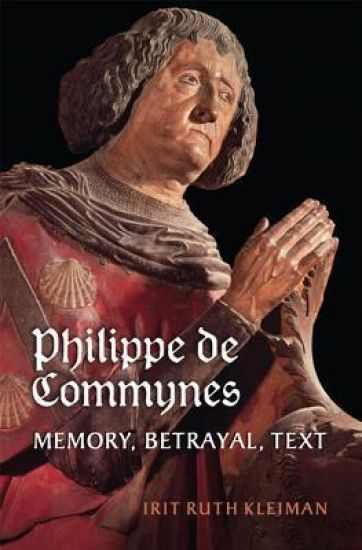
Philippe De Commynes

Philippe De Commynes

Irit Ruth Kleiman

University of Toronto Press
2013
sidottu
Philippe de Commynes, a diplomat who specialized in clandestine operations, served King Louis XI during his campaign to undermine aristocratic resistance and consolidate the sovereignty of the French throne. He is credited with inventing the political memoir, but his reminiscence has also been described as ‘the confessions of a traitor’: Commynes had abandoned Louis’ rival, the Burgundian duke Charles the Bold, before joining forces with the king. This study provides a literary re-evaluation of Commynes’ text – a perennial subject of scandal and fascination – while questioning what the terms ‘traitor’ or ‘betrayed’ meant in the context of fifteenth-century France. Drawing on diplomatic letters and court transcripts, Irit Kleiman examines the mutual connections between writing and betrayal in Commynes’ representation of Louis’ reign, the relationship between the author and the king, and the emergence of the memoir as an autobiographical genre. This study significantly deepens our understanding of how historical narrative and diplomatic activities are intertwined in the work of this iconic, iconoclastic figure.

Yehoshua Hankin

Yehoshua Hankin

Ruth Kark; Irit Amit Cohen

Israel Academic Press
2022
pokkari
Yehoshua Hankin had two loves: love for his wife Olga, many years his senior, and a love for the land. The two competed with each other, but he never preferred one over the other. Displayed for the reader, against the backdrop of the atmosphere in the Land of Israel toward the close of the Ottoman period and into that of the British Mandate, is a broad slice of life spread over fifty years of the man dubbed by constituents as the "Redeemer of the Land," and of the figures who accompanied him.The characters, events, times, and places described in this historical novel are to a great extent a faithful representation of reality, and they are interwoven into a multi-faceted biography illuminating the period and forgotten actors in a new light. Joining forces in writing this book were Irit Amit Cohen and Ruth Kark, who combined Irit Amit Cohen's literary work in the genre of the historical novel with Ruth Kark's long-term research endeavor on Yehoshua Hankin, which even encompassed oral documentation from his close associates.Prof. Irit Amit Cohen of Bar-Ilan University is an author and scholar, who has written action and adventure fiction for children and teenagers, as well as historical novels for adolescents. She has published textbooks on rhetoric and theory of writing, teaching Hebrew as a foreign and second language, and techniques for teaching subjects taught in school curricula. In addition, she has written many articles and books on the historical geography of Palestine, the state of Israel and on the connections between preservation planning and development of cultural heritage assets and cultural landscapes.Professor Ruth Kark of the Hebrew University of Jerusalem has written many books and articles on the historical geography, cultural, and settlement, of Palestine and the State of Israel in the nineteenth and twentieth centuries. The 27 books she wrote and edited deal with Palestine in its entirety, as well as, the Negev, Jerusalem, Jaffa, Sephardic entrepreneurial families, the American Christian Messianic settlement, consular activity, and "Redemption of the Land" in the Land of Israel.
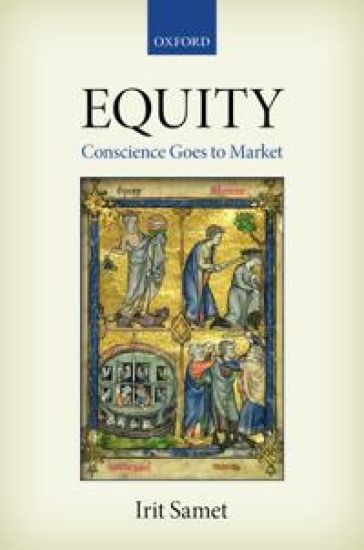
Equity

Equity

Irit Samet

Oxford University Press
2018
sidottu
This book sets out to defend the claim that Equity ought to remain a separate body of law; the temptation to iron-out the differences between neighbouring doctrines on the two sides of the Equity/Common Law divide should, in most cases, be resisted. The theoretical part of the book is argues that the characteristics of Equity, namely, appeal to conscience, flexibility, retroactivity and the use of morally-freighted jargon, are essential for the implementation of a legal ideal that has been neglected by the Common Law: âAccountability Correspondenceâ. According to this fundamental legal ideal, liability imposed by legal rules should correspond to the pattern of moral duty in the circumstances to which the rules apply. Equity promotes this ideal in the fields of property and obligations by disallowing parties to exploit the rule-like nature of Common Law norms in a way that breaches their moral duty to the other party. By reference to various equitable doctrines, it is argued that the faults identified by critics of Equity, especially from the perspective of the Rule of Law, are highly exaggerated, and that the criticism often reflects a political belief in the supremacy of individualism and free market over empathy and social justice. The theoretical part is followed by three chapters, each dedicated to an in-depth analysis of the equitable doctrines of fiduciary duties, proprietary estoppel, and clean hands. For each doctrine, it is shown how their equitable characteristics are indispensable for achieving their social, ethical and economic purpose.
The Future of Cross-Border Insolvency

The Future of Cross-Border Insolvency

Irit Mevorach

Oxford University Press
2018
sidottu
A fresh and insightful guide to post-financial crisis cross-border insolvency, this book interrogates the current regime and sets out a framework for improving its future. In recent decades, and especially since the global financial crisis, a number of important initiatives have focused on developing the mechanisms for managing the insolvency of multinational enterprises and financial institutions. The book considers the effectiveness of the current system and identifies the gaps that could be bridged by adopting certain strategies and tools, to improve the system further. The book first discusses the theoretical debate regarding cross-border insolvency and surveys the strengths and weaknesses of the prevailing method-modified universalism in its application to both commercial entities and financial institutions, consequently identifying a single set of emerging norms. The book argues that adhering to these norms more robustly would enhance global welfare and produce the best outcomes for businesses and institutions. By drawing upon sources from international law as well as behavioural and economic theory, the book offers a blueprint for meeting the demands of future cross-border insolvencies. It considers how to translate modified universalism into binding international law and how to choose the right instrument for cross-border insolvency as well as the impact that instrument design has on decisions and choices. It explores how to encourage compliance and proposes mechanisms that could potentially overcome, or at least take into account, behavioural biases in decision-making.
Insolvency within Multinational Enterprise Groups

Insolvency within Multinational Enterprise Groups

Irit Mevorach

Oxford University Press
2009
sidottu
Insolvency within multinational enterprise groups (MEGs) raises complex issues due to the foreign elements of the case and the multiplicity of debtors. The key problem is deciding to what extent and in which ways should there be 'linkage' between the entities in the course of their insolvency in order to promote insolvency goals. Historically the issue has been neglected both in national and international regimes. However, new initiatives are currently developing. In order to deal with this issue the work provides a theoretical framework, suggesting a balance between Entity-Enterprise issues (drawn from company law theory and the problem of enterprise groups) and Universality-Territoriality issues (drawn from cross-border insolvency and conflict of laws theory). This is further assisted by a taxonomy describing prototypical scenarios of MEGs and their insolvency. The theoretical framework and prototypical scenarios are the basis for critical analyses of various tools for 'linking' between different components of MEGs in the course of their insolvency and the degree to which they fit with a series of insolvency goals. Thus, the book suggests a comprehensive approach for dealing with insolvency within MEGs which can be used not only within the current cross-border insolvency frameworks (e.g., UNCITRAL Model Law, EC Regulation) but also as a definitive guideline for future reform. It argues that a global group-wide perspective for MEG insolvencies can be desirable if its application is limited to appropriate types of cases where unduly defeat of entity law and territoriality concerns can be minimized.
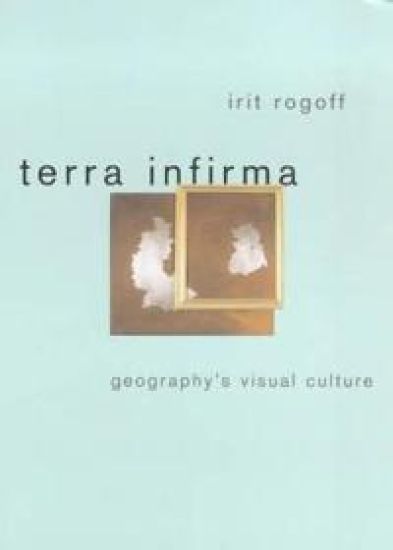
Terra Infirma

Terra Infirma

Irit Rogoff

Routledge
2000
sidottu
How have issues of place and identity, of belonging and exclusion, been represented in visual culture? Irit Rogoff uses the work of contemporary artists to explore how art in the twentieth century has confronted issues of identity and belonging.
Terra Infirma

Terra Infirma

Irit Rogoff

Routledge
2000
nidottu
In an age of 'ethnic cleansing' and forced migration, of contested borders and nations in turmoil, how have issues of place and identity, and of belonging and exclusion, been represented in visual culture? In Terra Infirma, Irit Rogoff examines geography's truth claims and signifying practices, arguing that geography is a language in crisis, unable to represent the immense changes that have taken place in a post-colonial, post-communist, post-migratory world. She uses the work of international contemporary artists to explore how art in the twentieth century has confronted and challenged issues of identity and belonging.Rogoff's dazzling and richly-illustrated study takes in painting, installation art, film and video by a wide range of artists including Charlotte Salomon, Ana Mendieta, Joshua Neustein, Yehoshua Glotman, Mona Hatoum, Hans Haacke, Ashley Bickerton, Alfredo Jaar and Guillermo Gomez-Pena. Structuring her argument through themes of luggage, mapping, borders and bodies, Rogoff explores how artists have confronted twentieth century phenomena such as the horror of the Holocaust, the experience of diaspora at New York's Ellis Island, and, in the present day, disputed and fraught boundaries in the Middle East, the two Germanies, the Balkan states and the US-Mexican border.
A Language in Space

A Language in Space

Irit Meir; Wendy Sandler

Psychology Press
2007
sidottu
This English version of A Language in Space: The Story of Israeli Sign Language, which received the Bahat Award for most outstanding book for a general audience in its Hebrew edition, is an introduction to sign language using Israeli Sign Language (ISL) as a model. Authors Irit Meir and Wendy Sandler offer a glimpse into a number of fascinating descriptions of the ISL community to which linguists and other researchers may not have access. An underlying premise of the book is that language is a mental system with universal properties, and that language lives through people.A clear and engaging read, A Language in Space addresses relevant aspects of sign language, including the most abstract questions and matters related to society and community. Divided into three parts, the book covers:the linguistic structure of Israeli Sign Language;the language and its community; anda broad depiction of ISL and the contribution of sign language research to linguistic theory.This book is intended for linguists (with or without a background in sign language), psychologists, sociologists, educators, students, and anyone with an interest in the human capacity for language.
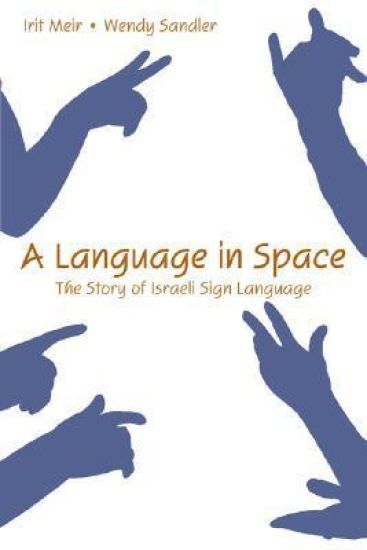
A Language in Space

A Language in Space

Irit Meir; Wendy Sandler

Psychology Press
2007
nidottu
This English version of A Language in Space: The Story of Israeli Sign Language, which received the Bahat Award for most outstanding book for a general audience in its Hebrew edition, is an introduction to sign language using Israeli Sign Language (ISL) as a model. Authors Irit Meir and Wendy Sandler offer a glimpse into a number of fascinating descriptions of the ISL community to which linguists and other researchers may not have access. An underlying premise of the book is that language is a mental system with universal properties, and that language lives through people.A clear and engaging read, A Language in Space addresses relevant aspects of sign language, including the most abstract questions and matters related to society and community. Divided into three parts, the book covers:the linguistic structure of Israeli Sign Language;the language and its community; anda broad depiction of ISL and the contribution of sign language research to linguistic theory.This book is intended for linguists (with or without a background in sign language), psychologists, sociologists, educators, students, and anyone with an interest in the human capacity for language.
Psychological War Trauma and Society

Psychological War Trauma and Society

Irit Keynan

CRC Press Inc
2018
nidottu
This book explores the psychological trauma affecting soldiers and civilians who have encountered the violence of war or terrorism, arguing that the enigmas surrounding war trauma are rooted in culture, collective memory and social norms. Focusing primarily on a large-scale sociological study in Israel, chapters detail the ideological, political, historical and economic factors that shape the multifaceted connection between individual and collective trauma, probing the exterior layers of Israeli society and exposing the complex relationship between society and emotionally scarred individuals everywhere. Divided into three main parts, particular attention is paid to the treatment of soldiers and civilians, and the tension between the medical and societal approaches to PTSD, shedding light on the intricate relationships between war trauma and society worldwide. Part 1 looks at traumatized soldiers and the changing attitudes towards CSR and PTSD; Part 2 explores civilian trauma and shock, including the first published research on the implications of war trauma in Israeli Arab society; and Part 3 analyses the deficiencies and contradictions in current international definitions and discourses of trauma, and the profound consequences of war trauma in society as a whole. Psychological War Trauma and Society will be of key value for academics and postgraduate students in the fields of psychology, sociology, history, Jewish studies, military studies, social work, terrorism studies and political science, as well as professionals who work with traumatised individuals, either directly or indirectly, including psychologists, psychotherapists and social workers. The Hebrew edition of the book was the winner of the 2012 AIS (Association for Israel Studies) Shapiro Award for Best Book in Israel Studies.
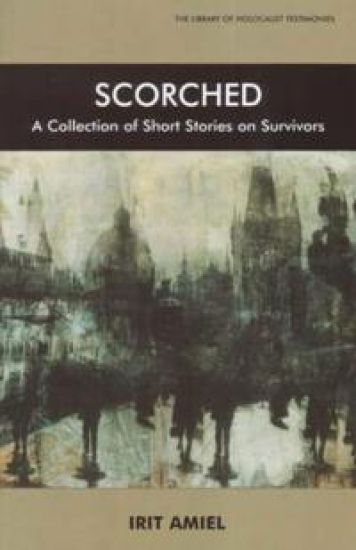
Scorched

Scorched

Irit Amiel

Vallentine Mitchell Co Ltd
2006
nidottu
The heroes of the stories in this book are people who in the hell of the Holocaust were doomed for life, people who cannot or do not want to speak about their past, about the heavy baggage of their life's experiences. Being a witness, Irit Amiel translates the long silence of people living in the Israeli melting pot into testimony. The stories are written in a simple and restrained way, but the voices coming out touch the most profound human feelings. These short stories achieve a weight through the use of poetic shortcuts, such as the two-page memory about the last parting from home and parents. 'I was then eleven years old and from that very moment I have never felt at home in life again.'
Psychological War Trauma and Society
This book explores the psychological trauma affecting soldiers and civilians who have encountered the violence of war or terrorism, arguing that the enigmas surrounding war trauma are rooted in culture, collective memory and social norms. Focusing primarily on a large-scale sociological study in Israel, chapters detail the ideological, political, historical and economic factors that shape the multifaceted connection between individual and collective trauma, probing the exterior layers of Israeli society and exposing the complex relationship between society and emotionally scarred individuals everywhere. Divided into three main parts, particular attention is paid to the treatment of soldiers and civilians, and the tension between the medical and societal approaches to PTSD, shedding light on the intricate relationships between war trauma and society worldwide. Part 1 looks at traumatized soldiers and the changing attitudes towards CSR and PTSD; Part 2 explores civilian trauma and shock, including the first published research on the implications of war trauma in Israeli Arab society; and Part 3 analyses the deficiencies and contradictions in current international definitions and discourses of trauma, and the profound consequences of war trauma in society as a whole. Psychological War Trauma and Society will be of key value for academics and postgraduate students in the fields of psychology, sociology, history, Jewish studies, military studies, social work, terrorism studies and political science, as well as professionals who work with traumatised individuals, either directly or indirectly, including psychologists, psychotherapists and social workers. The Hebrew edition of the book was the winner of the 2012 AIS (Association for Israel Studies) Shapiro Award for Best Book in Israel Studies.
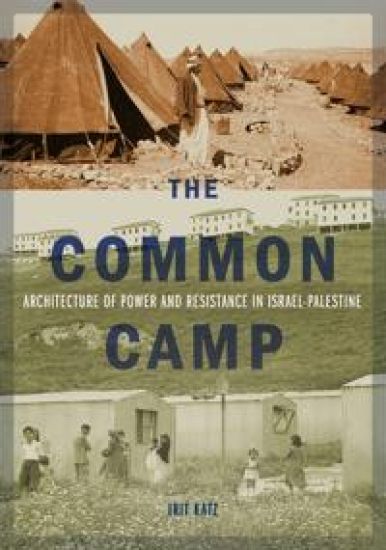
The Common Camp

The Common Camp

Irit Katz

UNIVERSITY OF MINNESOTA PRESS
2022
sidottu
Seeing the camp as a persistent political instrument in Israel–Palestine and beyondThe Common Camp underscores the role of the camp as a spatial instrument employed for reshaping, controlling, and struggling over specific territories and populations. Focusing on the geopolitical complexity of Israel–Palestine and the dramatic changes it has experienced during the past century, this book explores the region’s extensive networks of camps and their existence as both a tool of colonial power and a makeshift space of resistance. Examining various forms of camps devised by and for Zionist settlers, Palestinian refugees, asylum seekers, and other groups, Irit Katz demonstrates how the camp serves as a common thread in shaping lands and lives of subjects from across the political spectrum. Analyzing the architectural and political evolution of the camp as a modern instrument engaged by colonial and national powers (as well as those opposing them), Katz offers a unique perspective on the dynamics of Israel–Palestine, highlighting how spatial transience has become permanent in the ongoing story of this contested territory. The Common Camp presents a novel approach to the concept of the camp, detailing its varied history as an apparatus used for population containment and territorial expansion as well as a space of everyday life and subversive political action. Bringing together a broad range of historical and ethnographic materials within the context of this singular yet versatile entity, the book locates the camp at the core of modern societies and how they change and transform.
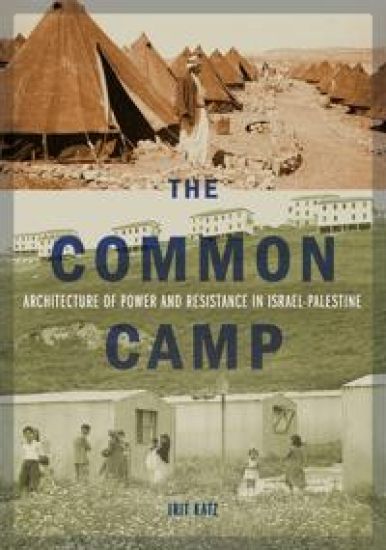
The Common Camp

The Common Camp

Irit Katz

UNIVERSITY OF MINNESOTA PRESS
2022
nidottu
Seeing the camp as a persistent political instrument in Israel–Palestine and beyondThe Common Camp underscores the role of the camp as a spatial instrument employed for reshaping, controlling, and struggling over specific territories and populations. Focusing on the geopolitical complexity of Israel–Palestine and the dramatic changes it has experienced during the past century, this book explores the region’s extensive networks of camps and their existence as both a tool of colonial power and a makeshift space of resistance. Examining various forms of camps devised by and for Zionist settlers, Palestinian refugees, asylum seekers, and other groups, Irit Katz demonstrates how the camp serves as a common thread in shaping lands and lives of subjects from across the political spectrum. Analyzing the architectural and political evolution of the camp as a modern instrument engaged by colonial and national powers (as well as those opposing them), Katz offers a unique perspective on the dynamics of Israel–Palestine, highlighting how spatial transience has become permanent in the ongoing story of this contested territory. The Common Camp presents a novel approach to the concept of the camp, detailing its varied history as an apparatus used for population containment and territorial expansion as well as a space of everyday life and subversive political action. Bringing together a broad range of historical and ethnographic materials within the context of this singular yet versatile entity, the book locates the camp at the core of modern societies and how they change and transform.
When I Grow Up

When I Grow Up

Irit Ben Noon

Xlibris UK
2018
pokkari
Daydreaming and not paying attentionthose are the terms that are being used when a child is wondering. The greatest gift weve got during birth, IMAGINATION, is used very well up till age four or five. A child will always wonder whats going on in his mind to build up a wonderful picture. Then, while growing up, we lose our imagination, and we are programmed to think about what we dont want and imagine problems. With this book, youll help your child to develop his/her imagination. You can read it with your child at any time and have a fun activity together. I am enough of an artist to draw freely upon my imagination. Imagination is more important than knowledge. Knowledge is limited. Imagination encircles the world (Albert Einstein).
Meditation for Children: Guided Imagery to Release Anxiety and Worries

Meditation for Children: Guided Imagery to Release Anxiety and Worries

Irit Almog

Children 911 Resources Publishing Company, In
2019
nidottu
Empower Your Child to Work through Their Worries and Anxiety Come along with a magical sea turtle on an amazing adventure designed to help your child deal with stress. As you are transported into the story, your child will learn simple techniques to overcome their anxiety, worries, and fears. Children can use this technique anytime they feel afraid or anxious. This engaging story and colorful illustrations will make this book a favorite. Meditation for Children books provide: - Children and parents with tools to cope with stresses, worries, and fears;- Techniques to aid in children's emotional and psychological recovery from frightening memories or traumatic events;- Entertaining ways for children to find their own sense of calm and to become anxiety-free.