Kirjojen hintavertailu. Mukana 11 699 587 kirjaa ja 12 kauppaa.

Kirjahaku

Etsi kirjoja tekijän nimen, kirjan nimen tai ISBN:n perusteella.

1000 tulosta hakusanalla Irving Widett; David Ferber

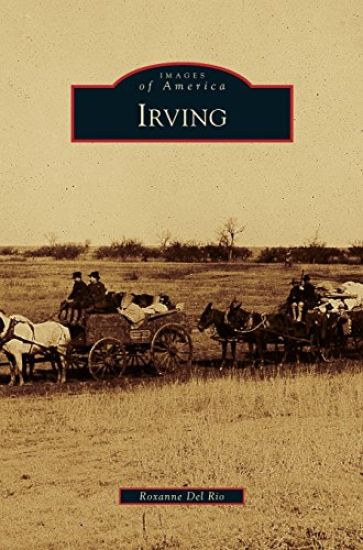
Irving

Irving

Roxanne Del Rio

Arcadia Publishing Library Editions
2016
sidottu
Irving, Texas, was founded in 1903 by two eager individuals, J.O. Schulze and Otis Brown, of the Chicago, Rock Island & Gulf Railway Company. Beginning as an agrarian area of farmland, cotton, and cattle, Irving grew to include industrial facilities while persevering through the financial difficulties resulting from the Civil War and the two world wars. Irving maintained its growth when other cities in the United States could not. Schulze and Brown recognized the importance of utilizing both agricultural and industrial resources in creating and sustaining a successful city. Remnants of early communities, such as Bear Creek, Elm, Estelle, Kit, Sowers, Twin Wells, and Union Bower, can still be identified. Situated between Dallas and Fort Worth, Irving is a robust and thriving city that has greatly contributed to the creation and preservation of Texas history.
Irving Berlin

Irving Berlin

Hamm Charles

Oxford University Press Inc
1997
sidottu
Irving Berlin remains a central figure in American music, a lyricist/composer whose songs are loved all over the world. His first piece, `Marie from Sunny Italy', was written in 1907, and his `Alexander's Ragtime Band' attracted more public and media attention than any other song of its decade. In later years Berlin wrote such classics as `God Bless America', `Blue Skies', `Always', `Cheek to Cheek', and the holiday favourites `White Christmas' and `Easter Parade'. Jerome Kern, his fellow songwriter, commented that `Irving Berlin is American music.' In Irving Berlin: The Formative Years, Charles Hamm traces the early years of this most famous and distinctive American songwriter. Beginning with Berlin's immigrant roots - he came to New York in 1893 from Russia - Hamm shows how the young Berlin quickly revealed the talent for music and lyrics that was to mark his entire career. Berlin first wrote for the vaudeville stage, turning out songs that drew on the various ethnic cultures of the city. These pieces, with their Jewish, Italian, German, Irish, and Black protagonists singing in appropriate dialects, reflected the urban mix of New York's melting pot. Berlin drew on various musical styles, especially ragtime, for such songs as `Alexander's Ragtime Band', and Hamm devotes an entire chapter to the song and its success. The book also details Berlin's early efforts to write for the Broadway musical stage, culminating in 1914 with his first musical comedy, Watch Your Step, featuring the popular dance team, Vernon and Irene Castle. A great hit on Broadway and in London, the show was a key piece in the Americanization of the musical comedy. Blessed with prodigious ambition and energy, Berlin wrote at least 4 or 5 new songs a week, many of which were discarded. He nevertheless published 190 songs between 1907 and 1914, an astonishing number considering that when Berlin arrived in America, he knew not a single word of English. As one writer reported, `there is scarcely a waking moment when Berlin is not engaged either in teaching his songs to a vaudeville player, or composing new ones.' Early in his career, Irving Berlin brilliantly exploited the musical trends and influences of the day. Hamm shows how Berlin emerged from the vital and complex social and cultural scene of New York to begin his rise as America's foremost songwriter.
Irving Berlin's American Musical Theater

Irving Berlin's American Musical Theater

Magee Jeffrey

Oxford University Press Inc
2012
sidottu
From patriotic "God Bless America" to wistful "White Christmas," Irving Berlin's songs have long accompanied Americans as they fall in love, go to war, and come home for the holidays. Irving Berlin's American Musical Theater is the first book to fully consider this songwriter's immeasurable influence on the American stage. Award-winning music historian Jeffrey Magee chronicles Berlin's legendary theatrical career, providing a rich background to some of the great composer's most enduring songs, from "There's No Business Like Show Business" to "Puttin' on the Ritz." Magee shows how Berlin's early experience singing for pennies made an impression on the young man, who kept hold of that sensibility throughout his career and transformed it into one of the defining attributes of Broadway shows. Magee also looks at darker aspects of Berlin's life, examining the anti-Semitism that Berlin faced and his struggle with depression. Informative, provocative, and full of colorful details, this book will delight song and theater aficionados alike as well as anyone interested in the story of a man whose life and work expressed so well the American dream.
Irving Berlin's American Musical Theater

Irving Berlin's American Musical Theater

Magee Jeffrey

Oxford University Press Inc
2014
nidottu
From patriotic "God Bless America" to wistful "White Christmas," Irving Berlin's songs have long accompanied Americans as they fall in love, go to war, and come home for the holidays. Irving Berlin's American Musical Theater is the first book to fully consider this songwriter's immeasurable influence on the American stage. Award-winning music historian Jeffrey Magee chronicles Berlin's legendary theatrical career, providing a rich background to some of the great composer's most enduring songs, from "There's No Business Like Show Business" to "Puttin' on the Ritz." Magee shows how Berlin's early experience singing for pennies made an impression on the young man, who kept hold of that sensibility throughout his career and transformed it into one of the defining attributes of Broadway shows. Magee also looks at darker aspects of Berlin's life, examining the anti-Semitism that Berlin faced and his struggle with depression. Informative, provocative, and full of colorful details, this book will delight song and theater aficionados alike as well as anyone interested in the story of a man whose life and work expressed so well the American dream.
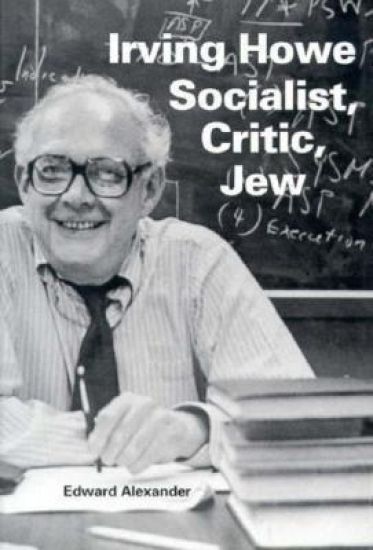
Irving Howe—Socialist, Critic, Jew

Irving Howe—Socialist, Critic, Jew

Edward Alexander

Indiana University Press
1998
sidottu
" . . . scrupulous, fair-minded and richly-detailed study . . . the book charts one of the most remarkable intellectual careers of the 20th century's latter half. . . . What is most heartening about Mr. Alexander's biography is its exemplary civility and nuance in discussing ideas across the lines of political difference." —Nathan Glick, Washington Times "Anyone interested in Howe's varied career, and the historical context that has given it its particular shape—American radicalism, the Cold War and anticommunism, the New Left, literary modernism, Jewish life—will profit handsomely from reading Alexander's respectful book." —Wilson Quarterly "Edward Alexander's captivating study of Irving Howe is illuminating and scrupulous; it is also temperate, generous, and deeply fair-minded. If Howe were alive, he would thank the author—and even now, in Paradise, he is surely doing so (while hotly continuing the discussion)." —Cynthia Ozick " . . . a singular achievement." —Jerusalem Post " . . . a masterpiece" —National Jewish Post and Opinion ". . . meticulous scholarship, felicitous writing style and a literate feistiness." —Chicago Jewish Star "An excellent work of insight and criticism, recommended for academic libraries." —Library Journal "An insightful, balanced contribution . . ." —Booklist "Edward Alexander's estimable intellectual biography . . . studiously avoids both undue sentimentality and overly harsh censure." —Sanford Pinsker, Philadelphia Inquirer "Edward Alexander's well-informed and engaging portrait of Irving Howe does full justice to the complexities of mind and the political passions of one of this country's leading intellectuals. This bracing, perceptive study honors Howe's admirable career by treating it with the same high degree of moral seriousness that characterized Howe's own work at its best." —Alvin H. Rosenfeld Irving Howe, author of World of Our Fathers, the prize-winning history of American Jewish immigrant culture, and founding editor of the influential magazine Dissent, was for over 50 years a dominant—and controversial—figure in American intellectual life. Through a clear and eloquent study of Howe's politics, writings, and thought, Edward Alexander constructs a sympathetic yet critical intellectual biography of this complex individual.
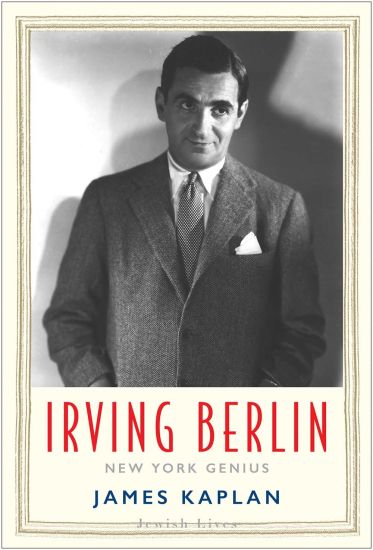
Irving Berlin

Irving Berlin

James Kaplan

Yale University Press
2020
sidottu
From the prizewinning Jewish Lives series: a fast-moving, musically astute portrait of Irving Berlin, arguably the greatest composer of American popular music"An extensively researched, entertaining, and nuanced account that contextualizes Berlin’s story and achievements within the scope of Jewish immigrant New York and modern American popular culture."—Library Journal Irving Berlin (1888–1989) has been called—by George Gershwin, among others—the greatest songwriter of the golden age of the American popular song. “Berlin has no place in American music,” legendary composer Jerome Kern wrote; “he is American music.” In a career that spanned an astonishing nine decades, Berlin wrote some fifteen hundred tunes, including “Alexander’s Ragtime Band,” “God Bless America,” and “White Christmas.” From ragtime to the rock era, Berlin’s work has endured in the very fiber of American national identity. Exploring the interplay of Berlin’s life with the life of New York City, noted biographer James Kaplan offers a visceral narrative of Berlin as self-made man and witty, wily, tough Jewish immigrant. This fast-paced, musically opinionated biography uncovers Berlin’s unique brilliance as a composer of music and lyrics. Masterfully written and psychologically penetrating, Kaplan’s book underscores Berlin’s continued relevance in American popular culture.About Jewish Lives: Jewish Lives is a prizewinning series of interpretative biography designed to explore the many facets of Jewish identity. Individual volumes illuminate the imprint of Jewish figures upon literature, religion, philosophy, politics, cultural and economic life, and the arts and sciences. Subjects are paired with authors to elicit lively, deeply informed books that explore the range and depth of the Jewish experience from antiquity to the present. In 2014, the Jewish Book Council named Jewish Lives the winner of its Jewish Book of the Year Award, the first series ever to receive this award.More praise for Jewish Lives: “Excellent.” – New York times “Exemplary.” – Wall St. Journal “Distinguished.” – New Yorker “Superb.” – The Guardian
Irving Fisher
Irving Fisher was one of America’s greatest mathematical economists – and certainly one of the most colourful. During his career, he made numerous contributions to mathematical economics, capital theory, monetary theory, and statistics. The now familiar distinction between stocks and flows is almost entirely due to Fisher’s The Nature of Capital and Income, and similarly, his theory of money and prices is the foundation of much contemporary monetary economics.An influential and controversial figure during his lifetime, Fisher’s work remains accessible and useful to students of economics today. This impressive collection brings together key contemporary responses to Fisher’s work, along with later assessments of his main contributions. Also including a new introduction to the collection and individual volume introductions by the editor, this unique set is undoubtedly a valuable research resource for both student and scholar.
Irving Thalberg

Irving Thalberg

Mark A. Vieira

University of California Press
2009
sidottu
Hollywood in the 1920s sparkled with talent, confidence, and opportunity. Enter Irving Thalberg of Brooklyn, who survived childhood illness to run Universal Pictures at twenty; co-found Metro-Goldwyn-Mayer at twenty-four; and, make stars of Lon Chaney, Norma Shearer, Greta Garbo, Joan Crawford, Clark Gable, and Jean Harlow. Known as Hollywood's 'Boy Wonder', Thalberg created classics such as "Ben-Hur", "Tarzan the Ape Man", "Grand Hotel", "Freaks", "Mutiny on the Bounty", and "The Good Earth", but died tragically at thirty-seven. His place in the pantheon should have been assured, yet his films were not re-issued for thirty years, spurring critics to question his legend and diminish his achievements. In this definitive biography, illustrated with rare photographs, Mark A. Vieira sets the record straight, using unpublished production files, financial records, and correspondence to confirm the genius of Thalberg's methods. In addition, this is the first Thalberg biography to utilize both his recorded conversations and the unpublished memoirs of his wife, Norma Shearer. "Irving Thalberg" is a compelling narrative of power and idealism, revealing for the first time the human being behind the legend.
Irving Layton and Robert Creeley

Irving Layton and Robert Creeley

Ekbert Faas; Sabrina Reed

McGill-Queen's University Press
1990
sidottu
The correspondence includes heated and lively debates over the work of poets such as Robert Graves, Louis Dudek, and Charles Olson; anecdotes from the personal lives of Creeley and Layton at crucial stages in both their careers; and glimpses of a time of change when the Black Mountain and other postmodernist movements were beginning. Admirers of Creeley and Layton will find this book of special interest, as will students of literature and scholars of modern poetry.
Irving Berlin Anthology - 2nd Edition

Irving Berlin Anthology - 2nd Edition

Irving Berlin

Hal Leonard Corporation
1994
nidottu
(P/V/G Composer Collection). 60 of this brilliant composer's very best Features a bio, background notes on each song, show and movie listings by year, and loads of photos Includes: Always * Blue Skies * Cheek to Cheek * God Bless America * Happy Holiday * I've Got My Love to Keep Me Warm * Marie * Puttin' On the Ritz * Steppin' Out with My Baby * There's No Business like Show Business * White Christmas * and more. A must for every Irving Berlin fan
Irving Howe and the Critics

Irving Howe and the Critics

University of Nebraska Press
2008
pokkari
Irving Howe and the Critics is a selection of essays and reviews about the work of Irving Howe (1920–93), a vocal radical humanist and the most influential American socialist intellectual of his generation. Howe authored eighteen books, edited twenty-five more, wrote dozens of articles and reviews, and edited the magazine Dissent for forty years after founding it. His writings cover subjects ranging from U.S. labor to the vicissitudes of American communism and socialism to Yiddishkeit and contemporary politics. His book World of Our Fathers: The Journey of the East European Jews to America and the Life They Found and Made received the National Book Award for Nonfiction. John Rodden has chosen essays and reviews that focus on Howe's major works and on the disputes they generated. He features both Dissent contributors and those who have dissented from the Dissenters—on the Right as well as the Left. Rodden includes a few stern assessments of Howe from his less sympathetic critics, testifying not only to the range of response—from admiration to hostility—that his work received but also to his stature on the Left as a prime intellectual target of neoconservative fire.
Irving Howe and the Critics

Irving Howe and the Critics

University of Nebraska Press
2005
sidottu
Irving Howe and the Critics is a selection of essays and reviews about the work of Irving Howe (1920–93), a vocal radical humanist and the most influential American socialist intellectual of his generation. Howe authored eighteen books, edited twenty-five more, wrote dozens of articles and reviews, and edited the magazine Dissent for forty years after founding it. His writings cover subjects ranging from U.S. labor to the vicissitudes of American communism and socialism to Yiddishkeit and contemporary politics. His book World of Our Fathers: The Journey of the East European Jews to America and the Life They Found and Made received the National Book Award for Nonfiction. John Rodden has chosen essays and reviews that focus on Howe's major works and on the disputes they generated. He features both Dissent contributors and those who have dissented from the Dissenters—on the Right as well as the Left. Rodden includes a few stern assessments of Howe from his less sympathetic critics, testifying not only to the range of response—from admiration to hostility—that his work received but also to his stature on the Left as a prime intellectual target of neoconservative fire.
Irving Babbitt

Irving Babbitt

Nevin Thomas R.

The University of North Carolina Press
2012
nidottu
Few men in America's intellectual history have sought as much as Irving Babbitt to be a crucible for the cultural values that America, expecially in its ""progressive"" epoch, had no inclination to receive. Over sixty years after his death, Babbitt remains a figure of controversy. He retains his reputation as a reactionary defender of genteel morality and taste, yet, as Thomas Nevin reminds us, he continues to be a scholar of importance and an erudite, forceful teacher who influenced -- among others -- T. S. Eliot, Van Wyck Brooks, Walter Lippmann, Austin Warren, and David Riesman.Nevin argues that the tradition Babbit represented did not so much uphold class mores as it urged that literature embody and inculcate discipline. In this book-length study of Babbitt's humanism, Nevin examines the controversial critic's attacks on collegiate educational reform, his literary and aesthetic criticism, his political philosophy of an ""aristocratic democracy"" and his fusion of humanism with Buddhism. Included in each chapter are substantial portions of Babbitt's unpublished correspondence with Paul Elmer More, letters that eloquently reveal points of agreement and difference between Babbitt's humanism and the theism that More came to espouse.Although this study reflects the variety of Babbitt's concerns, it concentrates on his major ideas: the need to maintain the dualism that is the legacy of the Western philosophical tradition, the imperative that critically sound standards of judgment be maintained in the individual and in society, and the affirmation of the human will against the reductive forces of materialistic ideologies. Humanism, as Babbitt defines it, opposes the ascendance of utilitarian science because the sciences, however legitimate in the area of phenomenal inquiry, as a secular faith supplant the traditional strength and appeal of cultural and religious standards. Literature itself under the influence of naturalism either reflects a mechanized, demoralized society or merely escapes aesthetically from its ugliness.With the reprinting of some of Babbitt's writings, scholars may now reassess his thought. Irving Babbitt should renew interest in a major American thinker and vindicate many of his arguments that apply to the problems of our own day.Originally published in 1984.A UNC Press Enduring Edition -- UNC Press Enduring Editions use the latest in digital technology to make available again books from our distinguished backlist that were previously out of print. These editions are published unaltered from the original, and are presented in affordable paperback formats, bringing readers both historical and cultural value.
Irving Howe

Irving Howe

Gerald Sorin

New York University Press
2005
pokkari
A New York Times "Books for Summer Reading" selection Winner of the 2003 National Jewish Book Award for History By the time he died in 1993 at the age of 73, Irving Howe was one of the twentieth century's most important public thinkers. Deeply passionate, committed to social reform and secular Jewishness, ardently devoted to fiction and poetry, in love with baseball, music, and ballet, Howe wrote with such eloquence and lived with such conviction that his extraordinary work is now part of the canon of American social thought. In the first comprehensive biography of Howe's life, historian Gerald Sorin brings us close to this man who rose from Jewish immigrant poverty in the 1930s to become one of the most provocative intellectuals of our time. Known most widely for his award-winning book World of Our Fathers, a rich portrayal of the East European Jewish experience in New York, Howe also won acclaim for his prodigious output of illuminating essays on American culture and as an indefatigable promoter of democratic socialism as can be seen in the pages of Dissent, the journal he edited for nearly forty years. Deeply devoted to the ideal of democratic radicalism and true equality, Howe was constantly engaged in a struggle for decency and basic fairness in the face of social injustice. In the century of Auschwitz, the Gulag, and global inter-ethnic mass murder, it was difficult to sustain political certainties and take pride in one's humanity. To have lived a life of conviction and engagement in that era was a notable achievement. Irving Howe lived such a life and Gerald Sorin has done a masterful job of guiding us through it in all its passion and complexity.