Kirjojen hintavertailu. Mukana 11 342 296 kirjaa ja 12 kauppaa.

Kirjahaku

Etsi kirjoja tekijän nimen, kirjan nimen tai ISBN:n perusteella.

591 tulosta hakusanalla Istvan Czachesz

Cognitive Science and the New Testament

Cognitive Science and the New Testament

István Czachesz

Oxford University Press
2017
sidottu
Over the last few decades, our knowledge of how the human mind and brain works increased dramatically. The field of cognitive science enables us to understand religious traditions, rituals, and visionary experiences in novel ways. This has implications for the study of the New Testament and early Christianity. How people in the ancient Mediterranean world remembered sayings and stories, what they experienced when participating in rituals, how they thought about magic and miracle, and how they felt and reasoned about moral questions--all of that can be now better understood with the help of insights from cognitive science. István Czachesz argues that the field of New Testament Studies witnesses the beginning of a cognitive turn. He surveys relevant developments in the Cognitive Science of Religion and explores the field of cognitive and behavioral sciences in search of opportunities of gaining new insights about biblical materials. Czachesz presents some methodological tools and initial steps, together with a large number of examples of applying the cognitive approach to the New Testament and related ancient literature.
The Grotesque Body in Early Christian Discourse

The Grotesque Body in Early Christian Discourse

Istvan Czachesz

Equinox Publishing Ltd
2012
sidottu
Early Christian apocryphal and conical documents present us with grotesque images of the human body, often combining the playful and humorous with the repulsive, and fearful. First to third century Christian literature was shaped by the discourse around and imagery of the human body. This study analyses how the iconography of bodily cruelty and visceral morality was produced and refined from the very start of Christian history. The sources range across Greek comedy, Roman and Jewish demonology, and metamorphosis traditions. The study reveals how these images originated, were adopted, and were shaped to the service of a doctrinally and psychologically persuasive Christian message.
The Grotesque Body in Early Christian Discourse

The Grotesque Body in Early Christian Discourse

Istvan Czachesz

Equinox Publishing Ltd
2013
nidottu
Early Christian apocryphal and conical documents present us with grotesque images of the human body, often combining the playful and humorous with the repulsive, and fearful. First to third century Christian literature was shaped by the discourse around and imagery of the human body. This study analyses how the iconography of bodily cruelty and visceral morality was produced and refined from the very start of Christian history. The sources range across Greek comedy, Roman and Jewish demonology, and metamorphosis traditions. The study reveals how these images originated, were adopted, and were shaped to the service of a doctrinally and psychologically persuasive Christian message.
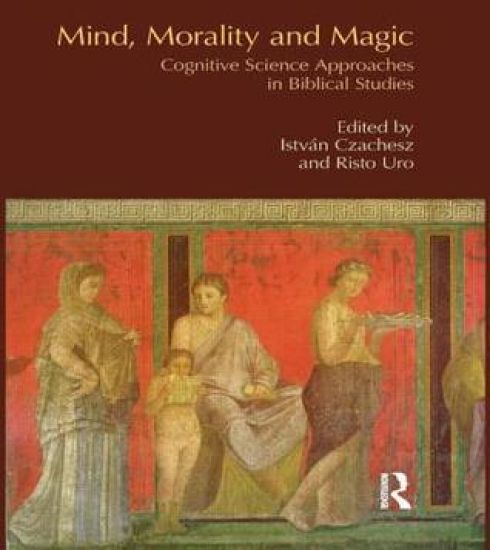
Mind, Morality and Magic

Mind, Morality and Magic

Istvan Czachesz; Risto Uro

Acumen Publishing Ltd
2013
sidottu
The cognitive science of religion that has emerged over the last twenty years is a multidisciplinary field that often challenges established theories in anthropology and comparative religion. This new approach raises many questions for biblical studies as well. What are the cross-cultural cognitive mechanisms which explain the transmission of biblical texts? How did the local and particular cultural traditions of ancient Israel and early Christianity develop? What does the embodied and socially embedded nature of the human mind imply for the exegesis of biblical texts? "Mind, Morality and Magic" draws on a range of approaches to the study of the human mind - including memory studies, computer modeling, cognitive theories of ritual, social cognition, evolutionary psychology, biology of emotions, and research on religious experience. The volume explores how cognitive approaches to religion can shed light on classical concerns in biblical scholarship - such as the transmission of traditions, ritual and magic, and ethics - as well as uncover new questions and offer new methodologies.
István Szabó

István Szabó

Susan Rubin Suleiman

BLOOMSBURY PUBLISHING PLC
2024
nidottu
István Szabó is one of the few Hungarian filmmakers to have earned a major international reputation over the past half century. This thoughtful and original book is the first examination of Szabó’s contribution to contemporary thought, engaging the troubled history of Europe in the 20th and 21st centuries. István Szabó’s importance as a filmmaker lies not only in his attention to film’s formal elements but in his deep and ongoing engagement with some of the most urgent ethical and existential questions of our time. With detailed analyses of István Szabó’s major films, from his 1960s works to his Academy Award for Best Foreign Film winner, Mephisto, and on through Szabó’s last film in 2020, Final Report, Susan Rubin Suleiman focuses on four important questions pertaining to existential choice: to leave home or to stay in a communist country? To collaborate or not with an authoritarian regime? To affirm or to deny one’s Jewishness in the face of antisemitism? To seek or to give up on community in the face of individual or national conflicts? Above all, Suleiman addresses the single most important philosophical question that haunts Szabó’s work, as it does that of many other Central European intellectuals and filmmakers of our time. That is, how do individuals attempt, through the life choices they make or that are foisted on them, to create a viable self in extreme historical situations over which they have no control?
István Szabó

István Szabó

Susan Rubin Suleiman

BLOOMSBURY PUBLISHING PLC
2024
sidottu
István Szabó is one of the few Hungarian filmmakers to have earned a major international reputation over the past half century. This thoughtful and original book is the first examination of Szabó’s contribution to contemporary thought, engaging the troubled history of Europe in the 20th and 21st centuries. István Szabó’s importance as a filmmaker lies not only in his attention to film’s formal elements but in his deep and ongoing engagement with some of the most urgent ethical and existential questions of our time. With detailed analyses of István Szabó’s major films, from his 1960s works to his Academy Award for Best Foreign Film winner, Mephisto, and on through Szabó’s last film in 2020, Final Report, Susan Rubin Suleiman focuses on four important questions pertaining to existential choice: to leave home or to stay in a communist country? To collaborate or not with an authoritarian regime? To affirm or to deny one’s Jewishness in the face of antisemitism? To seek or to give up on community in the face of individual or national conflicts? Above all, Suleiman addresses the single most important philosophical question that haunts Szabó’s work, as it does that of many other Central European intellectuals and filmmakers of our time. That is, how do individuals attempt, through the life choices they make or that are foisted on them, to create a viable self in extreme historical situations over which they have no control?
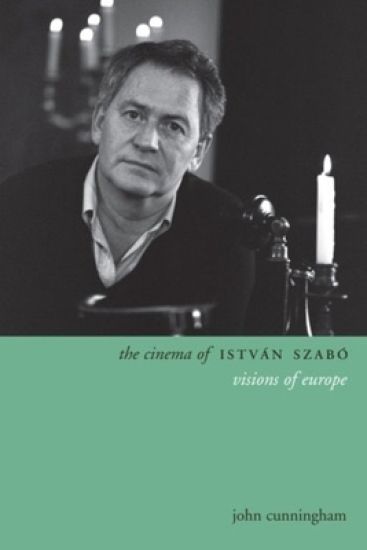
The Cinema of István Szabó

The Cinema of István Szabó

John Cunningham

Wallflower Press
2014
sidottu
Istvan Szabo is one of Hungary's most celebrated and best-known film directors, and the only Hungarian to have won an Academy Award for Best Foreign Language Film, for Mephisto (1981). In a career spanning over five decades Szabo has relentlessly examined the place of the individual in European history, particularly those caught up in the turbulent events of Central Europe and his own native Hungary. His protagonists struggle to find a place for themselves, some meaning in their lives, security and a sense of being, against a background of two world wars (Colonel Redl, Confidence), the Holocaust (Sunshine), the Hungarian Uprising and the Cold War (Father, 25 Fireman's Street, Taking Sides). This is the first English-language study of all his feature films and uses material from interviews with Szabo and his collaborators. Also included are chapters on his formative years, including his time at the famous Budapest Film Academy and the relationship of the state to the film industry in Hungary.
The Cinema of István Szabó

The Cinema of István Szabó

John Cunningham

Wallflower Press
2014
pokkari
Istvan Szabo is one of Hungary's most celebrated and best-known film directors, and the only Hungarian to have won an Academy Award for Best Foreign Language Film, for Mephisto (1981). In a career spanning over five decades Szabo has relentlessly examined the place of the individual in European history, particularly those caught up in the turbulent events of Central Europe and his own native Hungary. His protagonists struggle to find a place for themselves, some meaning in their lives, security and a sense of being, against a background of two world wars (Colonel Redl, Confidence), the Holocaust (Sunshine), the Hungarian Uprising and the Cold War (Father, 25 Fireman's Street, Taking Sides). This is the first English-language study of all his feature films and uses material from interviews with Szabo and his collaborators. Also included are chapters on his formative years, including his time at the famous Budapest Film Academy and the relationship of the state to the film industry in Hungary.
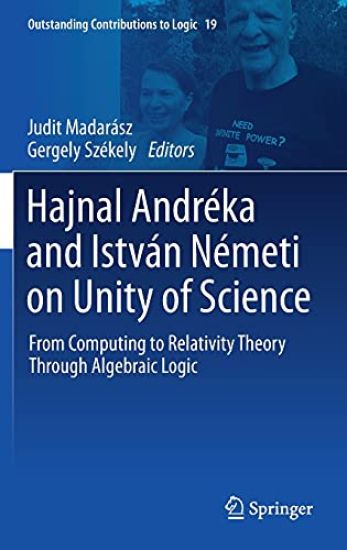
Hajnal Andréka and István Németi on Unity of Science
This book features more than 20 papers that celebrate the work of Hajnal Andréka and István Németi. It illustrates an interaction between developing and applying mathematical logic. The papers offer new results as well as surveys in areas influenced by these two outstanding researchers. They also provide details on the after-life of some of their initiatives.Computer science connects the papers in the first part of the book. The second part concentrates on algebraic logic. It features a range of papers that hint at the intricate many-way connections between logic, algebra, and geometry. The third part explores novel applications of logic in relativity theory, philosophy of logic, philosophy of physics and spacetime, and methodology of science. They include such exciting subjects as time travelling in emergent spacetime. The short autobiographies of Hajnal Andréka and István Németi at the end of the book describe an adventurous journey from electric engineeringand Maxwell’s equations to a complex system of computer programs for designing Hungary’s electric power system, to exploring and contributing deep results to Tarskian algebraic logic as the deepest core theory of such questions, then on to applications of the results in such exciting new areas as relativity theory in order to rejuvenate logic itself.