Kirjojen hintavertailu. Mukana 11 627 373 kirjaa ja 12 kauppaa.

Kirjahaku

Etsi kirjoja tekijän nimen, kirjan nimen tai ISBN:n perusteella.

591 tulosta hakusanalla Istvan Szent Miklosy

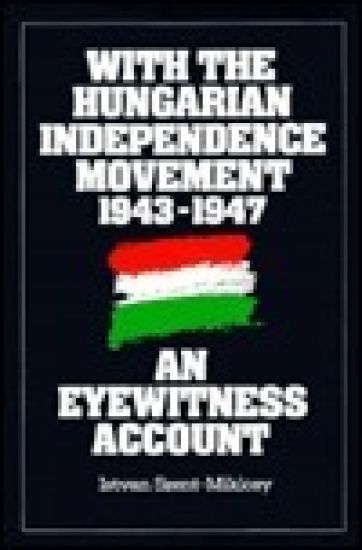
With the Hungarian Independence Movement, 1943-1947

With the Hungarian Independence Movement, 1943-1947

Istvan Szent Miklosy

Praeger Publishers Inc
1988
sidottu
The Magyar Fuggetlensegi Mozgalom (Hungarian Independence Movement or MFM) played an important role in the history of Hungary in the latter part of World War II and the years immediately after. The bulk of this volume is based on Szent-Miklosy's personal experiences as a participant in the activities of the MFM. The author, the last survivor in the West of the MFM, describes the unsuccessful attempts of the group first to assist efforts to obtain an armistice with the Allies and to save the Jewish population of Budapest, and then to introduce a Western-style democratic political system into Hungary. He also identifies the causes of the movement's failures, causes that lay not just in the actions of Nazi Germany and the Soviet Union, but also in the ambivalent foreign policies of France, Great Britain, and the United States, as well as in the shortcomings of Hungarian leadership. The author concludes that despite the eventual failure of the MFM its various efforts had to be made in order to demonstrate Hungary's commitment to Western European culture, independence, Hungarians living outside its borders, the defense of the Jewish population, and a Western-style of democracy.
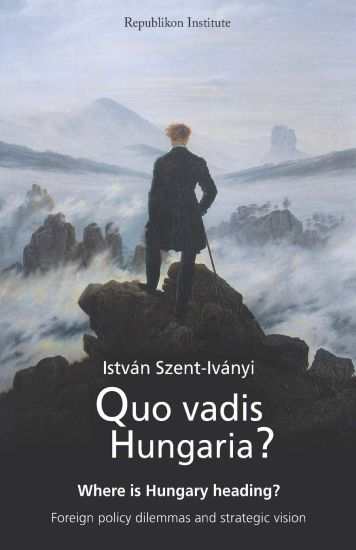
Quo vadis Hungaria?: Where is Hungary heading? Foreign policy dilemmas and strategic vision
This book is succinctly summarizing the history of the Hungarian foreign policy in the last 30 years and providing an insightful critical review on it. It is portraying the process of replacement of the clear attachment to the West by some kind of obscure "bridge role" and Eastern Opening. The book is about Central-Eastern-Europe, Visegrad 4 and the geopolitics of the region.
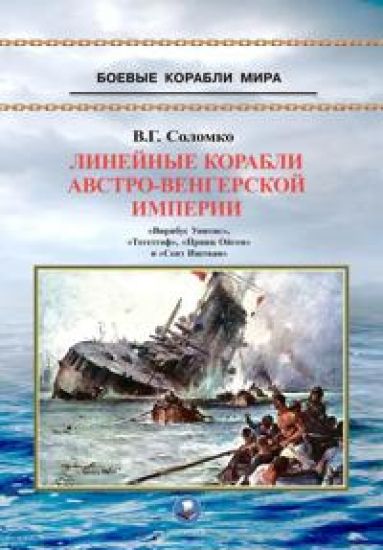
Linejnye korabli Avstro-Vengerskoj imperii (1906-1918). "Viribus Unitis", "Tegetgof", "Prints Ojgen" i "Sent Ishtvan"
Linkory tipa "Tegetgof" predstavljali soboj i vershinu, i vmeste s tem konets avstrijskogo sudostroenija. Kak i pochti na vsjo v strane, na nikh ne khvatalo finansovykh sredstv, i bez nastojaschego podviga togdashnego komandujuschego flotom admirala grafa R. Montekukkoli eti korabli, verojatno, voobsche nikogda by ne pojavilis na svet. I tem ne menee pervyj ikh nikh, "Viribus Unitis", 5 dekabrja 1912 g. vstupil v stroj - eto byl pervyj v mire linkor s trjokhorudijnymi bashnjami glavnogo kalibra. Ego 305-mm pushki proizvodstva firmy "Shkoda", bezuslovno, byli odnimi iz luchshikh korabelnykh orudij togo vremeni. Odnako iz- za nedostatochnogo finansirovanija i predelno ogranichennogo vodoizmeschenija u etikh drednoutov byli i suschestvennye konstruktivnye nedostatki. V obschem, eto byl tipichno avstrijskij produkt, otchasti vysokotekhnologichnyj i sovremennyj, otchasti otstalyj. No, s drugoj storony, osnovnoj zadachej etikh korablej, obladavshikh moschnoj tjazhjoloj artilleriej, bylo nedopuschenie desanta protivnika na avstrijskoe poberezhe, s chem eti linkory polnostju spravilis. Sojuzniki, obladavshie prevoskhodstvom v drednoutakh, tak i ne risknuli osuschestvit proryv v Adriatiku i derzhalis na pochtitelnom rasstojanii v techenie vsej vojny.
István Szabó

István Szabó

Susan Rubin Suleiman

BLOOMSBURY PUBLISHING PLC
2024
nidottu
István Szabó is one of the few Hungarian filmmakers to have earned a major international reputation over the past half century. This thoughtful and original book is the first examination of Szabó’s contribution to contemporary thought, engaging the troubled history of Europe in the 20th and 21st centuries. István Szabó’s importance as a filmmaker lies not only in his attention to film’s formal elements but in his deep and ongoing engagement with some of the most urgent ethical and existential questions of our time. With detailed analyses of István Szabó’s major films, from his 1960s works to his Academy Award for Best Foreign Film winner, Mephisto, and on through Szabó’s last film in 2020, Final Report, Susan Rubin Suleiman focuses on four important questions pertaining to existential choice: to leave home or to stay in a communist country? To collaborate or not with an authoritarian regime? To affirm or to deny one’s Jewishness in the face of antisemitism? To seek or to give up on community in the face of individual or national conflicts? Above all, Suleiman addresses the single most important philosophical question that haunts Szabó’s work, as it does that of many other Central European intellectuals and filmmakers of our time. That is, how do individuals attempt, through the life choices they make or that are foisted on them, to create a viable self in extreme historical situations over which they have no control?
István Szabó

István Szabó

Susan Rubin Suleiman

BLOOMSBURY PUBLISHING PLC
2024
sidottu
István Szabó is one of the few Hungarian filmmakers to have earned a major international reputation over the past half century. This thoughtful and original book is the first examination of Szabó’s contribution to contemporary thought, engaging the troubled history of Europe in the 20th and 21st centuries. István Szabó’s importance as a filmmaker lies not only in his attention to film’s formal elements but in his deep and ongoing engagement with some of the most urgent ethical and existential questions of our time. With detailed analyses of István Szabó’s major films, from his 1960s works to his Academy Award for Best Foreign Film winner, Mephisto, and on through Szabó’s last film in 2020, Final Report, Susan Rubin Suleiman focuses on four important questions pertaining to existential choice: to leave home or to stay in a communist country? To collaborate or not with an authoritarian regime? To affirm or to deny one’s Jewishness in the face of antisemitism? To seek or to give up on community in the face of individual or national conflicts? Above all, Suleiman addresses the single most important philosophical question that haunts Szabó’s work, as it does that of many other Central European intellectuals and filmmakers of our time. That is, how do individuals attempt, through the life choices they make or that are foisted on them, to create a viable self in extreme historical situations over which they have no control?
The Cinema of István Szabó

The Cinema of István Szabó

John Cunningham

Wallflower Press
2014
sidottu
Istvan Szabo is one of Hungary's most celebrated and best-known film directors, and the only Hungarian to have won an Academy Award for Best Foreign Language Film, for Mephisto (1981). In a career spanning over five decades Szabo has relentlessly examined the place of the individual in European history, particularly those caught up in the turbulent events of Central Europe and his own native Hungary. His protagonists struggle to find a place for themselves, some meaning in their lives, security and a sense of being, against a background of two world wars (Colonel Redl, Confidence), the Holocaust (Sunshine), the Hungarian Uprising and the Cold War (Father, 25 Fireman's Street, Taking Sides). This is the first English-language study of all his feature films and uses material from interviews with Szabo and his collaborators. Also included are chapters on his formative years, including his time at the famous Budapest Film Academy and the relationship of the state to the film industry in Hungary.
The Cinema of István Szabó

The Cinema of István Szabó

John Cunningham

Wallflower Press
2014
pokkari
Istvan Szabo is one of Hungary's most celebrated and best-known film directors, and the only Hungarian to have won an Academy Award for Best Foreign Language Film, for Mephisto (1981). In a career spanning over five decades Szabo has relentlessly examined the place of the individual in European history, particularly those caught up in the turbulent events of Central Europe and his own native Hungary. His protagonists struggle to find a place for themselves, some meaning in their lives, security and a sense of being, against a background of two world wars (Colonel Redl, Confidence), the Holocaust (Sunshine), the Hungarian Uprising and the Cold War (Father, 25 Fireman's Street, Taking Sides). This is the first English-language study of all his feature films and uses material from interviews with Szabo and his collaborators. Also included are chapters on his formative years, including his time at the famous Budapest Film Academy and the relationship of the state to the film industry in Hungary.