What does the proliferation of food festival tell us about rural areas? How can these celebrations pave the way to a better future for the local communities? This book is addressing these questions contributing to the ongoing debate about the future of rural peripheries in Europe.The volume is based on the ethnographic research conducted in Italy, a country internationally known for its food tradition and one of the European countries where the gap between rural and urban space is most pronounced. It offers an anthropological analysis of food festivals, exploring the transformational role they have to change and develop rural communities. Although the festivals aim mostly at tourism, they contribute in a wider way to the life of the rural communities, acting as devices through which a community redefines itself, reinforces its sociality, reshapes the perception and use of the surrounding environment. In so doing, thus, the books suggests to read the festivals not just as celebrations driven by food fashion, but rather fundamental grassroots instruments to contrast the effects of rural marginalization and pave the way to a possible better future for the community
What does the proliferation of food festival tell us about rural areas? How can these celebrations pave the way to a better future for the local communities? This book is addressing these questions contributing to the ongoing debate about the future of rural peripheries in Europe.The volume is based on the ethnographic research conducted in Italy, a country internationally known for its food tradition and one of the European countries where the gap between rural and urban space is most pronounced. It offers an anthropological analysis of food festivals, exploring the transformational role they have to change and develop rural communities. Although the festivals aim mostly at tourism, they contribute in a wider way to the life of the rural communities, acting as devices through which a community redefines itself, reinforces its sociality, reshapes the perception and use of the surrounding environment. In so doing, thus, the books suggests to read the festivals not just as celebrations driven by food fashion, but rather fundamental grassroots instruments to contrast the effects of rural marginalization and pave the way to a possible better future for the community
Scholarship has widely debated the question about the existence of an 'Italian identity' in the time of the Roman Republic, basing on the few sources available and on the outcomes of the Augustan and imperial age. In this sense, this debate has for a long time been conducted without sufficient imput from social sciences, and particularly from social geography, which has developed methodologies and models for the investigation of identities. This book starts therefore from the consideration that Italy came to be, by the end of the Republic, a region within the Roman imperium, and investigates the ways this happened and its consequences on the local populations and their identity structures. It shows that Italy gained a territorial and symbolic shape, and own institutions defining it as a territorial region, and that a regional identity developed as a consequence by the 2nd century BCE. The original, interdisciplinary approach to the matter allows a consistent revision of the ancient sources and sheds now light on the topic, providing important reflections for future studies on the subject.
Derived from Kluwer's multi-volume Corporate Acquisitions and Mergers, the largest and most detailed database of M&A know-how available anywhere in the world, this work by a highly experienced partner in the leading international law firm Orrick, Herrington & Sutcliffe LLP provides a concise, practical analysis of current law and practice relating to mergers and acquisitions of public and private companies in Italy. The book offers a clear explanation of each step in the acquisition process from the perspectives of both the purchaser and the seller. Key areas covered include: structuring the transaction; due diligence; contractual protection; consideration; and the impact of applicable company, competition, tax, intellectual property, environmental and data protection law on the acquisition process. Corporate Acquisitions and Mergers is an invaluable guide for both legal practitioners and business executives seeking a comprehensive yet practical analysis of mergers and acquisitions in Italy. Equivalent analyses of M&A law and practice in some 50 other jurisdictions, all contributed by leading law firms, are accessible on-line at www.kluwerlawonline.com under Corporate Acquisitions and Mergers.
The Bosco della Mesola represents one of the few remnants of coastal woodlands in Italy. A nature reserve was established in this area in 1977. No detailed checklists of the vascular flora of the nature reserve have been compiled since then. So, there was an urgent need to fill this gap. This book contains a critical updated checklist of the vascular flora in the Bosco della Mesola Nature Reserve. It also allows quantitative comparisons with a previous checklist dating back to the 1960s in order to detect temporal changes in the vascular flora over 60 years. We believe that this book represents a milestone for scientists and all people involved in nature conservation and management in this area and in similar territories in other countries. The readerships can also include high-school students and non-professional botany amateurs.
The Bosco della Mesola represents one of the few remnants of coastal woodlands in Italy. A nature reserve was established in this area in 1977. No detailed checklists of the vascular flora of the nature reserve have been compiled since then. So, there was an urgent need to fill this gap. This book contains a critical updated checklist of the vascular flora in the Bosco della Mesola Nature Reserve. It also allows quantitative comparisons with a previous checklist dating back to the 1960s in order to detect temporal changes in the vascular flora over 60 years. We believe that this book represents a milestone for scientists and all people involved in nature conservation and management in this area and in similar territories in other countries. The readerships can also include high-school students and non-professional botany amateurs.
This study recovers Italo Calvino's central place in a lost history of interdisciplinary thought, politics, and literary philosophy in the 1960s. Drawing on his letters, essays, critical reviews, and fiction, as well as a wide range of works--primarily urban planning and design theory and history--circulating among his primary interlocutors, this book takes as its point of departure a sweeping reinterpretation of Invisible Cities. Passages from Calvino's most famous novel routinely appear as aphorisms in calendars, posters, and the popular literature of inspiration and self-help, reducing the novel to vague abstractions and totalizing wisdom about thinking outside the box. The shadow of postmodern studies has had a similarly diminishing effect on this text, rendering up an accomplished but ultimately apolitical novelistic experimentation in endless deconstructive deferrals, the shiny surfaces of play, and the ultimately rigged game of self-referentiality. In contrast, this study draws on an archive of untranslated Italian- and French-language materials on urban planning, architecture, and utopian architecture to argue that Calvino's novel in fact introduces readers to the material history of urban renewal in Italy, France, and the U.S. in the 1960s, as well as the multidisciplinary core of cultural life in that decade: the complex and continuous interplay among novelists and architects, scientists and artists, literary historians and visual studies scholars. His last love poem for the dying city was in fact profoundly engaged, deeply committed to the ethical dimensions of both architecture and lived experience in the spaces of modernity as well as the resistant practices of reading and utopian imagining that his urban studies in turn inspired.
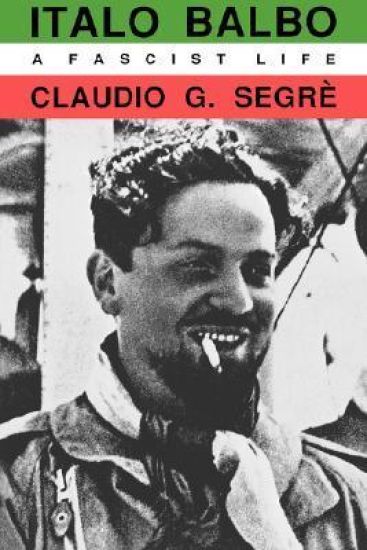
Pioneering aviator, blackshirt leader, colonial governor, confidante and heir-apparent to Benito Mussolini, the dashing and charismatic Italo Balbo exemplified the ideals of Fascist Italy during the 1920s and 30s. He earned national notoriety after World War I as a ruthless squadrista whose blackshirt forces crushed socialist and trade union organizations. As Minister of Aviation from 1926 to 1933, he led two internationally heralded mass trans-Atlantic flights. When his aerial armada reached the U. S., Chicago honored him with a Balbo Avenue, New York staged a ticker-tape parade, and President Roosevelt invited him to lunch. As colonial governor from 1933 to 1940, Balbo transformed Libya from backward colony to model Italian province. To many, Italo Balbo seemed to embody a noble vision of Fascism and the New Italy.
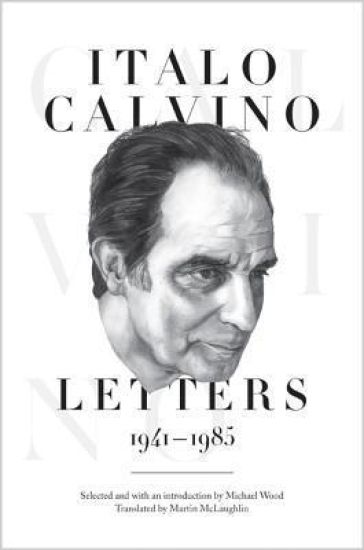
This is the first collection in English of the extraordinary letters of one of the great writers of the twentieth century. Italy's most important postwar novelist, Italo Calvino (1923-1985) achieved worldwide fame with such books as Cosmicomics, Invisible Cities, and If on a Winter's Night a Traveler. But he was also an influential literary critic, an important literary editor, and a masterful letter writer whose correspondents included Umberto Eco, Primo Levi, Gore Vidal, Leonardo Sciascia, Natalia Ginzburg, Michelangelo Antonioni, Pier Paolo Pasolini, and Luciano Berio. This book includes a generous selection of about 650 letters, written between World War II and the end of Calvino's life. Selected and introduced by Michael Wood, the letters are expertly rendered into English and annotated by well-known Calvino translator Martin McLaughlin. The letters are filled with insights about Calvino's writing and that of others; about Italian, American, English, and French literature; about literary criticism and literature in general; and about culture and politics. The book also provides a kind of autobiography, documenting Calvino's Communism and his resignation from the party in 1957, his eye-opening trip to the United States in 1959-60, his move to Paris (where he lived from 1967 to 1980), and his trip to his birthplace in Cuba (where he met Che Guevara). Some lengthy letters amount almost to critical essays, while one is an appropriately brief defense of brevity, and there is an even shorter, reassuring note to his parents written on a scrap of paper while he and his brother were in hiding during the antifascist Resistance. This is a book that will fascinate and delight Calvino fans and anyone else interested in a remarkable portrait of a great writer at work.
This is the first collection in English of the extraordinary letters of one of the great writers of the twentieth century. Italy's most important postwar novelist, Italo Calvino (1923-1985) achieved worldwide fame with such books as Cosmicomics, Invisible Cities, and If on a Winter's Night a Traveler. But he was also an influential literary critic, an important literary editor, and a masterful letter writer whose correspondents included Umberto Eco, Primo Levi, Gore Vidal, Leonardo Sciascia, Natalia Ginzburg, Michelangelo Antonioni, Pier Paolo Pasolini, and Luciano Berio. This book includes a generous selection of about 650 letters, written between World War II and the end of Calvino's life. Selected and introduced by Michael Wood, the letters are expertly rendered into English and annotated by well-known Calvino translator Martin McLaughlin.The letters are filled with insights about Calvino's writing and that of others; about Italian, American, English, and French literature; about literary criticism and literature in general; and about culture and politics. The book also provides a kind of autobiography, documenting Calvino's Communism and his resignation from the party in 1957, his eye-opening trip to the United States in 1959-60, his move to Paris (where he lived from 1967 to 1980), and his trip to his birthplace in Cuba (where he met Che Guevara). Some lengthy letters amount almost to critical essays, while one is an appropriately brief defense of brevity, and there is an even shorter, reassuring note to his parents written on a scrap of paper while he and his brother were in hiding during the antifascist Resistance.This is a book that will fascinate and delight Calvino fans and anyone else interested in a remarkable portrait of a great writer at work.
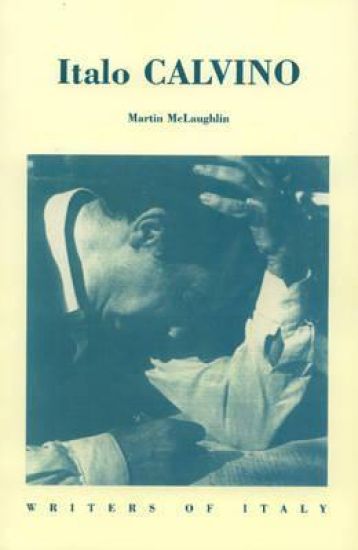
This first study in English of the complete writings of Italo Calvino (1923-85) offers new interpretations of Calvino's main works, taking into account some important unpublished material, and analyses Calvino's intertextual links with major writers of world literature (Conrad, Stevenson, Hemingway and Borges). Postmodern elements in his texts are assessed, and a chapter on Calvino's critical essays shed important light on his creative process.
Looking at five of Italo Calvino's often neglected early novels: The Young People of Po, The Cloven Viscount, The Baron in the Trees, The Non-Existent Knight, and The Watcher, Eugenio Bolongaro argues that these works, written between 1948 and 1963, contain a sustained meditation on the role of the intellectual and on the irreducible ethical and political dimension of literature. This meditation provides an insight into a crucial moment in Calvino's development as a writer, and allows Bolongaro to lay the groundwork for a more 'political' reading of Calvino's later work. Italo Calvino and the Compass of Literature firmly situates Calvino within his historical context - the cultural revival of post-World War II Italy - by relating these early novels to Calvino's political and critical writings which played an important role in the cultural debates of the time. This approach provides a key to understanding Calvino's work in a new light, ably demonstrating that Calvino's full literary significance cannot be understood in isolation from the politics and cultural movements of the period. One of the few book-length English-language works on Calvino's early writings, Italo Calvino and the Compass of Literatur will prove to be an indispensable tool to Italianists and literary studies scholars.
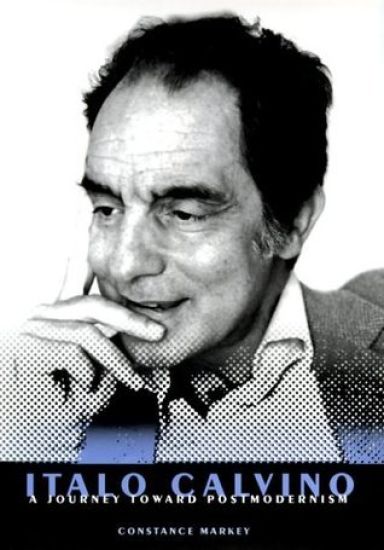
Concerned with the work of Italo Calvino, this text looks at the author in English translation, appraises his place in world literature and traces his development as a post-modern writer from the start of his writing career during World War II to his death in 1985.
This collection of comparative essays re-examines and discovers new literary links between Italy, Spain, and Latin America which will provide the reader with a better understanding of the meaning, significance, and literary value of the works examined. Among the co-authors and their essays are: Nancy D'Antuono on commedia dell'arte in Spain; Giulio Massano on Italian influences in the genesis of the p caro; Luigi Imperiale on Aretino and Francisco Delicado; Mario Aste on Hispanic-Sardinian writers. In addition, this collection also includes two Italo-Latin American essays by Vincenzo Bolletino and Galo Acevedo-Vaca.
The words 'Anthropocene animals' conjure pictures of dead albatrosses' bodies filled with plastic fragments, polar bears adrift on melting ice sheets, solitary elephants in the savannah. Suspended between the impersonal nature of the Great Extinction and the singularity of exotic individuals, these creatures appear remote, disconnected from us. But animals in the Anthropocene are not simply 'out there.' Threatening and threatened, they populate cities and countryside, often trapped in industrial farms, zoos, labs. Among them, there are humans, too. Italo Calvino's Animals explores Anthropocene animals through the visionary eyes of a classic modern author. In Calvino's stories, ants, cats, chickens, rabbits, gorillas, and other critters emerge as complex subjects and inhabitants of a world under siege. Beside them, another figure appears in the mirror: that of an anthropos without a capital A, epitome of subaltern humans with their challenges and inequalities, a companion species on the difficult path of co-evolution.
This work has been selected by scholars as being culturally important and is part of the knowledge base of civilization as we know it.This work is in the public domain in the United States of America, and possibly other nations. Within the United States, you may freely copy and distribute this work, as no entity (individual or corporate) has a copyright on the body of the work.Scholars believe, and we concur, that this work is important enough to be preserved, reproduced, and made generally available to the public. To ensure a quality reading experience, this work has been proofread and republished using a format that seamlessly blends the original graphical elements with text in an easy-to-read typeface.We appreciate your support of the preservation process, and thank you for being an important part of keeping this knowledge alive and relevant.
This study recovers Italo Calvino's central place in a lost history of interdisciplinary thought, politics, and literary philosophy in the 1960s. Drawing on his letters, essays, critical reviews, and fiction, as well as a wide range of works--primarily urban planning and design theory and history--circulating among his primary interlocutors, this book takes as its point of departure a sweeping reinterpretation of Invisible Cities. Passages from Calvino's most famous novel routinely appear as aphorisms in calendars, posters, and the popular literature of inspiration and self-help, reducing the novel to vague abstractions and totalizing wisdom about thinking outside the box. The shadow of postmodern studies has had a similarly diminishing effect on this text, rendering up an accomplished but ultimately apolitical novelistic experimentation in endless deconstructive deferrals, the shiny surfaces of play, and the ultimately rigged game of self-referentiality. In contrast, this study draws on an archive of untranslated Italian- and French-language materials on urban planning, architecture, and utopian architecture to argue that Calvino's novel in fact introduces readers to the material history of urban renewal in Italy, France, and the U.S. in the 1960s, as well as the multidisciplinary core of cultural life in that decade: the complex and continuous interplay among novelists and architects, scientists and artists, literary historians and visual studies scholars. His last love poem for the dying city was in fact profoundly engaged, deeply committed to the ethical dimensions of both architecture and lived experience in the spaces of modernity as well as the resistant practices of reading and utopian imagining that his urban studies in turn inspired.