Kirjojen hintavertailu. Mukana 11 244 527 kirjaa ja 12 kauppaa.

Kirjahaku

Etsi kirjoja tekijän nimen, kirjan nimen tai ISBN:n perusteella.

1000 tulosta hakusanalla Ivan G. Marcus

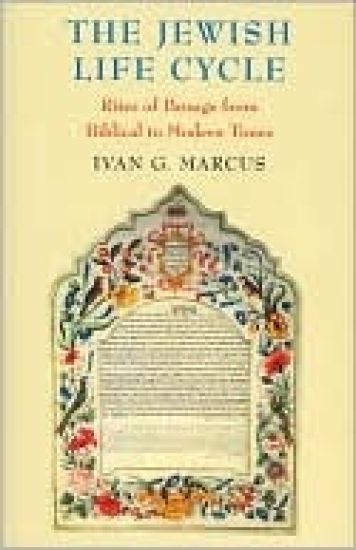
The Jewish Life Cycle

The Jewish Life Cycle

Ivan G. Marcus

University of Washington Press
2004
pokkari
In this original and sweeping review of Jewish culture and history, Ivan Marcus examines how and why various rites and customs celebrating stages in the life cycle have evolved through the ages and persisted to this day. For each phase of life--from childhood and adolescence to adulthood and the advanced years—the book traces the origin and development of specific rites associated with the events of birth, circumcision, and schooling; bar and bat mitzvah and confirmation; engagement, betrothal, and marriage; and aging, dying, and remembering. Customs in Jewish tradition, such as the presence of godparents at a circumcision, the use of a four-poled canopy at a wedding, and the placing of small stones on tombstones, are discussed. In each chapter, detailed descriptions walk the reader through such ceremonies as early modern and contemporary circumcision, weddings, and funerals.In a comparative framework, Marcus illustrates how Jewish culture has negotiated with the majority cultures of the ancient Near East, Greco-Roman antiquity, medieval European Christianity, and Mediterranean Islam, as well as with modern secular and religious movements and social trends, to renew itself through ritual innovation.In his extensive research on the Jewish life cycle, Marcus draws from documents on various customs and ritual practices, offering reassessments of original sources and scholarly literature.Marcus’s survey is the first comprehensive study of the rites of the Jewish life cycle since Hayyim Schauss's The Lifetime of the Jew was published in 1950, written for Jewish readers. Marcus’s book addresses a broader audience and is designed to appeal to scholars and interested readers.
The Jewish Life Cycle

The Jewish Life Cycle

Ivan G. Marcus

University of Washington Press
2015
sidottu
In this original and sweeping review of Jewish culture and history, Ivan Marcus examines how and why various rites and customs celebrating stages in the life cycle have evolved through the ages and persisted to this day. For each phase of life--from childhood and adolescence to adulthood and the advanced years—the book traces the origin and development of specific rites associated with the events of birth, circumcision, and schooling; bar and bat mitzvah and confirmation; engagement, betrothal, and marriage; and aging, dying, and remembering. Customs in Jewish tradition, such as the presence of godparents at a circumcision, the use of a four-poled canopy at a wedding, and the placing of small stones on tombstones, are discussed. In each chapter, detailed descriptions walk the reader through such ceremonies as early modern and contemporary circumcision, weddings, and funerals.In a comparative framework, Marcus illustrates how Jewish culture has negotiated with the majority cultures of the ancient Near East, Greco-Roman antiquity, medieval European Christianity, and Mediterranean Islam, as well as with modern secular and religious movements and social trends, to renew itself through ritual innovation.In his extensive research on the Jewish life cycle, Marcus draws from documents on various customs and ritual practices, offering reassessments of original sources and scholarly literature.Marcus's survey is the first comprehensive study of the rites of the Jewish life cycle since Hayyim Schauss's The Lifetime of the Jew was published in 1950, written for Jewish readers. Marcus's book addresses a broader audience and is designed to appeal to scholars and interested readers.
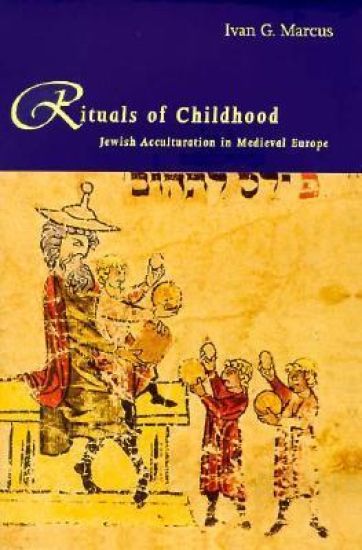
Rituals of Childhood

Rituals of Childhood

Ivan G. Marcus

Yale University Press
1998
pokkari
In medieval times, when a Jewish boy of five began religious schooling, he was carried from home to a teacher and placed on the teacher's lap. He was then asked to recite the Hebrew alphabet and lick honey from the slate on which it was written, to eat magically inscribed cooked peeled eggs and cakes, to recite an incantation against a demon of forgetfulness, and then to go down to the riverbank with the teacher, where he was told that his future study of the Torah, like the rushing river, would never end. This book--Ivan Marcus's erudite and novel interpretation of this rite of passage--presents a new anthropological historical approach to Jewish culture and acculturation in medieval Christian Europe.Marcus traces ancient Jewish and Greco-Roman elements in the rite and then analyzes it from different perspectives, making use of narrative, legal, poetic, ethnographic, and pictorial sources, as well as firsthand accounts. He then describes contemporary medieval Christian images and initiation rites--including the eucharist and the Madonna and child--as contexts within which to understand the ceremony. He is the first to investigate how medieval Jews were aware of, drew upon, and polemically transformed Christian religious symbols into Jewish counterimages in order to affirm the truth of Judaism and to make sense of living as Jews in an intensely Christian culture.
Jewish Culture and Society in Medieval France and Germany
These studies explore the history of the Jewish minority of Ashkenaz (northern France and the German Empire) during the High Middle Ages. Although the Jews in medieval Europe are usually thought to have been isolated from the Christian majority, they actually were part of a 'Jewish-Christian symbiosis.' A number of studies in the collection focus on Jewish-Christian cultural and social interactions, the foundations of the community ascribed to Charlemagne, and especially on the fashioning of a martyrological collective identity in 1096. Even when Jews resisted Christian pressures they often did so by internalizing Christian motifs and turning them on their heads to argue for the truth of Judaism alone. This may be seen especially in the formation of Jews as martyrs, a trope that places Jews as collective Christ figures whose suffering brings about vicarious atonement. The remainder of the studies delve into the lives and writings of a group of Jewish ascetic pietists, Hasidei Ashkenaz, which shaped the religious culture of most European Jews before modernity. In Sefer Hasidim (Book of the Pietists), attributed to Rabbi Judah the Pietist of Regensburg (d. 1217), one finds a mirror of everyday Jewish-Christian interactions even while the author advances a radical view of Jewish religious pietism.
How the West Became Antisemitic

How the West Became Antisemitic

Ivan G. Marcus

PRINCETON UNIVERSITY PRESS
2024
sidottu
An examination of how the Jews—real and imagined—so challenged the Christian majority in medieval Europe that it became a society that was religiously and culturally antisemitic in new ways In medieval Europe, Jews were not passive victims of the Christian community, as is often assumed, but rather were startlingly assertive, forming a Jewish civilization within Latin Christian society. Both Jews and Christians considered themselves to be God’s chosen people. These dueling claims fueled the rise of both cultures as they became rivals for supremacy. In How the West Became Antisemitic, Ivan Marcus shows how Christian and Jewish competition in medieval Europe laid the foundation for modern antisemitism.Marcus explains that Jews accepted Christians as misguided practitioners of their ancestral customs, but regarded Christianity as idolatry. Christians, on the other hand, looked at Jews themselves—not Judaism—as despised. They directed their hatred at a real and imagined Jew: theoretically subordinate, but sometimes assertive, an implacable “enemy within.” In their view, Jews were permanently and physically Jewish—impossible to convert to Christianity. Thus Christians came to hate Jews first for religious reasons, and eventually for racial ones. Even when Jews no longer lived among them, medieval Christians could not forget their former neighbors. Modern antisemitism, based on the imagined Jew as powerful and world dominating, is a transformation of this medieval hatred.A sweeping and well-documented history of the rivalry between Jewish and Christian civilizations during the making of Europe, How the West Became Antisemitic is an ambitious new interpretation of the medieval world and its impact on modernity.
How the West Became Antisemitic

How the West Became Antisemitic

Ivan G. Marcus

PRINCETON UNIVERSITY PRESS
2025
pokkari
An examination of how the Jews—real and imagined—so challenged the Christian majority in medieval Europe that it became a society that was religiously and culturally antisemitic in new ways In medieval Europe, Jews were not passive victims of the Christian community, as is often assumed, but rather were startlingly assertive, forming a Jewish civilization within Latin Christian society. Both Jews and Christians considered themselves to be God’s chosen people. These dueling claims fueled the rise of both cultures as they became rivals for supremacy. In How the West Became Antisemitic, Ivan Marcus shows how Christian and Jewish competition in medieval Europe laid the foundation for modern antisemitism.Marcus explains that Jews accepted Christians as misguided practitioners of their ancestral customs, but regarded Christianity as idolatry. Christians, on the other hand, looked at Jews themselves—not Judaism—as despised. They directed their hatred at a real and imagined Jew: theoretically subordinate, but sometimes assertive, an implacable “enemy within.” In their view, Jews were permanently and physically Jewish—impossible to convert to Christianity. Thus Christians came to hate Jews first for religious reasons, and eventually for racial ones. Even when Jews no longer lived among them, medieval Christians could not forget their former neighbors. Modern antisemitism, based on the imagined Jew as powerful and world dominating, is a transformation of this medieval hatred.A sweeping and well-documented history of the rivalry between Jewish and Christian civilizations during the making of Europe, How the West Became Antisemitic is an ambitious new interpretation of the medieval world and its impact on modernity.
"Sefer Hasidim" and the Ashkenazic Book in Medieval Europe

"Sefer Hasidim" and the Ashkenazic Book in Medieval Europe

Ivan G. Marcus

University of Pennsylvania Press
2018
sidottu
Composed in Germany in the early thirteenth century by Judah ben Samuel he-hasid, Sefer Hasidim, or "Book of the Pietists," is a compendium of religious instruction that portrays the everyday life of Jews as they lived together with and apart from Christians in towns such as Speyer, Worms, Mainz, and Regensburg. A charismatic religious teacher who recorded hundreds of original stories that mirrored situations in medieval social living, Judah's messages advocated praying slowly and avoiding honor, pleasure, wealth, and the lures of unmarried sex. Although he failed to enact his utopian vision of a pietist Jewish society, his collected writings would help shape the religious culture of Ashkenazic Judaism for centuries. In "Sefer Hasidim" and the Ashkenazic Book in Medieval Europe, Ivan G. Marcus proposes a new paradigm for understanding how this particular book was composed. The work, he contends, was an open text written by a single author in hundreds of disjunctive, yet self-contained, segments, which were then combined into multiple alternative versions, each equally authoritative. While Sefer Hasidim offers the clearest example of this model of composition, Marcus argues that it was not unique: the production of Ashkenazic books in small and easily rearranged paragraphs is a literary and cultural phenomenon quite distinct from anything practiced by the Christian authors of northern Europe or the Sephardic Jews of the south. According to Marcus, Judah, in authoring Sefer Hasidim in this manner, not only resisted Greco-Roman influences on Ashkenazic literary form but also extended an earlier Byzantine rabbinic tradition of authorship into medieval European Jewish culture.
Jewish Culture and Society in Medieval France and Germany
These studies explore the history of the Jewish minority of Ashkenaz (northern France and the German Empire) during the High Middle Ages. Although the Jews in medieval Europe are usually thought to have been isolated from the Christian majority, they actually were part of a 'Jewish-Christian symbiosis.' A number of studies in the collection focus on Jewish-Christian cultural and social interactions, the foundations of the community ascribed to Charlemagne, and especially on the fashioning of a martyrological collective identity in 1096. Even when Jews resisted Christian pressures they often did so by internalizing Christian motifs and turning them on their heads to argue for the truth of Judaism alone. This may be seen especially in the formation of Jews as martyrs, a trope that places Jews as collective Christ figures whose suffering brings about vicarious atonement. The remainder of the studies delve into the lives and writings of a group of Jewish ascetic pietists, Hasidei Ashkenaz, which shaped the religious culture of most European Jews before modernity. In Sefer Hasidim (Book of the Pietists), attributed to Rabbi Judah the Pietist of Regensburg (d. 1217), one finds a mirror of everyday Jewish-Christian interactions even while the author advances a radical view of Jewish religious pietism.
Digital Satellite Navigation and Geophysics

Digital Satellite Navigation and Geophysics

Ivan G. Petrovski; Toshiaki Tsujii

Cambridge University Press
2012
sidottu
Bridge the gap between theoretical education and practical work experience with this hands-on guide to GNSS, which features: • A clear, practical presentation of GNSS theory, with emphasis on GPS and GLONASS • All the essential theory behind software receivers and signal simulators • Key applications in navigation and geophysics, including INS aiding, scintillation monitoring, earthquake studies and more • Physical explanations of various important phenomena, including the similarity of code delay and phase advance of GNSS signals, and negative cross-correlation between scintillation intensity and phase variations. Whether you are a practising engineer, a researcher or a student, you will gain a wealth of insights from the authors' twenty-five years of experience. You can explore numerous practical examples and case studies and get hands-on user experience with a bundled real-time software receiver, signal simulator and a set of signal data, enabling you to create your own GNSS lab for research or study.
High Wycombe A Pictorial History

High Wycombe A Pictorial History

Ivan G Sparkes

Phillimore Co Ltd
1990
nidottu
High Wycombe is probably best known as the furniture town and the industry has greatly influenced its prosperity over the past 250 years. However, its history goes back to the Middle Ages and the customs which date from that period when the burgesses were granted control of the town and its markets. The mills on the River Wye, which were first used for grinding grain, then changed to the fulling of cloth followed by paper production, while lacemaking was an important early craft. The It is estimated that almost 5,000 Windsor chairs a day were being made.
GPS, GLONASS, Galileo, and BeiDou for Mobile Devices

GPS, GLONASS, Galileo, and BeiDou for Mobile Devices

Ivan G. Petrovski

Cambridge University Press
2014
sidottu
Get up to speed on all existing GNSS with this practical guide. Covering everything from GPS, GLONASS, Galileo, and BeiDou orbits and signals to multi-GNSS receiver design, AGPS, RTK, and VRS, you will understand the complete global range of mobile positioning systems. Step-by-step algorithms and practical methods provide the tools you need to develop current mobile systems, whilst coverage of cutting edge techniques, such as the instant positioning method, gives you a head-start in unlocking the potential of future mobile positioning. Whether you are an engineer or business manager working in the mobile device industry, a student or researcher, this is your ideal guide to GNSS.
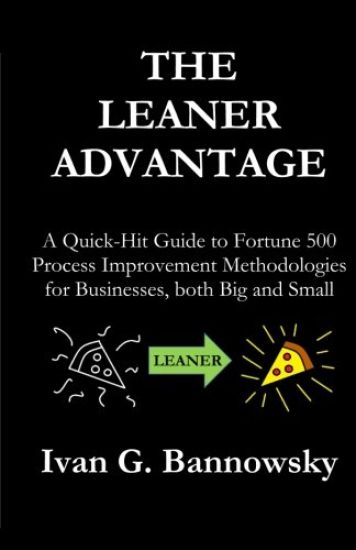
The Leaner Advantage: A Quick-Hit Guide to Fortune 500 Process Improvement Methodologies for Businesses, Both Big and Small
The Leaner Advantage is a unique take on commonly used process improvement methodologies, compiling them into a quick reference guide for the busy small business person, manager, entrepreneur, and the everyday continuous improvement practitioner. While these methodologies can be highly effective when implemented in large projects within operational centers, this book gleans for you the concepts easiest to implement and provides strategies to make your business more efficient and less prone to risk.Click here for a brief video overview: https: //youtu.be/ClclO-3Tg-g
Sick Justice

Sick Justice

Ivan G. Goldman

Potomac Books Inc
2013
sidottu
In America, 2.3 million people—a population about the size of Houston's, the country's fourth-largest city—live behind bars. Sick Justice explores the economic, social, and political forces that hijacked the criminal justice system to create this bizarre situation. Presenting frightening true stories of (sometimes wrongfully) incarcerated individuals, Ivan G. Goldman exposes the inept bureaucracies of America's prisons and shows the real reasons that disproportionate numbers of minorities, the poor, and the mentally ill end up there. Goldman dissects the widespread phenomenon of jailing for profit, the outsized power of prison guards' unions, California's exceptionally rigid three-strikes law, the ineffective and never-ending war on drugs, the closing of mental health institutions across the country, and other blunders and avaricious practices that have brought us to this point. Sick Justice tells a big, gripping story that's long overdue. By illuminating the system's brutality and greed and the prisoners' gratuitous suffering, the book aims to be a catalyst for reform, complementing the work of the Innocence Project and mirroring the effects of Michael Harrington's The Other America: Poverty in the United States (1962), which became the driving force behind the war on poverty.