Kirjojen hintavertailu. Mukana 11 244 527 kirjaa ja 12 kauppaa.

Kirjahaku

Etsi kirjoja tekijän nimen, kirjan nimen tai ISBN:n perusteella.

1000 tulosta hakusanalla Ivan T. Berend

Against European Integration

Against European Integration

Ivan T. Berend

Routledge
2019
nidottu
This book gives a complex description and discussion of today’s populist attacks against the European Union (EU) following the financial crisis of 2008, which opened the floodgates of dissatisfaction, and the migration crisis which destabilized the traditional solidarity basis of the EU. The problem of Brexit is also explored.Each chapter presents one of the main elements of the crisis of the EU. These include West European populism, Central European right-wing populism in power, and the exploitation of the EU’s mistake during the migration crisis of the mid-2010s. These also include the discovery of Christian ideology against immigration and hidden anti-Semitic propaganda using a hysterical attack against the liberal billionaire philanthropist George Soros, and Brexit. There is a detailed discussion of the failures of the EU to pacify the neighbourhood in the South and North, especially in Ukraine, and the rising hostile outside enemies of the EU, including Russia and Turkey, bad relationships with Trump’s America, the uncertainty of NATO, and the emergence of a new rival, China, that enters into the Central European edge of the EU.The author explores strategies for coping with, and emerging from, this existential crisis and ends with the alternative plans and possibilities for the future of the eurozone. This will be an invaluable resource for understanding the crisis of the EU, one of the central questions of contemporary international politics for undergraduate and graduate students, and readers interested in the discussion surrounding an endangered European integration and difficult world politics.

Against European Integration

Against European Integration

Ivan T. Berend

Routledge
2019
sidottu
This book gives a complex description and discussion of today’s populist attacks against the European Union (EU) following the financial crisis of 2008, which opened the floodgates of dissatisfaction, and the migration crisis which destabilized the traditional solidarity basis of the EU. The problem of Brexit is also explored.Each chapter presents one of the main elements of the crisis of the EU. These include West European populism, Central European right-wing populism in power, and the exploitation of the EU’s mistake during the migration crisis of the mid-2010s. These also include the discovery of Christian ideology against immigration and hidden anti-Semitic propaganda using a hysterical attack against the liberal billionaire philanthropist George Soros, and Brexit. There is a detailed discussion of the failures of the EU to pacify the neighbourhood in the South and North, especially in Ukraine, and the rising hostile outside enemies of the EU, including Russia and Turkey, bad relationships with Trump’s America, the uncertainty of NATO, and the emergence of a new rival, China, that enters into the Central European edge of the EU.The author explores strategies for coping with, and emerging from, this existential crisis and ends with the alternative plans and possibilities for the future of the eurozone. This will be an invaluable resource for understanding the crisis of the EU, one of the central questions of contemporary international politics for undergraduate and graduate students, and readers interested in the discussion surrounding an endangered European integration and difficult world politics.

The Economics and Politics of European Integration
The Economics and Politics of European Integration offers a comprehensive history of European integration, from the conceptualization of a United States of Europe, to the present day. The special role of the United States in this process of integration, and the expansion and evolution of the European Union, is critically analyzed. The book also thoroughly discusses the current view of the EU and the complex crises emerging from the COVID-19 pandemic.While the book focuses primarily on Europe, the role of other countries is also examined. The rise of hostile enemies from Turkey, Russia, the US and China is explored, and the history and outcome of Brexit also receives unique focus. Maps are used throughout to clearly depict the enlargement process. This illuminating text will be valuable reading for students and researchers across international economics, economic history, political economy and European studies.
The Economics and Politics of European Integration
The Economics and Politics of European Integration offers a comprehensive history of European integration, from the conceptualization of a United States of Europe, to the present day. The special role of the United States in this process of integration, and the expansion and evolution of the European Union, is critically analyzed. The book also thoroughly discusses the current view of the EU and the complex crises emerging from the COVID-19 pandemic.While the book focuses primarily on Europe, the role of other countries is also examined. The rise of hostile enemies from Turkey, Russia, the US and China is explored, and the history and outcome of Brexit also receives unique focus. Maps are used throughout to clearly depict the enlargement process. This illuminating text will be valuable reading for students and researchers across international economics, economic history, political economy and European studies.
The Contemporary Crisis of the European Union
The European Union widened and deepened integration when it introduced the Single Market and the common currency, increasing the number of member countries from 12 to 28. After a quarter of a century, the 2008 financial and economic crisis opened a new chapter in the history of European integration. Prosperity was replaced by economic crisis and then long stagnation, with ramifications far beyond the economic arena.For the first time, after more than half a century, some countries were almost forced to step out of the Union. History’s most frightening migration crisis shocked Europe and led to the strengthening of several anti-integration parties in various countries. This pioneering book discusses the nine crisis elements that could lead to disintegration of the EU. Beginning with the Greek Debt disaster this book delves into the cause of the recent European crisis and then onto the recent immigration influx and its consequences, as well as Britain’s exit from the Union. A concluding chapter, based on the facts of positive development during the crises years, gives a cautiously optimistic forecast for the future and asks the question: further integration or disintegration?This volume is of great importance to academics, students and policy makers who have an interest in European politics, political economy and migration.
Economic History of a Divided Europe
This book presents the sharp regional diff erences within the integrating European continent. Four regions – Northwestern Europe, Southern Europe, Central Europe, and Eastern-Southeastern Europe – represent high, medium, and relatively less-developed levels of economic advancement. These disparities have emerged as a result of historical diff erences that produced and reinforced cultural and behavioral diff erences.The author examines the distinctions between the regions, looks at how these differences transpired and became so retrenched, and answers the question of why some countries were able to elevate to higher levels of economic development while others could not. This book is unique in that it provides a timely historical analysis of the main causes of the most pressing conflicts in Europe today. Readers will come away from this book with a deeper understanding of the sharp divergence in economic standing between the four different regions of Europe, as well as knowledge about how institutional corruption and other cultural features exacerbated these variations. The book also offers a better understanding of major European Union confl icts between member countries and between member and nonmember countries, as well as the rise of autocratic regimes in certain countries. The book begins with a short history of European integration throughout European civilization and then goes on to discuss the modern reality of integration and attempts to homogenize the Continent that divided into four different macro-regions.It will primarily appeal to scholars, researchers and students studying Europe from various fi elds, including economics, business, history, political science, and sociology, as well as a general readership interested in Europe’s past, present, and future.
Decades of Crisis

Decades of Crisis

Ivan T. Berend

University of California Press
2001
pokkari
Only by understanding Central and Eastern Europe's turbulent history during the first half of the twentieth century can we hope to make sense of the conflicts and crises that have followed World War II and, after that, the collapse of Soviet-controlled state socialism. Ivan Berend looks closely at the fateful decades preceding World War II and at twelve countries whose absence from the roster of major players was enough in itself, he says, to precipitate much of the turmoil. As waves of modernization swept over Europe, the less developed countries on the periphery tried with little or no success to imitate Western capitalism and liberalism. Instead they remained, as Berend shows, rural, agrarian societies notable for the tenacious survival of feudal and aristocratic institutions. In that context of frustration and disappointment, rebellion was inevitable. Berend leads the reader skillfully through the maze of social, cultural, economic, and political changes in Hungary, Czechoslovakia, Yugoslavia, Poland, Romania, Bulgaria, Albania, Austria, Latvia, Lithuania, Estonia, and the Soviet Union, showing how every path ended in dictatorship and despotism by the start of World War II.
History Derailed

History Derailed

Ivan T. Berend

University of California Press
2005
pokkari
There is probably no greater authority on the modern history of central and eastern Europe than Ivan Berend, whose previous work, Decades of Crisis, was hailed by critics as "masterful" and "the broadest synthesis of the modern social, economic, and cultural history of the region that we possess." Now, having brought together and illuminated this region's storm-tossed history in the twentieth century, Berend turns his attention to the equally turbulent period that preceded it. The "long" nineteenth century, extending up to World War I, contained the seeds of developments and crises that continue to haunt the region today. The book begins with an overview of the main historical trends in the sixteenth to the eighteenth centuries, during which time the region lost momentum and became the periphery, no longer in step with the rising West. It concludes with an account of the persisting authoritarian political structures and the failed modernization that paved the way for social and political revolts. The origins of twentieth-century extremism and its tragedies are plainly visible in this penetrating account.
The Hungarian Economic Reforms 1953–1988

The Hungarian Economic Reforms 1953–1988

Ivan T. Berend

Cambridge University Press
2009
pokkari
Professor Berend presents a comprehensive inside account of Hungary's economic reforms since the 1950s. Working from Communist Party archives, which have hitherto partially remained closed to scholars, Berend situates the history of these economic reforms within their political context, looking in particular at the role of the Soviet Union. He examines the theoretical background to reform, the obstacles that arose during implementation and the gradual realisation that minor reforms of the old system could no longer work. The Hungarian Economic Reforms 1953–1988 comes at a time when many centrally planned economies are examining their performance and structure and seeking suitable forms of change. The Hungarian reforms have attracted those countries wishing to rid themselves of their Stalinist command economies. Thus the book indirectly sheds light upon Chinese economic reforms and on Gorbachev's Soviet perestroika. It will be of interest to specialists and students of East European studies, with special reference to the EMEA, planned economies and economic reform.
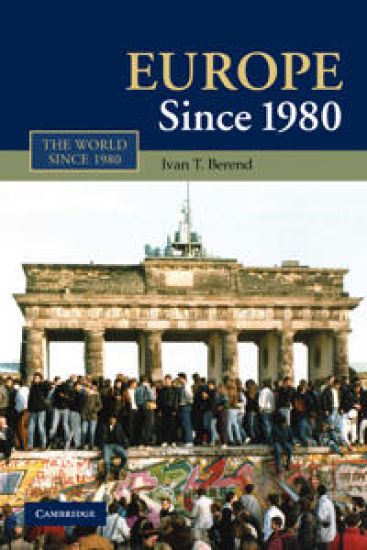
Europe Since 1980

Europe Since 1980

Ivan T. Berend

Cambridge University Press
2010
pokkari
This book tells the dramatic story of the economic, social, political, and cultural transformation of Europe during the transition from the Cold War to the European Union. Ivan Berend charts, in particular, the overwhelming impact of the collapse of communism on every aspect of European life. Europe became safer and more united, and Central and Eastern Europe started on the difficult road to economic modernization. However, the western half of Europe also changed. European integration gained momentum. The single market and the common currency were introduced, and the Union enlarged from nine to twenty-seven countries. This period also saw a revolution in information and communication technology, the increasing impact of globalization and the radical restructuring of the political system. The book explores the impact of all of these changes as well as the new challenges posed by the economic crisis of 2008–9 and asks which way now for Europe?
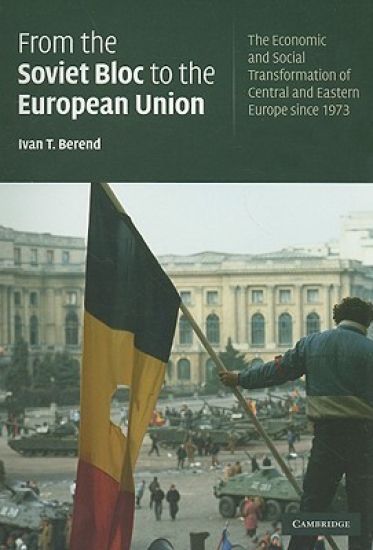
From the Soviet Bloc to the European Union

From the Soviet Bloc to the European Union

Ivan T. Berend

Cambridge University Press
2009
pokkari
The Soviet Union's dramatic collapse in 1989 was a pivotal moment in the complex history of Central and Eastern Europe, and Ivan Berend here offers a magisterial new account of the dramatic transformation that culminated in ten former Soviet Bloc countries joining the European Union. Taking the OPEC oil crisis of 1973 as his starting point, he charts the gradual unravelling of state socialism in Central and Eastern Europe, its ultimate collapse in the revolutions of 1989, and the economic restructuring and lasting changes in income, employment, welfare, education and social structure which followed. He pays particular attention to the crucial role of the European Union as well as the social and economic hurdles that continue to face former Eastern-bloc nations as they try to catch up with their Western neighbours. This will be essential reading for scholars and students of European and economic history, European politics and economics.
Economic History of a Divided Europe

Economic History of a Divided Europe

Ivan T. Berend

TAYLOR FRANCIS LTD
2021
nidottu
This book presents the sharp regional diff erences within the integrating European continent. Four regions – Northwestern Europe, Southern Europe, Central Europe, and Eastern-Southeastern Europe – represent high, medium, and relatively less-developed levels of economic advancement. These disparities have emerged as a result of historical diff erences that produced and reinforced cultural and behavioral diff erences.The author examines the distinctions between the regions, looks at how these differences transpired and became so retrenched, and answers the question of why some countries were able to elevate to higher levels of economic development while others could not. This book is unique in that it provides a timely historical analysis of the main causes of the most pressing conflicts in Europe today. Readers will come away from this book with a deeper understanding of the sharp divergence in economic standing between the four different regions of Europe, as well as knowledge about how institutional corruption and other cultural features exacerbated these variations. The book also offers a better understanding of major European Union confl icts between member countries and between member and nonmember countries, as well as the rise of autocratic regimes in certain countries. The book begins with a short history of European integration throughout European civilization and then goes on to discuss the modern reality of integration and attempts to homogenize the Continent that divided into four different macro-regions.It will primarily appeal to scholars, researchers and students studying Europe from various fi elds, including economics, business, history, political science, and sociology, as well as a general readership interested in Europe’s past, present, and future.
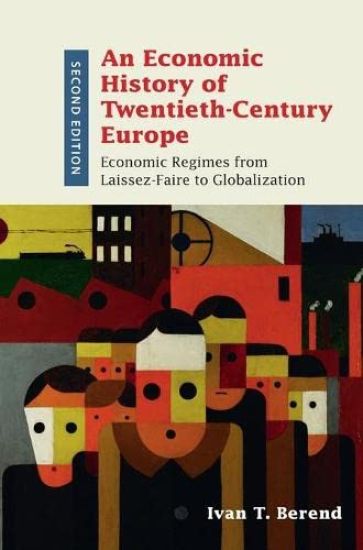
An Economic History of Twentieth-Century Europe

An Economic History of Twentieth-Century Europe

Ivan T. Berend

Cambridge University Press
2016
sidottu
This new edition of Ivan T. Berend's leading overview of economic regimes and economic performance from the start of the twentieth century to the present is fully updated to incorporate recent events, including the causes and impacts of the 2008 financial-economic crisis. Praised for its clear prose and uncluttered analytical style as well as its use of illustrative case studies, this is an integrated, comparative account of European economic development from the evolution of capitalism to the fascist and communist regimes and their collapse, and Europe's current economic problems. The book examines both successes and failures in responding to the challenges of this crisis-ridden but highly-successful age. It introduces the main factors behind economic growth and the various economic regimes that were invented and trialled. It also shows how the vast disparity which had existed between the European regions started gradually decreasing as a result of increased integration.
The Contemporary Crisis of the European Union
The European Union widened and deepened integration when it introduced the Single Market and the common currency, increasing the number of member countries from 12 to 28. After a quarter of a century, the 2008 financial and economic crisis opened a new chapter in the history of European integration. Prosperity was replaced by economic crisis and then long stagnation, with ramifications far beyond the economic arena.For the first time, after more than half a century, some countries were almost forced to step out of the Union. History’s most frightening migration crisis shocked Europe and led to the strengthening of several anti-integration parties in various countries. This pioneering book discusses the nine crisis elements that could lead to disintegration of the EU. Beginning with the Greek Debt disaster this book delves into the cause of the recent European crisis and then onto the recent immigration influx and its consequences, as well as Britain’s exit from the Union. A concluding chapter, based on the facts of positive development during the crises years, gives a cautiously optimistic forecast for the future and asks the question: further integration or disintegration?This volume is of great importance to academics, students and policy makers who have an interest in European politics, political economy and migration.
The History of European Integration

The History of European Integration

Ivan T. Berend

Routledge
2016
sidottu
The foundation of the European Union was one of the most important historical events in the second half of the 20th century. In order to fully appreciate the modern state of the EU, it is crucial to understand the history of European integration. This accessible overview differs from other studies in its focus on the major roles played by both the United States and European multinational corporations in the development of the European Union. Chronologically written and drawing on new findings from two major archives (the archives of the US State Department and Archive of European Integration), this book sheds crucial new light on the integration process. The History of European Integration offers a major contribution to our understanding of Europe’s postwar history, and will be essential reading for any student of postwar European History, Contemporary History, European Politics and European Studies.
The History of European Integration

The History of European Integration

Ivan T. Berend

Routledge
2016
nidottu
The foundation of the European Union was one of the most important historical events in the second half of the 20th century. In order to fully appreciate the modern state of the EU, it is crucial to understand the history of European integration. This accessible overview differs from other studies in its focus on the major roles played by both the United States and European multinational corporations in the development of the European Union. Chronologically written and drawing on new findings from two major archives (the archives of the US State Department and Archive of European Integration), this book sheds crucial new light on the integration process. The History of European Integration offers a major contribution to our understanding of Europe’s postwar history, and will be essential reading for any student of postwar European History, Contemporary History, European Politics and European Studies.
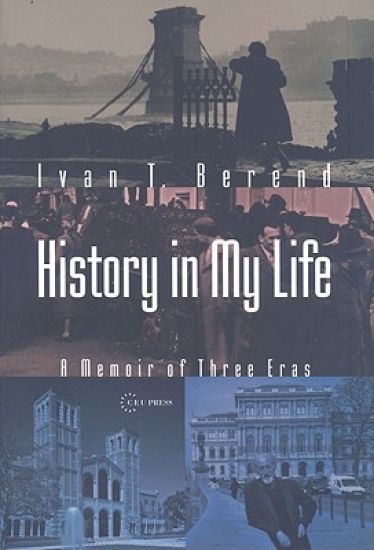
History in My Life

History in My Life

Ivan T. Berend

CENTRAL EUROPEAN UNIVERSITY PRESS
2023
nidottu
Ivan T. Berend is Distinguished Professor at the University of California Los Angeles, Director of the European Studies Program. He was one of the masterminds of regime change in Hungary. He made a career in Hungary as a university professor, Rector of the University of Economics (1973–79), and President of the Hungarian Academy of Sciences (1985–90). He was President of the International Committee of Historical Sciences (1995–2000), and Vice-President of the International Economic History Association (1986–1994). His research interests are the complex economic, social, ideological, and cultural history of Central and Eastern Europe in the 19th–20th century; economic modernization; problems of European backwardness; transition from state socialism to capitalism. He published and 26 books and more than 120 studies. Before he became a professor at UCLA, Ivan Berend had survived five regime changes and two revolutions in Hungary, had been in prison and German concentration camp in 1944–45. His memoir offers an interesting case study, a subjective addition to the “objective” historical works on Central and Eastern European state socialism. It describes the hard choices of intellectuals in a dictatorial state: 1. remain in isolation, concentrate on scholarly works, and exclude politics in your personal life; 2. be in opposition, criticize and unveil the regime, accept discrimination and exclusion; 3. remain within the establishment and work for reforming the country using legal possibilities to criticize the regime and to achieve changes from within. Berend’s book raises basic historical questions and debates, compares East European and American higher education systems, and presents an eyewitness’ insights on life in the United States.
History in My Life

History in My Life

Ivan T. Berend

Central European University Press
2009
sidottu
Ivan T. Berend is Distinguished Professor at the University of California Los Angeles, Director of the European Studies Program. He was one of the masterminds of regime change in Hungary. He made a career in Hungary as a university professor, Rector of the University of Economics (1973–79), and President of the Hungarian Academy of Sciences (1985–90). He was President of the International Committee of Historical Sciences (1995–2000), and Vice-President of the International Economic History Association (1986–1994). His research interests are the complex economic, social, ideological, and cultural history of Central and Eastern Europe in the 19th–20th century; economic modernization; problems of European backwardness; transition from state socialism to capitalism. He published and 26 books and more than 120 studies. Before he became a professor at UCLA, Ivan Berend had survived five regime changes and two revolutions in Hungary, had been in prison and German concentration camp in 1944–45. His memoir offers an interesting case study, a subjective addition to the “objective” historical works on Central and Eastern European state socialism. It describes the hard choices of intellectuals in a dictatorial state: 1. remain in isolation, concentrate on scholarly works, and exclude politics in your personal life; 2. be in opposition, criticize and unveil the regime, accept discrimination and exclusion; 3. remain within the establishment and work for reforming the country using legal possibilities to criticize the regime and to achieve changes from within. Berend’s book raises basic historical questions and debates, compares East European and American higher education systems, and presents an eyewitness’ insights on life in the United States.
Studies on Central and Eastern Europe in the Twentieth Century
This volume centres on the collaborative work of Ivan Berend and György Ránki, begun in Hungary in the 1950s and continuing till Ranki's death in 1988, but includes papers by each individually as well as those written jointly. The subject is the social and economic history of Central and Eastern Europe in the 19th and 20th centuries, with a particular focus upon Hungary. The first part looks at the troubled German-Hungarian relations during Hitler's rule; although focusing on Hungary, it also provides an understanding of the economic ties between Germany and Central and Eastern Europe during the turbulent war years. The economic and political problems of the region in the interwar years are dealt with in the second part. Two of the four studies in the final section present the efforts and strict limitations of reforms in state socialist Hungary. The other two analyze the post-communist economic transformation of Central and Eastern Europe during the 1990s in a broad international context.
A Century of Populist Demagogues

A Century of Populist Demagogues

Ivan T Berend

Central European University Press
2020
pokkari
The renowned historian Ivan Berend discusses populist demagoguery through the presentation of 18 politicians from 12 European countries from World War I to the present. In this book, Berend defines demagoguery, reflects on its connections with populism, and examines the common features and differences in the demagogues' programs and language. Mussolini and Hitler, the "model demagogues," are only briefly discussed, as is the election of Donald Trump in the United States and its impact on Europe. The 18 detailed portraits include two communists, two fascists, and several rightwing and anti-EU politicians. The series runs from Bela Kun, the leader of the Hungarian Soviet Republic in 1919, through Codreanu and Gombos from the 1930s, Stahremberg and Haider in Austria, Ceausescu, Milosevic, Tudjman, Izetbegovic, Berlusconi, Wilders, the two Le Pens, Farage and Boris Johnson, Orban and the two Kaczynskis. Each case includes an analysis of the time and place and is illustrated with quotations from the demagogues' speeches. This book is a warning about the continuing threat of populist demagogues both for their subjects and for history itself. Berend insists on the crucial importance for Europe to understand the reality behind their promises and persuasive language in order to impede their success.